FW
Rental fashion to be grab the limelight in 2020
 Starting a new trend, Banana Republic launched its own rental services in 2019. However, the road ahead seems challenging as even big rental companies like Rent the Runway have been facing tough times of late. The company faced several service glitches in 2019 and even had to shut down its subscription facilities for a while.
Demand for rental grows despite challenges
Besides managing their shipping and inventory costs, rental companies also have to deal with washing and dry cleaning of their apparels. Yet, the demand for rental fashion seems to be growing with brands like Banana Republic, Vince, American Eagle and Bash launching their own rental services.
In November 2019, fast-fashion brand H&M also announced its intention to enter clothing rental services. The brand recently launched a flagship store in Stockholm that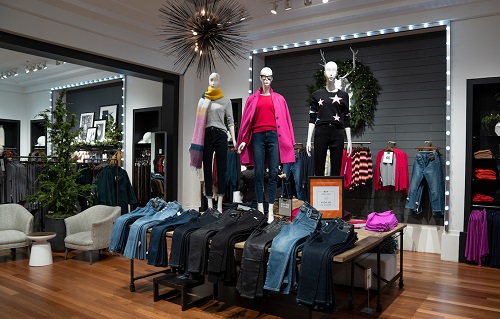 allows customers to rent a piece of clothing for $37 from a collection of 50 pieces that it currently holds. The store will first test waters for three months before expanding operations. Meanwhile other retailers like Banana Republic plan to expand their rental services by learning the intricacies of business and adding new customers. The company launched its service Style Passport in September and customer profile is increasing every month as the company allows customers to rent three items at a time with unlimited exchanges and free shipping and returns for $85 a month.
Best services at affordable rates
Growing rapidly, the online clothing rental market is expected to reach $1.96 billion by 2023. New companies are entering the space which is attracting many new customers. Opportunities for women customers are increasing as the entry of new players enables them to avail the best service at most affordable rates. A recent survey from JDA Software says, while 25 per cent of the surveyed consumers had used a rental service, about 75 per cent of them, traditionally used it to rent something for a special occasion. Customers prefer to rent more from retailers who offer a strong assortment of products at a good price point Brands like Banana Republics and Urban Outfitters offer customers strong loyalty programs which gives them a rich data that they can leverage to predict demand and choose products that have the highest potential to be successful.
US apparel imports from China down 31 per cent in November
US apparel imports from China were down 31 per cent in November 2019. This follows a 35 per cent plunge in October. In volume, apparel imports from China fell 20 per cent in November. This follows a 30 per cent volume decline the prior month.
While the erosion of apparel sourcing from China by US brands and retailers has been ongoing throughout the tariff-driven US-China trade war, the dramatic drop-offs in the past few months were driven in part by companies bringing goods in before the 15 per cent tariffs on Chinese imports. People tried to lock on and get their product in early this year.
but western hemisphere makers also have gained as well. Apparel shipments from Vietnam rose 10.37 per cent year to date but were down 12 per cent for the month. Vietnam’s market share stood at 15.93 per cent, a ten per cent gain.
US apparel imports from China for the first 11 months of the year fell 7.59 per cent. This brought China’s import market share–still in the top slot–down 6.63 per cent to 30.25 per cent in value terms for the year through November. Suppliers, largely Asian, are stealing away that market share
Tunisia aims at softer textile impact
The Tunisian textile sector wants to reduce the environmental impact of its activity. Textile operators are being introduced to a green economy approach, where chemical waste from factories are recycled or valorised. It aims at developing circular textile value chains, recovering textile waste, strengthening local infrastructure, technical expertise and knowhow to promote the appropriate classification, efficient collection, sorting and recycling of post-industrial and pre-consumer textile waste.
Textiles are a pillar of the Tunisian economy and contribute more than 20 per cent to the GDP, with1,600 companies, 1,60,000 jobs and exert a strong pressure on the environment. The textile and clothing industry plays a critical role in the socio-economic development of the country. Tunisia is among the top 15 garment suppliers in the world, and has the advantage of being close to the European market. It is EU’s the fifth largest supplier and a leading trouser supplier to the EU. Other important products are: work wear and lingerie. The main foreign investors in Tunisia’s apparel sector are: France, Germany, Belgium and Italy.
PVH Corp adopts sustainable strategies
PVH Corp has switched to a more sustainable digital design process. PVH has doubled its sustainability efforts. Its fourth collaboration with Formula One World Champion Lewis Hamilton uses sustainable materials and sourcing practices including the use of organic cotton and recycled materials, low-impact denim washes and more. These sustainability practices are a part of PVH’s Forward Fashion Initiative, which aims to change the way clothes are created and reused. Its goals include reaching zero negative impacts, increasing positive impacts and improving more than one million lives across its value chain.
PVH Corp is the parent company of Tommy Hilfiger, Calvin Klein, Van Heusen, Speedo and Izod. PVH’s business is strongly anchored in the US, where in 2018 it generated 46 per cent of its sales, but the group is reorganising itself in the US market. Tommy Hilfiger has been working to sales in China, engineering double-digit growth in the country in 2018. Asia accounts for 12 per cent of the group’s sales. The group has cut the share of its production that comes from China to the US market. Three or four years ago, about 35 per cent of its production for the US was coming out of China. For next year, it is looking at something that’s closer to 10 per cent.
Lingerie reframes glamor
The lingerie and swimwear industry has reinvented the rules of glamour by speaking generously and delightfully to all women. It began with getting away from stereotypes based on extreme thinness, gradually making space for plus size models on runways, and then, with varying amounts of curves, in advertising campaigns.
For women who have had their lives shaken up by surgery, Megami offers post-operative lingerie. Products are now available in several sizes covering a range that more accurately reflects all body types. Images for catalogues and other ad campaign visuals are featuring models with non-retouched bodies, proudly displaying stretch marks, varying degrees of curviness, and even boldly embraced body hair. Danish designers Moons and Junes intend to show how beautiful realism can be by spotlighting all kinds of physiques. With their hashtag #bitsandboobs, this brand encourages women to post their bustlines on their official website. At American brand Girlfriend Collective, this active wear line is made in sizes ranging from XXS to 6XL, allowing all women to be eco- friendly; this brand only uses fibers made from recycled plastic bottles. French brand Madame porte la culotte is intended first and foremost to make women happy with a combination of comfort and beauty.
J Brand to launch extended denim sizes
The premium denim brand J Brand known as the creator of the skinny jean will offer inclusive denim now. The brand plans to extend its women’s sizing from size 32 up to size 38 for a capsule collection of its most iconic jean fits. To develop the capsule, J Brand took into consideration the pain points of female denim consumers and cut the jeans from entirely new patterns that were perfected over hours of fittings on real women’s bodies.
Additionally, the jeans are made from cotton blended with fibers like lyocell and elastane, which allow movement while enhancing curves.
SRTEPC prepares 20-point strategy for MMF development
SRTEPC has prepared a 20-point strategy for the development of MMF fiber textile segment. The points include: bringing in fiber neutrality, lowering interest rates, making raw materials to be made available at international price, considering textile job work as manufacturing in the goods and services tax regime, considering textile merchant exporters as manufacturer exporter, branding and WTO-compatible schemes.
SRTEPC says, exports of Indian man-made fiber (MMF) textiles are expected to grow 10 per cent to reach $7 billion by the end of fiscal 2020-21. Exports in value-added segments like fabrics witnessed nearly 8 per cent growth during April-October period in 2019-20 as compared to the same period in the previous fiscal.
Indorama Ventures buys two chemical units from Huntsman Corporation
Indorama Ventures has bought the chemical intermediates businesses of Huntsman Corporation including PO/MTBE, and its surfactants businesses. The transaction is valued at around $2 billion, which comprises a cash purchase price of $1.93 billion along with the transfer of up to $76 million in net underfunded pension as well as other post-employment benefit liabilities. Notably, the cash purchase price includes estimated adjustments to the working capital purchase price.
The transaction significantly lowers Huntsman’s capital-intensive upstream asset base, strengthens its already strong balance sheet, and enables it to further invest and expand its downstream businesses. It also expands the company’s opportunity and flexibility for select strategic and accretive acquisitions, and ongoing opportunistic repurchases of its shares.
The divestiture will also enable Huntsman to generate more stable and consistent margins as well as strong free cash flow.
HeiQ introduces cool touch technology
Himatsingka to launch new lifestyle brand at Heimtextil
Himatsingka plans to launch new lifestyle bedding and bath brand Himeya at Heimtextil. The brand will bring back the beauty of the outdoors into its customers’ lives and homes. This is a part of the company’s broader efforts to spearhead a spectrum of initiatives designed to enhance market share across Europe and Asia Pacific for Himatsingka’s home textile portfolio.
Himatsingka’s theme at Heimtextil this week is “The Architecture of Comfort” as the event sets the tone for the company’s redesigned booth at the show. The company tapped Swedish interior designer and stylist Lotta Agaton to creatively present this visual expression. The company also plans to launch new Rescue Towel program made of repurposed yarn waste and its tagged cotton story at the exhibition.
Himatsingka is the only company equipped with the DNA to track and trace cotton from farm to home. The company has positioned itself as a leader in the track-and-trace space using the unique, patented DNA system by Applied DNA Science.