FW
Hemp to help revive American interest in fashion
"Though a Bureau of Economic Analysis NIPA table notes Americans spent $391.5 billion on their clothing and footwear in 2018, their share of disposable income on these items declined from 3.8 per cent in 2007 to 3.0 per cent in 2019. Even more alarming is the fact that their global share of expenditure on fashion was only 4.9 per cent. To revive their flagging interest in fashion, the industry needs to come up with some radical new ideas."
 Though a Bureau of Economic Analysis NIPA table notes Americans spent $391.5 billion on their clothing and footwear in 2018, their share of disposable income on these items declined from 3.8 per cent in 2007 to 3.0 per cent in 2019. Even more alarming is the fact that their global share of expenditure on fashion was only 4.9 per cent. To revive their flagging interest in fashion, the industry needs to come up with some radical new ideas.
A sustainable alternative to cotton
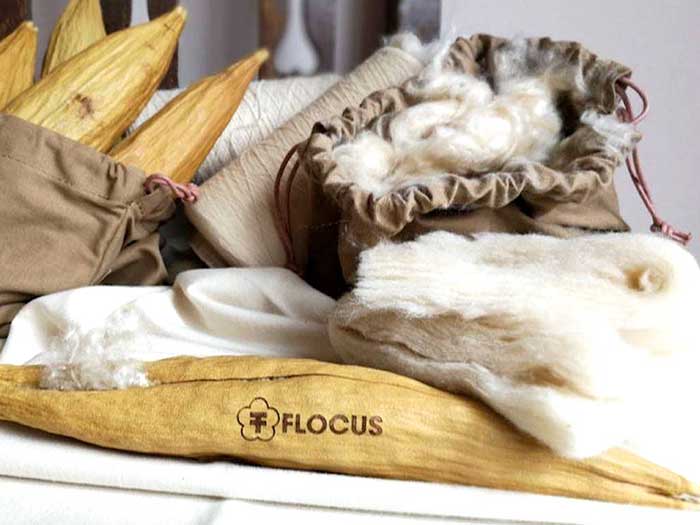
One of such radical ideas could be to make more clothes out of hemp. Hemp fabrication can open the door to more of American’s closets as it is a more sustainable, organic and regenerative agricultural crop and can used to make clothes similar to the ones made with cotton but with less environmental impact. Also, unlike cotton which requires more water, chemical fertilisers and insecticides, hemp grows faster, cultivation is cleaner and naturally resists insects. It also enriches the soil in which it grows by removing pollutants like cadmium through a process called phytoremediation. Little wonder, then it is known as a super plant.
Another advantage of hemp is that it is a more sustainable and environmentally sound alternative to cotton and synthetics. Though oil-based synthetics such as acrylic, polyester, nylon, spandex make up for 62 per cent of worldwide fiber consumption and cotton accounts for 26 per cent of the market, these could be easily replaced with Hemp at a reduced environmental cost. The hemp fiber can be mixed with other fibers to make it more softer and flexible.
Leading brands opening up to hemp
Though hemp’s popularity is marred by its incorrect classification as an illegal drug, hemp fashion has gotten a foothold in niche markets with some of the leading fashion brands like Recreator, Hoodlamb Hemp Tailors, Hempy’s, Jungmaven, Wama underwear, and Tact & Stone flirting with hemp fabrication.
Last September during New York Fashion Week, former Project Runway designer Korto Momoluintroduced a 26-piece collection in sustainable hemp, jute, linen and cork. Momolu developed the collection in partnership with Women Grow, a network which aims to cultivate women leadership within the cannabis industry.
Other early users of hemp are Patagonia which offers an extensive collection of hemp clothing for men, women, and children. Levi’s introduced its first “cottonized hemp” denim jean in collaboration with Outerknown under its Wellthread x Outerknown line earlier this year. In future, more hemp fashion is likely to enter the mainstream and help the industry save itself and world from environmental pollution.
Canopy partners with ZDHC
Canopy and ZDHC are partnering to increase their collaborative work toward taking on the negative impacts of chemical processing, wastewater discharge and raw material sourcing in global viscose production.
The aim is to improve the ecological footprint of the fashion sector on forests, species, waterways. The partnership brings together the two organizations’ expertise on different sustainability issues in the fashion industry. ZDHC’s deep knowledge on toxics pollution will combine Canopy’s 20 years of forest expertise to work toward creating integrated solutions for brands and manufacturers to address the issues related to viscose production.
ZDHC has expertise in chemical processing and wastewater. Since 2011 ZDHC has been working to drive the global implementation of safer chemical management practices in the global textile, apparel, leather and footwear value chain. Last year, ZDHC expanded its content scope to include the production of manmade cellulosic fibers and develop guidelines for wastewater, sludge, waste and air emissions specific to cellulosic production. Over the past six years, Canopy has worked to eliminate the world’s ancient and endangered forests from the production of viscose. The initiative represents 198 clothing brands, retailers and designers collaborating on reaching this goal. Canopy is also working to kickstart new industries that make viscose and fabrics from next-generation sources including recycled clothing and leftover straw.
Yarn units in Pakistan want duty free cotton
Yarn manufacturers in Pakistan want cotton imports to be duty-free. The country needs to import five million cotton bales to achieve textile export targets in the current fiscal year. Duties and taxes on cotton imports comprise 11 per cent of the import price. Industry players say taxes have made this essential import unviable for yarn manufacturers. On the other hand Pakistan needs to import cotton. There has been a significant shortfall in domestic cotton production. This has been badly hit by untimely rains and pest attacks. Pakistan’s cotton production estimates for the year have been revised down by 32 per cent.
Yarn is used by the fabric and cloth-making sectors of the textile industry. Duties and taxes on imports include a three per cent customs duty, a two per cent anti-dumping duty, a five per cent sales tax and a one per cent income tax. Besides, there is a 17 per cent general sales tax on yarn, which is refundable.
Pakistan’s textile exports accounted for 61 per cent of total export proceeds in the first two months of the current fiscal year. They had come in at 58 per cent of the total export proceeds in the previous fiscal year.
US knit fabric revenue up two per cent
In 2018, revenue of the US knit fabric market rose 2.6 per cent. Knit fabric consumption, however, continues to indicate a relatively flat pattern. The pace of growth was the most pronounced in 2014 with an increase of 19 per cent year-on-year. In 2018, knit fabric exports from the US declined by 5.9 per cent against the previous year. Exports peaked in 2013; however, from 2014 to 2018, exports failed to regain their momentum.
Nicaragua, Honduras and Guatemala are the main destinations of knit fabric exports from the US, together accounting for 50 per cent of total exports. Mexico, France, El Salvador, the Dominican Republic, Colombia, Australia, Chile and China together account for a further 33 per cent. Among the main destinations, Australia has experienced the highest growth rate of exports, over the last five-year period, while the other leaders have experienced more modest paces of growth.
The average knit fabric export price over the last five years has increased at an average annual rate of 8.8 per cent. The growth pace was the most rapid in 2014 when the average export price increased by 22 per cent. China, India and Israel are the main suppliers of knit fabric imports to the US, together accounting for 79 per cent of total imports.
Watch out for Turkey at Australian footwear show
Turkey will have a significant presence at International Sourcing Expo and Footwear and Leather Show to be held in Australia, November 12 to 14, 2019. Australia has been identified as a focus region for export by footwear and apparel exporters in Turkey. The Australian market provides a huge potential for Turkey with its high purchasing power and living standards. International Sourcing Expo presents Turkish traders with an unique opportunity to deepen relationships in the Australasian region, and showcase the European quality and standards of Turkish products. Turkey’s has an annual production capacity of 400 million pairs of shoes. It has a reputation for being among the top ten footwear producers in the world. Visitors to the shows can form connections with suppliers from Turkey.
Akinabella is one such company from Turkey, having a daily production capacity of 60,000 pairs. Producing thousands of slipper varieties for men, women and children, Akinabella places great importance on foot health and elegance and exports to some of the world’s largest and most prestigious markets.
International Sourcing Expo and Footwear and Leather Show are expecting around 4,000 trade visitors. There will be more than 700 textile, apparel and footwear exhibitors from countries like China, India, Bangladesh, Pakistan, Thailand, Vietnam, Australia, Malaysia, Singapore, and USA.
Puma re-launches swimwear range
Sportswear company Puma has launched its new swimwear collection, the first since they discontinued the line in 2016. The collection will include swimsuits, bikinis, shorts and even vests. Puma will distribute this new collection starting from February 2020 in Europe, Middle East and Africa.
The company wants to launch these products with a very diverse size range and using sustainable materials. In fact, all the bathing shorts in the collection are created with Repreve polyester made from recycled materials, such as plastic bottles. Sustainable materials and innovation will continue to play an important role in the collection for the future.
The first collection of Puma swimsuits since 2016 will be available in Europe, the Middle East and Africa in selected stores and in its online platform on a global scale starting February 2020.
Nitin Spinners expands market share
Nitin Spinners has a number of initiatives underway for expanding its market share. A leading player in the textile industry, Nitin Spinners commenced its operations as a commodity yarn player and has now expanded its operations to value-added yarns. The company manufactures a range of yarns, including open-end yarns, multi-fold open end yarns, ring spun combed yarns, multi-fold ring spun yarns, compact yarns, fancy slub yarns, core spun yarns, S and Z twist yarns, dyeable cheese cones and organic cotton yarns and blends. Its product range in knitted fabrics includes single jersey, pique structures, inter-lock structures, rib structures and three thread fleece.
The company’s products are applicable for producing apparel and garments, under garments, terry towels, woven fabrics, home furnishings, carpets, denim, industrial textiles and medical textiles, among others. Further, looking forward to a promising growth in the apparel sector, the company has forayed into the finished fabrics segment, thus being equipped to cater to all fabric demands of apparel manufacturers. In the yarn segment, it is expanding its product range by introducing ring spun carded yarns and PC blended yarns. The company has always deployed the latest machines across its manufacturing operations that are automated to reduce the use of unskilled manpower, improve the quality of products and optimise power consumption.
Pakistan working on new textile policy
Pakistan is drawing up a comprehensive textile policy with the aim is to increase the country’s share in world garment exports. Its small and medium sector will be promoted and developed. A task force will focus on facilities and incentives to attract investors to this sector. The task force will also work on the development of genetically-modified cotton seeds and ensure consistency in business policies.
Pakistan’s textile industry has become viable after a gap of 10 years, especially through the provision of regionally competitive energy tariffs. The industry witnessed a record 26 per cent growth in quantitative terms. The industry wants levies on cotton imports removed so that textile exports can go up. Exports fell one per cent during the last fiscal year as a strong negative price effect dominated the positive quantity effect. Exports, however, recovered 2.79 per cent in the July to August period of fiscal 2020. A special energy package was extended early this year to the erstwhile zero-rated industry to provide it a competitive energy tariff to expand and increase exports. The country’s textile exports constitute more than 60 per cent of total exports. Knitwear exports comprise 14.4 per cent of total exports. Readymade garment exports have a share of 12.5 per cent in exports. Bedwear has a 10.7 per cent share in exports.
Milan hosts street wear and sneaker events
Milan, Italy, recently hosted two events focused on street wear and the sneaker business - Plug-Mi and Sneakerness. Plug-Mi debuted in Milan as the first consumer-focused event dedicated to urban culture experience and street style fans. Sneakerness returned to Milan for the second time and recalled sneaker aficionados and resellers ready to buy and sell rare and special edition shoe models. Plug-Mi offers music entertainment and e-sport, while Sneakerness aims to make resellers and clients meet.
Milan is the ideal city for these of kind of events–both for its fame as a fashion city, and, especially for its size, as a draw for a very high number of people. Resellers are now part of the game, a game that has grown.
There is a lot of interest in street wear in Milan. There is also room for such events, not necessarily aimed at rich foreign tourists, who are only willing to buy designer brands. This project serves as an accelerator for new brands, but also for resellers. A B2C initiative like Plug-Mi wants to become a competitor of Pitti Uomo, although an event like Plug-Mi concerns only influencers and gamers. In other words, B2B events like Sneakerness have a clearer identity and purpose.
Fast Retailing’s brand GU’s profits up 75 per cent
GU’s profits have jumped 75 per cent compared to last year. Fast Retailing, based in Japan, runs the better known Uniqlo. GU, an experimental and stylish brand, is Fast Retailing’s second clothing line. This brand sells at lower prices and is aimed at younger customers. GU's projected growth offers a diversified stream of revenue for the Japanese retail giant at a time when the fast fashion industry is struggling. Many teen brands have gone bust after failing to keep up with the shopping habits of younger consumers. Fashion franchises are struggling globally amid changing shopping habits and competition from e-commerce. In this past fiscal year, GU whittled down the number of items and started focusing on mass trends. Items such as oversized tees and marshmallow pumps have done particularly well in the past year.
GU’s success is built on Fast Retailing’s existing strengths, like its expansive supply network and scale. While GU has mostly focused on domestic growth, it’s opened a handful of stores around Asia in cities like Taiwan and Hong Kong. Fast Retailing has managed to turn around a second clothing line into a profit driver. GU accounts for about a tenth of the group’s operating profit.