FW
Denim brands respond to consumer demand for street wear
The denim market in the US is more competitive than ever. The rise of athletic wear has not totally overtaken denim but it has fueled a more competitive market. Denim was scattered across the men’s spring 2020 shows, highlighting colored denim, bleach effects and classic trucker jackets. This not only bodes well for the staying power of denim but it also proves the consumer is still responding to the fabrication. While athleisure themes continue to rise and technical materials are soaring in popularity, there is still a customer that exists for both groups.
Madewell is currently among the top US denim brands. But only 19 per cent of Madewell’s revenue last year came from denim, with the rest coming from its combined other categories of apparel and accessories. Simultaneously, the last few years have seen consumers moving away from denim. Instead, customers, fueled by the rise of street wear, have embraced sweatpants, joggers and athletic leggings instead of jeans.
Some denim brands have adjusted to this shift by expanding their product range. One such brand True Religion known primarily for denim has pivoted to a more street wear inspired mix including other types of bottoms like sweatpants and joggers.
15th Interferliere Shanghai welcomes exhilarating number of visitors
"The 15th edition of Interfilière Shanghai, which concluded on Sept. 27th, 2019, welcomed an exhilarating record numbers of visitors. The 2-day trade fair also welcomed 150 exhibitors, representing 15 countries and regions, with wider range of offerings from fibers, fabrics, lace, accessories, embroidery, OEM & ODM, machinery, textile designers, trend agencies to testing and certification institutions."
The 15th edition of Interfilière Shanghai, which concluded on Sept. 27th, 2019, welcomed an exhilarating record numbers of visitors. The 2-day trade fair also welcomed 150 exhibitors, representing 15 countries and regions, with wider range of offerings from fibers, fabrics, lace, accessories, embroidery, OEM & ODM, machinery, textile designers, trend agencies to testing and certification institutions.
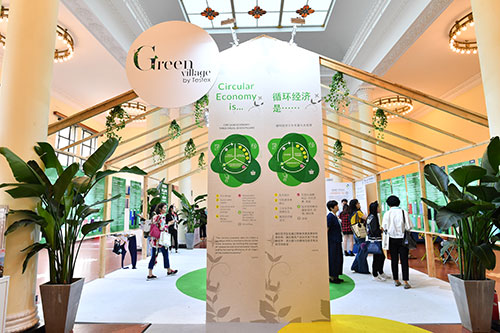
Sustainability continued to be the focal point of the show particularly highlighted by a new area – the Green Village sponsored by Testex, showcasing eco-products and eco -manufacturing processes presented by a selection of suppliers and four Indonesian partner manufacturers who are engaging in a Public Private Partnership project initiated by Eurovet, and developed and funded hand in hand with the German Federal Ministry for Economic Cooperation and Development (BMZ).
Visitors from Mainland China and Hong Kong China continued to top attendance at the show followed by Japan, South Korea and Taiwan Area China. Thailand bagged the sixth position in terms of visitor attendance, while United Stated experienced a slight decrease. Around 50 per cent of these visitors were from brands and the rest comprised of OEM, distributions, design offices, agents and media.
Interfeel Awards applauds material and manufacturing innovations
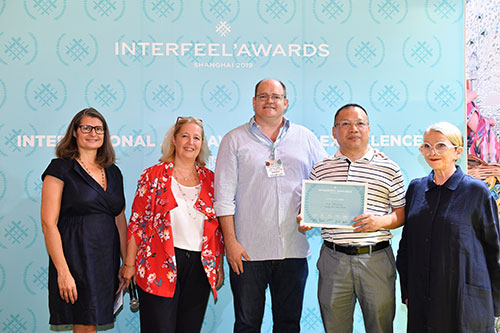
The sixth edition of Interfeel’Awards recognised the excellence and innovation of six material and manufacturing specialists who included Gayou International which was awarded with the Interfeel Award Lace; Asahi Kasei which bagged the Interfeel Award Natural; Seiren which won the Interfeel Award Interfeel’Award Solution Design. Libertytex which bagged the Interfeel’Award Surface Decoration; Hongxin Knitting which won the Interfeel’Award Shapewear and 3T Transfers which bagged the Jury’S Favourite Interfeel’Award.
Accolades for upcoming designer labels
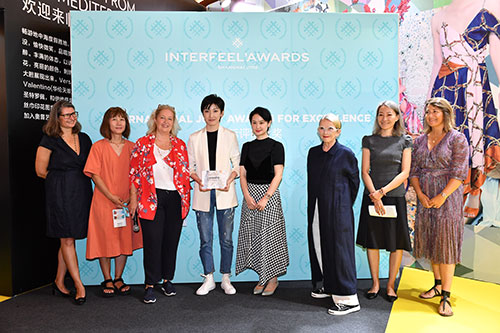
The 2nd edition of Young Label Awarded rewarded the up-and-coming young designer labels from Asia Pacific. On Sept 26th, 2019, the international jury announced the winners of the year which included the Chinese brands The Blender and Yalanka Newlife at the first and second position and Maimia at the third position.
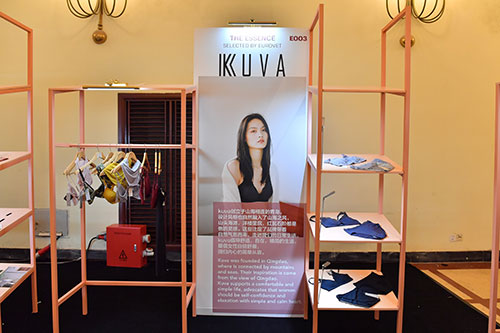
For the very first time, Interfilière Shanghai introduced The Essence, a curated area showcasing impressive collections by five domestic Chinese brands including Neiwai, Crème, Kuva, Coutoss And Sincere Heart. The “It’s Our Era” fashion show generated quite a buzz attracting KOLs, bloggers, media, industry players and the general public.
Pure London launches Pure Body section
In a move designed to create a wider offering across the active and loungewear sectors, leading festival of fashion Pure London will launch Pure Body at the February 2020 show.
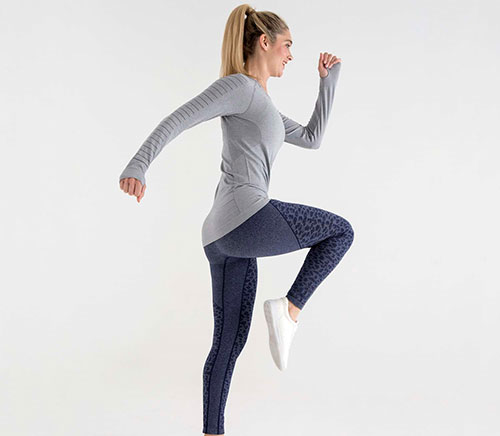
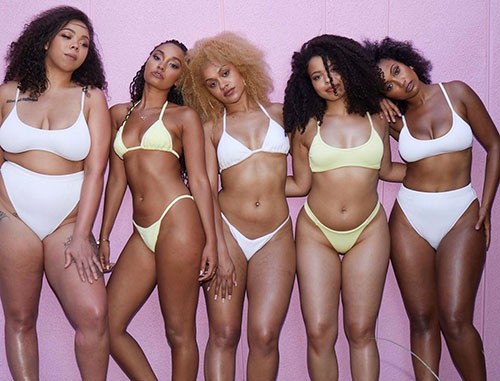
The new section will incorporate athleisure, nightwear, swimwear, lingerie, hosiery and will debut at the next show from February 09 -11, 2020 at Olympia London.
Alongside over 700 brands offering womens wear, menswear, footwear and accessories, young fashion, kids wear in Bubble at Pure London, ethical fashion in Pure Conscious and businesses from across the supply chain in Pure Origin, the February edition will present inspiring and educational content, keynote speakers and trend-led catwalk shows.
Pakistan textile industry to double exports in four years
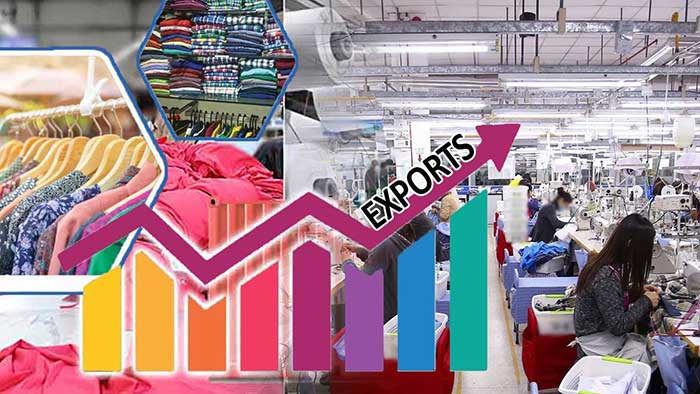
According to All Pakistan Textile Mills Association (APTMA), the textile industry in Pakistan is all poised to double exports in the next four years. It has strong balance sheets and an equity fund of US $ 1 billion earned directly from the international market. These funds can be leveraged to invest at least $ 4 billion in the next year alone.
The industry has achieved a record increase of 26 percent growth in quantitative terms although this did not directly reflect in the dollar amounts due to a substantial worldwide decrease in textile prices. However if this 26 percent increase in quantity had not been achieved the exports would have been less than $ 8.5 billion, the international prices have now recovered.
As per records, profits of the companies were over 5 percent. The companies have posted a turnover of $ 16 billion out of which $ 13.3 billion was exported and $ 2.8 billion were sold in the domestic market. Industry has contributed to the exchequer through income tax of Rs. 40 billion as well as various other indirect taxes and levies of over Rs. 35 billion. The importance of the industry can be assessed from the fact that it also employs over 10 million workers with many more dependents.
Time to set a new paradigm in knitwear production
"Tailored Industry, Co-founded by Alex Tschopp, believes many knitwear brands today are forced to plan lengthy production cycles and undertake astronomically high order quantities which prevents them from launching new collections. Their chronic overproduction also results in vast quantities of unwanted apparel ending up in landfills which further compresses the company’s profit margins."
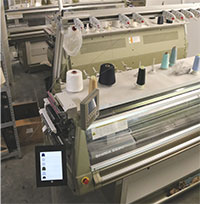 Tailored Industry, Co-founded by Alex Tschopp, believes many knitwear brands today are forced to plan lengthy production cycles and undertake astronomically high order quantities which prevents them from launching new collections. Their chronic overproduction also results in vast quantities of unwanted apparel ending up in landfills which further compresses the company’s profit margins.
The company believes it is time to set a new paradigm in knitwear production by mixing hardware and software for an efficient and flexible output. Tailored Industry already raised $650,000, and plans to further raise another $1or $2 million through seed funding. This will help it to triple its five-person team over the next year by onboarding additional engineers, programmers and operators to keep its 10 Shima Seiki 3D knitting machines running smoothly.
A full-service solution from apparel production
The Brooklyn facility of the company manufactures around 1,000 to 2,000 units of knitwear apparels every month. It produces a range of styles including sweaters, dresses, beanies, cardigans, blazers, tops, scarves and knit ties. It is building a cloud-based manufacturing platform to rapidly restock products “with very low risk in their inventory.
The company’s software facilities include a Shopify store that helps it to review order data for a new products, execute production and ship finished goods to customers in as little as five days. Its high-tech 3D-knitting machines reduce production waste, generating roughly 1 percent of the excess relative to other manufacturing techniques. The company offers a full-service solution for everything from yarn sourcing and knitting to finishing, packing and shipping. Its design template gives its clients new ideas while launching their designs if they don’t already have a style in mind.
Expanding its production model
Tailored has executed a pilot order for Gap Inc.’s new Hill City men’s active band—which could serve as a guinea pig for the Gap umbrella. As the company is being flooded with orders, it now plans to add 12 more knitting machines to its Brooklyn facility. However, its immediate plan includes opening a 100-machine factory in Brooklyn and expanding the lean production model to other close-to-customer regions surrounding the US coastline as it aims to make this location a model factory for other brands to emulate.
Gabriele Maggio appointed new CEO of Stella McCartney
The British luxury group Stella McCartney has appointed as new CEO Gabriele Maggio, former general manager at Moschino and with a professional career in Gucci and Bottega Veneta. He has a long career in the fashion industry. Besides working in Moschino, Maggio has held roles in Gucci and Bottega Venetta, both owned by Kering. He will join his position on October 21 replacing Frederick Lukoff leaving the company in June to join Scotch & Soda as CEO.
Maggio joins a couple of months after the company signed a deal with LVMH. The luxury holding bought a stake of the designer’s company last June after Stella McCartney ended its 15-year-old relationship with Kering. The goal of this partnership is to accelerate Stella McCartney’s worldwide development in terms of business and strategy, while of course remaining faithful to its long-lasting commitment to sustainable and ethical luxury fashion.
As part of the deal, Stella McCartney joined the managing team at LVMH as consultant for Bernard Arnault in terms of sustainability. Arnault appointed that this was a decisive factor for the acquisition.
Stella McCartney held a 50-50 joint venture with Kering until last year, when the designer bought back 100% of the company. The move was also part of Kering divestment in non-strategic businesses to focus on Gucci and fast-growing brands like Saint Laurent and Bottega Veneta.
Indonesia upgrades dyeing machinery
The Indonesian textile industry is upgrading its machinery from upstream to downstream levels. More than 85 per cent of the machines in color processing factories in textiles are more than 30 years old. Production costs are also higher because the machines use a lot of energy. For example, in the use of water, an old dyeing machine has a capacity of ten to one between water and fabric raw materials. In modern machines the ratio of water use can be 4.5: 1. Modern machines use less chemicals. When the water heats up a lot, the water itself requires a lot of energy. The ratio of chemicals that are put into it is higher.
The incentives provided to the processing sector are also focusing on the most crucial problem, namely dyeing. The biggest problem is currently in the dyeing sector. In addition to being inefficient in energy use, the dyeing sector also has to face high waste treatment costs because it is required to be environmentally friendly. More water and chemicals are used, which means that the costs for wastewater treatment plants are also high. Higher the ratio of water to chemicals, higher the costs.
The quality of Indonesian textile products has long been widely recognized by world fashion manufacturers.
Levi Strauss profit down four per cent
For the third quarter Levi Strauss’ profit dropped four per cent. Net revenue rose 3.8 per cent. The denim apparel maker is struggling to grow its wholesale business in the US. Reduced shipments to off-price stores and the impact of a delayed acquisition of a South American distributor drove net revenue down about three per cent in the region, the first fall since the 165-year-old company went public in March. US wholesale was challenged, particularly the legacy department stores and chain stores. Levi’s has been focusing on selling directly to customers through its stores and online than through off-price retailers. Levi’s teamed up with model Chanel Iman and New York Giants player Sterling Shepard during the quarter to create an exclusive drop, launching limited merchandise, for e-commerce retailer Amazon’s fashion line.
Levi Strauss is known for its brands Levi’s, Dockers, Signature by Levi Strauss and Denizen. It is implementing a strategy aimed at significantly reducing overall water use. Its suppliers are already engaged–and deeply invested–in the effort to reduce water use. In water-stressed regions, suppliers have begun to install water-efficient machinery and recycle water. The company will help its suppliers identify worthwhile investments in water projects and, in doing so, help them be successful over the long term.
Twine Solutions launches digital thread dyeing machine
Driven by issues of environmental sustainability and material waste, Israeli digital dyeing start-up Twine Solutions has developed a technology for digitally dyeing threads. The technology penetrates into the fiber to give clothing manufacturers the quality they need.
The Petah Tikva-based company, co-founded by twin brothers Alon and Erez Moshe, offers the clothing industry two digital solutions to increase efficiency, boost sustainability and even enable improved personalisation of garments.
The digital thread dyeing machine itself only requires a normal electricity source and ink bought from the company. Unlike existing polluting methods of fabric dyeing, Twine’s machine does not use water at all, and can produce threads for knitting, embroidery and sewing.
With the ability to digitally dye according to exact customer needs, the system also cuts down the huge quantities of textile waste produced throughout the traditional supply chain. In the US alone, an estimated 12.7 million tonne of textile waste is sent to landfills annually.
Sustainability commitments of top brands a window of future green roadmap
 A new report by the non-profit advocacy organization Stand.Earth lists fashion as a top filthy industry and brands still “wearing last season’s greenwash” rather taking real action against polluting processes within the supply chain.
Besides accusations, the report also includes the commitments made by brands who have signed up to one of several climate change assessment/limiting initiatives, including the Sustainable Apparel Coalition, the UN Fashion Industry Charter for Climate Action and the G7 Fashion Pact. The report goes on to rank these commitments by the likelihood of achieving targets of reducing emissions needed to halt global warming to 1.5 degrees, in line with the UN Paris Agreement.
Carbon emission from brands
Initially, it assesses the commitment of brands to not only reduce their carbon emissions across the entire supply chain and operations but also their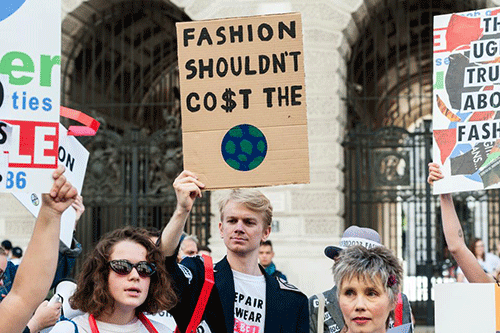 investment in renewable energies. The report declares that 8.1 per cent of global carbon emissions result from the fashion industry and this will increase nearly 60 per cent by 2030, at the current rate of growth, so renewable energy solutions are a critical imperative.
Impact on brands
In terms of relative impact, the brands on the list span Ganni, H&M, and LVMH and Kering groups. Earlier this year, the ‘Pulse of the Fashion Industry’ report (compiled by the Global Fashion Agenda, Boston Consulting Group and The Sustainable Apparel Coalition and released at the Copenhagen Fashion Summit), segmented the fashion industry by global market share. Entry price point fashion brands (e.g. Primark, H&M, and Zara) hold 43 of the global market share while mid-price brands account for 47 per cent. That leaves premium and luxury brands, including those in the LVMH and Kering stables and Ganni, at 10 per cent. Therefore, the ranking does not reveal the relative importance of the commitment of brands according to the impact they can actually have on climate change. So, if Zara, H&M, and Target, for example, managed to reduce their carbon emissions by 30 per cent it will be more than 1000 Ganni’s. The other point worth noting was the vast investment and innovation that garment manufacturers are making. The expansion of Leeds certified sustainable factories in Bangladesh, for example, has come at a huge cost to manufacturers and is entirely independent of brands.
Garment manufacturers on reduction of carbon emission
The also reveals, the largest segments of global fashion industry is actually shaped and driven by large-scale manufacturers serving the entry and mid-price point brands. And the scale at which some of these factories work dwarf the production quantities of entire brands. Pacific Jeans’ for example, has 5 garment factories in Bangladesh with 26,000 staff manufacturing 36 million garments a year for brands including Zara, H&M, Uniqlo and GAP. The climate change initiatives of a manufacturer like this far outweigh those of relatively small brands on this list, like GANT and Eileen Fisher. Soorty a vertical denim manufacturer making up to 6.5 million meters per month in their LEED platinum certified mill is an example of how pioneering sustainability initiatives can be achieved at huge scale. Ranking of the world’s largest garment manufacturers according to their initiatives to reduce carbon emissions and their use of renewable energy sources (along with the brands they manufacture for) would give far more clarity to this report.