FW
Latin America emerges as the new fashion hub
"Attracting Latin American consumers is both easy and difficult at the same time. Central and Southern Americas have different cultures, taste, climate. For instance, Brazil has an incredible passion for bright colors, and has special requests in terms of fits as their body types are very particular."
 Pepe Jeans London was among the first brands to enter the Latin American market. The brand forayed into this market in the early 1990s starting from Mexico and Panama. Today, Latin America accounts for 15 per cent of the company’s overall sales and reaches much higher values in terms of brand equity and penetration.
Pepe Jeans’ most important market is Mexico, where it opened its own direct subsidiary in 2007. It operates through 20 monobrand stores (including full-price and outlet stores), together with other stores opened in partnership with the prestigious department store Palacio de Hierro, and through more than 150 multibrand stores located all over the country. Its second most important markets are Chile and Peru where it manages about 200 shop-in-shops since 2008, while the third most important are Argentina, Colombia and Ecuador.
New stores set up in Brazil
Fashion Box, a leading company in the premium denim segment and owner of the Replay brand, has opened five monobrand stores and two outlets between April 2017 and December 2018 in Brazil. Replay Jeans do Brasil, the company through which Fashion Box operates, acts through the wholesale channel and distributes Replay to 200 multibrand stores.
Replay wants to further expand in this area by growing in Paraguay, a market where the brand is already sold through a store in Asuncion and a shop-in-shop in the Ciudad del Este department store.
Sharing a culture for denims
Attracting Latin American consumers is both easy and difficult at the same time. Central and Southern Americas have different cultures, taste, climate. For instance, Brazil has an incredible passion for bright colors, and has special requests in terms of fits as their body types are very particular.
However, all Latin American countries share a great culture for jeans and denim and know much about fabrics and treatments as the local industry is active and a myriad of brands exists. Each country has locally made brands offered at a profitable price-quality ratio and are very keen on products’ quality and care.
Impulsive shoppers with varied body types
The Latin American consumers do not fit into one box. They have all body types; short, tall, slim, curvy and similar ones. Their taste in clothes also change according to regions as climate also plays a role in the way these consumers shop.
Latin American consumers are mostly impulsive shoppers. They shop for unique items or love to buy if there is a promotion or in-store event that creates more of a customer experience. Although brand-oriented consumers in these countries are slowly getting more product-educated as they are starting to analyze quality versus price.
Trends at affordable rates
As the Latin American market is rich with good quality products, brands need to offer the trendiest clothes at affordable rates maintaining the price-quality ratio. For this they have to offer both product types keeping in mind the emotional relation between a local consumer and an appealing global brand’s offer. Replay produces part of its collections in Colombia and Brazil, but only for some very basic products and only after approval from the mother company. The rest of its collections are produced in Italy.
Marketing and communication also needs to be handled accurately. To achieve success in both Latin and Southern American markets, Guess has chosen Latin Grammy Award winner music star J Balvin. Also Replay’s long-time partnership with Paris Saint-Germain’s champion and captain of the Brazilian national team, Neymar Jr., continues to be fruitful.
Global accessories market growing at four per cent
The global accessories market is rising at a compound annual growth rate of 4.6 per cent. Among different types of products offered in the market, handkerchiefs currently secure a nearly 14 per cent share in terms of revenue sales. Other segments are hats, gloves, neckties, jewelry, eyewear, scarves, handbags and belts. By demographics, the accessories market is segregated into men’s, women’s, and children’s. Among these, women’s segment could become highly attractive in the global accessories market.
In sales channel, the global accessories market is bifurcated into online, specialty stores, franchise outlets, and modern trade. Among these, modern trade is envisaged to account for a larger share of the global accessories market in the near future. It is responsible for selling a colossal volume of apparel accessories each year. By price, the accessories market is divided into super-premium, premium, mid, and economy. Economically priced products account for a 39 per cent share of the global accessories market.
The market may witness a decline in sales in terms of both value and volume. Influx of counterfeit products and the ongoing economic concerns in some countries could hamper demand significantly. Moreover fast fashion companies are expected to pose some threat to established players in the accessories market.
Morocco can be gateway for Indian apparel exports
Morocco could serve as a gateway for India’s exports to Europe, West Africa and the US. The country has trade treaties with several countries. Morocco has free trade agreements (FTA) with 55 countries. It is the only African country to have an FTA with the US. Morocco is now the largest foreign investor in India’s fertiliser sector. India sources a large chunk of its rock phosphates and phosphoric acid requirements for its fertiliser industry from Morocco, the world’s biggest phosphate exporter.
Although bilateral trade volumes hover around the $1.5 billion mark, the two countries decided to elevate bilateral ties to a strategic partnership in 2015. Morocco has old links with India dating back to the Delhi Sultanate. Morocco is a member of the Arab League, the Union for the Mediterranean and the African Union and has the fifth largest economy of Africa.
In its drive to integrate Morocco further in the global value chain, the country has also joined the G20 partnership with Africa initiative that aims at promoting private investment, particularly in infrastructure, for Africa’s sustainable economic development. Morocco is the seventh biggest exporter of apparel to the EU. Trousers and denim account for the largest share of exports followed by shirts and dresses.
Milano Unica Shanghai showcases Italian excellence in textile production
The 15th edition of Milano Unica Shanghai showcased Italian excellence in textile production to the Asian market. Around 46 exhibitors showcased their S/S 2020 collections at the event with agreat interest shown by the Asian public. The number of buyers increased by 20 per cent over previous year. They included buyers from other Asian countries, particularly South Korea and Japan, but also India, the Russian Federation and Saudi Arabia
The event was held in collaboration with the ICE Agency with the support of the Ministry of Economic Development and longtime sponsors, Sistema Moda Italia and Banca Sella.
Indian brands/retailers increase sourcing from Bangladesh
Bangladesh’s apparel exports to India are up by 115 per cent. Readymade garments constitute around 80 per cent of Bangladesh’s exports. The hiking of the import duty on 328 textile products, which is not applicable to Bangladesh, and the withdrawal of the 12 per cent countervailing duty on textiles after the introduction of GST helped increase the exports of readymade garments from Bangladesh to India.
Retailers like Reliance, Future Group, Aditya Birla Retail, Arvind Retail, Woodland are aggressively increasing their sourcing from Bangladesh. Reliance Retail sourced 60 lakh pieces of garments from Bangladesh last year. The target for Reliance Retail is to increase the same to one crore pieces this year. The company is looking for manufacturers that can offer 20 per cent of their capacity with over 600 machines. Only 15 per cent of Reliance Retail’s current sourcing — mainly in shirts, bottoms and fashion knits--comes from Bangladesh.
The wide opportunities Bangladesh presents to Indian retailers are largely underutilised. For some retailers, the key product is bottom wear. However, shirts, jackets, knits, suits and lingerie are potential products which too can be sourced very competitively from Bangladesh. Today Bangladesh is second only to China in the global apparel sourcing business matrix. After capturing the markets of the west, the country is looking at developing new markets, among which India is the most important.
Burberry pledges to eliminate plastic by 2025.
The fashion giant will ensure that all of its future plastic packaging is either reusable, recyclable or compostable. The British company has already swapped plastic lamination on its retail bags and poly bags for garment covers - a move which has reduced the use of 29 tons of plastic.
By the end of 2019, Burberry also plans to give shoppers the opportunity to recycle their unwanted hangers in a take-back scheme. Last year, the luxury fashion house graced the headlines after famously torching clothing, accessories and perfume in a bid to protect the brand from counterfeiters. After widespread criticism, Burberry pledged to reuse, upcycle, donate or recycle all unsaleable products in the future. The required changes to its third-party distribution network are expected to accelerate.
Burberry is undergoing a major transformation, with a new designer, a new focus on ultra-luxury, a new logo and a change to the way it drops its product. The company has seen a successful launch of its new go-to-market model. The brand’s strategic focus is on igniting brand heat — starting with influencers and key opinion leaders, which will cascade to all consumers. But shifting consumer perception, transitioning product, and transforming the distribution will take time.
Bangalore has silk testing centers
The Silk Mark Organisation of India (SMOI) has set up nine testing centers in prime retail hubs in Bangalore to ensure silk quality. The organisation has introduced Silk Mark, a system to quickly and conveniently test the purity of silk by trained personnel. Consumers can benefit from purity tests like flame test and microscopic test, and an invoice and a sample test report are given after the test. SMOI is a registered society under the Karnataka Society Act 1960. The Silk Mark labels are in the form of paper hangtags and sew-in labels.
The Central Silk Board has developed new groups of silkworm seeds of mulberry and Vanya silk. These silkworm groups are expected to enhance the income of the farmers with their improved productivity and quality. This silkworm range will aid tribal farmers belonging to various parts of the country such as Jharkhand, Chattisgarh, West Bengal, Maharashtra, Madhya Pradesh and Uttar Pradesh as they can get 52 kilograms of cocoons per 100 disease free layings.
Additionally, Multivoltine x Bivoltine mulberry (PM x FC2), a hybrid group of silkworm, can make 60 kilograms per 100 dfls. This group of silkworms is said to be more productive than the earlier PM x CSR. The high-quality silk and significant egg recovery make this race more appropriate for farmers.
Australia's fashion brands close amidst rising competition
Australian fashion brands have started closing operations amid fierce competition from global retailers and e-commerce sites, as well as from consumers feeling the squeeze of the country's slowing economy. Menswear retailer Roger David closed the last of its 57 stores in December last year. Womenswear retailer David Lawrence was eventually acquired by department store operator Myer, while fund manager and major shareholder Will Vicars increased his stake in accessories brand Oroton Group.
Increasing number of e-tailers is also weighing on brands that rely heavily on brick-and-mortar sales, pressured further by the opening of Amazon's local operations. According to data from state-run Australia Post, the country’s e-commerce market totaled AU$21.3 billion in 2017, increasing from 18.7 per cent from a year earlier and surpassing overall retailers' 2.5 per cent on-year growth.
Brands, manufacturers looking at a closed loop chain
Some forward-thinking brands are aiming at creating a closed-loop textile supply chain. To bring about a closed-loop supply chain, industry players across the world are finding innovative ways to recycle and reuse, and some are even creating entirely new fibers and textiles from eco-friendly — and often unexpected — materials. To create a more sustainable process, some textile companies are developing alternative fibers from waste products, finding innovative ways to recycle fibers, and even fermenting agricultural products to make new materials. In Germany, Qmilk turns spoiled milk into fabric by drying out the milk and making it into a dough, from which a thin protein-based fiber is created. An Italian company is using citrus byproducts to create a spinnable fabric. In California and Japan, companies are working with sugar, water, salts, and yeast to make fermented spider silk thread. Pineapple leaves from plantations in the Philippines are used as faux leather.
Besides expanding the range of materials, textile suppliers are also looking at o reducing waste by recycling fibers. Evrnu, for example, uses cotton garment waste to make a fine fiber with a process using 98 percent less water and 90 percent less carbon emissions than cotton and polyester respectively. Similarly, Circular Systems, a starup, is taking factory floor scraps to turn them into yarn instead of burning them. This increases resource efficiency, by 20 per cent of textiles going into the factory end up in the cutting room floor. Fabric production has a big footprint. Overall, the world produces more than a 100 million tons of fiber a year. Millions of tons of new clothing, footwear, sheets, towels, and other products are being produced annually. The United States sends approximately 21 billion pounds of textile waste to landfills yearly.
Despite difficulties, China continues to lead world textile & apparel market
"Year 2018 was a landmark in the history of global apparel manufacturing as China’s dominance declined due to rising labor costs, slower economy and the government’s desire to decrease exports and increase production for domestic consumption. However, China will continue to remain top supplier to the US for some time even though growth would be limited to single digits instead of high-single digit or double digit annual percentages."
 Year 2018 was a landmark in the history of global apparel manufacturing as China’s dominance declined due to rising labor costs, slower economy and the government’s desire to decrease exports and increase production for domestic consumption. However, China will continue to remain top supplier to the US for some time even though growth would be limited to single digits instead of high-single digit or double digit annual percentages.
Apparel import sees marginal increase
According to the US Commerce Department’s Office of Textiles & Apparel (OTEXA), apparel imports by the US from China increased a meager 1.34 per cent in 2018 to reach $27.37 billion. Imports from Vietnam increased 5.78 per cent year-on-year to $12.22 billion, shipments from Bangladesh increased 6.65 per cent to $5.5 billion, imports from India rose by 3.42 per cent to $3.81 billion while Cambodia’s shipments increased 12.19 per cent for the year to $2.42 billion. US apparel imports from the world increased by 3.38 per cent in 2018 to $82.88 billion. Exports increased 6.38 per cent to $6.08 million, led by knitwear and bottoms.
Other countries gain more than China
A recent study by the United Nations Conference on Trade and Development (UNCTAD) shows, trade war benefited other countries rather than protecting the domestic industries in the US or China. The study further estimated, out of $250 billion Chinese exports, only 12 per cent will be retained by Chinese firms, and 6 per cent by US firms. Similarly, of the approximately $110 billion in US exports subject to China’s retaliatory tariffs, roughly 85 per cent will be taken by companies in other countries, while US firms will retain less than 10 per cent and Chinese companies will keep only 5 per cent.
While exports of countries like Vietnam, Cambodia, India and Bangladesh to the US will continue to grow, they are likely to be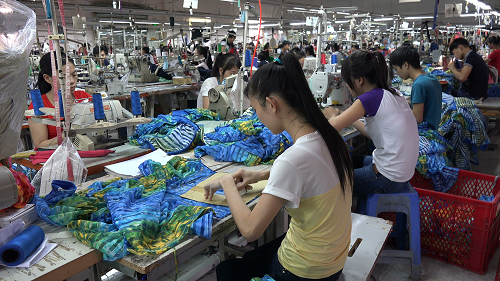 plagued by issues like labor and corruption as in the case of Brookfield Associates or protectionist measures or capacity problems like India or Vietnam.
Duty-free manufacturing by the Western Hemisphere
Some sourcing managers are also worried about the suspension of duty-free status to Cambodia by the European Union over its labor and human rights issues. Meanwhile Central America has witnessed steady growth in recent times with Honduras attracting substantial demand. According to Hughes, the Western Hemisphere provides immense opportunity for “duty free, closer to home” manufacturing, including Mexico and the Central American Free Trade Agreement (CAFTA) countries and Colombia.
Imports increase 5.13 per cent
Imports from all CAFTA countries increased 5.13 per cent for the year to $8.34 billion. US yarn exports to the CAFTA countries increased 5.06 per cent to $1.68 billion, while fabric exports increased by 6.05 percent to $962.7 million.
Imports from Mexico declined 5.76 per cent in 2018 to $3.36 billion. This decline could be attributed to the uncertainty of its duty-free status as the US, Mexico and Canada were renegotiated the North American Free Trade Agreement, which resulted in the trilateral US-Mexico-Canada-agreement signed in November and pending legislative approval. African countries like Ethiopia, Lesotho, Mauritius and Ghana also continue to grow on account of increased investment in African factories and infrastructure from US and Chinese companies. Thus, though certain countries witnessed prominent increases in apparel business, China continues to dominate with its quality products and timely delivery.