FW
Jakob Müller AG successfully enforced interim injunctions against design patent infringements
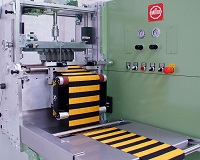 ITMA ASIA +CITME 2018 is China’s most important textile event. The sixth edition of the combined show has been held from 15 to 19 October 2018 at the new National Exhibition and Convention Centre (NECC) in Shanghai.
The subsidiary corporation COMEZ International s.r.l. of Switzerland based Jakob Müller AG, has at the on-site IPR Office successfully applied for interim injunctions to stop design patent infringements against Chinese manufacturers DKY Machinery Co. Ltd, Huibang Machine (Yingkou) Co. Ltd, and Dah Heer Industrial Co. Ltd.
On the first day of the fair, Jakob Müller found that the machines of the three companies showed a clear violation of COMEZ’s intellectual property without Jakob Müller’s or COMEZ’s permission. The patentee at once filed a complaint to the IPR Office against these companies, to prohibit the exhibition of the infringing systems.
The IPR Office served the complaint materials to three companies in the morning of the second day and set a time limit of 24 hours for a counterstatement to the three infringers. One of them, Dah Heer, removed the infringing system actively, and the others, DKY and Huibang, submitted a counterstatement. After the IPR Office assessed these statements and evaluated the possibility of the infringements, the IPR Office required them to remove the systems concerned in the patent on 17th October 2018. The systems concerned were removed by DKY and Huibang and not exhibited any more until the end of the fair.
Bernhard Engesser thanks the responsible patent lawyers of the intellectual property rights office and emphasizes that Jakob Müller AG will take a high priority against further patent infringements. Jakob Müller AG and its relevant companies reserve the right to take further civil actions against the respective companies.
Switzerland: the cradle of innovation
With Swiss textile machinery companies, the ‘inventor gene’ leads to added value for customers
Over the centuries, the sheer innovative spirit of the Swiss has been demonstrated many times through inventions spanning various fields of human experience. Their impact on the global textile industry has been among the most notable, with continuous and significant developments. Swiss textile machinery companies have been at the core of this naturally-evolving tradition of inventiveness. Today, the producers of machines and components and service providers in Swiss Textlile Machinery sustain that heritage by a commitment to ongoing innovation that will influence the textile industry worldwide in future.
A single click and an application starts, another one and a file opens, or closes... Nowadays, hardly anyone remembers how we managed before the mouse made computer interactions so easy, quick and intuitive. In fact, it was a Swiss, Daniel Borel, whose inventiveness first brought the pc mouse to series production in 1982, launching a mass-market driver of progress that has been literally life-changing.
India asks China to reduce tariffs
India wants tariff concessions for its exports to China. Among the exports are naphtha, bovine leather, shrimps and cotton yarn. Other products eligible for concessions include frozen, shelled shrimps, broken rice, fresh grapes, zinc, aluminium oxide and hydrocarbons like paraxylene, polyethylene, polypropylene and benzene.
The reason is that China has granted deep duty cuts to India’s competitors including Peru, Pakistan, Australia, South Korea and Asean countries in free trade agreements with them, which has displaced some of India’s exports. The Asia Pacific Trade Agreement is the only operational trade pact linking India and China. South Korea, Bangladesh, Lao PDR and Sri Lanka are also APTA members.
For instance, India’s exports of naphtha, a major industrial fuel, to China are subject to a six per cent duty with a ten per cent margin of preference under APTA. This is the highest duty for any of China’s FTA partners as Asean countries pay zero, Australia 2.4 per cent and South Korea 4.8 per cent. India’s exports of frozen shrimp and prawns form a small share in the Chinese market due to the absence of tariff concessions. Asean members face zero per cent tariff in the Chinese market and thereby account for a six per cent share in that country’s imports of these products.
The free economic zones coming up in Egypt to boost textiles industry
The world’s first specialized free zone for the textile industry is underway in Egypt. It covers an area of 2.2 million sq. mts. Free zones have a great role in the Egyptian economy. They recorded exports worth $14.7 billion from January to September 30, 2018, with an increase of $1.1 billion compared to the same period in 2017.
The textile industry is facing global changes, one of which is transferring the focus of this industry from the east to other regions in the world. And Egypt wants to take advantage of the opportunity and attract textile investments. The Middle East including Egypt has many advantages, among which are geographical location, consumer market, free trade agreements with COMESA, and availability of labor and a suitable investment atmosphere.
There are several free economic zones in Egypt. Free zone companies in Egypt enjoy a lifetime exemption from income tax, sales tax, import, and export duties. Egypt free zone companies with high electrical consumption (steel, cement, and fertilizers) are subject to 20 per cent corporate income tax on their net profits.
The country’s various zones have a wide range of different sector focuses. The Media Public Free Zone hosts radio and television companies. The Shebin El Kom Public Free Zone is mostly populated by the textile spinning and weaving industry.
American Apparel makes a comeback in Canadian avatar
One of America's most controversial clothing brands is making a comeback, but ditching some of its signature traits. American Apparel, founded in 1989, was known for selling basics, including its popular unisex hoodies, bodysuits, tights and leggings.
However, it came under criticism with its provocative advertising that often featured scantily clad women in suggestive poses. In the Me Too era, American Apparel is being careful about its portrayal of women. The brand still aims to be sexy, but gone are the ads that may have made women feel vulnerable, uncomfortable or like the camera is looking down at them.
The re-emergence of American Apparel comes at the hands of Gildan Activewear, a Canada-based manufacturer that won an auction to buy American Apparel, after it entered bankruptcy protection. So this time the brand will be Canadian-owned.
American Apparel relaunched in the US in August 2017 by operating a test store that it will use to study the brand’s traction and potentially pave the way for a return to physical retail. To stay competitive, American Apparel will standardize and expand its sizing to include extra large pieces, lower its prices by up to 23 per cent and offer its previous hits including disco pants, high-waisted jeans and bodysuits.
Myanmar hopes EU relents on duty free trade preferences
Myanmar would like the EU to continue with the trade preferences. Myanmar garment manufacturers say the loss of duty-free export trade preferences could put more than 4,00,000 jobs at risk and badly damage the country’s economy by depriving it of its largest source of foreign exchange income.
The country says it is progressing with the reforms and needs the EU’s support for further reforms. The EU says before taking a decision to withdraw the preferences it would investigate human rights violations, and whether Myanmar had committed labor rights violations and followed international law and regulations.
The value of Myanmar’s garment exports to the EU has significantly increased from 2013 to 2017. The EU has become Myanmar’s largest trade partner for garments, purchasing more than 47 per cent of the products. Since 2013, the EU has lifted duties on goods from Myanmar under the EBA’s zero-tariff import regime. Nearly 70 per cent of Myanmar’s exports go to EU countries, and more than half of these are garments.
As a result of the opening of the EU market, the number of factory workers in Myanmar has grown from 2,40,000 in 2012 to 4,50,000, and the garment sector is the most labor intensive of the country’s major industries.
Huge benefits for Vietnam from EU FTA likely
The free trade agreement with the EU is expected to benefit Vietnam by expanding export markets and engaging deeper into the global value chain. Negotiations for the deal have ended after six years. With a commitment to cutting down import taxes by over 99 per cent, the deal will bring about great chances for Vietnamese firms to strengthen exports, especially in products Vietnam holds strengths in, such as garments and textiles, footwear, agro-fishery, and timber.
In particular, products that have never been sold in the EU due to tariff barriers will be able to access the market with a competitive price. The FTA will help increase Vietnam’s export revenue by four per cent to six per cent a year in the ten years after it takes effect. This is true especially for the garment and textile sector.
As Vietnam’s and the EU’s export products and economic structures are supplementary without direct competition, the benefit from the deal is huge. However, along with the opportunities, Vietnam will also face some challenges from the FTA from 2019 onwards. Enterprises who wish to export goods to the EU will have to show certificates of origin for their products in order to enjoy the Generalised System of Preferences.
Indian garment exports down 26 per cent
Garment exports slumped by 26 per cent in September. The country’s exporters are facing stiff competition from countries such as Bangladesh, Sri Lanka, Vietnam, Cambodia and Ethiopia. Many of these have a duty advantage in major European markets compared to Indian manufacturers because India does not have a free trade agreement with the European Union. Indian products, therefore, get outpriced and lose out on the market.
Overall, India’s readymade garment exports in April-September 2018 fell 10.66 per cent as compared to the corresponding period of the previous year. Exports from Bangladesh have grown by 15 per cent. Compared to India, products manufactured in Bangladesh are ten per cent cheaper. Also, Bangladesh has a free trade agreement with the EU. But there is a duty of ten per cent on readymade garments manufactured in India.
Apparel exporters, particularly from Punjab, Haryana and Uttar Pradesh, face high input costs like labor, transportation and processing. In fact manufacturers based in the northern states are not even able to compete with the Tirupur cluster in Tamil Nadu because of costs. Textile clusters in the three northern states employ over two million workers. Around 200 textile exporters are based out of Punjab and Haryana alone.
Spain’s Jeanologia works on five zero finishes
Jeanologia has introduced two new collections, 5.Zero indigo & vintage and 5.Zero all blacks. The five zero finishes are: zero discharge, zero manual scrapping, zero potassium permanganate spray, zero stone washing and zero bleach.
The collection 5.Zero indigo & vintage is inspired by the vintage of the ’80s, ’90s and 2000s and shows how, through the use of Jeanologia’s laser, it is possible to create wear and other effects from the era, saving water and considerably reducing the use of chemicals and energy. The collection 5.Zero all blacks shows the benefits of the eco-technology for developing finishes on black denim. Combining the use of laser and G2 ozone technology the white effect in the used area is enhanced, avoiding the use of potassium permanganate spray.
These technological solutions aim at making the industry fully sustainable, maintaining quality, product look and the rationalization of production methods. The company, based in Spain, feels it’s possible to achieve this with the combined use of its technologies like laser, ozone and e-Flow, along with the right fabric selection, and the light sensitive fabric tool.
Since 1993, Jeanologi’s mission has been to improve garment finishing through its technological knowhow.
Garmon launches new textile dyes
Garmon Chemicals has launched OVO, a new line of textile dyes. These offer significant advantages both in terms of sustainability and saving of resources when compared to reactive dyes.
The line includes 22 direct dyes that inhibit extraordinary color effects. These dyes have excellent dischargeability, with the ability to achieve superior results without any aesthetic compromises. Furthermore, these dyes are used in the cationised dyeing processes on garments, where surface deposition of the color on fabric is required.
The new project uses only five process steps instead of eight. This leads to lower quantity and higher performance of both dyes and auxiliaries, and also allows for much easier corrections of final shades.
Garmon Chemicals, founded in 1982, is a customer-centric R&D powerhouse that is geared towards innovation with the goal of guiding change in the garment industry. The effort that the company dedicates to product innovation and constant research for eco-centric solutions is supported by the unmatched Garmon expertise in anticipating its customers’ needs.
Along with the new line of dyes, Garmon has also launched its enhanced Stretch Care Collection that includes Elam Sense and Fortres Flex. Elam Sense is the softener for high-quality finishes on super and hyper stretch fabrics, completely aminoethyl-ethanolamine free. Fortres Flex is a dispersing agent that performs at its best even at low temperatures.