FW
A 3-in-1 extravaganza at the The Mercedes Benz Fashion Week
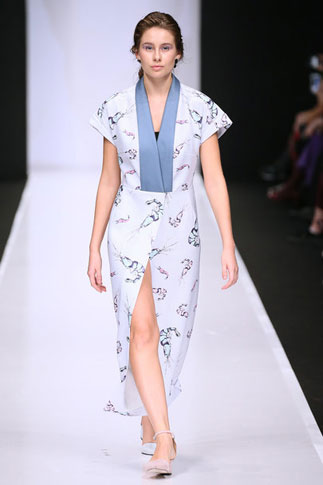
Around 175 Russian and foreign designers presented their new collections of clothing and accessories at the just concluded Mercedes-Benz Fashion Week Russia. These included KETIone, Dokuchaeva, 21Dot12, Arut MSCW, NVIDIA x Snezhana NYС, etc. Some of the shows during this season were held at Alena Akhmadullina – Museum of Moscow, Alexander Arutyunov – new location at Museum of Fashion, Gostiny Dvor.

Latest collections by Moscow designers at Futurum Moscow
Futurum Moscow, held on October 12 in the Museum of Moscow, presented the latest collections by emerging Moscow designers’ brands and artists. The event included the shows Lumiér Garson by Jean Rudoff, Volchok, Otocyon, Hovanskie, Citizen_A, Odor, Daria Lukash, Seti, Maria Iliynishna, FactiveFace, Alkhanashvili, Be.Li.Ve, Dinara.Murasova., Not Today, kruzhok, SVARKA, six one six. Vasilisa Vetrova, will present her show, too.
A special private show by Slava Zaitsev showcased his historical project Heritage: collection of 1997, Russian Seasons in Paris, dedicated to Christian Dior’s New Look.

Pop-up shows
The event also included pop-up Shops by Manege: six one six, Angela Le Bourgoise, Britanart, Dokuchaeva, Fakoshima, Intelligentsia , Lala Laguna, Leather Like Wood, Lumiér Garson by Jean Rudoff, Mad Daisy, Marusia Nizovtsova , Muus Lena Maksimova, N1 Jewelry, Neuroses Jewelry, Noel Concept, Oriori_Studio, Otocyon, Popmolly, Ranzel.Store, Rare, Scapegoat_404, Sniff, Spunky Studio, Tamta Shindelishvili, Varvara Zenina. etc.
A short-term designer pop-up shop was opened from October 13-16, 2018 where 70 Russian designers showcased their clothing and accessories, gowns, sweatshirts, bags, and fashion jewelry.
During the Pop-up Shop, public lectures were read by Igor Andreyev (ex-editor of Numero, founder of Inside project), Dmitry Stepanov (New Product Development Director, Yandex), and others. Trendy DJs and music bands created the atmosphere at Pop-up Shop: Misha Hillary, Arut Mscw, Zakharov Andrey, Abraam Ft. Mc Koshka, Shoo, and Sattva. At Pop-up Shop, the global bestseller This is not a f*cking street style book was presented by its author, Adam Katz Sinding, along with the book signing.
Spreading his fragrance
A special guest of Mercedes-Benz Fashion Week Russia included Christophe Laudamiel, the creator of fragrance bestsellers Polo Blue for Men Ralph Lauren and Fierce Abercrombie & Fitch, and other scents for the likes of Beyoncé and Helena Christensen, as well as well-known brands like Tom Ford, Burberry, Michael Kors, Tommy Hilfiger, etc.

Social campaign for pregnant models
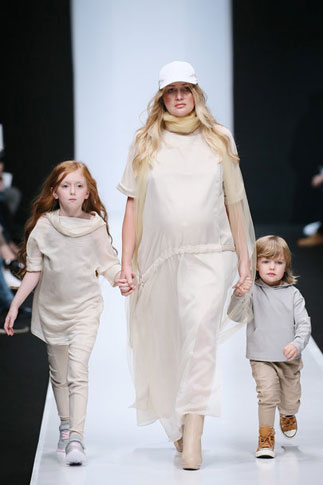
Mercedes-Benz Fashion Week Russia alongwith the Ministry of Healthcare of Russia launched a social campaign 09.giveBIRTH to Fashion where 13 Russian fashion designers prepared special looks for pregnant models. Among these included Igor Gulyaev, Yasya Minochkina, Oksana Fedorova, Julia Dalakian , Angela Le Bourgeois, Malina Fashion, Lena Karnauhova, Yuliakosyak, Yakubowitch, LiaGorg, Zabegina, Naira Arutyunian, Mad Daisy.
I-Inclusive
Mercedes-Benz presented the I-Inclusive show by Ksenia Bezuglova which focused in designing functional modern attire and accessories for people with disabilities.

DHL showcases capsule collection
DHL pieces were showcased from the sensational capsule collection Vetements x DHL. These included branded polo, gowns, baseball caps, socks, and iconic yellow DHL T-shirts. The automotive catwalk star of Mercedes-Benz Fashion Week Russia was the the new S-class sedan.
The title partner of the Fashion Week was Mercedes-Benz. Its MBFW Russia partners included IWC Schaffhausen, Harman and glo as the Official partners, L’Oréal Professionnel as the Official Stylist, Mary Kay as Official Make-Up Artists, DHL as Official logistics partner and Metropol as the Official hotel.

Positive outlook for clothing, fashion market in 2019 despite tariff wars
"The results reflected optimistic views on sales prospects over the next 12 months with exhibitors being more upbeat than buyers. Around 87 per cent of buyers and 91 per cent exhibitors expected sales to remain steady or increase over the next 12 months. Around 58 per cent of buyers expected the retail price of their products to remain unchanged in 2019, while 31 per cent expected an increase in the retail price and 11 per cent foresaw a decrease."
 Hong Kong Trade Development Council (HKTDC), during the course of Centerstage, a fashion brand-promotion, launch platform and trade exhibition conducted face-to-face interviews with 234 buyers and 72 exhibitors to gain an overview of the current market prospects, new product trends and latest e-tailing developments.
Positive sales prospects for next 12 months
The results reflected optimistic views on sales prospects over the next 12 months with exhibitors being more upbeat than buyers. Around 87 per cent of buyers and 91 per cent exhibitors expected sales to remain steady or increase over the next 12 months. Around 58 per cent of buyers expected the retail price of their products to remain unchanged in 2019, while 31 per cent expected an increase in the retail price and 11 per cent foresaw a decrease.
Around 38 per cent of all exhibitors expected the FOB selling price of their products to increase compared to 17 per cent in the 2017 survey, while a comparatively small number of exhibitors expected it to decrease to 8 per cent as against 13 per cent last year.
Around 45 per cent buyers expected sourcing prices and production costs to increase, while 51 per cent anticipated it to remain unchanged. Only 4 per cent, however, predicted a decrease in costs.
Japan and Taiwan lead the way
In terms of market potential, Japan and Taiwan led with nearly 60 per cent of exhibitors opting for these countries as having the highest growth potential among their traditional markets, followed by Hong Kong, South Korea, Australia & Pacific Islands. Chinese Mainland continued to receive the biggest endorsement from the exhibitors as the major emerging market, followed by ASEAN countries and the Middle East.
Around 68 per cent buyers and 71 per cent exhibitors did not expect any positive impact of the China-US trade spat on the export performance of their products. While around 30 per cent of buyers and exhibitors expected the war to affect them negatively. The relatively high neutrality perhaps reflects the fact that apparel and made-up textiles (of HS chapters 61 through 63) are not included in any of the currently effective US 301 tariff lists.
Optimal Product Development Strategies
Around 47 per cent of respondents backed ‘crossover/joint promotions’ as the most prevalent product development strategy in the coming year. This was followed by ‘celebrity or key opinion leader-endorsed fashion collections’ and ‘limited edition collections’. Among buyers, brand-licensing products’ and ‘collections made from new materials’ emerged as next most important strategies. Exhibitors, however, considered collections made from new materials and sustainable fashion as their most favored product development strategies for 2019.
E-commerce on the rise
On an average, e-tailing accounted for 40 per cent of the total sales revenue of fashion companies with an e-commerce presence. Around 29 per cent of the companies not engaged in e-tailing, or are planning to start selling online within the next two years. While 71 per cent companies currently engaged in e-tailing or are planning to, perceived the channel to be suitable for selling women’s wear, followed by fashion jewellery (27 per cent), bags (24 per cent) and menswear (18 per cent). Of those companies currently engaged in e-tailing, 61 per cent sourced from Mainland China, followed by Hong Kong (32 per cent), Japan (19 per cent), South Korea (14 per cent) and the ASEAN countries (14 per cent).
Nike Circular Innovation Challenge receives over 600 applications
Sportswear giant Nike received over 600 applications from 58 countries for its Circular Innovation Challenge, which challenged designers, engineers and scientists to close the loop in footwear waste. Submissions had been invited to send ideas on what can be made from footwear material waste and how the footwear recycling process can be improved to ensure that higher quality, more versatile resources are created from footwear-related waste.
Selected as finalists have been invited to create either new products using Nike Grind, a palette of premium materials (rubber, foam, fibre, leather and textile blends) recovered in the footwear manufacturing and recycling process, or to improve upon the Grind recycling process itself. Among the winning entries are Yogo, pictured, a unique line of yoga accessories developed with an assortment of Nike footwear waste by Jessica Thompson from San Francisco.
Other winners included Brian Riise and John Gysbers who identified two new phases that could be added to the standard Nike Grind material recovery process: an additional material separation step that divides outputs based on their weight, and an extra material-grinding step. Together, these steps are said to have the potential to improve the purity of the material outputs that come from the Nike Grind process.
Solutions from both the Design with Grind and the Material Recovery Challenges are being considered for further development in partnership with Nike, Inc.
Two US polyester producers file petitions against Indian, Chinese imports
Unifi and Nan Ya Plastics, two leading US polyester producers, have filed petitions alleging dumped and subsidised imports of polyester from China and India are damaging the domestic market. The petitions allege producers in China and India are dumping polyester textured yarn in the US market at sizeable margins – by up to 68 per cent in the case of China and between 40 and 130 per cent in the case of India.
The products affected by this case are made by Unifi at its production facilities in Yadkinville, North Carolina, and Madison, North Carolina, where Unifi employs approximately 1,100 and 470 people, respectively, and by Nan Ya at its production facility in Lake City, South Carolina, where Nan Ya employs approximately 900 people.
The petitions also allege the Chinese polyester textured yarn industry benefits from at least 20 different Chinese government subsidies, and that the Indian polyester textured yarn industry benefits from at least 38 different Indian government subsidies.
Coats opens first of the three planned Innovation Hubs in the US
Coats, world’s leading industrial thread manufacturer, has opened the first of three Innovation Hubs at North Carolina, US. The Innovation Hub comprises three zones. The Innovation Gallery features a video wall, display pods of most recent product developments and a timeline tracing Coats from its origins in Paisley, Scotland to the FTSE 250 global manufacturing company it is today.
The Materials Lab will enable customers to collaborate directly with R&D technologists in the idea generation and creation processes. The Prototyping Area will aid in creating ideas and prototypes. It will include a pilot factory with a full range of manufacturing machinery that can used to fine tune production processes in a controlled stand alone environment.
The company will open the remaining two innovation hubs in Turkey and China in early 2019. These Innovation Hubs will develop pioneering new products and processes in apparel and footwear and performance materials, which encompasses hi-tech products for end users in automotive, oil and gas, protective wear and telecom. They will provide creative and inspiring spaces to develop innovative ideas.
Nike to continue its association with 19 Indonesian garment companies
Contradicting recent news that Nike has discontinued its association with 19 garment companies, the sports products companies ensured them of its continued cooperation. News spread recently that about 19 Indonesian garment companies had being cut off by Nike. However, the Ministry of Industry immediately annulled or denied the news.
Chairman of the Indonesian Textile Association (API) Ade Sudrajat, as chairman who accommodated the industry said that Nike considered its cooperation with garment companies in Indonesia to be still profitable, hence the question of discontinuing does not arise.
EU’s withdrawal of EBA trade arrangement to Cambodia will benefit Bangladesh
The European Union's withdrawal of 'Everything But Arms (EBA)' trade arrangement to Cambodia will boost Bangladesh's export to the 28-nations economic block. The EU grants EBA to the 48 Least Developed Countries (LDCs), including Bangladesh and Cambodia, under which they're enjoying duty free and quota free market access to the EU for exports of all products, except arms and ammunition.
The EU notified Cambodia on October 5 that the Kingdom would lose its duty-free access to the EU market unless it makes clear and demonstrable improvements to human rights and democracy in the country. The suspension of trade privilege means Cambodian exports to EU will face a higher tariff up to 12 per cent whereas Bangladesh's export will remain duty-free, further promoting the latter's export to EU.
Exports to EU by far Bangladesh's largest market where it shipped goods worth $21.33 billion in the fiscal year 2017-18, accounting for 58 per cent share of its total shipments, according to the Export Promotion Bureau. However, EU's annual import from Cambodia is about $6.0 billion. The high import duty will make EU businesses uncompetitive in Cambodia which can immensely influence its import from the country. A major portion of this import may be shifted to Bangladesh due to competitiveness of local merchandises.
New York to host Apparel Importers Trade and Transportation event in November
The Apparel Importers Trade and Transportation conference will be held in New York City, November 7, 2018. This is one of the industry’s most important transportation and logistics events, which will bring together executives working in compliance, logistics, sourcing, supply chain management, government relations, and corporate social responsibility to discuss the impact of the elections on trade and business, as well as other hot topics.
Dozens of global fashion brands, retailers, importers, and industry service providers will be present. An array of expert speakers from across the supply chain will speak on varied topics. The focus will be on US-China trade tensions and how companies can mitigate the impact of the tariff increases.
In addition to trade policy, the conference will include discussions on retail, sustainability, and innovation, including experts from Levi Strauss and Co., Macy’s Merchandising Group, BSI, Canopy, Lenzing, and PwC. The conference will feature speakers from The Port Authority of New York and New Jersey, The Port of Long Beach, GEODIS USA, Bamboo Rose, and more.
The event is hosted by the US Fashion Industry Association (USFIA) and the American Import Shippers Association. USFIA works to eliminate the tariff and non-tariff barriers that impede the industry’s ability to trade freely and create economic opportunities in the United States and abroad.
US reshoring still to take off in a big way
Higher labor costs in China and political pressures were supposed to drive US manufacturers to bring production home. That is yet to happen. Reshoring trend has yet to materialize in any major way. US imports of manufactured goods from the 14 countries that would be typically associated with offshoring actually grew by eight per cent in 2017. By comparison, US domestic manufacturing output grew only 5.6 per cent.
The US is growing, manufacturing jobs are up, but imports are growing faster. The reshoring wave that was supposed to start back in 2011 really never took off. In fact more and more products are coming into the US from those offshoring countries. Some of these countries are China, Taiwan, Malaysia, India, Vietnam, Thailand, Indonesia, Singapore, Philippines, Bangladesh, Pakistan, Hong Kong, Sri Lanka and Cambodia.
One reason is that US consumers are still looking for a bargain. That means they are buying products that are cheaper because they’ve been made offshore. Even US companies that have reshored over the past few years have been reluctant to invest too much. In fact some have actually scaled down their reshoring. They have discovered that any product with labor-intensive manufacturing processes is still more economical to produce in low-cost countries.
A humanistic approach to attack thoughtless clothes consumption
"A recent survey by McKinsey & Company reveals around 60 per cent of all clothes produced end up in incinerators or landfills within the first 12 months. People are buying new clothes in large quantities. Clothes production doubled between 2000 and 2014, with the number of garments purchased each year by average consumer increasing 60 per cent."
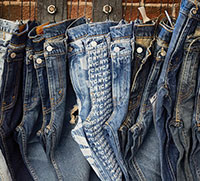 A recent survey by McKinsey & Company reveals around 60 per cent of all clothes produced end up in incinerators or landfills within the first 12 months. People are buying new clothes in large quantities. Clothes production doubled between 2000 and 2014, with the number of garments purchased each year by average consumer increasing 60 per cent.
Complete overhaul of system
Though many brands adopt sustainability measures in their operations, their focus is often misleading as they emphasise on a single sustainable component like the recycled ocean plastic. However, Levi’s has opted for a complete redesign of systems. Aware that fabrics recycled from reclaimed bottle can’t be recycled alongwith its snaps or zippers, the brand aimed to create something better than that is available.
It launched a new range of garments designed with 100 percent cotton Thermadapt fabric. These garments are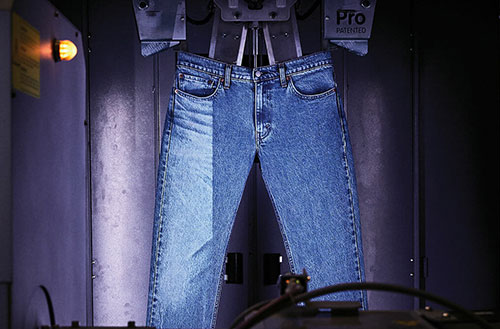 made from a polyester thread wrapped in cotton. This thread is then woven into denim and further dissolved and recaptured for future use. The resulting fabric looks like a heavyweight jean but is 30 percent lighter than traditional denim; it also wicks moisture from the body and provides enough insulation for year-round wear.
The machines that produce these garments aren’t located in San Francisco. However, Eureka Innovation Lab houses an array of scientific instruments for testing fabric and a room full of hi-tech wash and dye machines.
Denim with cottonised hemp
Rather than creating a new manufacturing system, Levi’s wanted to process hemp that would make it feel and act like cotton. This led to the development of cottonised hemp, produced using little energy or chemical processing and could move through a supply chain similarly to cotton.
The brand recently introduced Wellthread cottonised hemp collection as its team learned how to process, spin and weave the thread. In upcoming seasons, the brand will incorporate this cottonised hemp into its indigo denim and finish it with a range of washes.
Making clothes that last
The belief that people should buy less is an odd position to hold as one of the most influential executives at the world’s largest denim brand. However, Levi’s Wellthread x Jacquard by Google jacket, endorses this view of the brand. The jacket, featuring a touch interface on the left wrist paired to the wearer’s phone, allows the consumer an on-the-go access to navigation, messaging, music, etc. This stops the consumers from throwing away the jackets after a few uses. The brand also upgrades the jacket’s digital functionality with new features by adding and monetising digital value rather than simply producing more stuff.
Though Levi’s experiments with new and emerging technologies — e.g., working with textile technology startup EvrNuto produce jeans from garment waste, or using bacterium to dye clothes the right shade of blue — the brand adopts a simple, humanistic approach to attack the thoughtless consumption cycle. The brand emphasizes on making clothes that last. It also aims to train people to value clothes that they already own. Repair and reuse them instead of throwing them away.