FW

In a recent development, the Cotton Association of India (CAI) has revised its cotton pressing estimate for the ongoing 2023-24 season, signaling potential challenges in the cotton sector. The CAI, after a virtual meeting of its Crop Committee on November 17, 2023, announced a downward adjustment of 1 lakh bales, bringing the new estimate to 294.10 lakh bales of 170 kgs. each. This revision raises concerns about the state of cotton production, particularly in Haryana, where reports of damage due to pink bollworm infestation and farmer-driven uprooting of cotton plants prompted a reduction in pressing numbers.
The CAI's October supply figures indicate a total supply of 54.74 lakh bales for the month, comprising arrivals of 24.34 lakh bales, imports of 1.50 lakh bales, and an opening stock of 28.90 lakh bales. However, the pressing estimate for October stands at 26 lakh bales, leaving a lower closing stock of 27.74 lakh bales.
The Crop Committee, consisting of 18 members representing various cotton-growing regions, maintained the consumption estimate at 311 lakh bales for the entire season, mirroring the figures from the previous year. Notably, cotton imports for the 2023-24 season are expected to reach 22 lakh bales, a significant increase of 9.5 lakh bales compared to the previous year. Meanwhile, exports are estimated to be 14 lakh bales, representing a slight decline from the previous season.
The CAI's projections for the closing stock as of September 30, 2024, highlight a decrease to 20 lakh bales, down from 28.90 lakh bales in the previous year. This may indicate potential challenges in meeting demand in the coming months.
As the industry grapples with uncertainties, stakeholders will closely monitor pressing numbers and assess whether further adjustments are necessary. The CAI's decision to maintain the consumption estimate while revising pressing figures underscores the intricate dynamics at play in the cotton sector, requiring a delicate balance between supply and demand.
In a groundbreaking collaboration, textile industry leaders Recover, Evlox, and Jeanologia are set to unveil their revolutionary recycled denim capsule collection, REICONICS, at Milan's Denim Première Vision on November 23-24. The project integrates the expertise of each company, presenting a holistic approach to enhancing circularity within the denim industry, encompassing the entire production process from fiber to finish.
The REICONICS collection, crafted from Recover recycled cotton fiber and Spanish cotton, holds GRS certification and pays homage to classic denim fabrics of past decades. With a focus on eco-design, transparency, process measurement, traceability, and scalability, the collection seeks to inspire and add value to the industry by creating truly circular products.
Comprising premium denim fabrics by Evlox and 14 final garments, the collection showcases Jeanologia's innovative technology, reducing water and energy consumption while eliminating harmful emissions. Remarkably, a single jacket in the REICONICS line, incorporating 32% Recover recycled fiber and Jeanologia finishing, conserves up to 240 liters of water compared to its conventional counterpart.
Alfredo Ferre, CEO at Recover, expressed pride in contributing to the groundbreaking project, emphasizing its potential to guide brands towards a more sustainable future. Francisco Ortega, Evlox R&D Director, and Enrique Silla, CEO at Jeanologia, echoed the sentiment, underscoring the collection's role in reshaping the future of denim manufacturing, making circular fashion accessible without compromising heritage.

Intex India has established itself as the premier sourcing destination for textile and apparel industry professionals, providing a comprehensive platform that encompasses sourcing, networking, learning, and innovation across the entire textile value chain. With its extensive global reach and unwavering commitment to excellence, Intex plays a pivotal role in shaping the future of textiles, not only in India but across South Asia.
A Catalyst for Growth and Innovation
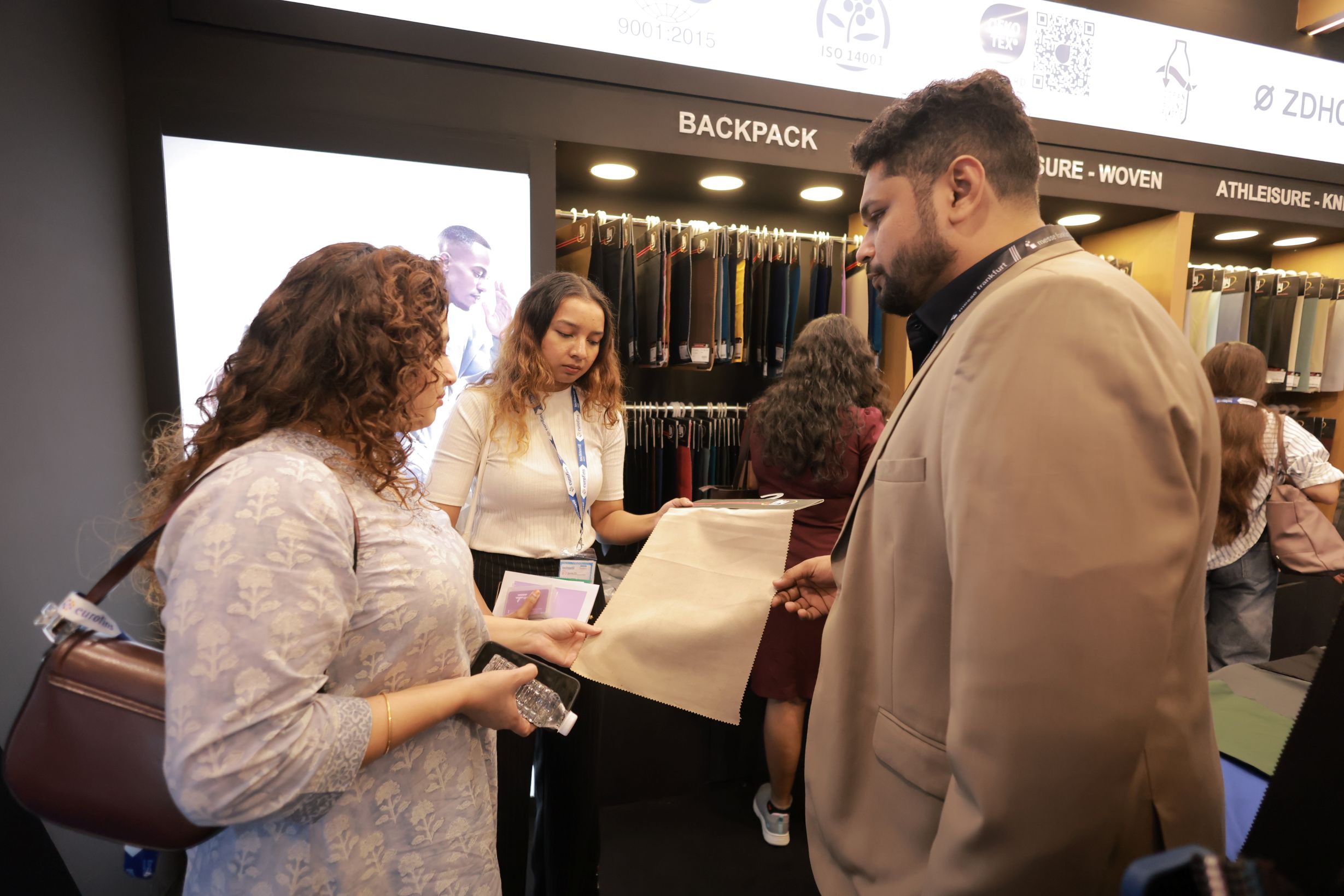
Intex India serves as an unrivaled B2B international textile sourcing event, attracting a multitude of exhibitors, buyers, and professionals who are integral to the textile and apparel industry's vibrancy. It fosters seamless connections between exhibitors and buyers from diverse regions across the world, offering comprehensive sourcing solutions and access to the rich and diverse tapestry of the textile and apparel industry.
A Hub for Knowledge Sharing and Business Expansion
Intex India provides a unique opportunity for networking, knowledge sharing, and business expansion, catering to a wide spectrum of professionals, ranging from textile manufacturers and suppliers to designers and entrepreneurs.
The trade show showcases the latest textile innovations and industry trends, functioning as a hub for the exchange of ideas and knowledge, facilitating discussions on sustainable practices, digital advancements, and design innovations that are shaping the textile landscape.
A Testament to Continued Growth and Success
Since its inception in 2015, Intex has gone from strength to strength. Through the past 12 editions, it has connected over 50,000 trade buyers from over 35 countries with over 1,850 textile suppliers from 20 countries. This remarkable track record underscores the event's continued growth and its vital role in facilitating international trade relations.
An Immersive Experience for Industry Professionals
Intex India 2023 transcends being a mere exhibition. It offers an immersive experience for professionals, with special forums that serve as platforms for industry leaders to exchange ideas, knowledge, and insights. These forums include:
Intex Textile Conclave (ITC): An inspiration and innovation exchange where the industry's brightest minds come together to share their vision for the future.
Intex Investment Forum (IIF): An opportunity to explore the investment potential in India and globally, paving the way for business expansion and collaboration.
Interactive Business Forum (IBF): A convergence of ideas and businesses, where industry leaders chart the course for future growth and development.
A Force Shaping the Future of Textiles
As the industry evolves and transforms, Intex India has emerged as a consistent and indispensable force, contributing significantly to the development and progress of the textile and apparel sector in the region. It is a place where ideas become reality, where connections are forged, and where the textile industry's future is etched. Intex India 2023 is not just an exhibition; it's an experience that will shape the industry's future.
As per a OTEXA report, apparel and textile imports to the US saw a 4.5per cent decline, equivalent to 8.4 billion sq. mt. (SME), in September this year compared to 8.8 billion SME during the same period the previous year. Over the first nine months of 2023, imports recorded a significant 16.5per cent decrease, amounting to 71.0 billion SME compared to 85.0 billion SME in the corresponding period of the previous year.
Specifically, imports from China saw a 9.5per cent increase, reaching 3.3 billion SME, compared to 3.1 billion SME the previous year. In contrast, imports from Vietnam declined by 12.4per cent, equivalent to 5.41 million SME in September, compared to 6.2 million SME the previous year. Imports from Turkey increased 9.7 per cent, totaling 4.8 million SME, compared to 4.4 SME the previous year. Israel experienced a remarkable surge, with imports rising by 914per cent to 4.95 million SME in September, compared to 0.5 million SME the previous year.
However, Egypt's exports to the US saw a substantial decline of 84per cent, amounting to 1.1 million SME, compared to 6.7 million SME the previous year. Imports from Malaysia surged by 76.3per cent in September compared to the same period last year, with the country shipping 6.1 million SME, up from 3.5 million SME the previous year. Meanwhile, imports from Pakistan increased by 1.1per cent, totaling 2.7 million SME, compared to just under 2.7 million SME the previous year. Shipments from India experienced an 11per cent decline, reaching 7.1 million SME in September, compared to 8.0 million SME the previous year.
On October 11, the Environmental Protection Agency (EPA) issued a new rule concerning per- and polyfluoroalkyl substances (PFAS), titled 'Toxic Substances Control Act Reporting and Recordkeeping Requirements for Perfluoroalkyl and Polyfluoroalkyl Substances.' This rule mandates that any entity engaged in commercial PFAS manufacturing since January 2011 must report details such as uses, production volumes, byproducts, disposals, exposures, and existing information on environmental or health effects to the agency.
The scope of the new PFAS reporting rule extends to importers of articles containing covered PFAS chemicals into the US, as well as byproducts containing PFAS and impurities generated during the manufacturing process. It's worth noting that the rule does not establish any threshold for the quantity of PFAS manufactured. According to the Natural Resources Defense Council, PFAS are widely used in clothing, shoes, accessories, cosmetics (including nail polish and eye makeup), and various other consumer products.
Retailers are now required to report comprehensive information, encompassing items ranging from raincoats and yoga pants to cosmetics, depending on the location of the direct supplier, as stated by Meegan Brooks from Benesch. However, individuals such as distributors, users, or those involved in the disposal of PFAS-containing articles, or who receive such articles from domestic suppliers, are excluded from this rule.
Mega textile show ‘Bharat Tex 2024’ is set to showcase entire textile value chain in Delhi’s Bharat Mandapam and Yashobhoomi from February 26-29, 2024. A core committee has been formed to coordinate the organization of Bharat Tex 2024. The event is being organized by Synthetic & Rayon Textiles Export Promotion Council (SRTEPC), with active collaboration from other textiles Export Promotion Councils such as TEXPROCIL, PDEXCIL, and HEPC.
A roadshow was held on November 16 at Hotel Le Meridien, Coimbatore, that attracted over 250 attendees, including senior officials from the Tamil Nadu government, to promote the upcoming textile show. Bharat Tex 2024, organized collectively by various Textiles Export Promotion Councils with the support of the Ministry of Textiles, is expected to cover an extensive area of about 2,00,000 sq. mt. and feature the entire textile value chain, showcasing fiber, fabrics, garments, made-ups, and technical textiles.
Expected to draw over 3,500 exhibitors, 3,000 foreign buyers, and 40,000 trade visitors, Bharat Tex 2024 will also host more than 50 knowledge sessions.
Organised from November 19-23, 2023, the eighth edition of ITMA ASIA + CITME exhibition in Shanghai attracted 1,500 exhibitors from 23 countries and regions.
Spread over 160,000 sq. mt. at the sprawling National Exhibition and Convention Centre in Shanghai, the six halls at the venue had 18 product sectors of the textile manufacturing value chain being showcased.
Exhibitors from China dominated this year’s edition followed by exhibitors from Germany and Japan. Some of reputed companies participants included: CHTC Group, Groz-Beckert, Itema, Muratec, Oerlikon, Picanol, Rieter, Saurer, Savio, Shima Seiki, Stäubli, Texpro, Truetzschler, Uster and Vandewiele.
Around 23 per cent of the exhibition space was occupied by spinning and man-made fiber production machines, followed by dyeing and finishing machinery which occupies 21 per cent space, knitting occupying 16 per cent space and weaving occupying 14 per cent space.
The organising committee collaborated with over 100 supporting media partners for the event. It conducted numerous, overseas roadshows in Indonesia, India, Pakistan and Bangladesh. This resulted in over 20,000 visitors from nearly 90 countries and regions pre-registering their visit.
Owned by CEMATEX and its Chinese partners, ITMA ASIA + CITME 2022 is organised by Beijing Textile Machinery International Exhibition and co-organised by ITMA Services. The Japan Textile Machinery Association (JTMA) was a special partner of the show.
The next ITMA ASIA + CITME exhibition is scheduled from October 14-18, 2024 at the National Exhibition and Convention Centre in Shanghai.
Around 40 VDMA companies showcased their products at the ITMA ASIA + CITMA exhibition held in Shanghai on November 19. They presented a comprehensive range of machines utilized in spinning and manmade fibers, nonwovens, weaving, braiding, knitting and hosiery, finishing and dyeing, and textile processing. This strong representation was part of the broader German presence at the exhibition, which included 60 exhibitors from the country.
The VDMA Textile Machinery Association and VDMA China were notably located in Hall 8 zone B. The inaugural day featured a conference that was addressed by Janperter Horn, Chairman, VDMA Textile Machinery Association. Horn said the event provided an opportunity for association members to engage with customers and partners in person. He emphasized the significance of strengthening relations with China and other countries and forming new partnerships.
Speaking on the German textile industry, Horn highlighted a slight decrease in textile and machinery exports to €1.7 billion between January and August of the current year. Exports to major markets saw a drop in this period, including a reduction in exports to China from €453 million to €440 million, Turkey from €265 million to €205 million, the US from €144 million to €177 million, and to India from €228 million to €170 million.
As per recent VDMA business climate survey among textile machinery companies in China, nearly 75 per cent participants regarded their present business situation as either good (6 per cent) or satisfactory (69 per cent). Looking ahead, about 50 per cent the companies anticipate a market decline in the coming quarter, while 44 per cent expect it to remain stable. Moreover, 63 per cent anticipate retaining their employees in the coming years.
The recent MoU between the APTMA Cotton Foundation (ACF) and Better Cotton Initiative Pakistan (BCI) will boost cotton production in Pakistan, say experts.
The MoU will facilitate more cooperation between the two organisations to foster cotton industry growth in Pakistan. It will strengthen the cotton value chain besides improving production and quality, and enabling market integration and linkages for cotton products,
It will also facilitate a traceability system aligning with international rules and standards. BCI will act as the program partner for the MoU and provide technical support for Better Cotton development in Pakistan. It will organise assessments, and mobilise financial and technical partnerships. BCI will also help APTMA integrate Better Cotton criteria into national cotton production technology and training materials.
Acting as the promoting agency, ACF will prepare training materials, and invite APTMA representatives to participate in BCI’s strategic planning meetings and seminars on Better Cotton. It will also collaborate with BCI to ensure traceability across the supply chain of Better Cotton produced in areas operated by ACF.
The recent depreciation of the Indian rupee is seen as a potential boon for the country's labor-intensive export sectors, say experts. They believe the devaluation could lead to a 2-19 per cent increase in outward shipments of products such as readymade garments, carpets, and handicrafts. Handicraft exporters, in particular, stand to benefit significantly with a potential 100 per cent gain.
Exporters could see a eight per cent gain if the rupee depreciates approximately 10 per cent, coupled with a reduction in the import content of their goods to 20 per cent. Moreover, the depreciation may be advantages in contract negotiations, as highlighted by Ajay Sahai, Director General of the Federation of Indian Export Organisations.
The global economic slowdown has taken a toll on labor-intensive sectors, with a 21.9 per cent decline in apparel production during the first half of 2023-24. The leather industry also faced growth stagnation and apparel production remained 34 per cent lower than the corresponding period in pre-COVID-19 year of 2019-20. Leather exports declined 22 per cent from their pre-pandemic levels.
Specifically, ready-made garment exports saw a 14.58 per cent year-on-year decline to $7.82 billion during the April-October period. Handicrafts and leather product exports also recorded declines of 11.37 and 11.74 per cent, respectively.
In the April-October period, India's overall merchandise exports decreased 7 per cent to $244.89 billion, while imports fell 8.95 per cent to $391.96 billion.