FW
Wrangler launches Indigood foam-dyed denim collection
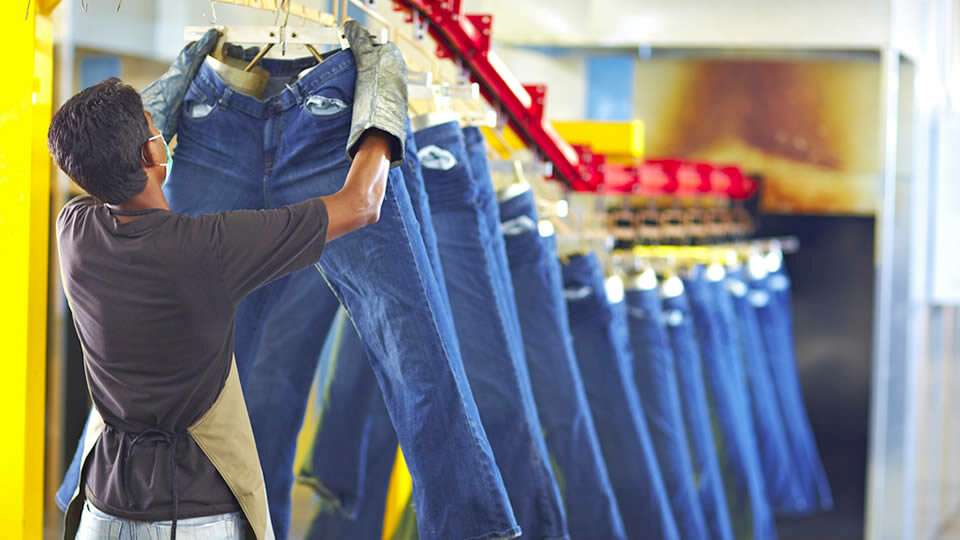
Wrangler, a part of Kontoor Brands, Inc. has launched first ever denim dyed with foam, an innovative technique that uses 100 percent less water than conventionally-dyed denim. The introduction of this Indigood foam-dyed denim represents the brand’s continued commitment to using its global scale to advance the denim industry while maintaining the authenticity, quality and style that consumers expect from Wrangler.
Indigood Foam-Dye entirely replaces the traditional water drums and chemical baths of traditional indigo dyeing, reducing by 100 percent the amount of water required to turn denim that beloved shade of indigo blue. The new dyeing process also reduces energy use and waste by more than 60 percent compared to the traditional denim dyeing process.
The Indigood products will be featured in the Icons collection, giving consumers access to Wrangler’s most iconic products with the highest level of sustainability available on the denim market today. In addition, with absolutely no compromise to quality, the Indigood products include recycled cotton, laser and ozone finishing. The collection includes both male and female jeans, shirts and jackets in dark and light shades.
The launch of Indigood demonstrates Wrangler’s continued commitment to sustainability, reflected in the brand’s global sustainability goals, which include:
• Conserving 5.5 billion liters of water at owned and operated facilities by 2020;
• Using 100% preferred chemistry throughout our supply chain by 2020;
• Powering all owned and operated facilities with 100% renewable electricity by 2025; and,
• Sourcing 100% sustainable cotton by 2025.
Fashion to become trendless as brands blend design with purpose
 Lack of customer activity is increasing brands’ dependence on fashion forecasters who are guiding them to navigate the ongoing crisis. Firms like WGSN and Stylus are holding in-depth video meetings with clients to advise them on what the post-COVID-19 world might look like.
These forecasters are not just providing seasonal trend analysis but also guiding brands on surviving the current morass. They reveal that fashion firms are keen to know more about the consumer response in more open economies like China and hear predictions about how people will behave after lockdowns end.
However, macro trends like a consumer call for sustainability or a move away from seasonality have not drastically changed in light of Covid-19. On the contrary, they are accelerating at a faster than anticipated pace, in effect putting trend forecasters into a more pivotal role.
Reliance on trade shows and fashion events
According to Carla Buzasi, Managing Director, WGSN, fashion firms are now looking at forecasters as one of the main forms of data on the market. To cater to increasing demands, forecasters are speaking to their clients and sending them information much more regularly. Stylus is running webinars with live Q&A sessions to its subscriber base. These webinar are included within current subscription models as raising prices or cashing in on the situation would play badly with clients.
Heuritech, which switched from monthly to weekly updates at no extra cost, is helping clients with short-term inventory movement rather than long-term planning that was the norm before.
Forecasters rely on trade shows and fashion weeks to know the direction designers are heading and gauge the reaction of social media influencers to emerging trends. However, as many of these events have been postponed or cancelled, firms like WGSN are reaching out to keynote speakers and exhibitors to find out future plan of action. Similarly, Stylus is prioritizing a number of cross-sector reports on subjects like: homeware, sleep, sex, hygiene and personal care.
Line of predictions
Market analysts firm Bain & Co predicts a revival of China’s luxury market with the country is likely to grab an even greater share of the luxe market at a much faster rate than anticipated, as Western economies go through sluggish recoveries. However, another trend forecaster and consultant Geraldine Wharry cautions against making any rash predictions about how the industry is likely to look when lockdowns and social-distancing measures end.
Many forecasters agree Covid-19 outbreak could force many brands to reevaluate their business models. Some of these brands may also have to change their mode of operations in order to survive. Emily Gordon-Smith, Director, consumer product at Stylus, anticipates a move to more trendless and seasonless approaches by fashion brands, with collections driven by individual vision of the brand rather than one tapping into shifting seasonal trends. According to her, clients are showing interest in these types of collections right now and evolving their own brand identity into something that's stronger and more individual.
Brands embracing the principle of design with purpose are also gaining more popularity than those more tied into the traditional fashion calendar. This benefits everyone from consumer, brands’ to the planet, Buzasi notes.
Apparel industry needs to evolve a manufacturer-friendly payment structure
 Completely freezing the global textile and apparel value chain, COVID-19 has highlighted some of the major faults in the apparel industry that need to be addressed both in the short and long terms.
Varied responses across the apparel value chain
Though all parties of the apparel value chain were affected by COVID-19, they were not equally positioned to navigate through this sudden disruption. Fashion retailers responded by canceling all orders including those under production. A study by Center for Global Workers’ Rights for Bangladesh reveals this led to around 72.1 per cent of the buyers refusing to pay for their purchased raw materials while 91.3 per cent of them refused to pay for the production cost of the supplier. Not only did this leave factories stranded also factory workers, 85 per cent of whom are women, were left without any cash in hand. Millions of these workers were also furloughed and terminated without compensation.
Imbalanced equation between buyers and sellers
According to the McKinsey Global Fashion Index, one of the reasons for this distorted outcome is that over a period of time the power equation between buyers and suppliers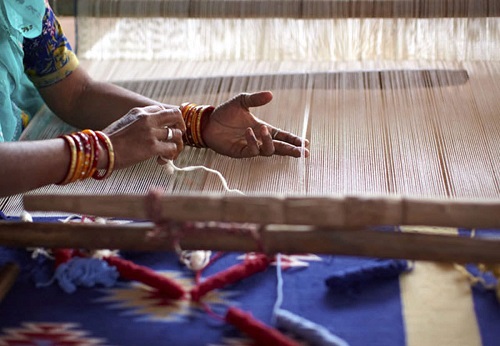 has become more and more imbalanced. During the 10 year period between 2008 to 2017 top-20 fashion companies cornered on average 88 per cent of entire industry profits.
This imbalance has created two types of sourcing trends in apparel global supply chains. First is the ‘price squeeze’ trend in which buyers constantly seek to lower the price paid to the manufacturers. Second type is known as ‘lead time squeeze’ in which buyers seek to reduce the lead time of factories.
No payment guarantee for manufacturers
Article 7.1.1 of the Vienna Convention for International Commercial Contracts recommends applying force majeure claims to factories producing items. A few years ago, most payment terms were agreed on Letters of Credit (LCs), in which a bank provided guarantee to the seller upon presenting certain documents as proof that production has completed to the buyer’s required standards. However, a layer of bureaucracy was added to the process as relationships between buyer and seller developed, a prevalent system emerged of Sales Contracts (SC) based on Purchase Order (PO) issued by a buyer. Based on SC, the manufacturer would raise its own LC to procure necessary raw materials to complete the order. The SC terms typically provide for legal recourse in case of non-payment.
The flaw in this payment system led to buyers delaying payments and even cancelling orders citing extraordinary circumstances. The manufacturers were left without any bank guarantee even for partially completed orders.
Egalitarian payment structure with modern technology
Therefore, all industry stakeholders need to evolve a more egalitarian payment structure which covers manufacturers’ expenses as per the stage of the order execution. In this system, manufacturers are compensated for the purchase of necessary raw materials with the balance payment being guaranteed by contracts or LCs.
To arrive at cost-effective solutions, the fashion industry value chain can also deploy modern technological solutions. These technologies can help the industry to monitor the execution of these solutions and establish trust in data by blockchain, which could then be linked with the stage-wise payment mechanism. Whatever solution the industry adopts, it needs to recognize that the current equation that puts the entire burden of such disruptions on manufacturers is grossly unfair and needs to be amended.
Revenues of Salvatore Ferragamo decline
As of 31 March 2020 the Salvatore Ferragamo Group reported total revenues of 222 million euros a decline of 30.1 per cent at current exchange rates againts 317 million Euros recorded in 1Q 2019.
The group registered a solid performance in January in all its main markets, that increasingly deteriorated in February and March, first in China and Asia and progressively also in Europe, in America and in the rest of the world, following the rapid diffusion of the pandemic caused by a novel coronavirus, known as Covid-19. The consequent decisions taken by the National governments regarding prohibitions and lock-downs of the commercial activities and of the international traffic, brought to the closure of the majority of the Group's store network in those countries and to a significant reduction in traffic in the remaining
As of 31 March 2020, the group's retail network counted on a total of 652 points of sales, including 391 Directly Operated Stores (DOS) and 261 Third Party Operated Stores (TPOS) in the Wholesale and Travel Retail channel, as well as the presence in Department Stores and high-level multi-brand Specialty Stores.
In 1Q 2020 the retail distribution channel, negatively impacted by the progressive closure of the majority of the distribution network in February and March and by the significant lack of traffic in the remaining stores, posted consolidated Revenues dow
The Wholesale channel registered a decrease in revenues of 32 per cent (-34.8 per cent at constant exchange rates2) againts1Q 2019, also penalised by the cancellation of orders, mainly in the Travel retail channel, and further disadvantaged by the comparison with 1Q 2019 that had benefitted from the recouped
The Asia Pacific area is confirmed as the Group's top market in terms of revenues, decreasing by 43.per cent (-43.8 per cent at constant exchange rates2) vs. 1Q 2019. In 1Q 2020 the retail channel in China reported revenues down 39.9 per cent. (-39.0 per cent at constant exchange rates2).
EMEA posted a decrease in revenues of 26.0 per cent (-26.3 per cent at constant exchange rates2) vs. 1Q 2019.
North America in 1Q 2020 recorded revenues down by 18.5 per cent (-24.7 per cent at constant exchange rates2)
Demand for textiles and apparels in USA plunges
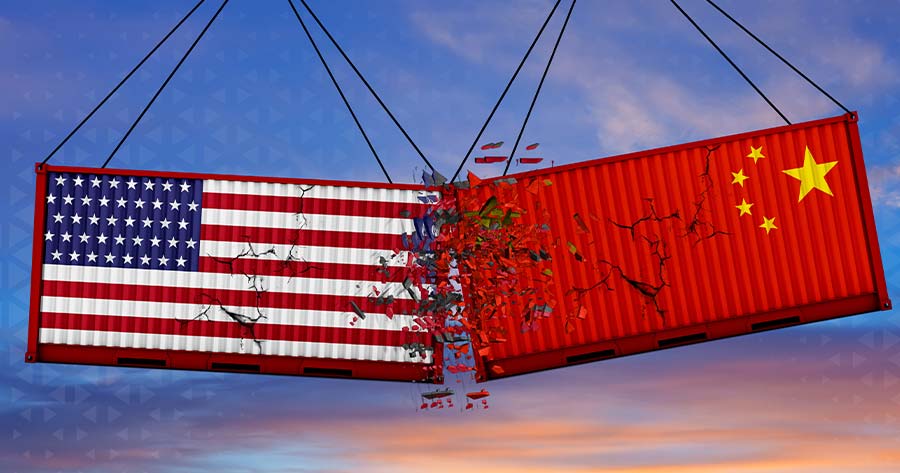
According to latest data by the CCF Group, United States has become the hardest hit and global economic activities have been greatly affected. US textile and apparel imports reached 4.19 billion sq mt in March, declining by 12.6 per cent year-on-year; the volume from China was 940 million sq mt, declining by 38.7 per cent year-on-year.
Textile and apparel imports by USA have been showing negative growth for six consecutive months, and declined more quickly; the volume from China saw faster speed than the total, a negative growth for seven consecutive months. April import demand will be weaker. In terms of import value, it declined faster year-on-year. In the first quarter, the cumulative US textile and apparel imports were 14.66 billion sq mt, declining by 10.9 per cent year-on-year; the volume from China was 5.18 billion sq mt, declining by 26.2 per cent year-on-year.
In March, the cumulative US textile and apparel imports were 6.88 billion sq mt, declining by 14.6 per cent year-on-year; the volume from China was 0.92 billion square meters, down by 49.6 per cent year-on-year. In the first quarter, the cumulative US textile and apparel imports were 23.63 billion sq mt, declining by 11.8 per cent year-on-year; the volume from China was 5.1billion sq mt, down 39 per cent year-on-year. From the share, both the volume and value of US textile and apparel imported from China declined significantly in March.
The volume and value of US textile and apparel imported from China in Mar fell to 22.4 per cent and 13.4 per cent of the total textile and apparel imports respectively, 30.1 per cent and 25 per cent lower than that in August of last year mainly due to the epidemic.
Kraig Biocraft Laboratories to shift production to Vietnam
Kraig Biocraft Laboratories is preparing to transfer production back to Prodigy Textiles, its Vietnamese subsidiary. During the COVID-19 lockdown, when the company opted to furlough its non-essential staff, the company shifted its spider silk production operations focus to its US research facility. The company is now ready to transition the majority of its production back to Vietnam as soon as the silkworm rearing cycle allows.
During this pandemic, the company has continued to advance and strengthen its production operations. Through vigorous testing of its Dragon Silk™ and Monster Silk® lines, the company identified its best performing and hardy silkworms ideally suited for large scale production. This milestone is the result of a dedicated effort by its US staff, going far beyond standard material performance testing. This first production cycle of 2020, at the company’s Vietnam factory, will utilize these top performing transgenics, forming a solid foundation for the continued 2020 production scale up.
The company anticipates rapid scale up of its recombinant spider silk and will use this year’s first production run to ship materials are dedicated to fulfill an outstanding order, by one of the company development partners. The following production runs will be to address fiber requests made by additional potential development partners and to grow the breeding population.
Chennai-based startup Muse Wearables develops new coating textiles machine
Muse Wearables, an Indian startup in Chennai is developing a new coating textiles machine with antimicrobial agents for use in personal protective equipment (PPE). The pilot machine can currently coat up to 100 metres of certain fabrics within a few minutes.
The start-up is backed by the Indian Institute of Technology (IIT) Madras. The group’s current efforts are on scalability for coating textiles with nanoparticles-based antimicrobial agents that can inactivate the human coronavirus upon contact. These coatings are said to be effective up to 60 wash cycles and would be primarily used to manufacture N95 masks, surgical masks, PPE and food packaging bags.
Currently, cotton, polyester and cotton-polyester can be coated; the startup expects to test more fabrics soon. Muse Wearables is also said to be partnering with a mask manufacturing company to launch five-layered antiviral N95 masks.
Abercrombie & Fitch Co partners thredUP
Abercrombie & Fitch Co, a global specialty retailer of apparel and accessories has partnered thredUP, the world’s largest fashion resale marketplace. This partnership allows customers to send in their clothing for gift cards to be redeemed at Abercrombie & Fitch, abercrombie kids, Hollister and Gilly Hicks. A&F Co is thredUP’s latest Resale-as-a-Service (RAAS) cleanout distribution partner.
A&F Co customers in the US can now request a thredUP clean out kit or download a prepaid shipping label at www.thredup.com /Abercrombie or www.thredup.com /hollister to send any brand of like-new women’s or children’s clothing to thredUP. Once the garments are received and processed by thredUP, customers will earn Abercrombie & Fitch or Hollister gift cards — ultimately gaining credit for future purchases while keeping clothes out of landfills.
A&F Co’s partnership with thredUP also supports the retailer’s commitment to the United Nations Global Compact (UNGC), the world’s largest corporate citizenship and sustainability initiative. A&F Co joined the UNGC in 2019, and recently submitted its first annual communication on progress towards its long-term social and environmental sustainability goals. The thredUP collaboration aligns with numbers 12 and 17 of the UN’s Sustainable Development Goals, which encourage responsible consumption and production and building partnerships that support the goals, respectively.
FICCI seeks Rs 4.5 lakh crore fiscal support
The Federation of Indian Chambers of Commerce and Industry (FICCI), in a letter to finance minister Nirmala Sitharaman has, sought an additional fiscal support of Rs 4.5 lakh crore from a quick release of Rs 2.5 lakh crore stuck in refunds and other government payments. According to FICCI, there is also a need to create a self-sufficiency fund for innovation, construction and manufacturing clusters to make use of the emerging opportunities in the wake of disruption in the global supply chain. The fund can be provided in tranches in the medium term, she said.
The problem being faced is largely that of liquidity and additional fiscal support is required for vulnerable communities over and above the sum provided for in the Garib Kalyan Yojana announced earlier
Fiscal support is also needed for micro, small and medium enterprises (MSMEs) to help them get back on track, she was quoted as saying by a news agency.
Besides, funds are needed for upgradation of healthcare infrastructure to effectively deal with the current situation and for support to sectors like aviation and tourism that have been hit hard due to the lockdown.
The fiscal support sought includes a ‘small amount’ of Rs 10,000 crore towards proposed COVID-19 liquidity bridge required to give comfort to banks to restructure or provide additional loans to large companies whose balance sheets have been impaired due to the virus outbreak.
Designers, fashion CEOs and retailers root for sustainable operations
A group of fashion CEOs, retailers and designers, including luminaries lie as Dries Van Noten, Tory Burch and Craig Green, have called for greater efforts to encourage sustainability in an open letter to the industry. The group noted the current environment presents an opportunity for a fundamental and welcome change that will simplify their businesses, making them more environmentally and socially sustainable and ultimately align them more closely with customers’ needs.
The group emerged from a series of Zoom conferences this month, uniting a surprisingly broad array of figures including fashion forward designers, dynamic executives, influential big boutique owners and even online retailers. The first of their two key demands included adjusting the seasonality and flow of both women’s wear and menswear goods, starting with the Autumn/Winter 2020 season besides maintaining a more balanced flow of deliveries through the season to provide newness but also time for products to create desire.
Another of their goal is to greatly reduce the bane of all designer houses, discounts, in order to allow more full-price selling. This fledgling fashion forum also calls for greater sustainability throughout the supply chain and a new sales calendar, which they claim would lead to less unnecessary product; less wasted fabrics and inventory, and less showrooms.
The letter is also signed by the likes of Joseph Altuzarra, Linda Fargo of Bergdorf Goodman, Erdem Moralioglu, Gabriella Hearst, Shelly Corkery of Brown Thomas, Marine Serre, Mary Katrantzou, Michael Kliger of Mytheresa, Pierre-Yves Roussel and Rodrigo Bazan of Thom Browne.