


FW
Kanopy to deploy Byproduct’s PLM solution
Kanopy Brands is implementing the Product Lifecycle Management (PLM) platform of BeProduct. The company will use platform for everything, from style creation to sourcing and follow up. The platform has allowed the brand to become faster, more agile and leaner in all operations.
In a short span of time, Kanopy has been able to fully exploit the potential of BeProduct, onboarding all close suppliers, and delivering significant efficiency savings throughout its collaborative design, development and sourcing practices.
Following the successful implementation, BeProduct and Kanopy maintain a close working relationship, with Kanopy influencing the development of BeProduct’s PLM solution, and the BeProduct team providing a support that will allow the retailer’s business to continue to grow in the future.
Craig A. Williams is the new president of Jordan
Craig A. Williams will be the president of Jordan Brand. He was earlier with Coca-Cola and McDonald’s. His experience driving global strategy and growth will help continue to build a premium brand that connects deeply with consumers.
Williams joined Coca-Cola in 2005 and was responsible for leading and growing the company’s business and strategic partnership with McDonald’s in more than 37,000 restaurants in more than 100 countries. Prior to that, Craig held positions of increasing responsibility within TMD, including senior vice president and chief operating officer, vice president US, assistant vice president of US marketing and group director of US marketing.
Larry Miller, current Jordan Brand president, will become chairman for the newly created Jordan Brand Advisory Board. Miller has served as president of Jordan Brand since 2012. He previously held the role from 1999 to 2006. In the interim, he served as president of the NBA’s Portland Trail Blazers. Prior to that, he served as VP, GM, of Nike Basketball.
As president of Jordan Brand, Miller helped build and expand the brand both domestically and around the world. His leadership has driven the Jordan Brand into new areas, including the Jordan women’s line of footwear, partnerships with college football teams, an increasing global presence with Jordan stores around the world.
India:Grasim Industries registers net loss in Q2
Aditya Birla Group firm Grasim Industries reported a consolidated net loss of Rs 1,300 crore (approx $180.2 million) for the second quarter ended September 2018 as against net profit of Rs 800 crore it had posted during the July-September period of last fiscal. The company attributed these losses to the merger of Vodafone with Idea Cellular.
Grasim’s revenue increased 24 per cent to Rs 16, 795 crore during the period under review as against Rs 13,570 crore of the corresponding quarter last fiscal. Its revenue from viscose staple fibre (VSF) increased 23 per cent at Rs 2,606 crore for the quarter as against Rs 2,120 crore last fiscal.
The viscose staple fiber (VSF) production and sales volume was 137,000 tonne and 1, 36,000 tonne. As a result of higher production, the share of domestic sales also jumped to 84 percent from 70 percent led by robust demand. The VSF business continues to focus on expanding the market in India by partnering with the textile value chain, achieving better customer connect through brand LIVA and intensive research work in enriching the product mix through a larger share of specialty fiber.
Germany top buyer of Bangladesh apparels
Latest data released by Bangladesh Export Promotion Bureau shows, Germany has emerged the top destination of Bangladesh’s apparel exports to the world in October 2018, followed closely by the United States.
Bangladesh earned $2.06 billion from exports to Germany during July-October 2018. This was a 19 per cent gain over the $1.73 billion from the same period last year. Knitwear fetched $ 1.23 billion during this period, a gain of 13 per cent gain. Woven items surged over 29 per cent, fetching over $834 million during this first fiscal quarter.
The US market, which once was top apparel export destination for Bangladesh, saw an impressive gain during the first quarter. The total apparel exports during this period fetched $2 billion, marking a 31 per cent gain over last year’s $1.56 billion.
BCI releases new leaderboards of top brands
Better Cotton Initiative has released new leaderboards showing the world’s top users of Better Cotton. The world’s top five users of cotton by volume are H&M, Ikea, Adidas, Gap and Nike. Of these Ikea and Adidas, along with Decathlon, are among brands that sourced 75 per cent of their cotton as Better Cotton in 2017 – the most update production figures available.
The Leaderboards also show that for some retailers and brands, Better Cotton now accounts for a substantial percentage of their total cotton sourcing. Adidas sourced more than 90 per cent of its cotton as Better Cotton in 2017, while Decathlon, Hemtex AB, Ikea and Stadium AB sourced more than 75 per cent of their cotton as Better Cotton.
In 2017, 71 BCI retailer and brand Members of BCI sourced a record 736,000 metric tonnes of Better Cotton. The BCI is aiming towards a 2020 target of having Better Cotton account for 30 per cent of global cotton production. New figures also show that in the 2017-18 cotton season, BCI retailer and brand members contributed more than €6.4m enabling more than one million farmers across China, India, Mozambique, Pakistan, Tajikistan, Turkey and Senegal to receive support and training.
Meanwhile, among the ‘fastest movers’ of 2017 were Adidas, Asos, Decathlon Gap Inc, G-Star Raw and KappAhl.
EAC notes sharp increase in discarded clothing materials
A recent hearing of Environmental Audit Committee’s (EAC) hearing on the sustainability of the fashion industry shows, the amount of discarded material had increased sharply in recent years.
As a 2016 survey by Sustainable Clothing Action plan reveals, out of 650,000 tonne of clothing collected for reuse and recycling in 2014, around 39 per cent was donated to charity shops. Eighteen per cent was given through charity bag household collections, 13 per cent brought to textile banks, 7 per cent was sold and 6 per cent of disposed of in general waste collections.
The charity called for greater public education on the environmental impacts of the fashion industry and on ways in which clothes could be repaired, reused or donated. Fast-changing trends and low prices has caused a significant increase in clothing purchases and so the rate of discarding, with 1.13 million tonne of clothing purchased in the UK in 2016, a 200,000 increase in four years.
Seven companies join ZDHC program
Seven new companies have joined the ZDHC Roadmap to Zero Program. UK online fashion company, Asos recently joined as a signatory brand. Other new members of the program include Bangladeshi denim business, Denim Expert, Chinese viscose business, Sateri, Indian chemicals business, Meghmani Dyes and Intermediates LLP, Indian apparel business Eastman Exports Global Clothing and Sustainable Textile Solutions (STS).
The program aims to implement sustainable chemistry, drive innovations and best practices in textile, apparel and footwear industries to protect consumers, workers and the environment. The ZDHC is an industry collaboration of brands, value chain partners and associates aimed at driving the textile and apparel industries towards more sustainable chemistry.
Joining the ZDHC, the companies will adopt the ZDHC tools, such as the ZDHC Manufacturing Restricted Substances List (ZDHC MRSL) and the ZDHC Wastewater Guidelines, and implement them into their value chains. With the additional organisations, the total number of ZDHC Contributors is 116.
Cambodia’s Tonlé sets sustainability goals for global fashion industry
"The world is being plagued by environmental abuse from all kind of industries. Traditional economies, dominated by the use and throw policy, did not consider the material’s end use. It only sourced the inputs from the environment, manufactured them, and channeled them into the industrial process to make end products. These products were then sold to consumers, who dumped them into landfills or incinerators after a while. This is particularly true of the fashion industry, where a new concept of fast fashion, has taken root. "
 The world is being plagued by environmental abuse from all kind of industries. Traditional economies, dominated by the use and throw policy, did not consider the material’s end use. It only sourced the inputs from the environment, manufactured them, and channeled them into the industrial process to make end products. These products were then sold to consumers, who dumped them into landfills or incinerators after a while. This is particularly true of the fashion industry, where a new concept of fast fashion, has taken root. This concept involves the high speed and cost-effective catwalk-to-store delivery of high-fashion trends. The disposable nature of new fashion along with a growing disposable income, have been driving production in the last 15 years. Around the world, the $1.3 trillion clothing industry employs over 300 million people across the value chain.
New ways of reducing pollution
The emergence of new fashion styles every day is driving pollution in the industry. A study by the Ellen MacArthur Foundation titled ‘A new textiles economy: Redesigning fashion’s future’ estimates that over half of the fast fashion garments are disposed off in under a year. Utilisation of clothes, over the last 15 years, or the average number of times they are worn has decreased by 36 per cent. This is particularly seen in the United States, where clothes are only used for a quarter of the global average, and in China, where utilisation has decreased by 70 per cent.
Now, various movements to counter fashion are emerging across the world. Global Fashion Agenda and The Boston Consulting Group, in its study on sustainability of fashion, demonstrates the progress made by the industry globally to improve the environmental and social performance, especially from small and medium companies in the mid-price segment. The study, which used a performance scoring mechanism called the ‘Pulse Score’ reveals that around 75 per cent of fashion companies surveyed improved their sustainability score compared to last year.
Cambodian company leads sustainability drive
The textile and clothing industry, which employs around 800,000 people in Cambodia, continues to be the backbone of the country’s export-driven economy. It contributes around 40 per cent to the nation’s GDP. The country is also home to Sustainability Champion, Tonlé, a frontrunner in processing pre-consumer waste.
Tonlé’s sustainability strategy forms the core of its operations. It reroutes and reuses waste materials that is usually dumped in landfills or burned. Through this strategy, the company not only reduces its massive CO2 emissions, but also the consumption of water, pesticide used in agriculture and chemicals used to dye fabrics. The fashion company has diverted more than 16,000 kg of materials from landfills, reduced 495,000 kg of CO2, reduced consumption of almost 200 million liters of water, and reduced pesticide consumption by almost 12 kg.
The commitment and action by companies like Tonlé not only affects real contributions, but also drives awareness on sustainable fashion further. To keep this drive alive, the rest of the industry needs to follow its lead. The industry should focus on the long-term effects of its products on the environment and communities where it operates.
Facing tough times, exporters in Tiruppur, India bank on falling rupee for growth
"Tiruppur’s garment industry, which has around 3,500 small, medium and large garment manufacturers, generates around Rs 45,000 crore ( US$ 6.16 bn) every year until last year, it had been growing at a rate of 20 per cent year-on-year. After GST was implemented, the 5.5 per cent excise rebate was included in GST. After the exporters made strong representations to the government, the commerce ministry increased MEIS from 2 per cent to 4 per cent, but also reduced ROSL from 3.6 to 1.7 per cent. So, after all the adjustments, exporters were enjoying only a 7.7 per cent of drawbacks, which meant they lost more than 5 per cent of what they earlier received as rebates."
 Tiruppur, which recently witnessed various disruptions, is struggling to survive. Growth in India’s largest knitwear and readymade garments cluster was pushed to negative by a year of disruptions starting with demonetisation followed by the implementation of Goods and Services Tax (GST) system which sucked out liquidity from the market.
GST negatively impacts industry
Tiruppur’s garment industry, which has around 3,500 small, medium and large garment manufacturers, generates around Rs 45,000 crore ( US$ 6.16 bn) every year until last year, it had been growing at a rate of 20 per cent year-on-year. After GST was implemented, the 5.5 per cent excise rebate was included in GST. After the exporters made strong representations to the government, the commerce ministry increased MEIS from 2 per cent to 4 per cent, but also reduced ROSL from 3.6 to 1.7 per cent. So, after all the adjustments, exporters were enjoying only a 7.7 per cent of drawbacks, which meant they lost more than 5 per cent of what they earlier received as rebates.
Thanks to the hasty implementation of GST, the refund process has become a slow and delayed one. While VAT refund came in three months earlier, GST refund is taking anywhere between 3-6 months. As the government is trying to hasten the refund process, GST offices continue to be understaffed. In Tiruppur, which has 1100 registered companies, there are only 10 officers processing refunds.
New avenues to explore
The bleak outlook at Tiruppur’s garment exports market has forced many to look for other avenues of growth such as Ethiopia.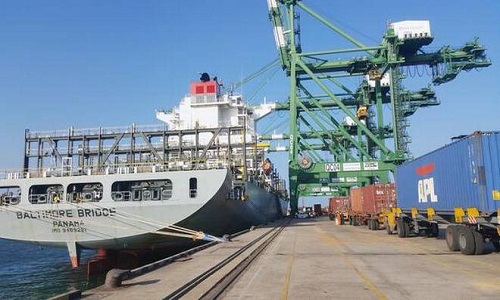 The country offers several incentives to garment exporters in a bid to become the next Bangladesh. The biggest advantage Ethiopia offers is duty-free entry into both the European Union and India. Apart from that, labor too is cheap and abundant. The country currently produces garments for French company Decathlon from this facility.
However, the efficiency levels in Ethiopia are low, given the raw and untrained labor. And this takes away most of the benefit of lower costs, at least for now. The labor too, he says, isn’t reliable. Also, production in Ethiopia can now only cater to basic styles. Any new style will require at least a few months of training. Connectivity in terms of mobile networks is very poor, workers are very raw.
Another revenue stream that several garment exporters in Tiruppur have been turning to is the domestic market. The apparel market in India is growing at nearly 10 per cent every year. Fall in exports led to a huge number of exporters, especially smaller ones, shifting to the domestic market to cater to companies such as Reliance, Big Bazaar, Pantaloons and Arvind Mills.
Falling rupee offers better value
For exporters, a falling rupee is advantageous as it gives them a better value for their goods against the euro and dollar. If the rupee had not depreciated, exports from Tiruppur would have been nearly nil. However, importers have also been watching the Indian rupee lose value. Knowing exporters have an advantage, importers too want them to pass on at least 10 per cent of the advantage to them. Given the competitive scenario globally, Tiruppur exporters are being forced to pass on the advantage to their customers. Exporters now expect the rupee to fall further. They hope that the upcoming general elections next year and strong policies by the government will improve the situation in the country.
Top UK retailers pledge to stop slavery
Top retailers in the UK like John Lewis, Marks & Spencer and Next have agreed to support moves to stop modern slavery in textile trade. Some companies use slavery to supply retailers with goods and services. That means some of these products have been produced by someone exploited into forced labor. Criminal groups operate in the shadows of supply chains to exploit people for commercial gain.
The retailers have pledged to raise awareness to prevent slavery, protect vulnerable workers and help bring more criminals to justice. Businesses in the UK with a turnover of more than £36 million have to publish annual statements setting out what they are doing to stop modern slavery. But fewer than two in three have complied. Anti-slavery operations are at an all-time high in the country. More than 920 live investigations were conducted by the police in September, in excess of 2,000 victims.
In October thousands of businesses were warned they could face action if they failed to meet legal obligations. The UK has pledged £40 million to aid more than 5,00,000 people around the world who have either survived modern slavery or are at risk of becoming victims. The support will address slavery and trafficking in countries with a high prevalence of these crimes in South Asia.











