FW
Beyond Imports: China's domestic yarn producers rise to the challenge
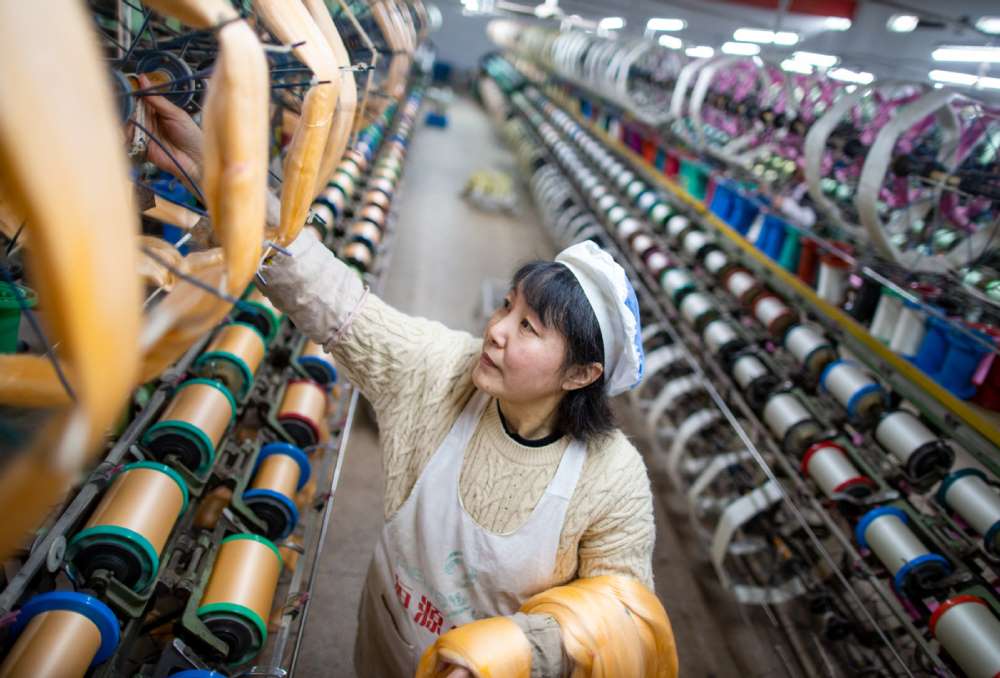
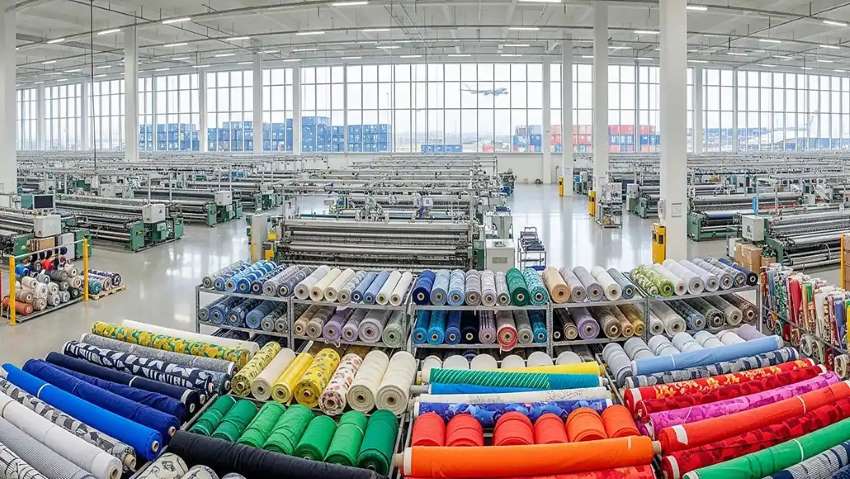
China's dominance in the global yarn market was reaffirmed recently by the Shanghai Yarn Expo, which drew international participation from March 6 to 8. However, the post-Covid era has brought significant changes to the industry, presenting both challenges and opportunities.
Challenges for China
Rising costs of yarn imports: Global raw cotton prices have surged, leading to a significant increase in imported yarn prices, particularly cotton yarn. A report by Textile Exchange indicates a 25 per cent increase in cotton prices year-on-year (YoY) as of December 2023. This trend is expected to continue in the short term, outpacing domestic yarn price hikes in China.
Falling profits for overseas mills: High cotton prices are squeezing profits for yarn mills in countries like Vietnam and Pakistan, traditionally major exporters to China. "We're seeing Vietnamese mills struggling to maintain margins," said a yarn manufacturer at the recent Yarn Expo in Shanghai, highlighting the need for these mills to find alternative markets or transition to blended yarns.
Resistance to high-cost yarn in China: Downstream Chinese weaving mills, which use yarn to produce fabrics, are hesitant to accept the high prices of imported yarn. This resistance could lead to a shift towards domestically produced yarn. The high import prices are simply not sustainable for our production," said a representative of a Chinese weaving company. "We're looking at domestically produced yarn more seriously now.”
What it means for China, India and Pakistan
China: Downstream mills in China might prioritize domestic yarn or delay purchases, waiting for import prices to stabilize. This presents an opportunity for domestic yarn producers like Shanghai DiW, which have ramped up production and can offer competitive pricing. However, high domestic cotton prices remain a challenge. We've seen a significant increase in demand for our yarn lately," says a spokesperson for Shanghai DiW, "particularly due to the price advantage compared to imports." While domestic yarn prices initially rose, they have since corrected, making them even more attractive.”
India & Pakistan: These major yarn exporters face dampened demand from China, their primary market. While some Indian mills are offering yarn at break-even prices in hopes of tax benefits, Pakistani mills might have a temporary buffer due to earlier export orders placed before the price hike. However, the overall reduced demand from China is impacting their current export opportunities.
Others: Yarn exporters from Vietnam and Indonesia are also feeling the pinch of rising cotton prices. These countries are now exploring alternative markets or focusing on blended yarn production to stay competitive.
Emerging opportunities
Cost-effectiveness is king: Both domestic and overseas mills are prioritizing cost-effective production. This focus has led to increased competition and a rise in the popularity of domestically produced yarn in China, particularly Xinjiang cotton yarn, which offers a price and quality advantage.
Diversification and innovation: Overseas mills are exploring blended yarn production and niche markets to differentiate themselves. This trend allows them to cater to specific customer needs and potentially command premium prices.
Technological advancements: Domestic yarn producers like Shanghai DiW are investing in advanced equipment to reduce production costs and improve efficiency. This focus on innovation will be crucial for maintaining competitiveness in the long run.
The shifting yarn landscape in China presents both challenges and opportunities. While rising cotton prices pose a threat to profitability, the industry is adapting with a focus on cost-effectiveness, diversification, and technological advancements. These trends will likely shape the future of the global yarn market.
China’s apparel market poised for recovery in 2024
China's domestic apparel market is poised for recover in 2024. With Government policies supporting consumption, stable employment, and income growth are expected to boost consumer confidence. Furthermore, expansion into second-tier markets and the emergence of new consumer groups and trends are likely to drive market vitality.
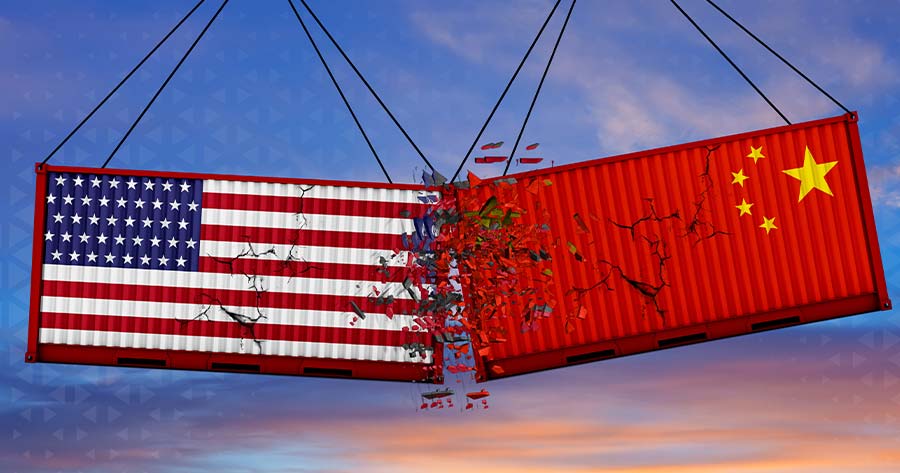
In 2024, China’s apparel market is expected to remain stable, with increased inventory driving demand in developed countries and emerging markets, alongside the growth of cross-border e-commerce. However, challenges will continue to persist, including trade tensions, geopolitical risks, and the potential impact of currency fluctuations.
In 2023, China's clothing industry faced a complex and challenging external environment marked by global economic slowdown and reduced international market demand. The industrial added value of apparel enterprises declined by 7.6 per cent, with garment production falling by 8.69 per cent. However, the retail sales of apparel showed resilience, growing by 15.4 per cent driven by events like the Singles Day shopping carnival.
Despite this, apparel exports decreased by 7.8 per cent, with declines in major markets like the United States and the European Union, though some growth was observed in regions along the Belt and Road.
Investment in fixed assets decreased by 2.2 per cent, but digital transformation accelerated, focusing on intelligent equipment, factory construction, and supply chain optimisation. Despite a 5.4 per cent decline in main business income, the operating margin improved slightly to 5.07 per cent, though 20.8 percent of enterprises operated at a deficit.
Internationally, apparel exports faced challenges due to trade protectionism and geopolitical risks, alongside increased competition from Southeast and South Asian countries. Domestically, however, China's economic stabilisation and policies promoting consumption fueled optimism. With stable employment and income growth, consumer confidence remained robust.
H&M Move unveils new performance-driven collection
Blending style with performance, H&M Move unveiled its latest collection featuring StormMove technology and expressive silhouettes. Offering everything from functional jackets to performance skirts, the collection is made using lab-tested fabrics and a high proportion of recycled materials.
Focusing on consumers’ comfort, the performance-driven collection is endowned with features like technical detailing, lightweight practicality and fashion-forward aesthetics. Mfon Boman, Outdoor Product Manager, H&M Move says, catering to diverse needs, the affordable hiking collection allows customers to move around as they please with comfort.
The collection showcases H&M Move’s commitment to sustainability and innovation through its lab-tested and performance-proven fabric innovations. Windproof, waterproof, and lightweight StormMove™ technology, ThermoMove warmth, and DryMove’s breathable, sweat-wicking capabilities ensure enhanced comfort and functionality.
Upcoming fashion trends and the brand’s culture of adventure infuse the collection with personality, resulting in standout performance pieces characterised by generous and expressive silhouettes. A few of the notable items in the collection include the StormMove™ rain parka, a water-repellent zip-off skirt, warm bomber jackets crafted from 100 per cent recycled polyamide, and a remarkably lightweight shell competing with premium industry leaders.
The collection’s earthy color palette, including light stone, sandy beige, moss, mauve, and charcoal, is complemented by bold high-tech details like 3D pockets, mesh ventilation systems, and taped seams. Carabiners add practicality for outdoor adventurers of all backgrounds, shapes, sizes, and abilities.
Available for both men and women in sizes ranging from XS to XL, the H&M Move hike collection emphasises accessibility and sustainability. It invites movement and style while ensuring comfort for all. The collection launched in-store and online on March 14, 2024, with prices starting at £21.99.
Global fashion markets shift to non-cotton materials: Study
Driven by their enhanced functionality, competitive pricing and sustainability credentials, fashion markets across the globe are pivoting towards non-cotton materials, as per a recent study by Wazir Advisors.
There is a burgeoning demand for a diverse array of fibers like polyester and nylon, regenerated fibers such as viscose rayon, animal fibers like wool and silk, as well as other vegetable fibers like linen.
Around 75 per cent of global apparel consumption and 57.5 per cent of textile trade worldwide now comprise non-cotton materials, according to the report. However, despite this, the proportion of non-cotton apparel in the export portfolio of countries historically lagged behind. Encouragingly, there's been a notable uptick in this figure, with the share of non-cotton apparel in export from some countries, including Bangladesh, rising to 30 per cent in the last three years.
Faruque Hassan, President, Bangladesh Garment Manufacturers and Exporters Association (BGMEA), highlights, since 2021, the association has spearheaded three research initiatives geared towards envisioning future growth prospects.
Notably, one such initiative resulted in the launch of a comprehensive report titled ‘Establishing a Virtual Marketplace Platform for the Apparel Sector’ by LightCastle Partners.
Faruque Hassan underscores the industry’s vision to elevate its share in the global market from the current 7.87 per cent to 12 per cent by 2030, with an export target of $100 billion. However, achieving this demands departing from conventional business models, he adds.
The recent surge in investments in non-cotton sectors signals a promising trajectory for the industry. Yet, challenges loom large, including dependence on imported raw materials, technology gaps, skill shortages, and the need for substantial capital and energy investments.
In response, experts advocate for a strategic roadmap that would help galvanise manufacturers, investors, policymakers, development partners, and other stakeholders towards establishing a robust foothold in the non-cotton textile and apparel market.
Government imposes Minimum Import Price on synthetic knitted fabrics
In a bid to fortify domestic manufacturing and mitigate the inundation of low-cost imports, the Central government has introduced a Minimum Import Price (MIP) on specific categories of synthetic knitted fabrics. Implemented under the Foreign Trade (Development & Regulation) Act, 1992, and in alignment with the Foreign Trade Policy, 2023, this measure aims to establish equitable conditions for indigenous producers.
Effective immediately, revisions to the import policy and conditions have been instituted for designated ITC (HS) codes falling under Chapter 60 of the ITC (HS) 2022. The affected HS codes encompass various forms of synthetic knitted fabrics, including unbleached, bleached, dyed, yarn of different colors, and printed varieties. Importation of these categories is now restricted unless the CIF value exceeds $ 3.50 per kg.
The imposition of this minimum import price seeks to curb the influx of cheaper imports and shield the interests of domestic manufacturers. The reinstatement of the prior ‘Free’ import policy is slated for September 16, 2024, barring explicit amendments in subsequent notifications.
Anticipated ramifications span across the textile sector, with manufacturers and traders bracing for adjustments in pricing strategies and sourcing patterns. The government's decision underscores its dedication to nurturing indigenous production capacities and fostering an enabling environment for domestic industries. It emphasizes the pivotal role of trade policies in safeguarding domestic stakeholders while fostering sustainable economic development.
Vietnam’s garment and textiles exports surge by 15% in 2024
In the first two months of 2024, Vietnam’s textile and garment exports surged by 15 per cent Y-o-Y to $5.2 billion, indicating the industry’s pivotal shift towards green production practices to meet the discerning standards of import markets. As reported by the General Statistics Office, this sector secured the fourth position among top foreign currency earners during this period.
Than Duc Viet, General Director, Garment 10 Corporation, says, it has become mandatory for manufacturers to embrace green production methodologies to ensure sustainable exports. Over the past three years, his company has embarked on a transformative journey, updating machinery with energy-efficient alternatives, implementing rooftop solar power systems, and forging partnerships to incorporate recycled and natural materials into their processes. Moreover, efforts to mitigate carbon emissions, such as substituting coal-derived inputs with biomass alternatives, have been central to their eco-friendly agenda. Viet anticipates that upon the full implementation of their initiatives in 2024, Garment 10's operations will reduce carbon emissions by over 20,000 tons.
The global fashion landscape is witnessing a paradigm shift, with major brands pledging to adopt recycled, natural, and circular materials by 2050. Consequently, international purchasers are recalibrating their supply chains to align with sustainability objectives. According to Prof Dr Andreas Stoffers, Country Director, Friedrich Naumann Foundation for Freedom in Vietnam, the European Union (EU) stands as a pivotal export market for Vietnam's textile and garment industry.
However, the EU views this sector as a significant contributor to environmental degradation, prompting stringent green measures.
Economist Dinh Trong Thinh underscores the challenges faced by small and medium-sized enterprises (SMEs) in adopting costly and time-intensive green standards. To address this, Thinh advocates for governmental support through favorable credit policies to incentivise green investment and production, he adds.
QVC® teams up with NYDJ to launch wheelchair-fit design jean
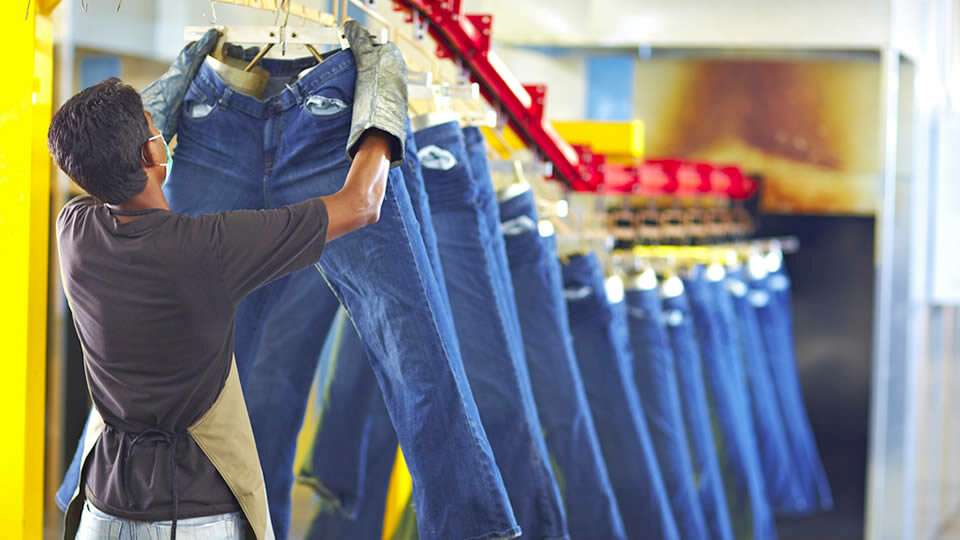
Renowned for its leadership in live video commerce ("vCommerce"), QVC® has introduced the brand's inaugural wheelchair-fit design jean in collaboration with NYDJ. Marking NYDJ's foray into adaptive designs, this venture expands QVC's diverse range of accessible and adaptive products. Named the ‘NYDJ Marilyn Straight Adapt-Denim™ jean wheelchair-fit, the innovative jean debuted on-air and on QVC.com on March 16.
Crafted by the same experts renowned for creating the best-fitting women's jeans, the NYDJ Marilyn Straight Adapt-Denim™ jean wheelchair-fit offers a stylish denim option tailored for millions of wheelchair users. The design incorporates adjusted fit points, such as a higher back rise and lower front rise, flat seams, faux front pockets, and woven tags. Notable features include an inner elastic adjustment for waist fit, an elastic back waist for added comfort, a functional fly with snap closure, and a pocket-free seat. Utilizing the brand's softest Sure Stretch® fabric with lift tuck® technology, this denim ensures both style and functionality.
Rachel Ungaro, GMM and VP - Fashion Merchandise, QVC, highlights, the company is committed to inclusive fashion and offers styles that resonate with a broader audience, fostering a comfortable and confident environment for all customers.
Mark Peters, Director of Consumer Experience & Retail Store Operations for NYDJ, adds, the company collaborated with the disability community throughout the design and construction process. Peters emphasises NYDJ's mission to provide timeless and on-trend fashion that empowers women to feel comfortable and confident.
Shift to luxury helps Zara and Mango beat fast fashion retailers
In the recent landscape of fast fashion, Shein and Temu stormed onto the scene, challenging established leaders like Zara and H&M with their unbeatable prices.
While casualties mounted among digital retailers like Asos and Boohoo Group, and H&M faced a downturn, two players emerged unscathed: Zara-owner Inditex and fellow Spanish retailer Mango.
Inditex reported a record-breaking €35.9 billion ($39 billion) in sales in 2023, a 10.4 percent increase from the previous year. Similarly, Mango saw a 19 percent surge in sales, reaching €3.1 billion, reflecting their ability to withstand the onslaught of competition.
What sets these retailers apart is their commitment to elevating the fast fashion experience. Both Zara and Mango have focused on offering higher-quality garments compared to Shein and Temu, alongside a strategic investment in physical retail, an area where their competitors are notably absent.
Zara, in particular, has embarked on a deliberate shift towards the luxury end of the spectrum. With offerings like $699 leather coats and $439 leather blazers, alongside collaborations with renowned artists and designers, Zara has cultivated an image of sophistication that contrasts sharply with the frenetic online platforms of Shein and Temu.
Mango, while smaller in scale, has followed a similar trajectory. By partnering with esteemed fashion labels and expanding aggressively into new markets like the US, Mango has carved out its niche as a high-quality fast fashion retailer.
Both companies have invested heavily in revamping their brick-and-mortar stores, enhancing the overall shopping experience and further differentiating themselves from their online-only competitors. This strategic move has proven fruitful, as evidenced by their continued growth even in the face of industry challenges.
In essence, the success of Inditex and Mango serves as a blueprint for other mass retailers grappling with the rise of cutthroat competition. By prioritising product quality, retail experience, and creative identity, these Spanish fast fashion giants have demonstrated the enduring power of differentiation in a crowded market.
Mango focuses on versatile clothing options to counter climate change
Spanish retail giant, Mango is focusing on versatile clothing options to accommodate unpredictable temperature fluctuations, reveals Toni Ruiz, CEO.
Traditionally, the fashion industry operated on a strict seasonal basis. However, the effects of global warming have blurred these lines, requiring the industry to respond with garments suitable for varying weather conditions. Ruiz emphasises the importance of providing customers with apparel tailored to their immediate needs, rather than adhering to outdated seasonal cycles.
With Europe witnessing fluctuations in temperatures and rainfall patterns, Mango is witnessing a shift in consumer preferences. For instance, there's a growing demand among women for lightweight trench coats, emblematic of transitional seasonal wear. Additionally, the company is introducing performance-oriented fabrics for men's clothing, enhancing breathability and moisture management for hot days.
Mango has strategically diversified its sourcing strategy, relying on European manufacturers for trend-dependent items and Asian manufacturers for functional wardrobe staples. This flexibility in the supply chain, with sourcing from over 3,000 factories across various regions, has enabled Mango to navigate disruptions efficiently.
The brand is not only expanding its store networks but also leveraging technology, with a particular focus on artificial intelligence (AI). Mango employs AI to monitor social media trends, analyse consumer data, and aid designers in creating innovative pieces. The brand has already developed around 20 garments using AI, underscoring its pivotal role in Mango's strategy.
Pakistan registers 0.65% decline in textile exports from July-Feb’2023-24
A cornerstone of Pakistan's economy, the textile sector has faced a slight setback with a nominal decrease of 0.65 per cent in exports during the first eight months (July – February) of the fiscal year 2023-24.
Data from the Pakistan Bureau of Statistics (PBS) shows, textile exports stood at $11.15 billion during this period, compared to $11.22 billion in the corresponding months of the previous fiscal year.
Among the major components, knitwear exports saw a notable decline of 5.69 per cent, reaching $2.90 billion during July – February 2023-24, from $3.08 billion in the same period of the previous fiscal year. Similarly, exports of readymade garments fell by 3 per cent to $2.31 billion, compared to $2.38 billion in the previous fiscal year.
However, there was a modest increase of 2.08 per cent in the export of bed wear, reaching $1.87 billion during the first eight months of the current fiscal year, compared to $1.83 billion in the corresponding period of the previous fiscal year.
On the other hand, the export of cotton cloth declined by 8.71 per cent to $1.26 billion during the same period, from $1.38 billion in the previous fiscal year. Conversely, there was a robust 48 per cent increase in the export of cotton yarn during the period under review.
While the textile exports experienced a significant 19.20 per cent Y-o-Y increase in February 2024, the sector faced a 3.31 per cent M-o-M decline in the same month.
The textile industry is a vital contributor to Pakistan’s economy, providing employment opportunities and generating foreign exchange earnings. The marginal decline in textile exports underscores the need for continued efforts to address challenges and capitalise on opportunities to enhance competitiveness and sustainability in the sector.
Analysts suggest that factors such as global market dynamics, fluctuations in raw material prices, and evolving consumer preferences may have influenced the performance of Pakistan’s textile exports. They emphasise the importance of adopting strategies to diversify export markets, enhance product quality, and invest in innovation to maintain the sector’s growth trajectory.