FW
Malbon Golf signals strategic shift towards China’s expanding performance-lifestyle market
The opening of Malbon Golf’s first flagship store in Shanghai marks a definitive entry into the world’s most competitive retail theater, specifically targeting China’s rising interest in ‘golf-core.’ While traditional luxury brands face cooling demand in the region, the crossover segment between technical sportswear and high-street fashion - valued at approximately $14 billion—continues to attract high-net-worth Gen Z consumers. Malbon’s presence in China is not merely a retail expansion but a move to capture the ‘quiet luxury’ aesthetic that has transitioned from the fairway to urban centers. Market data suggests, premium sports-lifestyle brands in Tier-1 Chinese cities are maintaining a 15 per cent growth trajectory, outperforming standard fast-fashion aggregates. This flagship serves as a physical anchor for the brand’s digital ecosystem, providing a tactile experience for its high-performance technical fabrics and unconventional silhouettes.
Navigating regional supply chains and consumer preferences
The success of this mainland expansion hinges on Malbon’s ability to synchronize its global design language with local preferences for localized fit and rapid seasonal turnarounds. Retail analysts indicate, the primary challenge for Western lifestyle labels in China remains the 25 per cent higher operational cost associated with premium mall real estate and localized logistics. However, the opportunity lies in the ‘Bharat-to-Beijing’ parallel, where younger consumers are decoupling golf from its elite heritage and embracing it as a versatile lifestyle category. The Chinese consumer is no longer just buying a brand; they are buying into a specific sub-culture that bridges the gap between performance and prestige, noted a regional trade consultant. By leveraging domestic social commerce platforms like Xiaohongshu, Malbon aims to drive double-digit conversion rates, positioning its Shanghai flagship as a regional hub for its planned multi-city rollout across East Asia.
Pioneer of contemporary golf culture
Malbon Golf operates as a premier lifestyle label bridging the gap between traditional golf apparel and modern street fashion. Based in the United States, it specializes in technical sportswear, footwear, and limited-edition collaborations. The brand’s growth plan focuses on aggressive international retail scaling and digital-first storytelling to redefine the 21st-century golfer's wardrobe.
Sulzer-Spinnova alliance accelerates commercial scaling of sustainable wood-based fibers
The partnership between Swiss engineering giant Sulzer and Finnish textile innovator Spinnova marks a critical transition from pilot-phase experimentation to large-scale industrial viability for wood-based fibers. Sulzer’s entry into the Spinnova ecosystem is specifically designed to refine the mechanical delivery systems required for high-volume fiber production. By leveraging Sulzer’s century-long expertise in fluid dynamics and separation technology, the consortium aims to stabilize the consistency of the Spinnova fiber, which is produced without the use of harmful dissolving chemicals. This technical collaboration is vital as the global textile industry faces a projected 15 per cent supply gap in sustainable cellulosic fibers by 2030.
Operational efficiency and circularity mandates
Data from recent industrial trials suggest, Sulzer’s precision manufacturing can reduce energy consumption during the extrusion process by nearly 12 per cent, addressing a primary cost barrier for alternative fibers. The integration of Sulzer’s pump and agitation technology ensures the homogeneity of the fiber suspension, which is the cornerstone of achieving yarn tenacity equivalent to cotton, states a lead engineer involved in the development project. For apparel manufacturers, this partnership offers a tangible route toward meeting the European Union’s Digital Product Passport requirements. As global brands move away from traditional synthetics, the ability to produce zero-waste fibers at a commercial price point represents a significant market opportunity for Tier-1 spinning mills.
Strategic industrial footprint
Sulzer specializes in fluid engineering and chemical processing technologies across global energy and industrial markets. Based in Switzerland, it provides high-efficiency pumping and mixing solutions essential for textile chemical recovery. The company’s growth strategy focuses on decarbonization technologies, supported by a strong 2025 financial performance and a legacy of engineering excellence dating back to 1834.
ABB and Syre forge engineering alliance to scale circular polyester output
The partnership between ABB and Syre represents a significant technical leap toward industrializing the textile-to-textile recycling value chain. By integrating ABB’s digital automation and electrification expertise with Syre’s molecular depolymerization technology, the duo aims to establish a network of high-capacity regeneration hubs. This initiative arrives as the global textile industry faces a critical 2026 deadline for the EU’s Digital Product Passport (DPP), which mandates greater transparency in fiber sourcing. The primary goal is to produce high-grade circular polyester (cPET) that maintains the same performance characteristics as virgin, fossil-based fiber, effectively closing the loop on synthetic textile production.
Automation as a catalyst for molecular regeneration
A central hurdle in scaling textile recycling has been the high operational expenditure associated with chemical processing. Through this collaboration, ABB will deploy advanced manufacturing execution systems (MES) and sensor technologies to optimize Syre’s chemical recycling plants. Internal projections suggest, integrated automation can improve energy efficiency by up to 15 per cent while ensuring consistent output purity. Standardizing the digital architecture across our global facilities is essential for delivering circularity at the speed the market demands, notes a senior engineering lead at Syre. A recent case study in Northern Europe demonstrated that automated monitoring of feedstock variability helped maintain a 98 per cent yield of high-purity rBHET, proving the viability of large-scale, cost-effective regeneration.
Establishing a transatlantic infrastructure for sustainable fibers
The roadmap for the ABB-Syre alliance focuses on establishing ‘mega-hubs’ in strategic regions, starting with a flagship facility in the United States. This geographical focus leverages the growing demand for sustainable materials in the North American market, where synthetic fiber consumption remains high. With a target to reduce carbon emissions by over 50 per cent compared to traditional polyester manufacturing, the venture addresses the supply-demand mismatch in the recycled material sector. Currently, less than 1 per cent of textiles are recycled into new garments; however, Syre’s ambition to scale to millions of tons annually - backed by ABB’s industrial infrastructure - provides a scalable blueprint for apparel manufacturers seeking to insulate their supply chains from fossil-fuel volatility and impending environmental taxation.
Industrial technology and circular materials
ABB is a global leader in electrification and automation, specializing in optimizing manufacturing processes. An impact venture backed by H&M Group and Vargas, Syre focuses on molecular polyester recycling. Their joint 2026 growth strategy targets the global expansion of circular fiber hubs to replace virgin petroleum-based inputs in the textile sector.
Indian apparel sector gains short-term relief as RoDTEP scheme secures extension
The Indian government has signaled its continued commitment to the nation’s trade resilience by extending the Remission of Duties and Taxes on Exported Products (RoDTEP) scheme through September 2026. Announced amid a volatile global economic climate, this six-month reprieve aims to shield the export community from the immediate impact of non-refundable taxes and duties. While the Apparel Export Promotion Council (AEPC) and broader industry stakeholders have formally expressed their gratitude to the Ministry of Finance and the Ministry of Commerce for this intervention, the move is being characterized as a vital bridge rather than a final solution for a sector grappling with high input costs and logistical bottlenecks.
Safeguarding competitiveness amidst global trade headwinds
The extension arrives at a critical juncture for Indian exporters who are currently navigating a landscape defined by fluctuating demand and rising operational expenses. By offsetting the burden of local taxes that are not otherwise channeled through rebate mechanisms, the RoDTEP scheme functions as a stabilizer for the price competitiveness of Indian goods in international markets. Industry leaders, including Dr A Sakthivel, Chairman, AEPC, noted, this policy continuity is essential for maintaining export momentum. However, the council has already begun engaging with high-level government officials -including the Finance and Textiles Secretaries -to advocate for a transition toward a more permanent fiscal framework.
The Strategic push for a five-year policy horizon
Despite the immediate benefits of the extension, the exporting community is intensifying its call for a long-term commitment, specifically requesting a five-year fixed duration for the scheme. The industry argues,the current cycle of short-term renewals creates a climate of unpredictability that hinders large-scale capital investment and capacity expansion. A multi-year roadmap would allow apparel manufacturers to better forecast margins and commit to the long-term trade agreements necessary to strengthen India’s market share. For a sector eyeing aggressive growth targets, the AEPC maintains that policy stability is the primary lever required to transform temporary relief into sustained global trade dominance.
Reconomy, ReHubs partnership anchors Europe’s closed-loop textile infrastructure
The European textile recycling landscape has reached a critical inflection point as a global leader in circular economy solutions, Reconomy has formally joined the ReHubs initiative. This strategic alignment is designed to address the region's massive ‘sorting gap,’ where currently less than 1 per cent of textile waste is recycled back into high-quality fiber. By integrating Reconomy’s sophisticated logistics and data-tracking capabilities with ReHubs’ industrial-scale processing ambitions, the partnership aims to create a standardized feedstock pipeline for chemical and mechanical recyclers. This move is particularly timely as the European Union’s Waste Framework Directive nears its 2026 enforcement milestone, requiring member states to establish comprehensive separate collection systems for all textile waste.
Synchronizing logistics with molecular regeneration needs
A primary bottleneck in the circular transition has been the lack of consistent, high-purity textile volumes required for advanced chemical recycling. The collaboration focuses on ‘Hubs-to-Hubs’ connectivity, utilizing Reconomy’s digital platforms to manage the complex reverse logistics from retail take-back programs to centralized processing centers.
Industry data suggests, a 15 per cent increase in sorting accuracy can reduce the operational expenditure of regeneration facilities by nearly 20 per cent. The scale of ReHubs requires an intelligent bridge between waste collection and industrial fiber production, notes Elena Moretti, a circular economy lead. A recent pilot in the Benelux region demonstrated, digitized tracking of blended fiber compositions improved the yield of recycled polyester (rPET) by 12 per cent, highlighting the necessity of data-integrated waste management.
Scaling for the 2030 sustainable apparel mandate
As the industry faces the upcoming July 1, 2026, registration deadline for global Extended Producer Responsibility (EPR) programs, the Reconomy-ReHubs alliance provides a scalable blueprint for compliance. The broader objective is to reach a processing capacity of 2.5 million tons by 2030, a goal that requires over €7 billion in cumulative infrastructure investment. For apparel brands, this infrastructure represents an essential safeguard against looming fiber shortages and price volatility in the sustainable materials market. By securing a reliable domestic supply of regenerated fibers, European manufacturers can mitigate the impact of freight inflation and geopolitical disruptions, ensuring the long-term viability of high-performance, eco-compliant textile production.
Circular solutions and waste management
Reconomy is a premier technology-led provider of circular economy services, specializing in waste management, sustainability consulting, and resource optimization across international markets. Founded in 1994, the company focuses on helping brands achieve zero-waste goals through data-driven logistics and innovative recycling partnerships, targeting aggressive growth in the European textile and electronics recovery sectors.
Reju funding infusion signals industrial-scale transition for circular polyester
Reju has secured €135 million in funding from the Dutch government’s NIKI program, marking a transformative milestone for the commercialization of textile-to-textile regeneration. The capital is earmarked for the development of ‘Regeneration Hub One’ at the Chemelot Industrial Park in the Netherlands, a facility designed to divert post-consumer textile waste from landfills and incineration at an unprecedented scale. This investment follows Reju's January 2026 site selection in Rochester, New York, effectively establishing a transatlantic infrastructure for circular fibers. By utilizing advanced molecular depolymerization technology, the hub aims to process the equivalent of 300 million garments annually, translating into a production capacity of approximately 50,000 tons of regenerated BHET (rBHET) for repolymerization into high-quality polyester.
Bridging the carbon gap in synthetic fiber production
The technical significance of Reju’s output lies in its environmental performance; the resulting ‘Reju Polyester’ delivers a 50 per cent lower carbon footprint compared to virgin, fossil-based alternatives. This award represents a critical vote of confidence in our ability to deliver circular raw materials at scale, states Patrik Frisk, CEO, Reju. The 2026 market dynamics - characterized by a projected $7.36 billion global textile recycling valuation - are increasingly favoring such chemical recycling methods over traditional mechanical processes. While mechanical recycling currently holds a 73 per cent market share due to lower costs, chemical regeneration offers superior fiber integrity, allowing polyester to be recycled multiple times without quality degradation.
Traceability and the Digital Product Passport frontier
As the European Union moves toward mandatory separate textile waste collection and the implementation of Digital Product Passports (DPP), Reju is positioning its hubs as essential nodes for fully traceable supply chains. The integration at Chemelot provides access to a mature industrial ecosystem, enabling the brand to streamline logistics and energy efficiency. However, the sector still faces a significant supply-demand gap; even with these new capacities, analysts estimate that total global output will meet less than 10 per cent of the 11-million-ton potential for textile-to-textile recycling over the next decade. For global apparel brands, Reju’s scaling represents a vital opportunity to secure nearshore, sustainable fiber supplies amidst escalating geopolitical and regulatory pressures.
Industrial regeneration strategy
Reju is a materials science leader specializing in molecular polyester regeneration. Owned by Technip Energies and utilizing IBM Research technology, the company operates across European and North American markets. Reju aims to establish a global network of circular hubs, targeting high double-digit capacity growth through 2030 to replace virgin fossil-based inputs.
PVH leverages brand flywheel to deflect global macro headwinds
PVH Corp has successfully navigated an intricate 2025 fiscal landscape, reporting a 3 per cent revenue increase to $8.95 billion, underscored by the resilient performance of its flagship labels, Calvin Klein and Tommy Hilfiger. While the broader retail sector faces significant cooling, the group’s ‘PVH+ Plan’ has catalyzed a critical pivot toward product desirability and operational discipline. The fourth quarter was particularly telling, with revenue increasing by 6 per cent to $2.51 billion, handily exceeding analyst projections despite a substantial 170-basis-point drag from escalating US import tariffs.
Navigating the tariff-induced margin squeeze
The primary challenge for 2026 remains a rigorous cost-push environment. Management has signaled that gross tariff impacts could reach $3.30 per share this year, yet sequential gross margin improvements in late 2025 suggest that mitigation strategies - including supply chain diversification and disciplined pricing - are taking hold. The brand concludes the year with over 200 basis points of annualized cost savings, notes Stefan Larsson, CEO of PVH, highlighting that the company is effectively self-funding its growth initiatives. A recent internal analysis of their ‘Hero Product’ strategy showed that concentrated marketing on core franchises like Calvin Klein’s 'Icon Cotton Stretch' line helped offset lower footfall in traditional wholesale channels.
Direct-to-Consumer momentum and global recovery
Looking ahead, PVH is banking on a Direct-to-Consumer (DTC) resurgence across all operating regions. While constant-currency revenue in Asia dipped slightly in early 2026, the group expects a return to growth in the second half, bolstered by positive wholesale order books in Europe for the Fall 2026 season. The company’s financial outlook remains cautiously optimistic, guiding 2026 non-GAAP EPS to a range of $11.80–$12.10. By prioritizing digital acceleration and reclaiming licensed categories in-house, PVH is transitioning from a volume-led model to a brand-led powerhouse, ensuring its iconic American aesthetic remains a staple in the global luxury-casual market.
Operational footprint and market position
PVH Corp is a global apparel leader managing the iconic Tommy Hilfiger and Calvin Klein brands across 40 countries. Specializing in premium lifestyle apparel, footwear, and accessories, the company focuses on the ‘PVH+ Plan’ to drive long-term, data-driven growth. Founded in 1881, PVH continues to prioritize high-margin DTC expansion and digital commerce leadership.
$120 Crude, Zero Margin: How India’s textile hubs are paying the price
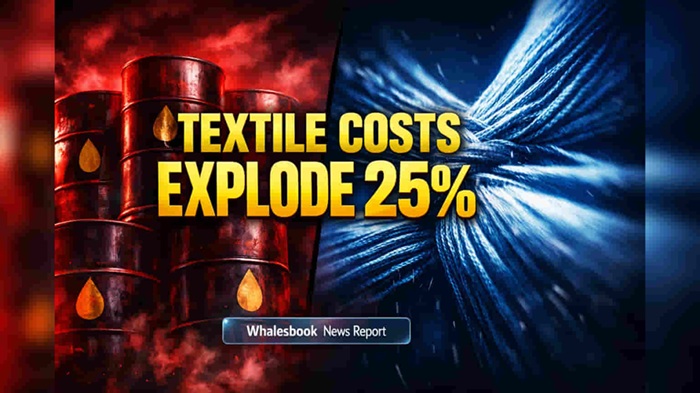
For India’s textile clusters, the current West Asia crisis is no longer a distant geopolitical headline. In Surat’s polyester corridors and Ludhiana’s knitwear factories, it has become a live spreadsheet problem. Every escalation in the US-Iran standoff now transmits directly into crude, derivatives, marine fuel, insurance, and freight, converting geopolitics into a brutal margin equation.
The real stress point is not merely higher oil. It is the speed and asymmetry with which petroleum-linked inflation moves through India’s textile and apparel value chain. In a sector increasingly dependent on man-made fibres (MMF), the price of every kg of polyester yarn, every meter of synthetic fabric, and every export container is now mathematically tethered to the barrel. At a crude benchmark hovering around $120-plus, India’s textile hubs are facing a profit shock that is sharper than what many competing Asian exporters face.
MMF dependence turns crude into a direct threat
India’s textile narrative has evolved beyond its cotton legacy. The growth engine in export-facing apparel, technical textiles, activewear, winterwear, and fast-fashion synthetics is now deeply MMF-led. That makes petroleum derivatives such as PTA and MEG the first line of exposure.
The present cycle shows the classic ‘rocket and feather’ phenomenon that haunts commodity-linked industries. When crude rises, PTA and MEG spike almost immediately as upstream suppliers reprice inventory and forward contracts. But when crude falls downstream yarn and fabric prices dip only gradually because expensive stock remains embedded across spinning, weaving, and processing pipelines. The following cost table captures the severity of the shift.
Table: Impact on input materials (March 2026 vs. Dec 2025)
|
Raw material |
Dec 2025 (base) |
March 2026 (peak) |
% Change |
Impact on garment cost |
|
Crude Oil (Brent) |
$78/bbl |
$124/bbl |
+59% |
Indirect (Logistics/Power) |
|
PTA (Synthetic Base) |
Rs 68/kg |
Rs 84/kg |
+23.5% |
Direct (Polyester Fabric) |
|
MEG (Synthetic Base) |
Rs 44/kg |
Rs 56/kg |
+27% |
Direct (Polyester Fabric) |
|
Coal (Indonesian) |
$90/ton |
$135/ton |
+50% |
High (Boilers/Processing) |
The numbers explain why Surat is particularly exposed. A 23-27 per cent increase in PTA and MEG does not remain only about raw material cost; it cascades into filament yarn, textured yarn, grey fabric, dyeing, and finished polyester apparel. In margin-sensitive export categories, even a mid-single-digit increase in fabric cost can erase negotiating power with global buyers.
Coal’s 50 per cent jump adds a second layer of pain. Textile processing remains energy intensive, especially in dyeing, finishing, and boiler-led wet processing units. The result is simultaneous inflation in both material and conversion cost, a rare double hit that few apparel sectors can absorb comfortably.
Why it’s harsher for India than Bangladesh or Vietnam
The global apparel trade is unquestionably under stress, but India’s cost sensitivity is uniquely severe because of the structure of its product mix and domestic logistics. Bangladesh remains more cotton-heavy, especially in mainstream knit basics. That cushions some of the oil shock at the raw material level. Freight inflation still hurts Dhaka’s exporters, but the core fibre basket is less directly tied to petroleum volatility than India’s MMF-rich product mix.
Vietnam, by contrast, has comparable or even higher MMF penetration, yet it enjoys a buffer that India currently lacks. Zero-duty market access in important geographies, faster port turnarounds, and a superior logistics performance ecosystem help offset fuel-driven shipping spikes. The more punishing differential lies in logistics cost. India’s logistics burden at roughly 13-14 per cent of GDP effectively compounds the crude shock. Vietnam’s 8-9 per cent structure gives it a decisive resilience advantage in periods of bunker fuel inflation. In practical terms, every rise in marine fuel costs creates a ‘double tax’ for Indian exporters, once through global shipping rates and again through domestic inland inefficiencies. This is where the crude story becomes less about oil and more about systemic competitiveness. High energy prices merely expose pre-existing friction.
New freight regime wiping out apparel margins
The shipping side of the crisis is proving just as disruptive as the raw material side. Vessel diversions around the Cape of Good Hope have lengthened Europe- and US-bound routes by nearly 6,500 km, adding close to two weeks to transit cycles. For textile exporters working on seasonal calendars, this delay is commercially devastating. Fashion goods are perishable in timing, even when they are not perishable in nature. A winter jacket arriving late to Hamburg is worth materially less, irrespective of production quality.
The economics are stark in the Ludhiana winterwear corridor. A typical consignment of 10,000 jackets now absorbs three layers of war-related cost inflation: emergency war-risk surcharges, bunker adjustment factors tied to marine fuel, and sharply increase in insurance premiums.
The result is a landed cost goes up around $2.10 per jacket. In a business where net margins often hover around 5 per cent, that single line item can eliminate profits altogether. More importantly, delayed cash cycles from longer transit and slower realization place working capital under immediate strain, raising dependence on export credit.
The 30-day survival playbook
The first shift Indian exporters need is contractual discipline. Fixed-price agreements signed in a volatile crude environment are effectively margin traps. Price agreements now require indexed clauses linked to either crude, PTA benchmarks, or freight indices so that sudden movements beyond a 5 per cent threshold trigger automatic repricing.
Inventory management also needs a reset. Traditional 45-day stocking norms, once seen as prudent, now risk locking capital into peak-priced raw material. A tighter 21-day rolling inventory model is emerging as the more rational play, allowing firms to respond faster if crude retreats or shipping lanes normalize.
Liquidity is the third immediate issue. Longer sailing times and delayed buyer payments mean the cash conversion cycle is stretching precisely when working capital needs are highest. Exporters that proactively negotiate 90-day extensions on pre-shipment and post-shipment credit lines will preserve operational flexibility far better than those relying on conventional banking windows.
Decoupling textiles from oil volatility
Beyond immediate firefighting, the sharper response lies in reducing the sector’s embedded energy sensitivity. Surat’s processing ecosystem, where power can account for nearly 15 per cent of conversion cost, has a clear decoupling opportunity through rooftop solar and hybrid captive renewable systems. A credible green-energy transition can cut processing power cost nearly in half, creating a structural hedge against both coal and oil-linked electricity inflation.
Integrated manufacturing ecosystems under PM MITRA also gain renewed relevance in this environment. Their biggest advantage is not policy optics but cost architecture. By reducing intra-cluster transport movements between spinning, weaving, processing, and garmenting, these parks can materially compress internal logistics expenses and turnaround times.
Equally critical is the democratization of hedging. Mid-sized exporters have for long avoided basic commodity and currency protection tools, viewing them as instruments for large corporates. In a Middle East-led volatility cycle, that mindset is increasingly untenable. PTA exposure, bunker-linked freight, and USD/INR swings now require even mid-market players to adopt structured hedging disciplines.
New rule of textile competitiveness: math over optimism
The defining lesson of 2026 is that textile competitiveness can no longer be measured solely by labour cost, scale, or fibre access. It must now include exposure to energy cycles, route security, inventory lag, and financial agility.
For India’s textile hubs, especially Surat and Ludhiana, the challenge is not simply surviving a temporary crude spike. It is learning to operate in a world where every stitch carries embedded geopolitical risk. The winners will not be those waiting for oil to cool or shipping routes to normalize. They will be the firms that reprice faster, stock smarter, hedge better, and redesign cost structures around energy uncertainty. In the current scenario, hope is not a strategy, Maths is.
TUMI departs from business-centric palette as premium travel gear market grows by 7.2%
International travel and lifestyle brand, TUMI has unveiled its Spring 2026 ‘Mediterranean Escape’ collection, signaling a decisive departure from its historically monochromatic, business-centric palette.
Launched at a high-profile regional activation in Koh Samui, the collection introduces sun-washed tones like ‘Horizon Blue’ and ‘Pink Clay’ across its flagship 19 Degree and Voyageur lines. This strategic shift reflects a broader 7.2 per cent annual growth trend in the global travel accessories market, which is increasingly driven by a 65 per cent consumer preference for leisure-oriented, high-aesthetic gear. By integrating artisanal textures - such as raffia-inspired weaves in the Olas and Harrison collections - TUMI is aggressively targeting the premium women’s segment, which analysts expect to contribute significantly to the brand’s projected 10-15 per cent revenue growth for the FY26.
Engineering seamless movement for the modern globalist
Beyond aesthetic renewal, TUMI is doubling down on ‘Functional Performance’ to capture a larger share of the $15.67 billion global luggage market. The Spring 2026 range debuts the 19 Degree ‘Front Access’ expandable carry-on, a mechanical innovation designed for travelers navigating high-density urban environments and limited cabin spaces. As global travel demand remains robust, with 70 per cent of market growth linked to rising international passenger traffic, TUMI is leveraging its ‘OneTech’ philosophy to integrate lightweight polycarbonate with sculptural aluminum silhouettes. This collection is an evolution in how we tell our story; it’s about traveling while fully experiencing the senses, says Victor Sanz, Global Creative Director. This data-driven approach to product diversification ensures TUMI remains a dominant Tier-1 choice for the ‘China+1’ sourcing era, where durability and expressive design are the new benchmarks for luxury loyalty.
TUMI is a leading international brand specializing in premium travel, business, and lifestyle accessories. Known for its signature FXT Ballistic Nylon, the company operates a global retail network spanning over 75 countries. TUMI is currently expanding its women’s and lifestyle categories, aiming for a 15 per cent revenue growth in 2026 while maintaining its reputation for precision-engineered, durable design.
Strategic diversification buffers Indian apparel exports against US tariff volatility
India’s RMG sector is demonstrating remarkable structural resilience, recording a 2.36 per cent growth to reach $11.58 billion during the April-December 2025 period. This modest uptick is a significant achievement given the ‘tariff shock’ of September 2025, which saw US-bound shipments plunge by 10.45 per cent following aggressive duty hikes. However, the strategic implementation of the India-UAE CEPA and the landmark ratification of the India-EU Free Trade Agreement in January 2026 have provided a critical safety valve.
Exports to the UAE increased by 9.5 per cent, while shipments to Spain and Poland grew by 7.9 per cent and 19.3 per cent respectively. Industry data suggests, this geographical pivot is effectively diluting the US market’s historical dominance, which has contracted to approximately 32 per cent of India’s total apparel export basket. .
Fiscal recovery and margin stabilization for FY2027.
Despite a 30 per cent rise in operational costs linked to Red Sea logistical disruptions, the sector’s outlook was revised from ‘Negative’ to ‘Stable’ in February 2026. This optimism is fueled by a downward reset in US tariffs from peak levels of 50 per cent to a more manageable 10-18 per cent following bilateral negotiations. .
The industry is moving from a survivalist discount model to a value-added growth phase, notes a report by ICRA, predicting an 8-11 per cent revenue rise for FY2027. Exporters are now leveraging ‘blended finance’ to upgrade to sustainable manufacturing standards, a prerequisite for the EU’s upcoming Digital Product Passport mandates. This transition is expected to improve operating margins by 200 basis points, positioning Indian Tier-I suppliers as the preferred ‘China+1’ alternative for global retailers like H&M and Adidas. .
India’s global apparel export engine.
The Indian apparel industry is a top-tier global supplier specializing in RMG, cotton textiles, and high-value ethnic wear. With key markets in the US, EU, and UAE, the sector is targeting $55 billion in exports by 2031. Growth is currently driven by Free Trade Agreements and aggressive integration of sustainable production technologies.