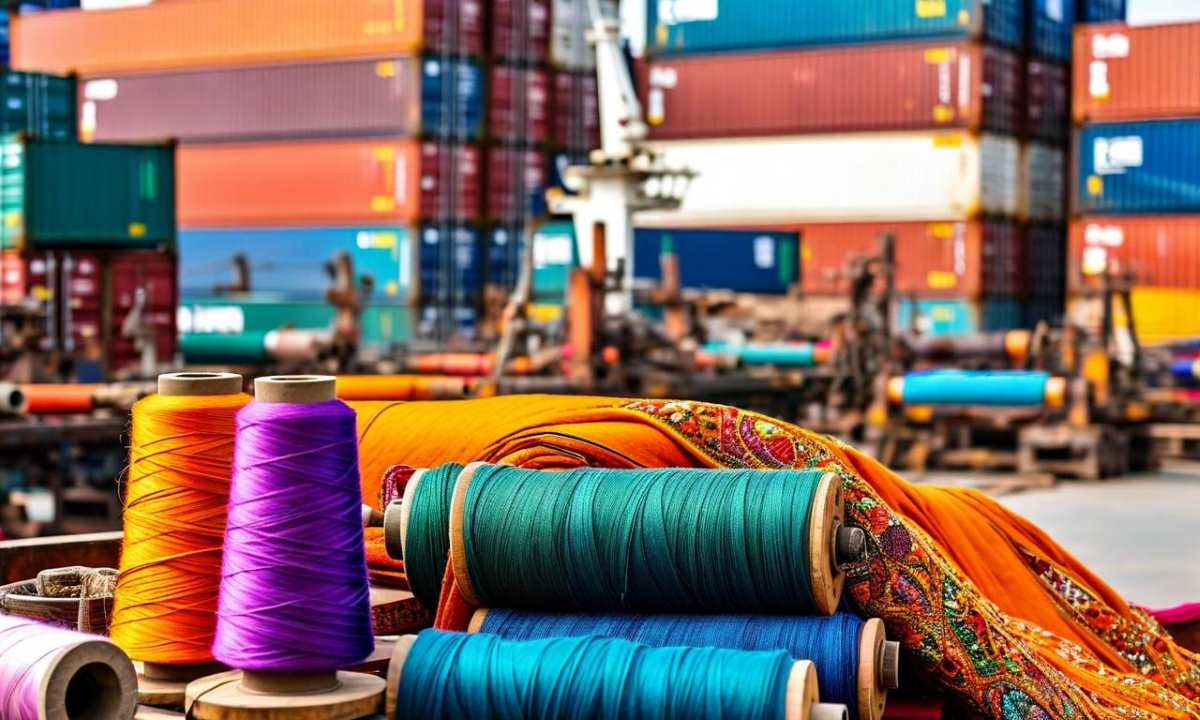
In the sprawling textile clusters of Tiruppur, Surat, Panipat, and Karur, the familiar hum of looms has taken on a sharper urgency. The finalisation of the India-EU Free Trade Agreement (FTA) this week is being read across India’s textile heartland not as a routine trade pact, but as a reset, one that could reorder global sourcing hierarchies that have been frozen for over a decade.
For years, Indian exporters arrived late to the European shelves, not because of quality or capacity constraints, but because of price distortion. A punitive 9.6-12 per cent import duty acted as a silent tax on Indian competitiveness, steadily eroding market share while rivals from Bangladesh, Vietnam, and Pakistan surged ahead under zero-duty regimes enabled by LDC status, GSP+ benefits, or bilateral FTAs. The India-EU FTA doesn’t merely remove a tariff barrier. It collapses an asymmetry that defined the EU apparel market for over a generation.
From structural disadvantage to strategic parity
Until now, Europe’s sourcing map was built on a simple arithmetic. An Indian garment priced at $10 landed on EU shelves at $11.20 after duties. The same product from Bangladesh landed at $10 flat. That 12 per cent delta, small on paper, lethal at scale decided contracts, volumes, and factory survival.
With tariffs reduced to zero across key textile and apparel categories, Indian suppliers finally enter the EU market on equal footing. This parity is arriving at a moment when European buyers are actively rethinking overdependence on a narrow supplier base, driven by geopolitical instability, ESG pressure, and rising compliance costs in traditional sourcing hubs. The FTA thus intersects perfectly with Europe’s China-plus-one and increasingly Bangladesh-plus-one strategies.
Where the gains actually accrue
The true impact of the FTA becomes clear when examined layer by layer across the textile value chain. India’s long-standing advantage lies in its rare degree of vertical integration, from fibre to finished garment a capability few competitors can match at scale.
Europe discovers ‘soil-to-shelf’ India
India’s dominance in cotton production has historically been underutilised in Europe due to residual duties on yarns and grey fabrics. With these eliminated, EU designers and sourcing houses gain direct access to traceable, origin-certified cotton supply chains an increasingly critical factor under new EU due-diligence laws. This positions India uniquely as a ‘Soil-to-Shelf’ supplier at a time when traceability has become as important as price.
RMG the immediate volume winner
Accounting for nearly 60 per cent of India’s EU textile exports, ready-made garments (RMG) stand to gain first and fastest. Core categories like T-shirts, dresses, casual shirts, and kidswear will see immediate reallocation of volumes as European brands rebalance sourcing away from tariff-free but capacity-constrained suppliers.
Home textiles, a comeback story in motion
Clusters like Panipat and Karur are poised for a resurgence. Indian bed linen, towels, and curtains long overshadowed by Pakistan’s duty-free access re-enter EU sourcing conversations with renewed competitiveness. Given Europe’s demand for sustainable home products, India’s scale in organic cotton and recycled blends adds another layer of advantage.
Man-Made Fibres and technical textiles, the quiet breakout
While Vietnam retains leadership in synthetics and sportswear, India’s MMF segment is at an inflection point. The FTA, combined with the Production Linked Incentive (PLI) scheme and rationalisation of Quality Control Orders (QCOs) on polyester yarn, is expected to drive a 15-20 per cent CAGR in MMF apparel exports to Europe over the next five years.
Table: Comparative scenario in the EU market (Pre-FTA vs Post-FTA)
|
Feature |
India (pre-FTA) |
India (post-FTA) |
Bangladesh |
Vietnam |
Pakistan |
|
Tariff Rate |
9.6-12% |
0% |
0% (LDC Status) |
0% (EVFTA) |
0% (GSP+) |
|
Primary Strength |
Cotton RMG, Home Textiles |
Diversified (MMF + Technical) |
Mass-market Cotton RMG |
MMF & Sports Apparel |
Home Textiles & Denim |
|
Supply Chain |
High Integration |
Maximized Integration |
Low (Imports Yarn/Fabric) |
Moderate |
High (Cotton-based) |
|
EU Market Share |
4-5% |
Projected 8-10% |
21% |
5% |
4% |
India’s edge is not volume alone but resilience. While Bangladesh and Vietnam remain strong, their dependence on imported yarns and fabrics exposes them to supply shocks and ESG scrutiny areas where India’s integrated ecosystem becomes a decisive advantage.
From $7 bn to a $40 bn corridor
India’s textile and apparel exports to the EU currently stand at approximately $7.2 billion annually. Post-FTA projections suggest a dramatic expansion trajectory.
|
Product Category |
Actual exports 2024 |
Projections 2030 (Post-FTA) |
|
Ready-Made Garments |
$4.5 bn |
$22.0 bn |
|
Cotton Textiles/Made-ups |
$1.2 bn |
$8.5 bn |
|
Man-Made Fibers (MMF) |
$0.8 bn |
$5.5 bn |
|
Technical Textiles/Other |
$0.7 bn |
$4.0 bn |
|
Total |
$7.2 bn |
$40.0 bn |
The numbers suggest a radical transformation. Current annual T&A exports to the EU hover around $7.2 billion. Industry projections following the FTA suggest a rapid ascent. In the short term there will be an immediate bounce as retailers like H&M and Zara shift volumes from Bangladesh (amidst its socio-political transition and LDC graduation concerns) to India. In the medium-term by 2030 exports are projected to hit $30-$40 billion, potentially creating six million new jobs, primarily for women in rural clusters.
The drivers behind this leap are factors like immediate volume shifts by EU fast-fashion and mid-market brands; Bangladesh’s impending LDC graduation and political uncertainty; India’s scale advantage in ESG-compliant production; capital reinvestment enabled by duty savings.
Inside Tiruppur: A factory-floor view of the fta effect
Consider the experience of Vardhaman Apparel Solutions (name changed), a mid-scale Tiruppur exporter. Before the FTA in 2024, the company lost a German organic cotton hoodie contract to a Vietnamese competitor. The deciding factor wasn’t quality or delivery it was the 12 per cent tariff differential that pushed Indian pricing out of the retailer’s mid-range category.
Post FTA with tariffs eliminated, Vardhaman has signed an MoU for a 30 per cent volume increase starting Q3 2026. Crucially, the company is reinvesting duty savings into automated cutting systems, water-less dyeing, and pilot green-hydrogen energy units. The FTA doesn’t just restore competitiveness—it restores margins, notes an analyst at CareEdge Ratings. And margins are what fund sustainability.
From tariff walls to green walls
If tariffs were the old battleground, compliance is the new one. The EU’s Carbon Border Adjustment Mechanism (CBAM), Digital Product Passport mandates, and stricter traceability rules mean that access alone is not enough. Indian exporters must now meet Europe’s rising bar on carbon accounting, labour transparency, and circularity.
Here, again, the FTA acts as an enabler. By improving margins, it gives manufacturers the financial headroom to invest in renewable energy, cleaner chemistry, and data-driven compliance systems—investments that were previously unviable under thin, tariff-compressed margins.
A rare alignment of policy, market, and timing
Trade agreements rarely arrive at moments of perfect alignment. This one does. The India-EU FTA lands just as Europe is diversifying supply chains, India is scaling industrial policy, and global brands are redefining what “responsible sourcing” means. Together, these forces could transform India from a marginal EU supplier into a cornerstone of Europe’s textile future. The tariff wall has fallen. The race now is not just to supply Europe but to supply it better, cleaner, and smarter than anyone else.