FW
Philippine garments industry gets back on track
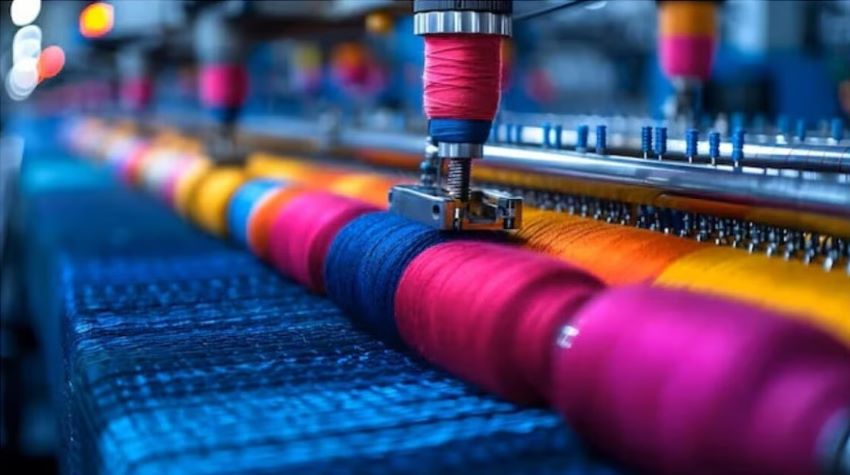
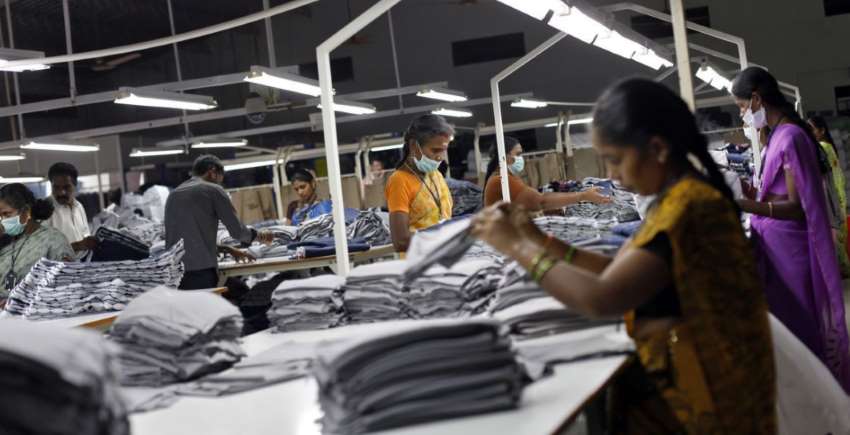
The Philippine garment and textile industry is undertaking strategic initiatives, projects and partnerships involving key players, manufacturers, and stakeholders. The garment and textile sector was considered a sunrise industry during the 1990s. But the end of the Multi-Fiber Agreement, which granted preferential tariffs to the country’s exports of garments and textiles, saw a decline in the sector’s general performance. As a result, garment and textile enterprises in the Philippines which relied on quotas underwent difficulties leading to closure of factories and downsizing.
The MFA, which prescribed quota allocations in identified textiles and garments that are for export to developed countries from developing countries like the Philippines, India, and Vietnam, was replaced by the Agreement on Textiles and Clothing in 1995.
The Philippine garment and textile industry trade has steadily and continuously declined between 2005 and 2011. Its garment export performance dropped by 39 per cent. At present, 39 per cent of the industry is composed of exporters, and 61 per cent is subcontractors, which include small contractors catering to garment exporters, or backyard businesses. Employment under the textile and garment industry in the country is at 1,37,000 and 4,22,000 respectively.
The Philippine garment and textile industry is gearing up to jumpstart its resurgence and gain back its reputation as a competitive player in the domestic and international markets.
Gap sales up eight per cent
For Q2 Gap net sales increased eight per cent compared with last year. Comparable sales increased two per cent compared with a one per cent increase last year. Gap has delivered its seventh consecutive quarter of positive comparable sales growth. Gross profit increased 10 per cent compared with last year.
Gross margin was 39.8 per cent, an increase of 90 basis points compared with last year. The effective tax rate was 23.5 per cent for the second quarter of fiscal year 2018.
During the quarter, the company repurchased 3.2 million shares for 100 million dollars and ended the second quarter of fiscal 2018 with 385 million shares outstanding. The company’s dividends during the second quarter of fiscal year 2018 increased five per cent compared with last year.
Gap ended the second quarter of fiscal year 2018 with 3,626 store locations in 43 countries, of which 3,187 were company-operated. The company continues to expect comparable sales for fiscal year 2018 to be flat to up slightly. The company continues to expect its fiscal year 2018 effective tax rate to be about 26 per cent.
In estimating the earnings per share impact from foreign currency exchange rate fluctuations, the company estimates current gross margins using the appropriate prior year rates.
Ethiopia to generate $240 million from textiles sector
Ethiopia plans to generate $240 million from the textile sector in the 2018/19 fiscal year. The country gained $ 110 million, 46 per cent of the expected outcome, in the 2017/18 fiscal year from the sector. According to the Minister of Industry, Bogale Feleke, failure in achieving the plan was caused by lower exports, shortage of cotton, lack of trained manpower, and instability in some parts of the country.
The minister revealed that agreements to release efficient foreign currency in the textile and apparel market have been signed with the National Bank of Ethiopia and Development Bank of Ethiopia. He also informed that the government had developed National Cotton Development Strategy, a 15 years strategy, in order to address cotton shortages. According to the minister, the strategy aims at improving local cotton production and putting Ethiopia at the top of cotton production in Africa.
The Director General of Textile Industry Development Institute, Silesh Lema, stated that maximum efforts are being undertaken to enhance foreign currency earnings from the sector. He said that the institute is doing its best to expand market opportunities and attract potential buyers from the global market.
Africa emerging as the new textile and fashion hub
Demand for African textiles and garments is increasing globally, and African patterns are gaining recognition as truly fashionable and iconic pieces. International fashion houses are integrating more and more African influences in their latest collections.
International textile manufacturers are turning to Africa as a new source of labor – and a growing consumer market. Africa is clearly and quickly taking on a greater role in the global fashion value chain. A great example of this is Ethiopia which is investing in industrial parks to accelerate textile production and the country’s productivity as well as developing a heavy industry that will allow its full industrialisation by 2025.
The African Development Bank will continue to support the fashion industry so that it can make its full contribution to the growth of our economies, as well as give Africa its rightful place in the global cultural and creative landscape.
US sourcing to focus on high margin Chinese goods
Sourcing higher-margin products removes the need to increase prices, helping to retain price-sensitive consumers and maintain customer loyalty. < US retailers fear the tariff war with China will harm their business. When the US announced the plan to hike up tariffs on Chinese goods from ten per cent to 25 per cent, China responded in kind, placing retaliatory tariffs on an equal amount of American imports—including products used to manufacture apparel such as cotton, yarn and assorted textiles.
Brands across the spectrum are being impacted by the additional tariffs on Chinese merchandise. Given the recent taxes on imported goods, retailers need to source higher-margin products to offset these additional expenses and minimize the risk of unpredictable changes to future costs.
However, footwear retailers face unique challenges when it comes to sourcing high-margin merchandise. Footwear brands tend not to have high margins.
In the meantime, the European Union has placed its own retaliatory tariffs on some US goods like apparel and textiles, including T-shirts and jeans. Add to that, NAFTA negotiations are continuing to drag on under the constant threat that the US could pull out entirely. Together, it means there are few safe sourcing channels for retailers to rely on.
India:Eco-friendly method to size and desize yarns developed
A research team at the Department of Chemistry in the Calicut University has developed an economically viable and environmentally responsible method to size and desize cotton and polyester yarns. The team used liquid and supercritical carbon dioxide as solvents, and nonfluorous CO2-philes as size compounds to size and desize the yarns through a dry process. The research, published in the ACS Sustainable Chemistry & Engineering journal, found that the tensile strength of the yarn nearly doubled for the cotton yarn when sized with this method, while it increased 60 percent for the polyester yarn.
Sizing is the process of strengthening the yarn by applying a protective adhesive coating to decrease breakages on the loom and improve weaving efficiency. The conventional sizing method involves drawing the yarn through a concentrated sizing solution, mostly starch and polyvinyl alcohol, and then drying it. After weaving, the yarn has to be desized by washing with water that requires high amounts of water and energy. The entire size materials and the solvent can be recycled, making it a zero-pollution technology that can easily be translated into industry at an affordable cost.
Online clothing sales in China up 24 per cent
From January to June, online retail sales in China grew 29.8 per cent year on year. Among online retail sales of physical commodities, sales of clothing increased by 24.1 per cent year on year.
Retail sales of clothing, foot and head wear and knitted goods edged up 10.1 per cent year on year.
China's garment and accessories exports were down two per cent year on year.
Investment in the country’s garment industry decreased by 5.7 per cent.
From January to June, the main business income of textile enterprises showed a year on year growth of 3.89 per cent. Total profit was up by 0.84 per cent year on year. The margin of sales was 5.32 per cent, down 0.16 percentage points compared with the same period in 2017.The gross profit margin was 14.43 per cent and declined by 0.26 percentage points year on year. The share of overheads in turnover was 9.08 per cent, up 0.12 percentage points year on year.
Luxury brands are investing in China. Youngsters account for around 30 per cent of the sector's sales. Increasing spend by cash-rich Chinese millennials is prompting brands to revamp some stores and open new ones in second- and third-tier cities where luxury spending is growing faster.
Li & Fung turnover down nine per cent
Li & Fung turnover in the first half ended June 30 fell 9.6 per cent from a year earlier. Total margin as a percentage of turnover was 10.5 per cent. The logistics business saw turnover increase 10.9 per cent from a year earlier.
Core operating profit in the half decreased 18 per cent due largely to the decrease in turnover and total margin in the supply chain solutions business given the shifting retail environment and customer destocking. Core operating profit in logistics rose 15.1 per cent. Operating costs in supply chain solutions decreased 9.8 per cent, benefiting from the roll out of the digital modules and productivity measures.
Li & Fung is among the top sourcing and supply chain companies in the world. It was affected by a challenging macroeconomic and retail environment in the first half of the year, which saw continued destocking, store closures and bankruptcies.
The strategic divestment of its three product verticals–furniture, beauty and sweaters–was completed in April. The divestment was in line with Li & Fung’s strategy to simplify its business and allow senior management to focus resources on growing the core business of supply chain solutions, helping customers manage the changing retail environment and delivering its three-year plan goals.
Huntsman develops technology for protection from the sun
Textile companies are using new technology to develop products that protect against natural elements like sun and water.
Consumers want maximum protection from the sun’s harmful rays, especially when it comes to protecting children.
Huntsman Textile Effects has launched High IQ Sun Protect to help mills, brands and retailers meet consumer demand for apparel and accessories with built-in sun protection. High IQ Sun Protect provides an Ultraviolet Protection Factor of up to 50, offering the wearer with the highest level of protection for the lifetime of the garment.
High IQ Sun Protect guards against damaging UV-A and UV-B rays. The product does not impair the natural aesthetics of the fabric and prolonged exposure to sunlight and multiple laundering will not degrade the protection or fade the colors.
Textile chemicals company Bolger & O’Hearn has introduced an advanced durable water repellent technology engineered to keep apparel dry and consumers comfortable, even when exposed to pounding wind and rain. Garments made with the material are engineered to deflect heavy, wind-driven rain, but are lightweight and allow perspiration to evaporate.
Chemours has introduced Zelan R2 Plus, which contains 30 per cent renewably sourced, plant-based raw materials and is focused on delivering a high level of durable water repellent technology for all material substrates.
Coach expands range
Coach has begun to diversify its offerings beyond handbags. It started selling ready-to-wear apparel, and it plans to expand into new product categories and grow its menswear selection, which accounts for about 20 percent of the business.
Its merchandise now includes outerwear, jewelry, watches, scarves, and fragrances. The plan is to expand into home décor and other segments, when the time comes.
Coach has cut down on promotional activity, such as flash sales and discounted merchandise, purposely hurting sales in the hope that it would wean customers off lower-priced fare.
Sales at Coach are starting to recover after a disastrous three-year stretch from 2012 to 2015, when the label shed more than 18 per cent of its annual revenue.
Coach began in 1941 as a leather goods workshop in the US that sold only men’s goods: bags, wallets, flask-holders. It didn't sell women's handbags until 20 years later.
The shoulder bags with interchangeable straps, bucket bags and clutches and the signature brass turn lock are still used on many of the brand's styles today.
In 2001, the brand released a line of bags covered in interlocking Cs, a design that coincided with the very beginning of fashion's logo craze. Coach had its logo bags. The print was applied to premium leather satchels, as well as to its cheap nylon tote bags. In a little over a decade, Coach would grow into one of the world's largest handbag labels.