FW

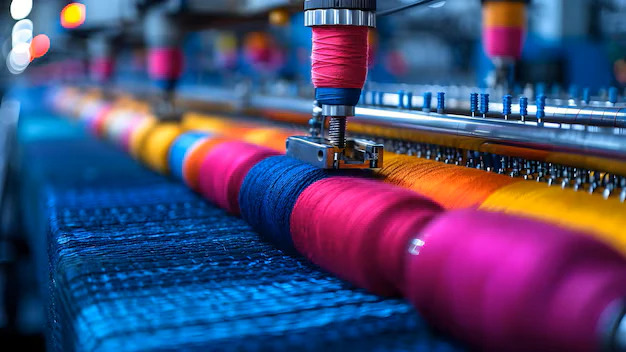
 Experiencing a complete knockout due to the pandemic outbreak, the global textile machinery market slumped 30 per cent in 2020. Shipments of all types of textile machines including spinning, texturing, weaving, knitting and finishing machines declined during the year. As the 43rd annual International Textile Machinery Manufacturers Shipment Statistics released by the International Textile Manufacturers Federation (ITMF) show, shipments of finishing machines declined 17 per cent on average. In this segment, the largest decline was witnessed in the shipment of knitting machines which declined by 53 per cent while the shipment of draw-texturing spindles declined 30 per cent and those of shuttle-less looms shrunk by 16 per cent. An exception in this segment were large circular machines whose shipments increased by 13 per cent.
Short-staple spindles shipments decline 3.3 million
In the spinning machinery category, shipment of short-staple spindles fell by about 3.3 million units in 2020 to 3.63 million units. Around 88 per cent of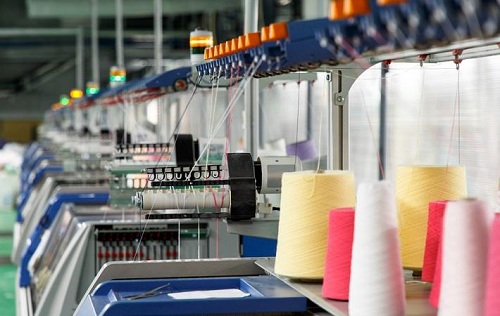 short-staple spindles were shipped to Asia and Oceania, which however saw a 50 per cent decline in shipments from the last year. The six largest importers of short-staple spindles during the year were: China, India, Turkey, Pakistan, Bangladesh, and Uzbekistan.
China emerges largest importer of open-end rotors
The second largest shipment in spinning machinery during the year was witnessed in open-end rotors with around 422,000 units. This was however, 151,000 units less than those exported in 2019. Around 83 per cent of rotors were exported to Asia and Oceania with Turkey, and Pakistan emerging world’s second and third largest importers of open-end rotors after China. Import by these two countries increased 290 per cent and 42 per cent respectively.
Driven by a fall in deliveries to Asia and Oceania, global shipment of long-staple (wool) spindles decreased 46 per cent from about 40,000 in 2019 to nearly 22,000 in 2020. Around 80 per cent of these shipments were directed to Iran, Turkey, and Italy.
Asia, Oceania dominate texturing machines import
In the texturing machinery category, shipments of single heater draw-texturing spindles decreased 36 per cent from nearly 26,000 units in 2019 to 16,000 in 2020. Asia and Oceania were the largest importers of spindles with a share of 89 per cent. In Asia, China Japan and Taipei were the largest importers with imports worth 63 per cent, 9 per cent, and 8 per cent of global deliveries, respectively. Shipment of double heater draw-texturing spindles decreased 30 per cent to 325,000. China was the largest importer of these spindles with around 78 per cent imports.
Asia imports 98 per cent weaving machinery
In 2020, worldwide shipments of shuttle-less looms decreased 16 per cent to 112,000 units. In this, the shipments of ‘air-jet’ and ‘rapier and projectile’ declined -3 per cent to 29’337 units and -15 per cent to 21’542, respectively. The delivery of water-jet looms decreased by -21 per cent to 61’483. The main importers of shuttle-less looms in 2020 were Asia and Oceania with 94 per cent of imports.
In total, Asia and Oceania imported world’s 98 per cent, 93 per cent of water-jet, air-jet and rapier/projectile looms responsible. China was the largest importer of all three types of machines with 74 per cent of total global imports.
Shipment of circular knitting machines grow, flat machines decline
Against the rest of machines, global shipments of large circular knitting machines grew by +12 per cent to 30’231 units in 2020. Asia and Oceania were the largest importers accounting for 81 per cent of wordwide shipments. In Asia, China was the largest importers accounting for 62 per cent imports. The country imported 15,980 units of knitting machines during the year, followed by India with 2,433 units and Turkey 2,381 units, respectively.
In 2020, global shipments of electronic flat knitting machines decreased -52 per cent to around 66,000 units. The main importers were Asia and Oceania with China’s imports amounting to 38 per cent of global shipments. However, compared to 69,000 last year, China’s imports dropped to 17, 000 units this year.
Fabric continuous segment grows
The fabric continuous segment witnessed 75 per cent growth in shipments of Sanforizers and Compacters in 2020. The shipment of stenters is expected to have reached 1,731 units in 2020 while those of jigger dyeing/bean dyeing machines in the ‘fabric discontinuous’ segment declined 8.5 per cent to 529 units. Global shipments of ‘Air Jet Dyeing’ and ‘Overflow Dyeing ’machines also declined 18 per cent and -21 per cent respectively.
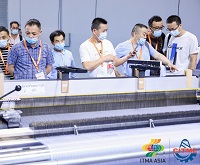 The better than expected exhibitor response to ITMA Asia + CITME 2020 is an indication of the robust growth of Chinese textile machinery market. The exhibition which took off today and will last till June 16, 2021, is showcasing 1,237 exhibitors from 20 countries and regions. Ernesto Maurer, President, CEMATEX, says, the response to the combined exhibition seals its reputation as the leading-edge business platform in Asia for textile machinery. The exhibition is being organized by Beijing Textile Machinery International Exhibition and co-organized by ITMA Service.
China’s dominance continues with major exhibitors
China continues to be largest exhibitor at ITMA ASIA+CITME 2020 with over 1,000 exhibitors showcasing their products on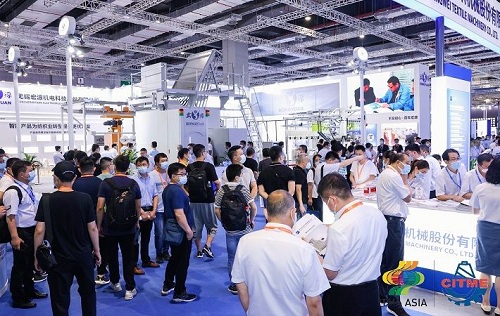 56,000 sq. mt. net exhibit space. Major Chinese exhibitors include: CHTC, Fong’s, Ningbo Cixing, Wuxi Hongyuan, Hangzhou Honghua, Jiangsu Yingyou Textile Machinery and Changshu Textile Machinery.
After China, CEMATEX territories dominate with 170 exhibitors. Together they exhibitors occupy 13 per cent of the net exhibition space totaling over 9,200 sq. mt. From these territories, Germany and Italy are the two of the largest exhibitors with 57 exhibitors from Germany and 63 from Italy. The German pavilion spans 3,700 sq. mt. while the Italian pavilion spreads over 2,500 sq.mt. The third largest group of exhibitors at ITMA ASIA+CITME 2020 is from Japan, occupying over 2,200 sq. mt. net space. Japanese participation is coordinated by the Japan Textile Machinery Association, a strategic partner of the combined show.
ITMA ASIA + CITME 2020 features leading names from Europe and Japan like: Automatex Solution, Fil Control, Groz-Beckert, Itema, Jeanologia, Karl Mayer, MS Printing Solutions, Meech International, Muratec, Oerlikon Barmag, Picanol, Reggiani Macchine, Rieter, Santoni, Saurer, Savio, Shima Seiki, Staubli, Toyota, Tsudakoma, Vandewiele and Vanwyk. The products on display include: spinning machines which make up 25 per cent of all products displayed followed by finishing machines with 24 per cent of product category. Knitting machinery at 13 per cent, weaving machines 12 per cent and printing machines 8 per cent form the remaining exhibits at the trade show.
Universities in Research and Innovation Zone
A major attraction is the Research and Innovation zone which features 11 local universities and colleges. Some universities being featured are: Donghua University, Jiangnan University, Qingdao University, Tianjin University of Technology, Wuhan Textile University, Xi'an University of Technology, Zhejiang University of Technology and other institutions.
The extensive promotions carried out by the organizers via online and offline channels are expected to boost visitor turnout. Over 400 local textile and garment manufacturers’ associations and their members are expected to visit the exhibition which is also being supported by over 100 media partners from around the world.
Building long term business relations
In view of the ongoing pandemic, organizers are implementing safety measures to ensure participants’ safety. They are conducing mandatory temperature checks and strict badge verification with facial recognition at hall entry. Visitors are also being advised to observe social distancing. The exhibition is instrumental in uplifting the textile industry in China and Asia. It allows companies to reconnect face-to-face with clients and build long term business relationships, adds Wang Shutian, Honorary President, China Textile Machinery Association (CTMA).
Karl Mayer’s two brands Stoll and KM.ON have collaborated to launch new design software known as Create for flat knitted fabrics.
Stoll is a pioneer in flat knitting technology and brings unique process knowledge to its business, which results in perfect flat knitting solutions and excellent customer support. KM.ON is an agile specialist in innovative software products, as well as digital solutions and services for the textile industry.
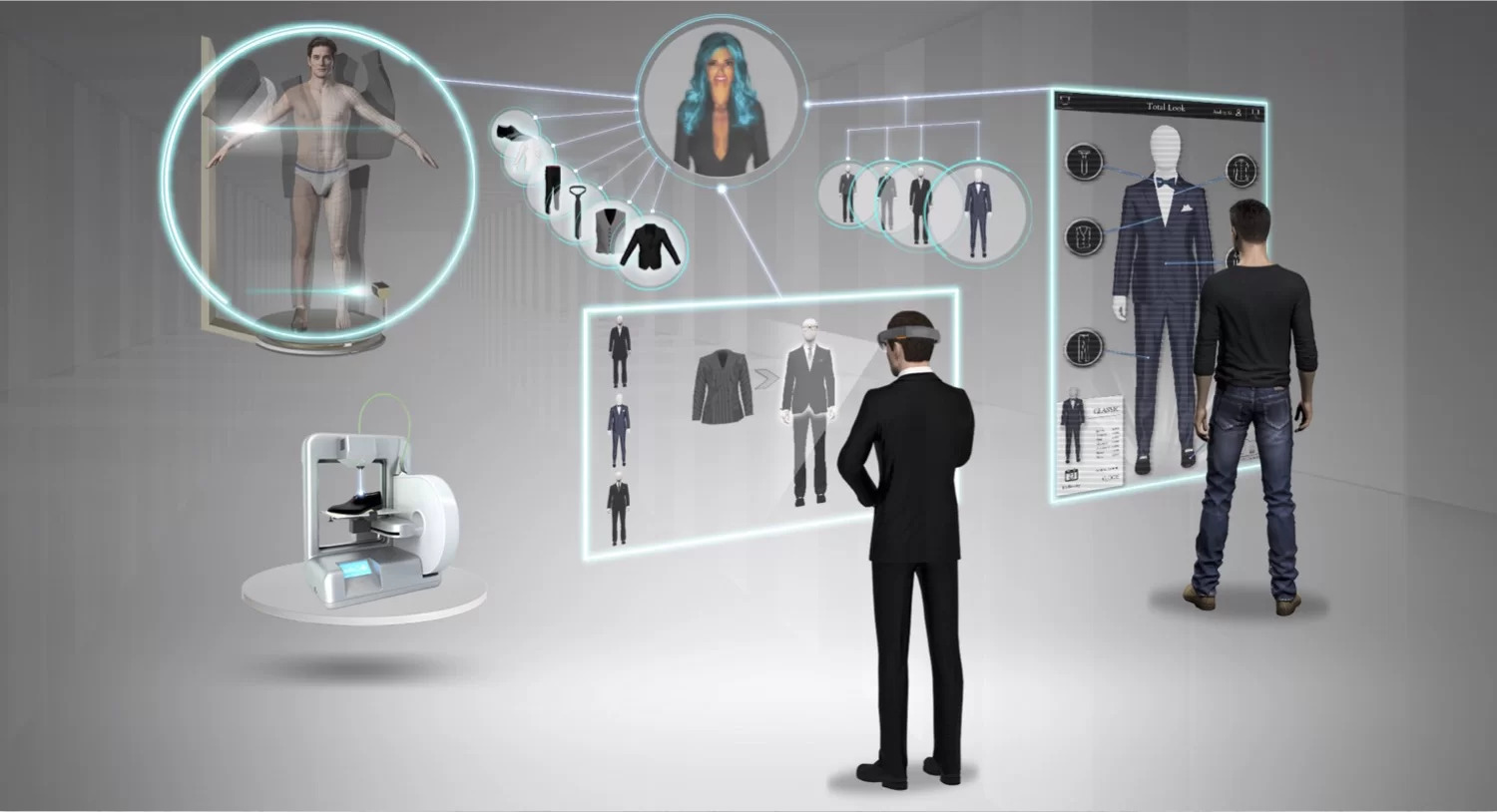
The software Create focuses on an accelerated design-to-market workflow. Its key features include possibility to create shapes and to implement customized adaptations or size adjustments just as easily. An important part of the tool is a shape library with numerous presets.
For the creation of knitted fabrics, an integrated yarn library offers a first selection of standard and fancy yarns, that will be continuously updated. Additionally, there is the possibility to create your own yarns.
The software includes an extensive library with different stitch constructions that can be used for the design. Additionally, the customer can create own digital stitch constructions with simultaneous stitch simulation and to run technical design checks.
The virtual fabric views have a true-to-life imitation of the stitches and their distortions, which makes it possible to conceptualize and plan a collection with fewer or no physical sample pieces. With a colorway generator, different color combinations can also be tried out.
The design program can be used as a basis for the knitting program. Once a technician has completed various checks, the knitting process can then be started immediately.
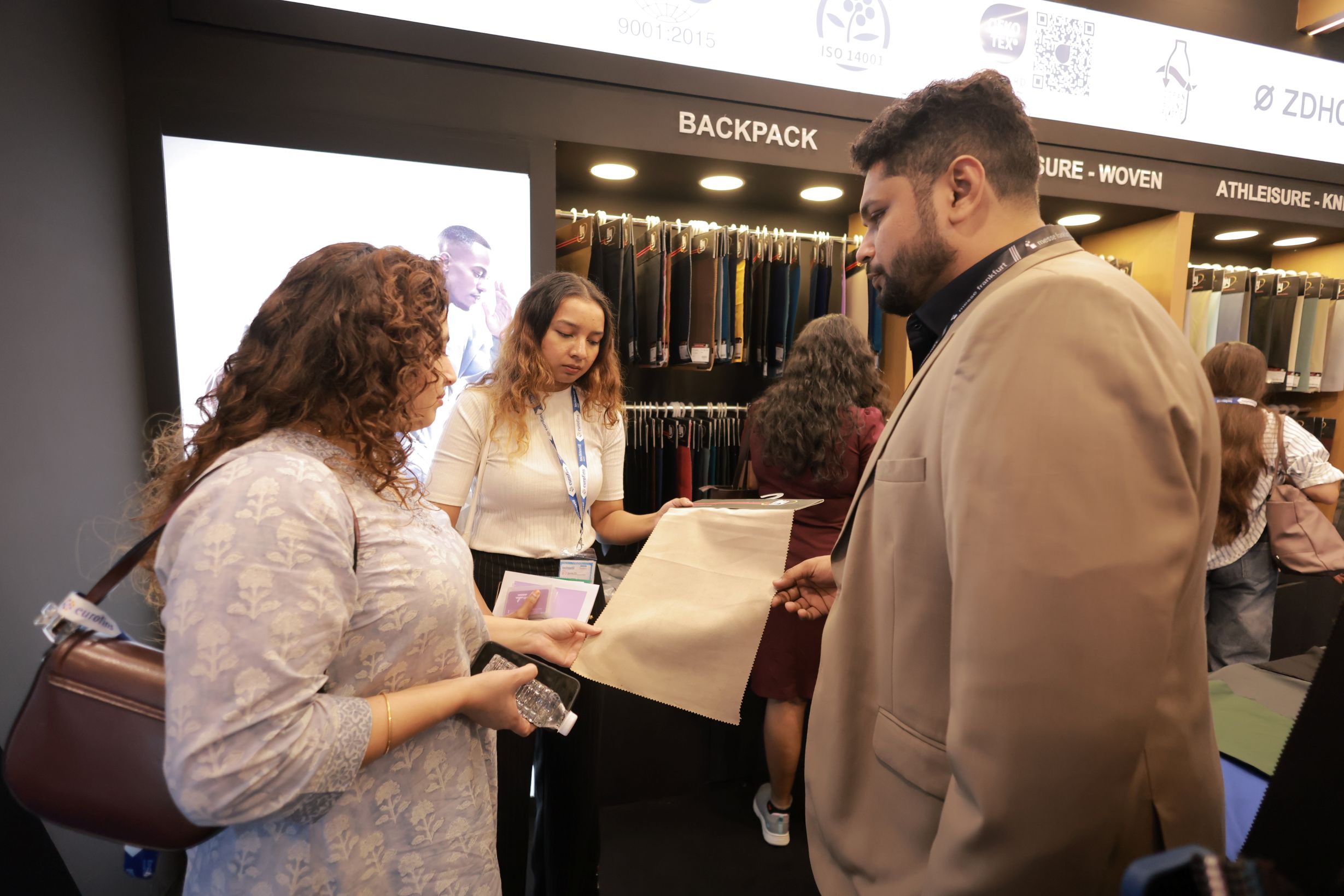
To be held from July 5 to 9, 2021, the second edition of Texworld Evolution Paris - Le Showroom will host live collections from 150 international companies, representing nearly 7,500 products and samples. This new approach of sourcing by Messe Frankfurt France will allow professionals to discover new creative approaches, decode future trends, measure the quality of the fabrics and finished garments offer, exchange with manufacturers.
The exhibition will be held at two exclusive venues including the Atelier Richelieu, where last February's edition took place and the 5 rue du Mail. These two locations will present samples of fabrics, garments or accessories classified by product categories. The trend forum will be set up at rue du Mail.
Exhibitors will include Taiwanese Dance Worldwide and Korean A Jin Corporation, both of whom will be participating for the first time. Also to debut is Mandarin Enterprises International, a premium silk manufacturer. Many exhibitors, satisfied with their presence in February, have chosen to renew their presence at upcoming edition. These include Korean silk-look fabric specialist Great Duksan, the embroiderers Kaskas (Lebanon) and SN Mukara (India)
The Rudolf Group has launched the Cycle-logic brand to focus on transforming waste into more sustainable materials. The brand captures tremendous technical innovation and pioneers the upcyling of post-consumer, disposable and non-returnable plastics such as PET Bottles into valuable textile industry.
The Rudolf Group has also launched the first three cycle logic chemical auxiliaries for textiles based on post-consumer recycled PET bottles. These include Feran Upcycle ICT: the first intelligent moisture management technology for PES textiles; Rucogen Upcyle RNB: The most diversifying agent for indigo washing and Rucolin Upcycle SOS: A first all-in-one multi-functional high-affinity polymer dyeing auxillary.
Rudolf GmbH provides textile and chemical products. The company offers pretreatment, dyeing, finishing, and coating products. Rudolf also offers materials and technology for various applications and processes that formulate or manufacture professional/consumer care products. The group sees itself as a global service provider for the whole textile industry. Over 1,300 Rudolf employees worldwide work at developing innovative products to contribute to our customers' success, many of whom belong to different industries.
Tencel™ brand is partnering with One Tree Planted once again, an innovative NGO focused on reforestation efforts, to introduce “#MakeAPledge” campaign on TikTok and Instagram. The campaign will enable consumers to submit a short video pledge in exchange for a “Tree Certificate”. For every certificate generated, Tencel™ will then plant a tree with One Tree Planted as a way to acknowledge their contributions in aiding the global reforestation effort.
In addition to NGOs, this year the campaign will include a variety of new and powerful influencers, including Lily Cole, Caitlyn Warakomski, Valeria Hinojosa and more! As social media influencers, their raw star power and dedicated audiences will play a big role in shaping the sustainability movement to #MakeItFeelRight.
Since the inauguration of the first #MIFR campaign in 2019, demand for sustainable fashion and lifestyle has skyrocketed. With the launch of the #MakeItFeelRight reboot, the brand aims to inspire consumers to heal the planet by implementing sustainability practices and products in their daily routines, says Florian Heubrandner, Vice President Global Textiles Business, Lenzing AG.
Jemmy Kartwa Sastraatmada, Chairman, Indonesian Textile Association (API) says, the condition of the domestic textile and textile products (TPT) industry is increasingly critical as utilization has fallen by an average of around 55 percent since March 2021. The purchasing power of the people has declined due to the pandemic and massive sales of imported goods in the domestic market are adding pressure on the local textile industry.
Jemmy says, if the influx of imported goods continues, the small and medium industries (IKM) will be hit even more. At a press conference for the Indonesian Textile Association (API) and the Indonesian Filament Fiber and Yarn Producers Association (APSyFI), he urged the government to immediately apply import duties on trade security measures (BMTP) or apparel safeguards. Redma Gita Wirawasta, Secretary General, Indonesian Filament Fiber and Yarn Producers Association (APSyFI) said, a proposal to safeguard the domestic industry is currently going through stages at the Ministry of Finance.
If approved, this policy will be stipulated through a Ministry of Finance Regulation (PMK) regarding the imposition of security measures import duties (BMTP) on imports of clothing products and clothing accessories, he added.
A new survey by Kontoor Brands predicts denim will grow to be consumers’ new work uniform. As reported in the Sourcing Journal the survey says, the pandemic introduced a new level of casualness in work attire that almost borders on sleepwear. The instantaneous and unprecedented demand for comfortable at-home fashion drove brands to pivot their production to nap dresses, joggers, house shoes and wireless bras.
However, the industry is likely to gradually shift back to pre-pandemic fashion that would combine professionalism with comforts, adds the survey conducted by KRC Research. Around 85 per cent of the 1,006 surveyed adults expect their office to have a business-casual dress code in future. Almost 36 per cent plan to wear dress pants or dress skirts when they return to the office. Another 15 per cent respondents expect to wear sweatpants and joggers to work.
Nearly four in 10 workers surveyed said they expect to wear jeans to office, and 82 per cent indicated they plan to buy new jeans in the next 12 months. Jeans are also viewed as an essential off-duty item. As per the survey, 73 per cent said they’re likely to wear jeans for a night out with friends, while 63 per cent plan to wear jeans on dates. A surprising 31 per cent said they even plan to wear jeans to more formal events like weddings.
Overall 84 per cent respondents to the Kontoor said, they plan to refresh their wardrobes in coming weeks with plans to spend $445 on new clothes. The survey echoes the National Retail Federation’s (NRF) new outlook for the year that projects retail sales will grow between 10.5 per cent and 13.5 per cent—the fastest growth the US has seen since 1984—thanks in part to the vaccination distribution putting millions back to work.
Growing at a CAGR of 3 per cent, the global denim jeans market is expected to surpass $152 billion by 2031. A report published by ESOMAR-certfied market research firm Fact.MR states, the market is anticipated to grow 1.2X from 2021 to 2031. Demand for women’s denim is expected to grow by more than 3 per cent CAGR during the forecast period.
North America is set to dominate market revenue in 2021, and is expected to grow from 1.5 billion units in 2020 to nearly 2.6 billion units by 2031. The market in China and India is expected to rise at over 4 per cent CAGR during the forecast period.
The market for regular fit jeans are expected to make up 45 per cent and reach $1.3 billion by 2031 However, the market for slim fit jeans has gained huge attention among teenagers, which has propelled the demand trajectory. Fast adoption of Western lifestyle in Asian countries has generated enormous demand for denim jeans over the last few decades. Moreover, rapid growth in consumer disposable income spending on personal care is boosting the sales of denim jeans in the continent. The market in Asia Pacific countries such as India, China, and Australia has been gaining traction owing to rising urbanization and improving consumers’ economic stability.
In its latest annual corporate responsibility report PVH Corp, the New York-based owner of brands including Calvin Klein and Tommy Hilfiger, highlighted progress made by the company in achieving its key targets set in Forward Fashion CR strategy.
As per Fashion Network, the thirteenth corporate responsibility report to be published by PVH noted developments in its strategy to advance inclusion and diversity with the introduction of the industry’s first comprehensive research report on inclusion and diversity including a roadmap to create a more equitable future, as well as nine new global Inclusion & Diversity (I&D) commitments.
In terms of its environmental goals, PVH revealed that it increased its renewable energy usage by 15 percent and that it installed what is believed to be the world’s most powerful solar roof at its warehouse and logistics center in Venlo, the Netherlands.
It also launched PVH’s first circular business model through Tommy Hilfiger’s Tommy for Life program, which has already diverted 36,429kg of textile waste to date, as well as furthered work to eliminate single-use plastics by partnering with Fashion for Good.
Likewise, on the subject of human rights, it expanded its disclosure of living wage data in its supply chain to cover 86 percent of its global manufacturing base, and reached an additional 29,368 children, parents, and teachers with educational programming and services through its partnership with Save the Children.
Furthermore, it enrolled 3,078 more women workers in its supply chain in PVH Women's Empowerment Programming, and launched its first community program benefiting women near Hawassa Industrial Park, Ethiopia.