FW
Patience will pay, say Bangladesh industry leaders as exports may rebound soon
 Buoyed by global demand ahead of Christmas, garment exporters in Bangladesh are confident about exports rebounding by December. Exporters hope to garner a bigger share in the United States market even though they lagged behind Vietnam during July and June, as per General Statistics Office of Vietnam and the Bangladesh Export Promotion Bureau.
Though exporters are getting new work orders, it’s not sufficient as only basic items are in demand, says Anwarul-Alam-Chowdhury Parvez, Former President, BGMEA. The pandemic has hit the country’s exports by around 18 per cent with export earnings declining to $32.83 billion in fiscal 2019-20.
A bigger share in Chinese market
To tackle these challenges, Bangladesh government and the private sector aim to work on a long-term plan, opines Chowdhury. This can be a ‘golden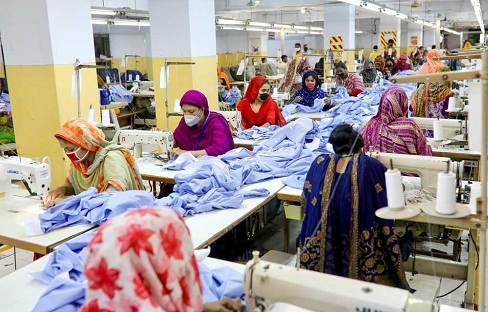 chance’ for Bangladesh to grab a share of the Chinese garment market in the US as China’s garment exports to the US have nosedived after COVID-19 outbreak in Wuhan, says US Department of Commerce Office of Textile and Apparel.
From January to April of this year, Bangladesh’s garment exports to the US increased just 2.13 per cent to $2.07 billion. Among the many reasons for slow growth are closures of factories in April due to the COVID-19 outbreak. Though factories reopened on a limited scale in May and June, they exported garments worth only $3.5 billion, says Mohammed Hatem, Vice President of BKMEA.
Slow delivery, lack of FTAs and skilled labor
Vietnam on the other hand, exported $3 billion worth garments more than Bangladesh as Vietnamese investors are quick on deliveries. They can collect raw materials from China in three to four days and deliver finished products soon to the buyers. The country’s Free Trade Agreement with the US and other countries is another reason for exports superseding Bangladesh. Vietnam’s manufacturers pay only 5 per cent export duty while Bangladesh manufacturers pay 15 percent to export garments to the US.
Another big reason for Vietnam’s export growth is its skilled labor which greatly reduces production cost. Vietnamese manufacturers also pay lower utility bills and their industrial units uninterrupted power supply with no voltage fluctuations.
COVID-19 depresses demand
Bangladesh factory owners had a boost recently when the government provided four months’ salary for workers under an incentive package to cushion the effects of the pandemic on the economy. This helped the country increase garment exports to $3.24 billion in July, which was better than in April, May and June. However, the country’s exports are again expected to decline in August and September as it has few work orders. As most people lost their income to COVID-19 pandemic, demand for garments has depressed, says Hatem. However, he is confident of the demand increasing as the situation goes back to normal.
Wait and watch
Ahsan H Mansur, Executive Director, Policy Research Institute too believes Bangladesh will be able to gain back second position in garment exports if it survives the challenge for a year. There would have been an 8-9 percent decrease in Bangladesh garment exports even without the pandemic. COVID-19 pushed it to 18 per cent. He therefore advises exporters to keep a close watch on global market and hope for some good for its garment sector.
US-China trade row to benefit Sri Lankan apparel exporters
Wing Tak Bill Lam, Chairman, Teejak Lanka feels, trade conflict between the United States and China could assist countries like Sri Lanka to raise exports. Lam says Sri Lankan exports of textiles and garments are likely to decline in the near term, especially to key export destinations of Europe and the US.
Sri Lankan apparel exports during the first six months of this year declined 30 per cent to $1.8 billion from $2.6 billion a year ago. Apparel exports to the European Union during the first six months of this year declined 32 per cent to $753 million from $1.1 billion recorded a year earlier, while exports to the US during the same period declined 27 per cent to $830.5 million from $1.14 billion.
However, with COVID-19 global pandemic many companies are now frightened to rely on single destinations for its supply chain. According to Lam, these countries are now moving away from China to partner with other South Asian countries, which Sri Lankan apparel manufacturers can easily tap into, according to Sri Lankan media reports. Statistics released by the Apparel Exporters Association indicates, apparel exports in June this year reached $382 million, down by 20.5 per cent from $481 million recorded during the corresponding month of last year.
TJX expects same store sales to decline by 20%: Refinitiv
According to IBES data from Refinitiv, TJX, owner of off-price retailers TJ Maxx and Marshalls, expects current-quarter same-store sales to decline by up to 20 percent after reporting a bigger-than-expected loss for the previous three months, sending the off-price retailer's shares down about 7 percent. In the quarter, TJX's Marmaxx brand witnessed a 6 per cent decline in comparable sales at stores reopened, even as its HomeGoods chain, which sells furniture, rugs, tabletop and cookware, posted a 20 per cent increase.
Overall net sales slumped 32 per cent to $6.67 billion as stores were closed for nearly one-third of the quarter, but the numbers came in above estimates of $6.57 billion. Excluding items, it lost 18 cents per share in the second quarter ended Aug. 1, compared with market expectations of 10 cents per share,
The company anticipates slower back-to-school selling season, as more school districts rolled back their reopening plans. The retail chain also grappled with bringing shipments into its stores, particularly in Canada, due to virus-led supply and logistics issues that have gripped some retailers ever since the lockdown was imposed.
Though apparel brands are keeping their best merchandise for their own channels or have put their wholesale business on pause, TJX has increased its buying since mid-July to support the flow of inventory. The company said traffic and demand have moderated after a stronger-than-expected surge upon the reopening of its stores.
The Framingham, Massachusetts-based company has reopened nearly all of its 4,557 locations in nine countries.
Demand for nylon films grows in H1 2020
As per a report by the CCF Group, of all various downstream fields of nylon, consumption of nylon films grew significantly in the first half of 2020. This was mainly driven by surging demand for convenient and fast food at the early stage of the pandemic around the world, which drove up demand for nylon film. Particularly in March and April, when the pandemic was spreading fast, nylon film exports surged. The output of nylon film grew to 8 per cent in H1 2020.
However, output of nylon 6 textile filament reduced by 5 per cent year-on-year, and the proportion of nylon distribution to film dipped 2 percentage from 55 per cent in 2019 to 53 per cent in H1 2020. Nylon 6 textile filament demand shrank due to falling China domestic textiles trading and exports in the first half of 2020. In China domestic market, shrunk demand for textiles could be told in evidently declined China Textile City turnover in the first 7 months in 2020.
The actual demand for NFY driven by mask export is estimated at around 40-50kt, however, the demand decrease due to shrinking apparel exports is estimated at around 180-230kt. The temporary increase in textiles export could not make up the shortage brought by lower apparels trading.
In other areas, the output of industrial filament, engineering plastic, and microfiber was also restricted during February-March and in April-May both supply and demand recovered to a normal pace. Demand for staple fiber had shrunk similarly like nylon 6 textile filament, given the shrinking end user’s demand on the year.
Besides the impact on demand in various areas, supply of nylon 6 in the first half of the year was the same as that same period last year, as some imports were replaced by China domestic production and some cargoes were accumulated in the form of inventory (mainly high-speed spinning.
Brands create new marketing approaches as clothing demand rises
New data from Statista shows between March to May 2020, the clothing and accessories retail sector experienced a remarkable uptick in sales clothing and accessories. A few brands wisely capitalized on this rise in demand and created new marketing approaches. Prominent amongst these is clothing and accessory brand Madewell which created a new, curated section on website for jewelry items for those working from home.
This new section of Madewell’s ecommerce site went live in April and is devoted to being video chat friendly. The brand has also extended the approach to tops and apparel, curating items that look polished but also comfortable and easy to wear.
Peter Nguyen, a private personal stylist based in New York says, there’s still quite a bit of room for brands to expand and improve upon the idea of curating products that are well-suited for video calls Lele Sadoughi is doing just that—and profiting from it. Leveraging its colorful offerings of accessories, jewelry, and headbands, Sadoughi has been marketing on how pairing their products can instantly transform a look, frame the face, and make the wearer feel more dressed up and professional.
Orta adds Lycra T400 fiber to denim fabrics
Turkish denim mill Orta has added Lycra T400 fiber into its latest denim innovation–Freecycle fabrics–to improve its stretch and durability. Lycra T400 fiber is a multi-component yarn in which different polymers are joined together within each filament. When exposed to heat, each polymer shrinks to a different degree, producing a smooth helical crimp. Since the crimp is not mechanically induced, Lycra T400 fiber gives greater, more durable stretch and recovery, as well as a softer, smoother hand than textured yarns.
Freecycle fabrics made with Lycra T400 fiber enable denim to keep its original aesthetics and provide multiple benefits, such as eliminating sagging problems at the knee, providing low shrinkage and offering greater stability. These benefits, along with the added stretch, help make the fabrics more comfortable and durable than rigid denim, the company said.
At the same time, Freecycle fabrics provide a natural cotton touch with high strength, thanks to the addition of Lycra T400 fiber. The company said when considering that the short and irregular distribution of staple length in recycled cotton fiber usually leads to a decrease in fabric-strength values, the unique construction of Freecycle fabrics can be ‘game-changing.”
Orta operates in Turkey with a production capacity of 60 million meters of denim. The company recently introduced its Here4Good collection with an interactive, collaborative kit. The digital innovation features “concept boxes,” each with a fabric swatch and information card that includes a QR code. Users can scan the code on their mobile device to view the fabric’s wash gallery and see exactly which washes are available for the specific material, as well as the Lifecycle Assessment (LCA) of the garment.
Almost 30 per cent garment workers in Philippines to be furlounghed: CWEP
About 30 per cent of garments workers in the Philippines are likely to be furlough until the end of the year due to weak demand resulting from COVID-19 pandemic, says the Confederation of Wearable Exporters of the Philippine (CWEP). Garments factories in Philippines are operating at downtime to comply with safety protocols. The capacity of these factories is projected to decline by 40 per cent in the third quarter, points out Maritess Agoncillo, Executive Director.
Agoncillo says to cope with sluggish demand, several factories repurposed their operations to produce medical-grade personal protective equipment in response to the government’s request to locally produce the PPEs and save jobs. Factories that agreed to repurpose operations had to compete with imports. Repurposing program attracted $35 million in investments and saved 7,450 jobs amid the weakening of the global economy.
Other factories adopted rotational work basis, allowing workers to report to work for at least two weeks. Yet most factories are still operating, at 40 per cent to 50 per cent of their capacity. The trade body is finalizing its report on the costs of operating in the ‘new normal’ and its impact on operations and profitability.
India emerges the second largest medical textile exporter: AEPC
Owing to the COVID-19 crisis, India has rapidly emerged as the second largest medical textile exporter, says Sakthivel, Chairman, Apparel Export Promotion Council (AEPC), at a webinar. A part of technical textiles, medical textiles is also known as healthcare textiles. As reports state, the global medical textile market valued at $16,775.52 million in 2018 and is expected to reach $23,762.66 million by 2025.
Sakthivel further said due to Coronavirus, multinational companies are keen to divert their investments from China to India. This will open new dimensions for India and the country will get multi-million-dollar business from Europe, Australia and America. Greg Ruggles, President, CEO for Multiple Product Companies agrees that due to the differences between the US and China, apparel companies are finding options to move from China to other countries.
According to him, India has the ability to manufacture different types of fabrics. The online business has given an international platform for everyone from small retailers to apparel manufacturers. Roopak Vasishtha, CEO & DG, Apparel Made Ups & Home Furnishing Sector Skill Council (AMHSSC) points out so far the council has skilled and employed 12 lakh persons in apparel industry across India and the work is still going on in this direction.
The council is trying to identify the migrant workforces that have gone back to their native places and is looking to skill and certify them with the Government’s skill certification scheme.
Sri Lanka to increase production of batik and local garments
In the next five years, the newly elected Sri Lankan government aims to focus on increasing the production of batik, handlooms and local garments. State-owned textile trading institutions such as Lanka Salu Sala will facilitate market expansion for the industry, said Gotabaya Rajapaksha, President.
In a recent discussion, the President urged the public to remain the main stakeholders in its vision to create a public-centric economy. Rajapaksha named the garment industry as pioneer in employment generation and regional development, noting that exports from the garment industry account to 43 per cent of total exports accumulating an annual income of nearly $ 5 billion to the country.
He stressed that it is of utmost importance to further the local economy while the rest of the world recovers from a global pandemic. The discussion was attended by Minister of Industries Wimal Weerawansa, State Minister for Batik, Handlooms and Local Garments Dayasiri Jayasekara, Secretary to the President, P B Jayasundera, Secretary to the Treasury S R Attygalle and several entrepreneurs related to batik, handlooms and local garments.
Brands explore the power of fashion to spread joy amidst difficult times
 As COVID-19 began disrupting the global fashion industry, retailers responded swiftly by shifting to digital e-commerce channels. Most brands and retailers have changed course over the last several months. As per an article in thezoereport, Lisa Aiken, Buying Director, Moda Operandi shifted her working style. Once working from all across the globe, she currently operates digitally from Paris. Though enjoying this shift, Aiken misses the physical connection with products and people from across the globe.
Designers also experienced major adjustment during this period. Alonso Rojas, Owner of her namesake label was compelled to cancel production due to lack of orders. Instead she focused on preventing additional costs from products that wouldn’t sell if any of her retailer partners close.
Similarly, Amy Smilovic, Owner, Tibi, postponed her pre-fall orders from May to July to ensure products arrive in stores at the time when customers need them. The designer also limited the size of her collection and the number of stores she works with. She further also plans to curtail the size of her Spring 2021 collection.
Revamping the fashion calendar
The Council of Fashion Designers of America and the British Fashion Council have also urged designers to focus on two main collections per year. The decision has been welcomed by many designers like Alonso Rojas. Since the beginning of the quarantine Rojas has been producing only two seasons annually. She’s also times her collections strategically to ensure their availability when demand rises.
Following suit is Tibi, which plans to launch only two major collections every year. These collections will be augmented by a series of smaller capsules. Aiken’s opines these changes need to be implemented mutually by the retailers and designers. She advises retailers to reevaluate their deliveries, markdown strategies, and much more to align with a slowed down calendar.
Perfect time to go solo
The ongoing financial troubles of department stores are impacting profit margins of brands like Tibi who are neither being able to adhere to the 90-day payment terms nor give margin guarantees. According to Rojas, it is important for brands to admit to the need to change their working styles. She advises her retail partners to embrace the new normal and new business models in order to grow together.
Telsha Anderson, Owner, t.a expects shoppers to be more inspired to look inwards. It’s the perfect time for brands like hers to open independent boutiques while shoppers need to research about the designers and brands they buy clothes from and the media outlets which inform them about the latest collections launched in the market.
Towards a more inclusive future
Retailers are preparing for more inclusive and equitable fashion industry in future. Moda Operandi plans to partner 30+Black-owned brands or Black designers and reserve 15 percent of its trunk shows for Black designers. Tibi also plans to support Black creatives by offering retail space within their store to Black designers on a weekly basis. The brand has connecting with its fans through two ongoing Instagram live series while Rojas has been donating products and raising money to support organizations for women and girls of color.
Rojas feels, one of the biggest takeaways from the current crisis is simply learning to slow down and be a little more patient. She believes it’s important for brands to remain mentally fit during this crisis and know their limits. Likewise, Aiken advises brands to explore the power of fashion to spark joy in difficult times.