FW

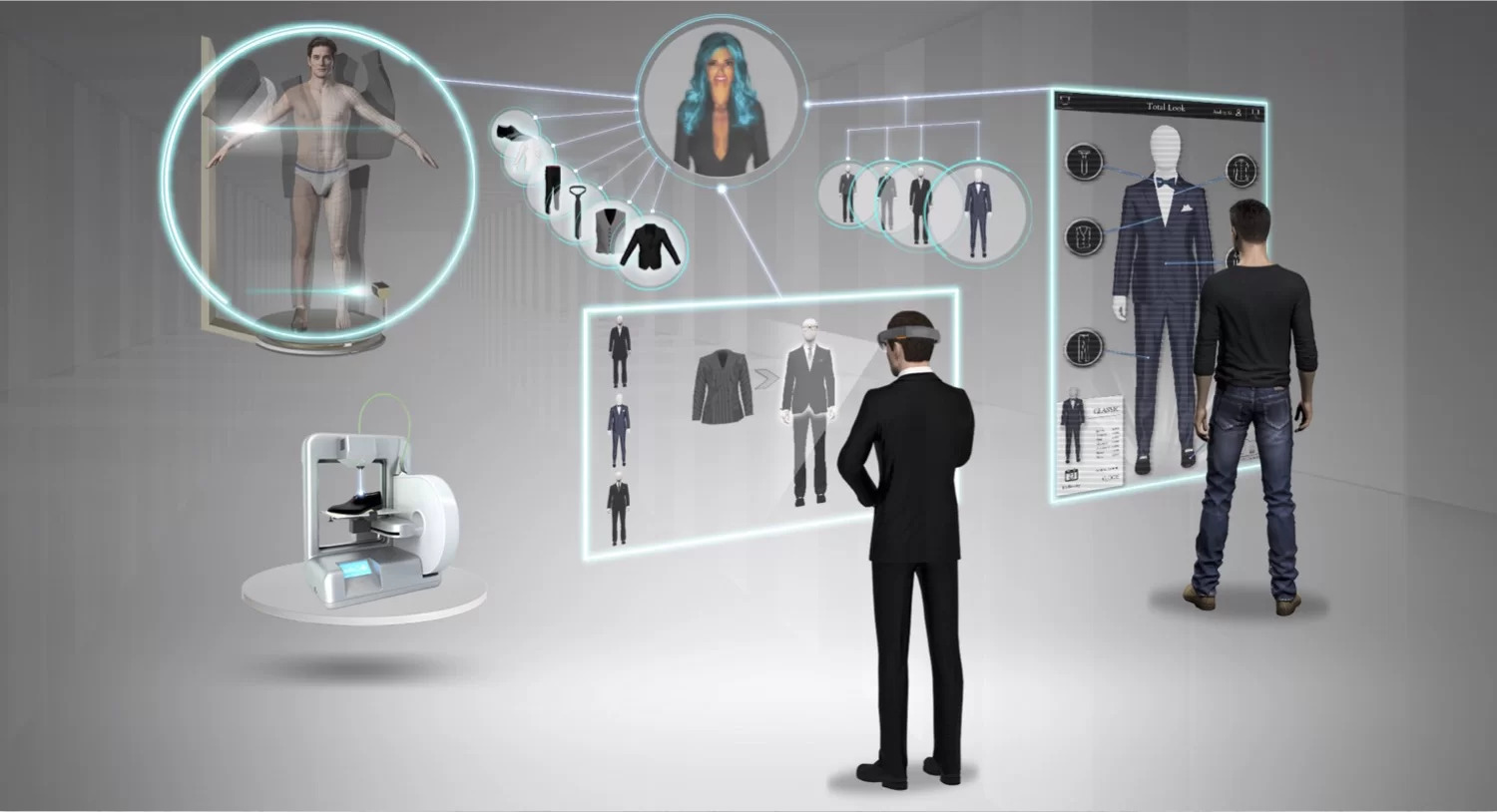
 In an effort to connect with their consumers and form a bond, brands across different product segments are building new apps that broadcast their latest campaigns and new collections. In February this year, Gucci launched Version 6.0.0 of its official app to display its latest collections and news. Featuring mini games and podcast episodes, the app uses the augmented reality (AR) lens to enable its users to try on lipstick colors and footwear virtually.
Helping brands identify customers
One of the most significant advantages of building an app for brands is that it enables them to identify their consumers. Hence, it is crucial for them to build their own private channels. This helps to improve engagement with consumers besides increasing sales prospects. The recent chat module R Message developed by Burberry and Apple allows consumers to communicate with choices and preferences directly to the sales associates of the brand.
Such applications are common in China where brands can execute their CRM activities, launch exclusive products and reactivate consumers through their service accounts or dedicated mini programs on WeChat. The transactional and behavioral data on this application can be tracked by the brands which can use this data to service their existing clients and also form new ones.
However, such solutions are not common in the Western countries which focus mainly on remarketing and SMS or email marketing. In such countries, applications like R Message and StyleHint can create an opportunity for brands and consumers to interact with each other.
A two-pronged approach to increase traffic
Brands in such countries can also adopt a two-pronged approach to increase their private traffic. They can create a controlled environment for engaging with consumers by launching new apps besides using channels like WeChat to engage with their Chinese consumers.
Increasing competition in the global fashion market has made it imperative for brands to increase their communication with their clients. These brands are now focusing on leveraging the available CRM opportunities that enable to form long-term relationships with their clients.
With continuous growth and delivery of genuine business outcomes each year, Yarn Expo has established its global reputation as a leading networking destination for worldwide visitors and exhibitors, with a wide variety of yarn and fibre products on offer.
Yarn Expo Autumn 2019 had a record breaking 543 exhibitors from 14 countries and regions, covering 26,000 sqm of exhibition space and attracted 19,155 visitors from 93 countries and regions.
This year, Yarn Expo Autumn 2020 returns to Hall 8.2, National Exhibition and Convention Center (Shanghai) from September 23-25, weaving the net for professionals from the yarn and fibre sector to meet, connect and exchange.
Yarn Expo Autumn 2020 will be held concurrently with Intertextile Shanghai Apparel Fabrics – Autumn Edition, PH Value and CHIC, giving you a concentrated overview of the latest trends and developments in the entire textile industry.
Page Industries reported net sales of Rs.551.17 crore during the period ended March 31, 2020 as compared to Rs.797.28 crore during the period ended December 31, 2019.
The company posted net profit of Rs.31.02 crore for the period ended March 31, 2020 as against Rs.87.01 crore for the period ended December 31, 2019.
The company reported EPS of Rs.27.82 for the period ended March 31, 2020 as compared to Rs.78.02 for the period ended December 31, 2019.
The company reported net sales of Rs.2,970.06 crore during the 12 months period ended March 31, 2020 as compared to Rs.2,888.62 crore during the 12 months period ended March 31, 2019.
The company posted net profit of Rs.343.22 crore for the 12 months period ended March 31, 2020 as against Rs.393.94 crore for the 12 months period ended March 31, 2019.
The company reported EPS of Rs.307.72 for the 12 months period ended March 31, 2020 as compared to Rs.353.19 for the 12 months period ended March 31, 2019.
TBM and yarn manufacturer Bioworks, have launched sustainable face masks produced on Shima Seiki knitting machines for both the domestic Japanese and international markets.
The Bio Face Cool and Bio Face Lite Cool washable face masks have been created to help resolve the shortage of face masks worldwide, while at the same time striving to improve the enzBvironmental footprint by using renewable biomass-based resources including PLA (polylactic acid).
The masks are designed to help to prevent spray from coughing and sneezing and can also reduce exposure to various allergens. They can be washed and reused around 30 times and have been reported to be antibacterial and mildly acidic (close to human skin) by a Japanese testing laboratory.
The masks are comfortable and fit the shape of a face, since they have a 3D knit shape that leaves room around the mouth. They can also be equipped with commercially available virus filters, cotton gauze, and similar accessories.
The biomass-based yarn, meanwhile, provides premium comfort for hot summer season when wearing a mask can be uncomfortable under high temperatures and humidity.
The production of Bio Face follows collaboration between TBM and Bioworks and flat knitting machine builder Shima Seiki. Together, the companies achieved a mask design that is comfortable and easily fits the shape of a face, by knitting masks three dimensionally on WHOLEGARMENT machines using the PLA yarns developed amongst the three parties.
The latest data from CCF Group showed that the EU's 27 members' textile and apparel imported from China in April showed a significant month-on-month increase, especially the significant increase in import value.
EU textile imports value in April amounted to €4.75 billion up 536.7 per cent year-on-year and 447.8 per cent month-on-month respectively; that of apparel amounted to €860 million, down 19.1 per cent year-on-year and 18.2 per cent month-on-month respectively.
Textiles accounted for a relatively large proportion in EU textile and apparel imports volume and value from China, which accounted for more than 80 per cent, indicating that the YoY improvement was mainly due to textile growth. As a result, the apparel import was still in a poor state, so what kind of product supports EU textile imports from China?
In April, COVID-19 spread outside China while the epidemic in China was controlled, and the situation of production resumption was tolerable. Therefore, export of prevention materials increased sharply, especially that of masks and protective clothing. It was reported that the export of protective materials such as medical masks and medical shoe covers was counted in HS code 630790 which increased rapidly to €4.24 billion , 50 times than that in same period of last year and about 11 times than that in last month.
Forgoing the conventional September runway show, Burberry’s Spring/Summer 2021 collection will be ‘an immersive show experience set in the British Outdoors’.
A day before the beginning of the London Fashion Week, i.e., 17 September, the British luxury label will live stream the show for all who would like to partake whilst the actual catwalk will only consist of the Burberry team and the models. The show will adopt the open air concept that is expected to reduce the risk of catching the illness considerably.
Like Burberry, Dior plans to stage its Cruise 2021 collection, earlier slated to be held in May, without audience on 22 July in Lecce, Italy. Both luxury giants are on the consensus that luxury requires connect with the audience and hence needs to be showcased.
A study by the UK charity WRAP reveals, 67 million clothing items — mostly T-shirts, blouses, sweaters and hoodies — and as many as 22 million pairs of shoes could be discarded by UK homes as lockdown eases. A total of 184 million textile items have been earmarked for disposal, WRAP said, with people on average discarding 11 items of clothing during lockdown. Most will go to charity shops, which have slowly begun to reopen with social distancing measures in place. Other items have already been — or will be — headed straight to the landfill.
WRAP, a not-for-profit organization that works with governments, businesses and individuals to promote sustainability, undertook its research in late May, surveying 2,422 UK adults aged 18 and over. The report, titled “Clothing Behaviors During COVID-19 Lockdown,” prepared by Sarah Gray, said 41 per cent of UK citizens discarded textiles during the COVID-19 lockdown, mostly clothing, shoes, footwear, bedding, bags, accessories and household textiles. Some 57 percent of the items earmarked for disposal had been set aside at home until the end of lockdown. The remaining 43 percent of items had already been tossed away. The survey said 36 per cent people used the “general rubbish,” or household garbage, to get rid of one or more of their items.
South Asia Textiles, a leading Sri Lankan textile manufacturer and HeiQ Materials AG, a Swiss -ased global leader in textile innovation are collaborating to produce a specially treated fabric to be used for masks exported to the US. South Asia Textiles, a subsidiary of Ambeon Holdings PLC, specializes in knitting, dyeing, finishing, printing, brushing, sueding and preshrunk fabric for leading global brands such as Victoria Secret, Next, Marks & Spencer, Tesco, Calvin Klein, Decathlon and Adidas. On the hand, HeiQ specializes in research, manufacturing and marketing of high-quality, high-performance textile finishing.
The Swiss-based material science organization’s latest innovation, HeiQ Viroblock is an antimicrobial / antibacterial / antiviral textile technology specially engineered to work against enveloped viruses, such as influenza viruses and human coronaviruses.. Fabrics treated with HeiQ Viroblock treated fabrics show over 99.99 per cent reduction in SARS-CoV-2 viruses after 30 minutes. In the case of Sendai viruses, over 99.2 per cent viruses are deactivated within two minutes based on modified ISO 20743 method.
In its recent annual Global Citizenship & Sustainability Report for fiscal year 2020, Ralph Lauren highlights its goals for the future. The brand recently joined forces with WWF to drive progress toward the company’s goal of reducing water use across its operations and value chain by 20 percent by 2025. Within the first year, this will include an analysis of the company’s water use, identification of areas of water risk and strategies to decrease consumption and address water quality and other water outcomes across its value chain.
The brand also aims to set a science-based target to reduce emissions across the company and value chain by 30 percent by 2030, provide 100 per cent renewable energy to power owned and operated offices, distribution centers and stores by 2025, achieve gender parity in its leadership ranks, with women holding 50 percent of vice president level and above positions at the company, score 100 percent on the Human Rights Campaign Corporate Equality Index, in recognition of the company’s work toward ensuring an equitable, inclusive workplace for LGBTQ employees, disclose the racial and ethnic makeup of its global employee base, with additional recent commitments made to reflect the communities the company serves in its leadership across the entire organization, and donate through the Ralph Lauren Corporate Foundation and its business, more than $7 million toward causes including cancer care and prevention, LGBTQ equity and inclusion and clean water access for undeserved communities,, and pledge an additional $10 million through the Ralph Lauren Corporate Foundation toward COVID-19 relief.
With rising number COVID-19 cases in the Limbayat region of Surat, the Federation of Surat Textile Traders Association (FOSTTA) has decided to not allow the delivery of finished and unfinished fabric parcels from the powerloom units and textile mills for one week starting June 22. However, the parcels containing value addition of the fabrics will be allowed in the markets.
The representatives have decided to keep the markets operational from 9 am to 7 pm by strictly banning the entry of workers and others coming from the containment zones and hotspot areas. The traders will have to strictly follow social distancing rules and compulsory checking of the people coming into the market with thermal guns.
About 40 per cent of the markets in the region have become operational .FOSTTA has also banned the chewing of tobacco and smoking in the market and that the management will fine those caught violating this rule.
Manoj Agarwal, the president of the association also said that the workers in the markets and textile traders arriving from other states will have to remain in the home quarantine strictly for 14 days. There will be no entry of children below 10 years and senior citizens above 65 years in the textile markets.