FW

Bangladesh Garment Accessories and Packaging Manufacturers and Exporters Association (BGAPMEA), has demanded the same facilities as the readymade garment (RMG) industry in the proposed budget for FY20-21, urging the government to reduce the corporate tax rate to 12 per cent. Currently, the apparel sector pays 12 per cent corporate tax, while accessories and packaging makers make 35 per cent tax. This backward linkage industry for the apparel sector also urged the government to keep source taxes unchanged at 0.25 per cent instead of the proposed 0.5 per cent for FY20-21.
According to BGAPMEA data, there are about 1,700 small and medium accessories and packaging makers, who are capable of providing 95 per cent supply of accessories products to the country’s $34 billion apparel industry and other export oriented packing industries, including frozen foods and pharmaceuticals.
Though the government has announced a 1 per cent cash incentive in the proposed budget, the RMG's backward linkage industry is not getting it.. BGAPMEA also urged the government to include the sector for cash incentives as it exports its goods directly as part and parcel of exports themselves.
In the last fiscal year, the sector contributed over $7.5 billion to the exports of the apparel sector, of which nearly $1 billion came from the direct export of accessories goods.
With the 127th China Import and Export Fair (Canton Fair), an international trade fair, just a few days away, several online events were held for global buyers at multiple locations.
Welcoming business associations, buyers and entrepreneurs from Africa, Germany, and other "Belt and Road" initiative countries, these online events not only aim to facilitate better communications between buyers and sellers but also create a channel for global partners and companies in the post-Covid-19 era.
The online introduction events connecting traders in South Africa, Kenya and Egypt attracted more than 150 buyers and company representatives across Africa. Egypt is also looking forward to the first virtual Canton Fair that will bring more business possibilities to African businesses, said Alaa Ezz, first under secretary of state of the Egyptian chamber of commerce and industry..
Africa is also an essential source of buyers for the Canton Fair, with the number of importers from the region standing at more than 15,000 every year. The trade volume of Central Africa has also achieved a record high in 2019, totalling $20,87 billion, a 2.2 per cent increase year-on-year.
Cone Denim® has launched its Pride Selvage Denim in honor of Pride Month. Pride Denim is the newest fabric in the Cone® Community Collection to show Cone’s support of a wider and more inclusive community. Cone will donate a portion of proceeds from the sale of its Pride fabric and accessories to the HRC Human Rights Campaign whose work focuses on achieving equality for the LGBTQ Community.
The Cone® Community Collection fabrics are designed with neutrality in mind and are perfect for both Men’s and Women’s collections. These limited edition fabrics have a timeless authentic character and a brilliant optimistic indigo shade with just the right stretch for comfort. The Pride Denim incorporates the rainbow colors of the Pride flag into the selvage of the fabric.”
Pride Denim fabric and accessories made with the special denim are available on the White Oak Shop. Accessory items include a large tote bag, wallet and travel kit, all crafted using the unique rainbow colored selvage. Smaller quantities of Pride denim fabric are also available on the Shop. Larger volumes of Pride Denim are available for order through a Cone Denim sales representative.
UK supermarket chain Morrisons recently launched a new portal for its Nutmeg clothing label to make it more easily available to customers as people continue to stay home amid the COVID-19 pandemic. The new website will allow customers to buy from Nutmeg’s range of quality essentials and fashion range without the need to visit a Morrisons store.
The Nutmeg babywear and kids range is currently available in all 494 Morrisons stores, with the label’s womenswear collection present in around half.
The online store will be updated regularly throughout the seasons. It will deliver clothes at £2.97 with items arriving within 14 working days of purchase and customers have 30 days in which to return the clothes, either online or in store.
A £3.97 next day delivery option, as well as a click-and-collect service, will be available from all Morrisons stores in the near future.
Leading Italian knitter Carvico has launched Xlance, a whole range of eco-sustainable fabrics designed to promote re-use, recycling and respect for our environment. According to Carvico, the fabrics boast extraordinary performance in terms of resistance to chlorine, ensure perfect fit, exceptional comfort and a unique, contemporary and elegant ‘Made in Italy’ style, and they are bound to revolutionize the worlds of swimwear and sportswear.
These fabrics put together a unique, high-tech elastomeric fibre and a selection of exceptional and eco-sustainable yarns to meet the requirements of the market and the latest swimwear and sportswear trends. They are resistant to chlorine, suntan creams and oils and are also UV protective (UPF 50+).
Moreover, they are eco-sustainable. Carvico has always operated in the view to safeguarding the environment promoting a more sustainable fashion. XLANCE fabrics stem from a long and thorough research process for fully sustainable raw materials and production processes.
Xlance fabrics ensure a perfect fit and maximum comfort and fit the body like a second skin adapting and shaping its curves and offering athletes support and maximum freedom of movement, Soft and pleasant to the touch, all these fabrics are suitable for printing (sublimation and digital). XLANCE ECO is also available in 15 amazing colours.
A group of retailers and non-governmental organisations including CEOs of global businesses including Inditex, Nestle, Unilever, H&M Group, Danone, Coca-Cola, PepsiCo, L’Oreal, Ikea, Stella McCartney and Barclays Bank, as well as organisations such as WRAP and Global Fashion Agenda, have signed a joint statement committing to building a circular economy as industries begin to recover from the coronavirus pandemic.
The Ellen MacArthur Foundation, a charity that promotes the move towards circularity, will release the joint statement on 13 June. The statement commits retailers to transition to a more circular model of production, across the food, plastics, finance and fashion sectors.
The businesses have also committed to address other global challenges, including climate change, waste and pollution.
Their statement marks the start of an ambitious programme of work that will turn the call to ‘build back better’ - the campaign for a coronavirus recovery plan that embraces positive chang- into a tangible effort, by giving the recovery phase a clear pathway.
About half of US consumers have urged retailers to cut back on sourcing from China, according to a study released this week by Coresight Research. Two-fifths of these American consumers were less willing to buy products made in China due to the COVID-19 pandemic.
This was the first time the retail research firm’s weekly survey asked US consumers about their sentiment toward things made in China in the wake of the pandemic.
The most recent survey also pointed to the continued challenges facing US retailers as the US economy reopens—over three-fifths of consumers expect the crisis to last for more than six months.
Just as the issue of sustainability is no longer an afterthought in the fashion industry, the coronavirus outbreak has again highlighted the vulnerabilities facing a global supply chain driven often only by lowest costs and over-dependence on China, known as the world’s factory and the biggest source of imported goods to the US.
The coronavirus pandemic is drawing attention to the ways in which the United States and other economies depend on critical manufacturing and global value chains that rely on production based in China, the non-partisan think tank Congressional Research Service said in an April study.
 As major international brands canceled their orders due to the COVID-19 outbreak, millions of workers employed in Asian garment factories were left without a job. Many were laid-off without severance pay or outstanding pay which shows that brands do not respect their workers, points out Akter, Founder, Awaj Foundation, a labor rights organization at a recent forum organized by Cornell University’s ILR School. Bangladesh, which employs over four million workers, pays them a meager $95 a month. The country lost over $3.18 billion worth of garment orders affecting nearly 2.28 million workers, says the BGMEA.
Brands reiterate commitment to workers
Hence, Akter urged US and EU brands to take responsibility for their orders and workers’ welfare. On their part, brands reiterated their commitment to long-term business in Bangladesh. For instance, Adidas revealed it is working in close collaboration with partners to shift some orders to the second half of the year. The company has initiated a program to increase the health and safety requirements for suppliers by providing additional protective masks, hand sanitizers, health checks, and more intensive cleaning measures. It is also promoting the exchange of information among partners to leverage the experience gained in China.
Like Bangladesh, over 130,000 garment workers in Cambodia too lost their jobs as about 250 factories suspended operations. The country employees around 8,00,000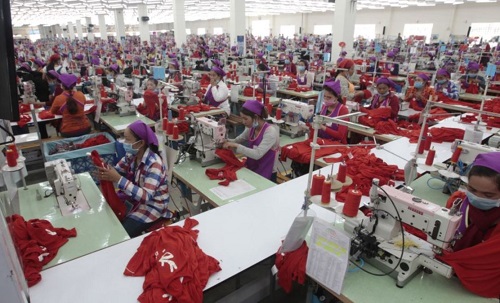 workers in its factories which produce around 80 per cent of Cambodia’s garment exports, revealed a joint association of Garment Manufacturers Association in Cambodia (GMAC), Cambodia Footwear Association, and the European Chamber of Commerce in Cambodia. Ken Loo, Secretary-General, GMAC, estimates around 300,000 workers will lose their jobs in future.
The rapid spread of COVID-19 has made garment workers across the world extremely vulnerable. To alleviate the effects of this pandemic, H&M recently joined a Call to Action in support of garment workers. The call urges brands to protect workers’ income, health, and employment by paying for manufactured goods and goods in production.
Focus on building long-term partnerships
Though neither suppliers nor big brands were prepared for the pandemic of this magnitude, experts are urging them to institute safety measures for workers. Sarosh Kuruvilla, Professor, Industrial Relations at Cornell University’s ILR School has urged suppliers to institute an unemployment insurance scheme for these workers.
Brands should also take this opportunity to scout talent from other industries that have a better knowledge of building strategic partnerships within their supply chains, feels David Hayer, Senior Vice President, Global Sustainability at Gap Inc. Instead of focusing only on seasonal orders, they should build long-term partnerships from production to retailer levels, he emphasizes.
The first edition of Global Talents Digital on June 10-11, 2020 will presenting over 50 designer collections and digital artworks from 20 countries – Great Britain, Germany, Australia, Russia, USA, Peru, Poland, etc. Combining real and virtual collections, Global Talents Digital drives an attention to excessive consumption and environmental problems. Most of the GTD participants are following sustainable and ethical fashion practice.
To support sustainable future of fashion, Global Talents Digital has partnered with short video platform TikTok to launch a 2-day challenge with hashtag #rewiringfashion (#перезагружаюмоду in Russian). The main idea was to promote live-streaming event and to attract an attention of the general audience to overconsumption and changes that fashion industry faces due to coronavirus threats.
The hashtag #перезагружаюмоду (#rewiringfashion) has been viewed over 8,5 million times, raising the actual number of social media hits of Global Talents Digital to 10 million in the first day. The challenge was joined by fashion designers and influencers like Linus Leonardsson, Igor Chapurin, Natalia Osmann, Karina Nigay, etc.
Global Talents Digital is off-season international project that combines new cutting-edge fashion collections, digital art and virtual influencers in one event. Global Talents Digital is blurring the lines between actual fashion and virtual world, using the advantages of both. Some real collections were presented by virtual models. Some virtual influencers have presented their own digital fashion capsules along with real designers. GTD features AR and ‘see now, buy now’ options, making the streaming event quite interactive. The second edition of Global Talents Digital is scheduled to August 2020.
As a part of its attempts to navigate the challenges posed by the coronavirus crisis, PVH Corp has introduced a number of cost-cutting measures over the past few weeks.
These include furloughings, hiring freezes, salary reductions and decreased working hours, as well as the elimination or reduction of a range of discretionary and variable operating expenses, including marketing, travel, consulting services, and creative and design costs.
The first quarter sales of the company, which owns brands like Tommy Hilfiger and Calvin Klein declined by 43 per cent. The New York-based company reported $1.34 billion revenue during the quarter. Its Tommy Hilfiger brand posted a 39 per cent decline in revenue, while the revenues of Calvin Klein fell by 46 per cent. PVH’s heritage brand segment also reported a 47 per cent decrease in revenue.
The company expects 85 per cent of its stores to have reopened by mid-June and highlighted that, although second quarter-to-date sales are currently running down approximately 25 per cent globally, traffic and sales trends are improving each week.