FW

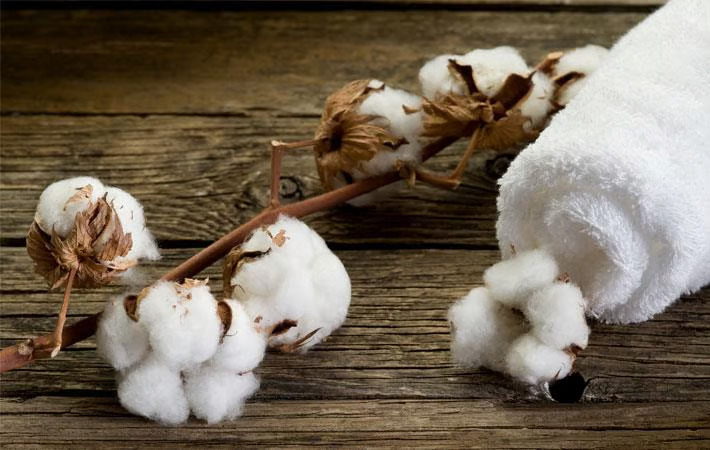
As per Cotton Association of India (CAI) estimates, cotton exports by India are likely to rise by 12 per cent from previous estimate to 4.7 million bales in 2019-20 as a fall in the value of the rupee has made shipments competitive. This could further add pressure on global cotton prices, which are trading near their highest level in more than two months.
Indian could also limit its shipments to rivals such as the United States, Brazil and Australia and divert them to key Asian buyers such as China, Bangladesh and Vietnam. The country sells its cotton at around 62 cents per pound on a cost and freight basis (C&F) to these Asian buyers such as Bangladesh. The country is expected to produce 33 million bales in the marketing year ending September 30, 2020.
In view of the current circumstances, VDMA has postponed international trade fair Texcare International, The fair will now be held from November 27 to December 1, 2021. The trade fair will offer global technology providers from the textile care sector the ideal platform to present their innovations to an international audience and to position themselves together with their customers for the challenges of the future after the COVID-19 crisis.
Texcare International is the international trade fair for the laundry and dry-cleaning sector. Exhibitors and visitors at the trade fair will present their latest machinery, plant, processes and services for laundry and dry-cleaning technology. The exhibition will be the central meeting place for the worldwide textile care sector and by postponing it, the fair can once again live up to its own standards as the leading international technology fair in autumn 2021.
The American Apparel and Footwear Association (AAFA) recently co-signed a letter with more than 130 organizations calling for amendments in the Paycheque Protection Program (PPP). Addressed to several top US government politicians, the letter requests emergency legislative and administrative action to repeal the program's 75 per cent-25 per cent rule, extend the eight-week period for purposes of calculating loan forgiveness and extend the June 30 safe harbor date for rehiring and restoration of pay.
These three modest changes would help ensure that the liquidity provided through the PPP can be deployed in a manner that is most likely to allow a small business to remain operational, the letter said. Specifically, these changes would help small business owners who need capital for overdue rent payments, the re-start of vendor contracts, and other necessary expenses. In addition, the extended deadlines would permit a more orderly return to work consistent with the phased reopening, it added.
AAFA also submitted detailed comments on to the US Customs and Border Protection office and the US treasury department requesting an extension and modification of the duty deferral program.
It suggested including additional months in the deferral program, expand the program to include all duties, modify the hardship test and allow retroactive refunds.
Textile Exchange plans to launch 2020 CFMB survey in June 2020. The survey enables participating companies to measure, manage and integrate a preferred fiber and materials strategy into their business.
Textile Exchange recently released its 2019 Material Change Insights Report, which surfaces valuable insights about the state of fiber and materials sourcing in the textiles sector in the context of the COVID-19 pandemic. The report draws on exclusive data provided through Textile Exchange's Corporate Fiber & Materials Benchmark (CFMB) program, the largest peer-to-peer comparison initiative in the textiles sector with more than 170 voluntary brand participants. The CFMB program fills a necessary industry gap by rigorously analyzing self-reported company data to track the materials sourcing progress of individual companies as well as the industry at large.
The resulting Material Change Insights Report provides one of the most data-backed and comprehensive analyses of how the industry is progressing in its shift to preferred materials, as well as alignment with global efforts like the Sustainable Development Goals (SDGs) and the transition to a circular economy. It builds on Textile Exchange's Material Change Index (MCI) — a family of indices, published earlier in the year, that tracks individual company progress.
The 2019 report was authored by Textile Exchange's Fiber and Materials team, with circularity content developed with global consultancy Corporate Citizenship and support from media partner GreenBiz.
Salvatore Ferragamo, the Florence-based label, which has suffered a 30 per cent decline in sales due to the COVID-19 crisis, has reshuffled its management and reappointed Michele Norsa as its executive deputy chairman. Micaela le Divelec Lemmi will continue in her role as CEO but the Ferragamo family has stepped down from their executive positions.
Norsa has taken over the authority previously held by Ferruccio Ferragamo, who will continue in his role as chairman but has passed on his previous executive powers. Norsa has also assumed the chairmanship of the executive committee, and the brand and product strategy committee.
Ferruccio Ferragamo's son, Giacomo Ferragamo has stepped down as a member of the board in order to make a seat available for Norsa. However, he will continue as a manager with strategic responsibilities, focusing on his role as brand & product and communication director.
Norsa boasts many years of experience in the luxury industry, having notably served as CEO at Valentino. Most recently, he was vice chairman at Missoni.
Ralph Lauren Corp expects its fiscal 2021 results to be significantly hit by the COVID- 19 crisis. As reported by IBES data from Refinitiv, the company recently posted a bigger-than-expected quarterly loss as stores across the world were forced to close due to the Covid-19 pandemic.
The company’s shares, which have fallen over 30 per cent so far this year, fell 2.5 per cent in premarket trading. Its net revenue fell by 15.4 per cent to $1.27 billion in the fourth quarter ended March 28, but was slightly above analysts' average estimate of $1.22 billion.
The company reported a net loss of $249 million, or $3.38 per share compared with a profit of $31.6 million, or 39 cents per share, a year earlier. Excluding certain items, it lost 68 cents per share, while analysts were expecting a loss of 40 cents.
After 28 years on the Hong Kong Stock Exchange, sourcing giant Li & Fung has officially gone private as its shares were delisted from the Hong Kong Stock Exchange (HKSE) after they lost over 94 percent of their value since 2011.
As a privately held company, Li & Fung will be managed by the Fung family and Singapore-headquartered global logistics warehouse operator and investor GLP Pte Ltd. The Fung family will retain a controlling share of the company with 60 percent of the voting shares.
Privatization of the company was prompted in part by Li & Fung’s fall from its perch as the leading middle man facilitating manufacturing and trade between factories in mainland China and brands and consumers around the world. As supply chains developed new demands and the value of the middleman waned, the company struggled to pivot, particularly as online shopping started to step into brick-and-mortar retail’s territory, and its volumes and profits took a hit.
Its focus now will be to create the digital supply chain of the future. The 114-year-old company is poised to put all of its efforts into a transformation that will empower it to deliver on the modern supply chain’s new demands.
Lacoste has appointed Robert Aldrich and Pedro Zannoni as the Chief Executive Officers of the North America and Latin America Regions respectively. Both will report to Jean-Louis Delamarre, Executive Vice-President Global Markets & Distribution.
Robert Aldrich started his career with Giorgio Armani where he held various commercial positions. He then joined the Ermenegildo Zegna Group in 2006, where he was Executive Vice President Wholesale, CEO of the North America region, and then CEO of the Americas region.
Pedro Zannoni has held various commercial positions within the Amer Sport, Babolat and Puma groups, before joining the Adidas Group in 2013, where he was successively Senior Commercial Director for Brazil and then Vice President Reebok for the Latin America zone. Since 2018, he has been President of the Latin American zone for ASICS.
Respondents to a recent survey by Textile Excellence viewed cost cutting as the most important strategy to overcome the current crisis and emerge strong. Along with cost cutting, 29.45 per cent respondents also listed other measures such as: product development and innovation, improving efficiency, increased emphasis on marketing and sales both in domestic and export markets, fund management and cutting production, as important to deal with the situation. Around 24.80 per cent of respondents preferred to wait and watch how the scenario emerges before deciding on a strategy.
Nearly 97 per cent respondents said the lockdowns imposed by the government across the country has impacted their production by 50 to 100 per cent. Some textile and related mills have begun partial production, However, around 30 per cent believe they would be able to achieve full production by July, 23 per cent by September, 20 per cent by next month, 12 per cent by November. Only 5 per cent respondents feel they may get to full production by June.
For the full financial year 2020-21, 43 per cent of the respondents expect 30 per cent of their production to be impacted, while 39 per cent expect 50 per cent of it to be impacted. Twenty seven per cent of the respondents also expect the lockdown to lead to 35 per cent job losses in the industry.
The Association of Indian Medical Device Industry (AiMeD), has urged P D Vaghela, pharma sectary and chairman of the empowered committee of essential medical equipment to open up exports of surgical three-layer masks and N95 respirator masks as the country now has a surplus capacity.
In his letter, Rajiv Nath, Forum Coordinator, AiMeD wrote manufacturers of these masks have been either stopping or slowing down their production since the last 15-20 days as they have unsold inventory amid falling demand. The prices of these masks are also falling as clients in public and private health care prefer to buy lower cost 2 and 3 layer masks or non-standard quality without nose clip.
India had banned the export of all kinds of masks in March. In mid May, however, the director general of foreign trade allowed the exports of non-medical category masks like those made of cotton, silk, wool and knitted materials. The industry said the government needs to stress on proper certifications for masks and other protective gear as export of sub-standard quality products can earn a bad name. The final decision on this is expected within a next few days.