FW
Telangana Textile Park has signed up with Youngone
"Youngone is a global exporter of apparel. Founded in 1974, Youngone Corporation is a leading global manufacturer of outdoor/athletic clothing, textiles, footwear and gear built with a history of innovation, partnership and trust. They have operations in 13 countries, including the United States, Switzerland, Bangladesh and Vietnam"
 Youngone is a global exporter of apparel. Founded in 1974, Youngone Corporation is a leading global manufacturer of outdoor/athletic clothing, textiles, footwear and gear built with a history of innovation, partnership and trust. They have operations in 13 countries, including the United States, Switzerland, Bangladesh and Vietnam.
An agreement was signed with the state government for infusing funds into the textile park. Indian ambassador to Korea, Sripriya Ranganathan, Korean ambassador to India, Shin Bongkil and Telangana information technology and industries minister, K.T. Rama Rao were present at the signing ceremony.
On the occasion of signing the dotted lines Mihir Parekh - Director – Kakatiya Mega Textile Park, TSIIC speaking to DFU Publications stated “that they had been eyeing India for a long time. They invested in Coimbatore in 2004. But that project did not take off. They started scouting for more locations. In 2017 they came in contact with us. Youngone was impressed with the progressive policies of Telangana. They decided on the state. But Korean and Japanese investors take their time. They assess every minute aspect before deciding on an investment.“
Further continuing Parekh mentioned “we projected Telangana as an attractive investment destination. For two years we engaged with them. Their chairman visited Telangana. We visited their manufacturing facilities in Vietnam, Bangladesh. We guided them on all aspects, grounding their investment, the approvals, ensuring the skilled labor is available etc. During the two years they interacted with almost all the government levels—the industries minister, the bureaucrats, the administrators down to the people on the ground. Finally we have a signed agreement with them.” 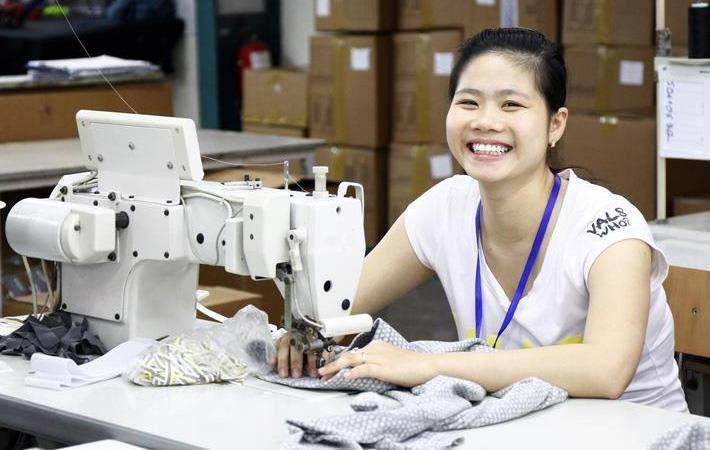
Parekh further emphasized that “they want to target the pre monsoon window from January to July. Within this time they want the first unit up and running. In all we have allotted them 300 acres. They will set up eight manufacturing units. Of these four will be garment manufacturing units. Then they will backward integrate by setting up a knitting, processing and a technical textile unit. In all they will invest Rs 900 crores, which may be hiked. The eight units will directly employ 11-12,000 people. The indirect employment may be to the tune of 20,000. This is easily the largest FDI in recent years in textiles in India. It will put Warangal on the global garmenting and apparel map.”
Further Parekh mentioned “when Youngone starts exporting out of Warangal, it will attract international companies by its success. This is an example of an international investor doing well in Telangana. It will give confidence to other international companies in the textile sector to come and invest in India.” When asked about a message to the textile industry Parekh said “ I would like to tell the Indian textile industry they are missing something if they are not in Telangana. India has advantages in terms of labor, a growing middle class, a ready market. But with all these advantages, you still have to be in the right location to ensure you are leveraging these advantages.”
Capital shortage cripples textile units in Tamil Nadu
Tamil Nadu’s textile units are facing a severe shortage of working capital. This has been caused by volatility in cotton prices, the Eurozone crisis and an extended credit period due to a liquidity crisis in the system. Since business demands more money, entrepreneurs have had to extend their credit limit. On the one side, working capital from banks has eroded and on the other the market is demanding more credit. Unable to work in this system, a large percentage of units facing higher manufacturing costs in terms of raw material, energy, and lower price realisation of their products are in a negative cycle now. The working capital shortage is felt at a time exporters of manmade fiber apparel are trying to grow their market share in the west, particularly in the American market.
Tamil Nadu’s textile clusters are populated by small factories running on bank credit. Over the years, the number of days before a bank can declare a loan asset as non-performing has come down. It used to be four quarters to declare NPA, then got reduced to 180 days, and now it is 90 days. In a business scenario where credit lines have spread, these norms are impacting businesses, especially small businesses.
South Korean company Youngone invests in Telangana, India
Youngone is setting up a 290 acre facility at Telangana’s at Kakatiya Mega Textile Park. This fiber-to-fabric integrated textile cluster is built on 1,200 acres of land. Over a dozen companies have come forward to set up their manufacturing operations in the park with a combined investment of over Rs 3,900 crores. Youngone is a South Korean textile and apparel major. The facility would involve manufacture of knitted and woven garments for outdoor wear and technical textile products, predominantly for exports. It is estimated that more than 12,000 jobs would be created through this project.
Youngone operates in 13 countries, including Bangladesh, Vietnam and Ethiopia, with subsidiaries in the US and Switzerland, and employs over 90,000 persons worldwide. The Kakatiya mega textile park is the first industrial park project to reach the ground-breaking stage in three years after the formation of the state. The project also assumes significance due to its location in the cotton-rich Warangal region which was once a hotbed of Naxalite activities in Telangana. A state-of-the-art infrastructure featuring common effluent treatment and zero-liquid discharge facilities besides ready-built factory sheds will be developed in this park. There is also a provision to expand the park to 2000 acres in future.
Inditex accelerates digital expansion, maintains positive growth
Inditex’s results for the first nine months of the year showed that the Spanish retail giant continues to shrug off the retail malaise, as far as sales are concerned, with a 7.5 per cent increase in the period to the end of October. Sales reached €19.8 bn in the first nine months and it reported an 8 per cent rise in gross profit for a gross margin of 58.2 per cent, as well as its highest-ever net cash position (up 17 per cent) and a 12 per cent leap in net profit to €2.72bn. Inditex is one of the world's largest fashion retailers, with eight brands selling in 202 markets through its online platform or its over 7,000 stores in 96 markets.
The company continuing to roll out new stores, to accelerate its digital expansion and to tie them both neatly together to make sure it’s reaching the customer where the customer wants to be reached.
That was clear from Q3 with the firm having launched Zara online in South Africa, Ukraine, the Philippines and Colombia, while Massimo Dutti’s and Zara Home’s online platforms went live in the UAE, Saudi Arabia, Lebanon and Morocco. Stradivarius, Oysho and Uterqüe also launched their online platforms in the US. And all group brands are now operating worldwide online stores since the launch of bershka.com/ww. These reach more than 200 markets across the globe.
And on the physical stores front, importantly, the company opened its first for&from location outside Spain, in Como, Italy. The chain has an ethical focus and gives jobs to disabled workers.
YKK partners Browzwear, to be available in true-to-life 3D format
YKK’s fastening products will be integrated with Browzwear’s 3D solutions. YKK’s products will be available in Browzwear’s platform in true-to-life 3D. Browzwear shares YKK’s vision for a more innovative, sustainable and efficient fashion industry. Both companies share a commitment to drive innovations for more sustainable processes and practices for apparel businesses. The first stage of the YKK integration will be available in the January product update. The YKK catalogue will be incorporated in phases, with new products added in each of Browzwear’s software updates.
YKK is a global leader in fastening solutions, including zippers, plastic hardware, hook and loop fasteners, webbing tapes, and snaps and buttons. Founded in 1999, Browzwear is a pioneer of 3D digital solutions for the fashion industry, driving seamless processes from concept to commerce. For designers, Browzwear accelerates collection development, opening limitless opportunities to create iterations of styles. For technical designers and pattern makers, Browzwear rapidly fits graded garments to any body model with accurate, true-motion material replication. Worldwide, more than 650 organisations such as Columbia Sportswear, PVH and VF leverage Browzwear’s open platform to streamline processes, collaborate and pursue data-driven production strategies so they can sell more while manufacturing less, which increases both ecological and economic sustainability.
US October imports down eight per cent
US textile and apparel imports in October 2019 were down by 8.2 per cent.
US textile and apparel imports from China declined 16.4 per cent in October. From January to October the share of China in US textile and apparel imports declined by 48.6 per cent. The value of US imported apparel in October was down by 12.9 per cent. Apparel imports from China were down by 35 per cent. From January to October, US apparel imports increased 2.6 per cent year on year, of which the cumulative value from China was down by 5.6 per cent. US apparel imports from China fell 18 per cent in September.
There has been no progress in the recent Sino-US trade negotiations. The US may impose tariffs on more Chinese goods including apparel on December 15. If this is done, most of the Chinese textile and apparel will be included in the list of additional duties, so US imports of textile and apparel from China will decrease. Nearly every major apparel company in the US has slashed its sourcing from China as the raging trade war between the US and China has triggered steep punitive tariffs.
Jeanologia joins sustainability initiative
Jeanologia has committed to Sustainable Development Goals (SDG). With the aim of building more sustainable societies, Jeanologia will extend this to all stakeholders and throughout its value chain: employees, clients, business partners and providers. The company joins the world’s biggest corporate sustainability initiative, which has more than 13,000 member entities in 160 countries and with more than 70 local networks. By joining up, Jeanologia deepens its commitment to people and the environment, and contributes to communicating the importance of sustainable resource use. Currently the company is leading the transformation of the textile industry with its disruptive technologies, laser and eco. These technologies are capable of increasing productivity and reducing water and energy consumption, at the same time as eliminating discharge and harmful emissions, guaranteeing zero pollution.
Since 1994 Jeanologia has aimed at creating an ethical, sustainable and eco-efficient industry through its disruptive technology and knowhow. Its laser, G2 ozone and e-flow system have revolutionised the textile industry. They offer infinite design and garment finishing possibilities, while saving water, energy and chemicals and eliminating discharge and toxic emissions. One of Jeanologia’s main challenges is to achieve the dehydration and total detoxification of the jeans industry. To do this, the company works with the main brands and providers with the objective of making the textile industry totally sustainable.
Inditex commits to recycling
Inditex has committed to using only organic, sustainable or recycled polyester, linen or cotton from 2025. The parent company of Zara has a number of ongoing initiatives with the aim of helping make the world more sustainable by using resources more efficiently all along the value chain, with a focus on raw material and energy consumption.
Inditex’s net profits rose 12 per cent for the nine months to October. Sales across the group jumped 7.5 per cent. Inditex has a focus on the highest-quality locations, store environments, products and customer experience both in stores and online. Crucially, this is coupled with strategic investments in technology and sustainability. Inditex is the biggest retail clothing company in the world. Last year, Inditex made 1.6 billion pieces of clothing. The company, which also has brands including Bershka and Pull & Bear, has been resilient against challenges in the sector due to tight control of inventory, which has helped it avoid major discounting. Expansion of its online platform in new territories, such as South Africa, Ukraine, Philippines and Colombia, has helped it to grow revenues in new markets.
Among the new products brought to market were the new Zara Home cooking collection, Massimo Dutti’s new capsule Après Ski collection and a Uterque pop-up store.
2020 Winter Texworld USA and Apparel Sourcing USA to be held from Jan 19
The next Texworld and Apparel Sourcing winter edition will take place in New York from January 19 to 21, 2020. This is one of the largest fabric sourcing events for the North American market. It will examine innovations in fabrics, technology tools, and trends for spring/summer 2021. A discussion will bring leaders together in an open forum who will share insights on the latest trends, technology, and tools in the textile and apparel industry. A curated area will concentrate on the innovation of processes and advancements of today’s revolutionary fabrics. The program is designed to offer insightful and informative sessions for every role and level of experience across all segments of the industry.
An open panel discussion on the technology tools needed to compete in today’s fashion industry will explain insights into blockchain technology, circular tracing, and the newest software to reduce lead times and waste. Attendees can see, feel and learn about the newest innovations in bio-synthetics, smart textiles, and circular design solutions. Visitors will also learn about how established fibers and fabrics are evolving to keep up with circular and sustainable design needs. A presentation will share upcoming trends for spring/summer 2021. Cutting-edge companies will present the newest innovations and offer a wide range of products.
Conscious fashion choices likely in 2020: Pinterest
In 2020, consumers are more likely to make environmentally friendly fashion purchases, says a Pinterest study. In particular, secondhand wedding dresses have attracted the curiosity of internet users around the world with searches that increased by 41 per cent between August 2018 and July 2019 in comparison to the same period a year earlier.
A center of attention in recent years, the trend for conscious consumption will continue in 2020 in the sectors of decoration, DIY and lifestyle, Fashion will continue to see consumers showing an increased interest in recycled materials as well as secondhand and environmentally friendly clothes. Pinterest highlights three main trends: thrifted wedding dresses (searches up by 41 per cent), art and creations made from ocean waste (up 39 per cent), and secondhand clothing (up 38 per cent). Enthusiastically embraced by major ready-to-wear brands and retailers, the vogue for gender-neutral fashion has also caught the attention of consumers, who are looking for gender-neutral hair styles, unisex children’s clothing and androgynous wedding wear.
Internet users are particularly interested in scrunchies, which made a major comeback this year, hair clips, Y2K outfits featuring army pants, hip chains and logos, grunge fashion and streetwear. This is a trend that has also had an impact in the worlds of television and music.