FW
China looks overseas to mitigate trade war effects on apparel, textile sector
"China first proposed the Belt & Road initiative in 2013. The initiative became one of its three major national development strategies in 2014. In July 2019, the Chinese government signed co-operation agreements with 136 countries along the route, which runs through three continents. During the initiative’s first five years, the total trade volume between China and countries along the Belt & Road route exceeded $6 trillion"
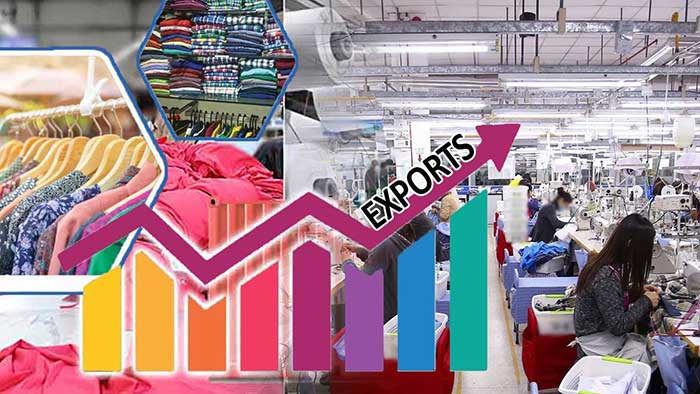
 China’s textiles industry was one of the first markets to open up globally. The country textile exports increased 3.5 per cent in 2018, accounting for around 37.6 per cent of the world’s total apparels. Although its purchasing power slowed slightly, the Chinese textiles industry still experienced high demand in the domestic market. China offers a safety net to its industry due to its huge population. Domestic apparel sales, which grew 8 per cent in 2018, continued to grow in 2019, though not as fast as previous years.
However, investments in the industry slowed as US-China trade war frictions knocked confidence. The country’s investments in fixed assets, which grew 5 per cent in 2018, also slowed in the first half of 2019. Investments focused on technology and innovation, resulting in increased productivity. The country is now entering a new era in textile manufacturing and design with a focus on technology and innovation, cultural and local talent and sustainability.
Overseas investments crosses $6billion mark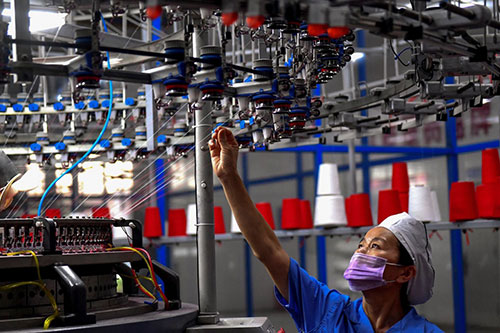
China first proposed the Belt & Road initiative in 2013. The initiative became one of its three major national development strategies in 2014. In July 2019, the Chinese government signed co-operation agreements with 136 countries along the route, which runs through three continents. During the initiative’s first five years, the total trade volume between China and countries along the Belt & Road route exceeded $6 trillion. The textiles industry makes up a large part of this trade.
By 2018, Chinese textiles industry reportedly invested $6.5 billion in countries along the Belt & Road route. The textile industry in the country has made further investments overseas, upstream and downstream.
Opportunities for other countries to step in
With 18 per cent of China’s textile exports going to the US, the country forms its largest export market for textiles. China is also the largest exporter of apparels and textiles to the US, accounting for 38 per cent of the nation’s total imports.
However, ongoing tensions, tariffs and uncertainties have opened up opportunities for other countries to step in. Indonesia, which recently experienced a decrease in purchasing power, has opened its market to Chinese investment as the country plans to develop local e-commerce industry and start-ups.
Asia Pacific Rayon cleans viscose rayon making
Asia Pacific Rayon is committed to clean production of viscose rayon fiber. The company constantly strives to operate in the top quartile of viscose rayon manufacturing, in terms of reduced greenhouse gas emissions, improved carbon disulphide recovery, and wastewater management in line with industry-leading practices.
Based in Indonesia Asia Pacific Rayon is the first fully integrated viscose rayon producer in Asia from plantation to viscose fiber and has a production capacity of 2,40,000 tons per annum. Almost half of the output is used in the domestic market, while the rest is exported to countries like Turkey, Pakistan, Bangladesh, Vietnam, Germany and Italy. Being fully integrated from plantation to viscose-rayon bale, the company has minimal risk of supply disruption and is also protected against the volatility of commodity prices.
Asia Pacific Rayon has invested in a pilot-scale yarn and fabric manufacturing operation, which is expected to start-up in the first quarter of 2020. It will possess all three spinning technologies of ring, open-end and MVS to produce yarn for both knitting and woven applications, with a capacity of 7,600 tons per year. The aim is to help build a vibrant and sustainable textile industry where raw materials are responsibly grown, using the latest technologies to maximize efficiencies and to supply world-class products for customers all over the world.
Neonyt to focus on sustainable fashion brands
Neonyt, the global hub for fashion, sustainability and innovation, will gather green fashion labels in the German capital during January 14-16, 2020. The event will bring together decision-makers and stakeholders of the fashion and textile industry, remaining committed to interpreting sustainability not only as a fashion trend, but as a complete innovation process.
For retail buyers, Neonyt is the one-stop solution for scouting out cool, contemporary collections and future trends. The event has established a catalogue of criteria for exhibitors and built up a contemporary portfolio of exhibitors. The success and growth history of Neonyt, with its formats like the Fashionsustain conference, influencer format Prepeek and the Fashion Show, helps it to appeal to the different communities and their various stakeholders in a very targeted way.
The event will hold panel discussions on fashion and “Air” – the theme for 2020 - at the multidisciplinary conference Fashionsustain. Allison Dring, co-founder of Made of Air, will deliver a keynote speech on how carbon dioxide can be used as a raw material. And the panel discussion “SDGs x Fashion – The UN’s Fashion Industry Charter for Climate Action” will be shedding light on the global repercussions of climate change on the textile industry and vice versa. During the conference, Christopher Veit, managing director of the Veit Group, will look at things from the perspective of the mechanical engineering industry.
Techtextil show in Mumbai sees strong participation
Techtextil was held in Mumbai, November 20 to 22, 2019. This event on technical textiles saw a strong participation of 192 exhibitors from major countries across the world. Visitors from Canada, Dubai, Germany, Italy, Turkey, UAE, UK and USA gave the show a global feature. The fair marked a 17 per cent increase in exhibition space, growing by 25 per cent in international exhibitors compared to the previous edition.
Smart textile machineries, recycled fibers, industrial fabrics, fire retardants, industry wearables, and other sustainable solutions were among some of the key highlights on the show floor. Among the areas discussed were recent technical advancements, all-round growth, sustainability, and reusability of materials in technical textiles, including inventive means and methods, such as the use of lighter, stronger, and better renewable composites including technologically refined machineries in the manufacture of technical textiles.
A lot of quality visitors showed up and conveyed their interest in the innovative technologies exhibited. Overall, the conference also received a tremendous response from the prominent delegates. As always, Techtextil India succeeded in bringing all stakeholders together through this platform. A survey and analysis of the problems and challenges facing the growth of technical textiles in India and the various subsidy schemes launched for the promotion of technical textiles were a major highlight at the show.
Chinese luxe customers becoming more experimental
The luxury market in China is becoming younger, more diffuse. Customers are trying out far more brands than before rather than fixating on a handful and are more interested in things like sustainability and even secondhand luxury.
LVMH has its eyes firmly set on deepening its accessible jewelry portfolio and capturing a greater share of the Chinese middle class as well as US-based Chinese students and US-bound Chinese tourists. Although 2019 marked a decline in Chinese travelers headed for the US and a slower pace of Chinese student enrolments, there are signs that both could recover in 2020. Similarly, the mid-market jewelry segment in China remains ripe for continued growth. This opens up LVMH to tap more of the Chinese middle class, which also favors the group’s higher-end offerings. LVMH can’t expect younger Chinese customers to be as enthusiastic about heritage Louis Vuitton collections as their parents. To stay on top, the brand has to make smart additions to its portfolio.
Italian apparel brand Moncler’s high-priced puffer jackets are a regular sight in Beijing or Shanghai. With nearly 50 stores in Greater China, Moncler already has a strong stance in the country and is a popular purchase for Chinese tourists from Los Angeles to Milan.
Nike sells Hurley to Bluestar Alliance
With this acquisition from Nike, Bluestar aims to fuel Hurley’s sales in categories like skateboarding and snowboarding, as well as continue to grow the women’s business, which will be fueled by connecting fashion and function. Hurley also expects several of its sponsored athletes to qualify and compete in the 2020 Summer Olympics in Japan, where surfing will be an Olympic sport for the first time.
Bluestar Alliance, founded in 2006, owns, manages, and markets a portfolio of consumer brands, including Hurley, Bebe, Tahari and Kensie, among others. Bluestar's retail footprint includes over 250 stores as well as distributors all across the world. Since its inception, the company has acquired select brands with retail sales expected to exceed three billion dollars in 2019.
Hurley is a surfing brand, which Nike bought in 2002. As well as a wide range of women’s board shorts, customers at Hurley can also find backpacks, wetsuits, hats, bikinis and jackets. Nike, the world’s largest footwear maker, now sells more of its products directly to customers through online platforms rather than through wholesalers. Nike has also launched pop-up stores that cater to loyal fans of the brand in several big US cities in an effort to build a strong relationship with its customers and gain market share.
Upcoming Heimtextil to promote fresh design ideas at ‘New & Next’
Textile designers from three countries have emerged winners of the ‘New & Next’ university competition meant to promote newcomers at next edition of Heimtextil in January. Under this head, Heimtextil presents young labels that are being represented at the annual fair for the first time. Over a dozen newcomers with fresh design ideas are expected to attend the next edition of Heimtextil to be held from January 7-10, 2020. New & Next participants will also be offering creative design products for furniture and decorative fabrics as well as bed and bath.
The three universities, viz. the University of Bolton from the UK, the Indus Valley School of Art and Architecture from Pakistan and the Lucerne School of Design & Art from Switzerland won the competition. Following the successful launch of the “New & Next university competition” at the last event, the 50th edition of Heimtextil also offered budding textile designers the chance to submit their work via their university and secure an exclusive presentation area at the fair. Representatives from the universities and their students will present the award-winning works at the “New & Next” area.
The expert jury that chose the winners consisted of Hervé Francois, general manager of Mitwill Textile Europe in France, Xavier Comman from Hermès International in France, Aziza Grill Mariotte & Lutz Walter from the European federation Euratex, Belgium and Prof Tina Moor from the Lucerne School of Design & Art in Switzerland.
Century Textiles stock up 30 per cent following demerger of business
Century Textiles & Industries stock have zoomed 30 per cent in the past two months following the demerger of the cement division and its merger into UltraTech Cement.
Post demerger, its debt/ebitda (earnings before interest, tax, depreciation and amortisation) ratio is at a healthy 1.85, paving the way for further growth in the businesses. After demerger, Century Textiles & Industries has three divisions (textiles, pulp and paper and real estate) and the cement division has been demerged along with associated liabilities including a debt of around Rs 3000 crores. This transaction aims at deleveraging the company’s balance sheet and creating an opportunity for its new phase of growth in the remaining businesses with a primary focus on real estate. It also achieves unlocking of the value of the cement divisions to its shareholders through issuance of equity shares of UltraTech directly to shareholders of the company.
Meanwhile, the company’s outlook for both paper and textile sector is positive and it expects to reverse this trend in the second half of the financial year. The management is confident of sustaining and improving its performance in the second half of the year on the back of revenue enhancement measures and a continued focus on operational efficiencies and cost control.
Bangladesh garment earnings fall from July to November
Bangladesh’s income from garment exports has fallen in the July-November period of this fiscal compared to the same period of the earlier fiscal. This has been attributed to falling demand in the Eurozone, the country’s main market for garment products, and a slump in business competiveness of the sector.
Bangladesh garment exporters want cash incentives. While the country’s apparel exports have taken a hit in recent months those of its competitors are on the rise. The readymade garment sector accounts for more than 80 per cent of the country’s annual export earnings. But the country has lost its market share in global apparel exports by 0.1 percentage point to 6.4 per cent. China still remains the top exporter of apparel products with earnings. India’s market share has come down to 3.3 per cent from 4.1 per cent.
The second biggest apparel exporter globally, the Bangladesh garment manufacturing sector is not having the best of times lately. In the last seven months, 59 garment factories have gone out of business while around 25,900 workers have lost their jobs. Most garment factories are small and medium enterprises and they fail to maintain compliance strictly and pay their workers under the new wage structure.
YKK Partners with Browzwear to bring digital innovations in fashion industry
Browzwear and YKK Corporation today announced that YKK’s fastening products will be integrated with Browzwear’s pioneering 3D solutions for the fashion industry. The integration will enable designers to easily incorporate 3D models of YKK products into their designs, freely moving and visualizing them in photo-realistic 3D as they create. Additionally, the specifications for the fasteners will be included in Browzwear’s Tech Pack with the rest of the manufacturing instructions, making the production process faster and error-free.
YKK, a global leader in fastening solutions, including zippers, plastic hardware, hook and loop fasteners, webbing tapes, and snaps and buttons, is among the growing number of prominent companies in the industry to partner with Browzwear to facilitate the creative design and speed time to market. Both companies also share a commitment to driving innovations for more sustainable processes and practices for apparel businesses.
“At Browzwear, we are constantly building partnerships and developing new solutions that will streamline the design process for our clients from concept to commerce,” said Sharon Lim, co-founder, and CEO of Browzwear. “A zipper may seem simple, but designing and manufacturing with that zipper is actually complex. With YKK’s products available in our platform in true-to-life 3D, we’re changing that, and we feel confident that our customers will benefit from the ability to work faster and smarter.”
Browzwear, which shares YKK’s vision for a more innovative, sustainable and efficient fashion industry, is an ideal partner for us. We look forward to working closely with the company to build pioneering solutions that will achieve those goals.” said Takashi Tsukumo, Vice President, Global Marketing Group, YKK Corporation. The first stage of the YKK integration will be available in the January product update. The YKK catalog will be incorporated in phases, with new products added in each of Browzwear’s software updates.