FW
Fashion industry sets sustainability ball rolling with new initiatives
"With prices of clothing falling and disposable incomes rising, fast fashion has become one of the major trends of the 21st century. However, this has also contributed to major environmental crises and the textile industry is now regarded as the second most polluting industry. People are now questioning the moral and ethical compromises they have to make to keep up with the latest fashion trends."
 With prices of clothing falling and disposable incomes rising, fast fashion has become one of the major trends of the 21st century. However, this has also contributed to major environmental crises and the textile industry is now regarded as the second most polluting industry. People are now questioning the moral and ethical compromises they have to make to keep up with the latest fashion trends. The case in point is about the fast fashion brands, which prided themselves on providing ‘fashion at low prices’ but since 2013, these brandsare known more for their associations with the Rana Plaza type of incidents: where a factory collapsed due to the hazardous state of the building, claiming the lives of over 1,100 workers and permanently injuring over 2000 more. The disaster revealed the horrendous working conditions faced by those who work in the overseas factories producing clothes for our high street; including low wages, no health care benefits, unsanitary and mentally damaging working environments and excessively long working days.
A wake up call for brands
The incident compelled both consumers and brands to change their attitude towards environment protection. As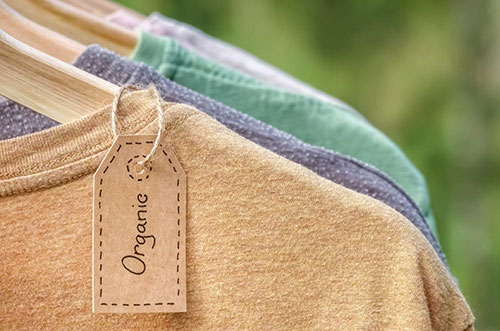 2018 Weber and Shandwick public opinion poll revealed, around 83 per cent millennials plan to boycott a brand for ethical, moral, or environmental reasons. This would serve as a huge wake-up call for offender brands who are now being pressured by both the government and the consumers to take responsibility for their extremely influential actions. Recent reports reveal, around 200 high street brands have signed up to the Sustainable Apparel Coalition so far.
On its part, one of the brands teamed up with Cotton Connect and the Self Employed Women’s Association (SEWA) in 2013 to create the Sustainable Cotton Programme. This scheme trains farmers in sustainable cotton farming techniques to produce organic cotton. The brand now plans to train 160,000 farmers across India and Bangladesh in efforts to exclusively use 100 per cent organic cotton in their products within the next few years. Though these efforts on part of the brands are admirable, still a lot needs to be done.
Role of social media
Social media too has contributed to the rapid rise in popularity of second-hand resale websites and apps such as Depop, eBay and Gumtree. Schemes like TK Maxx’s “Give up clothes for Good” in association with Cancer Research allow customers to donate their unwanted clothes to charity, preventing perfectly wearable clothes from ending up in a landfill.
Social media also exposes environmental offenders through its ever-present advertising and the ‘swipe effect’ which that thoughtless buying. For instance, earlier this year, The Guardiantriggered a nationwide boycott of the #IWannabespicegirl, which was being produced in a factory where wages averaged at 35p an hour and shifts were mandatory for 16 hours per day. Retailers like Marks and Spencer temporarily ceased trading of the brand’s products and launched an investigation into the production of its t-shirts. This campaign is yet another example of how the public are waking up to the dark consequences of fast fashion and demanding change.
Need for a more focused approach
Though a step in the right directions, these initiatives need a more critical eye that will push these companies to become more sustainable. Though the industry has set the ball rolling for becoming more sustainable however, it needs to reduce its consumption of fast fashion products to be truly sustainable. =
India’s T&A exports decline by 13% in August 2019
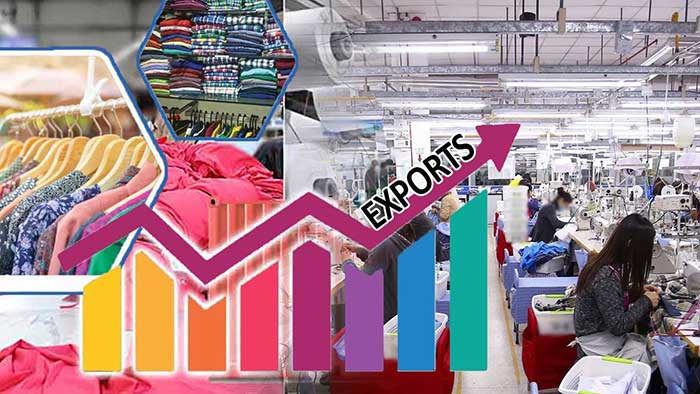
According to the recent analysis by CITI, India’s exports of textiles and apparels during August 2019 declined by 13 per cent to US$2,752.7 million as against US$3.156.4 million recorded in August 2018. The exports declined by 8 per cent to US$14,322.0 million during the Apr-Aug 19 quarter as against US$15,641.5 million recording during Apr-Aug 18.
On the other hand, India’s imports of textiles and apparels increased by 41 per cent to US$ 964.55 million in August 2019as against US$ 685.22 million recorded in August 2018. During the Apr-August 2019, these imports increased by 19 per cent to US$ 3819.49 million as against US$ 3198.49 million recorded during Apr-August 2018.
Benetton Group launches Autumn-Winter Collection for festive gifting
Benetton Group, one of the celebrated fashion companies in the world, recently launched its Autumn-Winter collection which offers a plethora of chic and stylish options to beat its customer’s dilemma of picking the ideal gift for their dear ones.
The collection offers a wide array of apparels for men, women, and kids that are high on style with exciting prints and compliment the brand’s alluring color palette and its contemporary silhouettes. It also offers accessories like convertible bags in varieties such as nylon and pu slings, small coin pouches, purses in true Benetton colors, classic work and laptop bags, also available in decent color and neutral style with pop accents, along with metallic and patent shine bags, etc that make for the perfect gifting options.
India to ease debt repayment for textiles makers
India may extend the two-year moratorium for debt repayments by textile units. While steps have been taken to boost liquidity for struggling textile units, it is felt that giving them some time for debt payment will ease their financial burden. A liquidity crunch is being faced by manufacturers and exporters. There have been delays in GST refunds. The medium and small industry debt restructuring package may be extended for the entire industry and so prevent many companies from turning into non performing assets.
The industry has also requested that remission of duties or taxes on the export product scheme should cover all products in the textile value chain as it is the reimbursement of duties and taxes paid. Another proposal is that the three per cent interest subvention scheme for export products should be raised to five per cent for all textile and clothing products and that recycled polyester staple fiber should be placed under five per cent GST. The industry has requested that dues and TUF subsidies be released along with stimulus measures such as debt restructuring, e-auctioning of CCI procured cotton and extension of export credit. Cotton yarn consumption in the domestic market has stagnated during the last four years. The 35 per cent fall in yarn exports in recent months has aggravated the situation.
Non active casuals drive US apparel market
Active wear is still a relatively small portion of the total US men’s and women’s apparel market. Non-active casual wear represents more than half of the industry’s annual sales. Active wear continues to grow but casual fashion with special features is driving industry growth.
Today’s casual fashion is different from what was once referred to as sportswear in the American fashion industry. Consumers are looking for their clothing to do more. American sales of non-active casual wear apparel that has special features like stain-resistance, wicking, antimicrobial, and wrinkle-resistance grew seven per cent in the past year, with nearly every applicable category contributing to the growth. Today’s consumer is mixing and matching their clothing styles, price points, brands, and retailers. Non-active casual wear is maintaining its place in the consumer’s closet. Wardrobe staples like casual pants, golf/polo/rugby shirts, and jackets and blazers are making a comeback.
Specialty and department stores are top in terms of overall sales of casual wear apparel, with 29 per cent and 15 per cent of the market respectively. But off-price retailers aren’t far behind, with 14 per cent of sales. Growth is being driven by off-price and manufacturer-owned/direct-to-consumer stores, illustrating changes in the ways in which consumers shop and the new apparel retail landscape.
Mexico apparel exports decline 9.9 per cent in 10 years
Latest World Trade Organisation (WTO) data indictes, clothing exports from Mexico declined by 9.9 per cent in the last ten years, to 14 billion dollars last year. The value exports fell from $5.1 billion in 2007 to $4 billion in 2017.In 2017, the sector was affected by Donald Trump’s threat to suspend the North American Free-Trade Agreement, which regulates trade relations between Mexico, Canada, and the United States.
Finally, the three governments reached an agreement to create a new agreement, the T-Mec, which has already been ratified by Mexico and is pending the green light of Canada and the United States. The entire Latin American market witnessed a decline during the period. The progress of Southeast Asia undermined the importance of this region as a productive pole for the sector. Foreign sales of clothing from this market have fallen almost every year since 2008, with the only exception of 2019 and 2011, when it was 16.4 billion dollars. The following year, exports fell again by 8 per cent, and have continued to decline until they reached 14 billion dollars last year.
Inditex to expand store network
Inditex plans to expand its store network by opening new stores in the following months. The company currently has 63 points of sale of its Zara, Massimo Dutti and Bershka chains in the United Kingdom. In the first six months of the current year, the Spanish giant expanded its retail space in the British by 7 per cent.
Inditex also reduced its profit before taxes in the United Kingdom in the first half of its fiscal year. Its profit before tax stood at $28.9 million dollars in the country in the first half of its fiscal year. The group achieved revenues of $ 28.9 million in the first half, compared to $67.1 million in the same period last year. Sales in the country increased by 10 per cent to $1 billion.
Emerging brands to drive VF growth
VF hopes to drive business forward with its emerging brands Smartwool, Icebreaker and Napapijri. Smartwool is a sock, apparel and accessories brand. Last year, Smartwool revenues grew eight per cent. The company’s new 3D Intraknit collection will be the key driver for Smartwool to scale up its apparel category, especially in markets such as Europe, where distribution is lagging, but also in the US where the brand hopes to expand beyond its core markets.
Ten years ago, Icebreaker was a wholesale-only company, but over the past decade, the brand is now 33 per cent direct-to-consumer (DTC), which has not only helped boost margins but also given Icebreaker better control over the customer experience. Now the brand is looking to grow the DTC channel to 45 per cent over the next four years, and part of that transformation involves the company’s commitment to natural fibers. Icebreaker uses ultra-fine, ethically sourced, sustainable, traceable fiber made with the best factories in the world. Italian-based apparel maker Napapijri has been part of VF since 2004 and has an established customer base in Europe. The upscale apparel brand is generating double-digit growth and has a strong direct-to-consumer channel presence in both owned and partnership stores. The brand’s success is based on a commitment to design and sustainability.
Chinese FDI in Vietnam up 60 per cent
China’s direct investment in Vietnam has surged more than 60 per cent this year. Increasing production costs in China have pushed manufacturers to relocate their factories to Southeast Asian countries which have lower costs. Vietnam is also seen as a country with a better labor supply. Manufacturers considering moving out of China are mainly producers engaged in low-end sectors in manufacturing, including textiles and garments, consumer discretionary and electronics packaging and assembly. But high-end industries, such as electronics and machinery, are also showing signs of relocating to Vietnam.
Vietnam relies on China to propel its rapidly growing economy. China is Vietnam’s biggest trading partner. Vietnam has capitalised on the fallout of the US-China trade war to become a top destination for manufacturers looking to avoid tariffs. China now is the third biggest FDI investor to Vietnam, climbing up from fifth in 2018. Another reason for the Chinese shift to Vietnam is the trade dispute with the US. The trade war is also benefiting countries like Cambodia, Myanmar and Bangladesh. The massive outflow of production from China is going to them. While outerwear is moving into Myanmar and Vietnam, sportswear and bottoms are moving into Cambodia. There has also been an increased general outflow into Bangladesh.
China to remain world’s largest apparel supplier
As per global analytical firm GlobalData, though the on-going US-China trade war highlights the country’s need to diversify clothing and footwear sourcing, it is not an easy task given its dominance of apparel supply chains. China is by far the largest clothing and footwear supplier, accounting for 42 per cent of all apparel and 69 per cent of all shoes imported into the US last year. All other countries combined are ill-equipped to handle the sheer volume of capacity that would be required to move production out of China.
China had a 31.3-per-cent share of world apparel exports by value last year. No other country can match the size of its supply base, its range of skills, its quality levels, its product variety and the completeness of its supply chain from raw materials to final products – or has the capacity to absorb its business. China also continues to appeal to apparel buyers as rising wages are largely being offset by efficiency and productivity gains.
In addition, the country plays a key role as a textile supplier, as the world’s largest producer of fiber and fabric and the largest textile exporter, with the value of shipments last year reaching 37.6 per cent of the global total. Its on-going investment in modern spinning, weaving and knitting machinery is also helping to drive better quality, lower production costs and more environmentally-friendly production – and shores up China’s future position as the key supplier of fabric and trims.