FW

Direct-to-consumer denim brands have stepped up to ensure consumers make the best purchasing decision. Brands selling jeans via digital-only channels need foresight, an astute eye for fabrics, nimbleness and effective communication to sell.
More than the price benefits associated with shopping direct-to-consumer, men like the brands’ home try-on program. Since men don’t like shopping and don’t like going to the mall shopping online feels more natural. Brands are educating consumers about the benefits of shopping direct-to-consumer brands.
Warp + Weft, based in Pakistan, is a direct-to-consumer men’s and women’s line of size inclusive denim launched in 2017. The jeans are produced in an energy efficient, fully-integrated manufacturing facility. Forty per cent of the business comes from men’s. The brand is introducing a tech platform aimed at offering men a more personalized experience.
Jeans with a tech element, be it four-way stretch for 360-degree movement, or a left-hand weave jean with a soft hand feel, connect with men. While women are more concerned with aesthetic, for men, comfort is king. Comfort, technology and easy accessibility speak to men in a big way. The fact that direct-to-consumer denim brands are not itching to rewrite the fashion playbook allows them to invest and focus on building men’s items with lasting power.
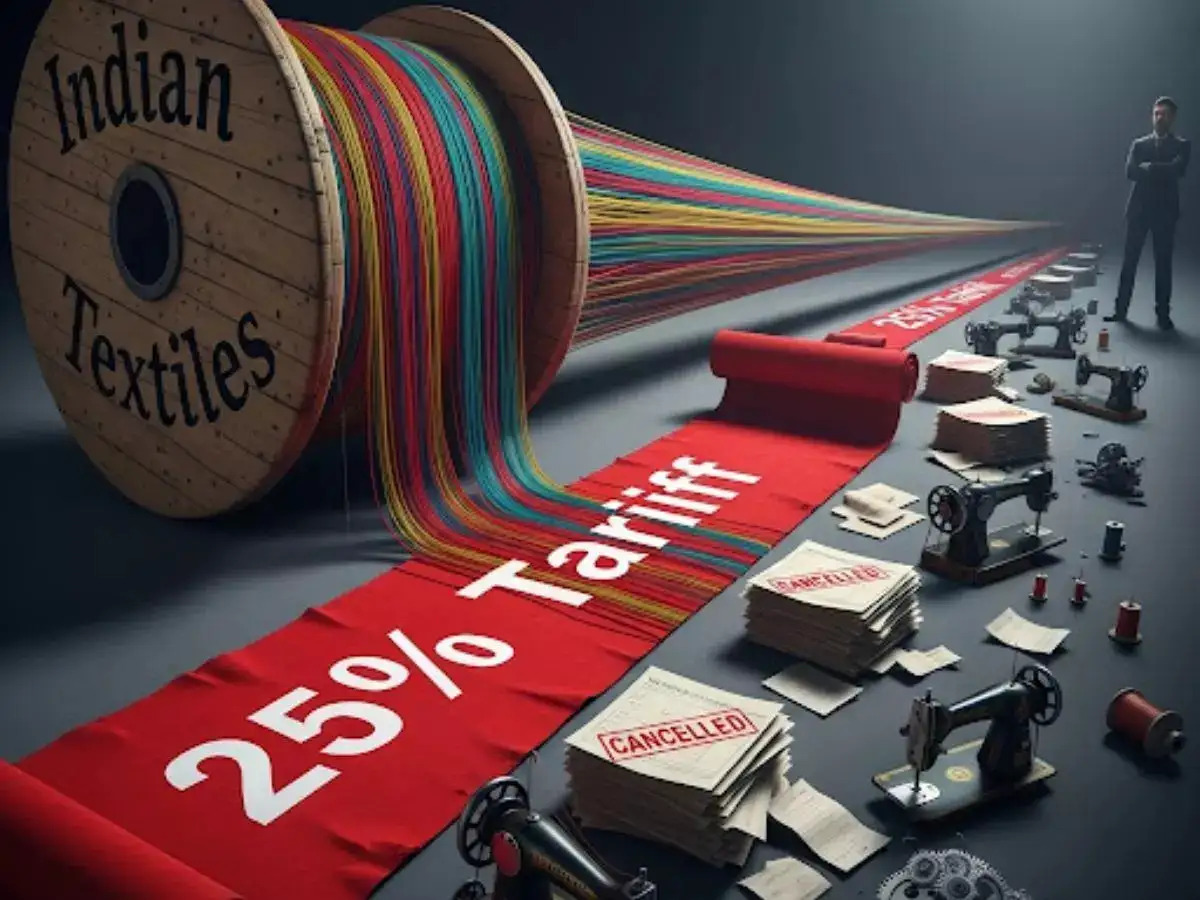
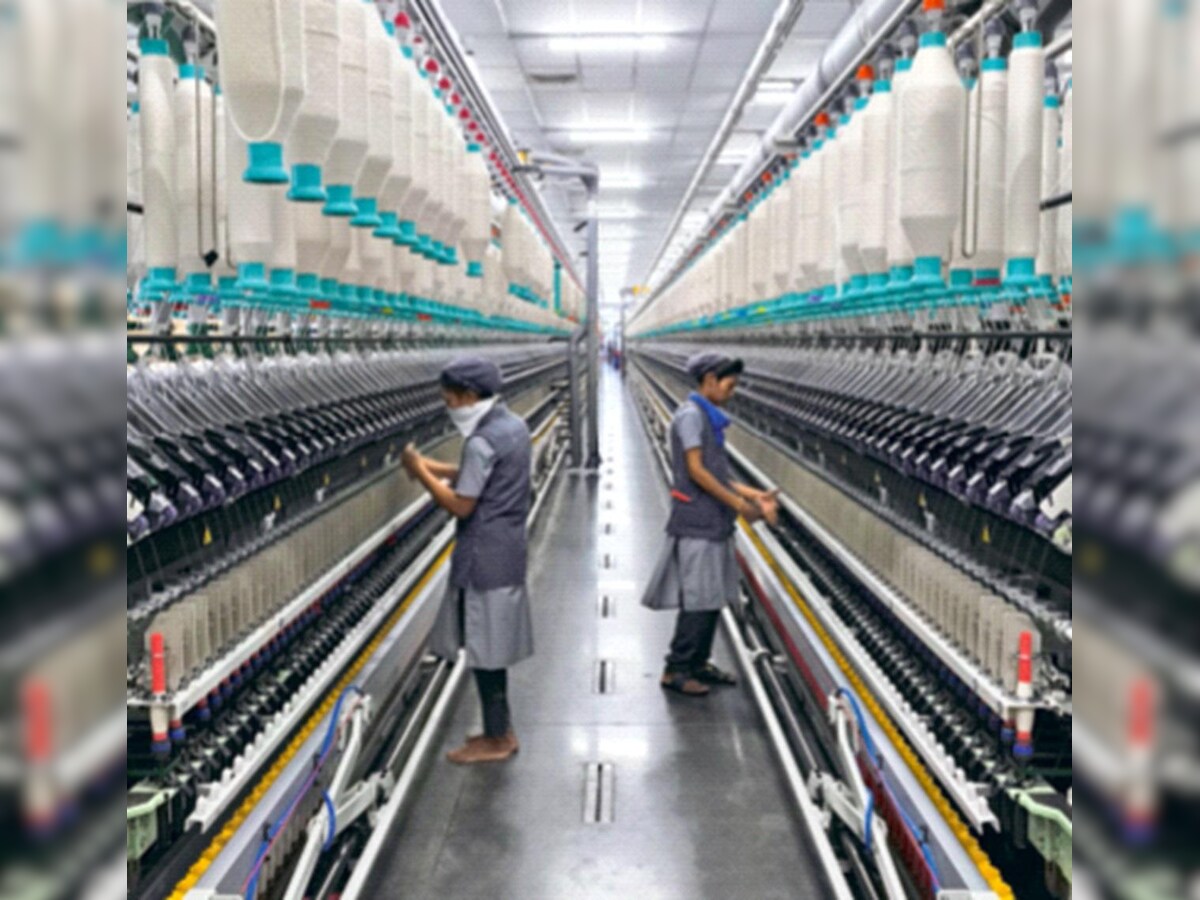
An improvement in US-China trade relations has started to hurt India’s cotton yarn exports. The US-China tariff war had benefited India. Between June and September 2018, the US announced high customs duties on several Chinese goods and China retaliated by increasing levies on US goods. Consequently, India’s exports to the neighboring country increased by about 32 per cent during the June-November period. India’s exports of cotton yarn to China in April to November were up 2.5 per cent.
Also, earlier, the Chinese had put duties on American cotton so there was pressure to buy from India. Now the situation has eased. Chinese importers have renegotiated orders of Indian cotton yarn worth $500 million in the past few weeks. Importers, import agents and Chinese bankers have defaulted, renegotiated confirmed orders or even cancelled shipments and letters of credit on contracts without assigning proper reasons.
China is slowing and fears losing competitiveness if the second round of American tariffs, which includes apparel, comes into effect from March. The country may want to cut down on inventory. While China is the largest importer of cotton yarn, with a share of 46.7 per cent globally, India remains the largest exporter of cotton yarn in the world.
The Barcelona Fashion Summit 2019, which will be held on February 5 at Teatre Nacional de Catalunya (TNC) in Barcelona will witness the participation of executives from companies like Inditex, Mango, Tendam, Desigual and Tous, as well as experts from consultancies like Deloitte or EY. The congress, titled ‘Fashion Año 0: Claves para reinventar el negocio de la moda (Fashion Year 0: Keys to reinvent fashion business)’, will be organised by Modaes.es in collaboration with 080 Barcelona Fashion and has the sponsorship of Board, Facebook, Minsait (an Indra company) and TecnoCampus.
The first conference of the day will be conducted by Chiqui Calleja, co-founder of the restaurant group Larrumba, who will present his case in the restoration sector. The first round table titled La moda, a vista de ‘outsider’ (Fashion, from the point of view of an outsider), will involve fashion executives such as Daniel Muñoz, IT Director at Desigual and with experience in groups like Conforama or Caprabo; Andrés López, Operations Director at Pepe Jeans and former at Johnson Controls Automotive and Camper; or José María Ruiz, who joined GOCCO in 2017 as CEO after working at Juguettos and Telepizza.
Dimas Gimeno, former President , El Corte Inglés, will analyse the challenges that the retail sector must address Managers from Inditex, C&A, Pepe Jeans or Tendam will complete the program of the largest congress about fashion business in Spain
In the last fiscal year, Bangladesh's overall export earnings from the UK saw an 11.76 per cent growth. In fiscal 2016-17, export growth to the UK was 12.63 per cent. In the July-December period of the current fiscal year, Bangladesh apparel exports to the UK were up by 1.30 per cent from the previous year. In the same period last year, the growth was 20.70 per cent.
Tensions over Brexit have slowed down Bangladesh's export growth to the UK. Earnings from the European country during the first half of the current fiscal year posted only a 3.16 per cent increase. The UK is the third largest market for Bangladeshi goods. Since there was a slowdown in the UK economy due to the Brexit deal, importers went slow to import goods to observe the trade policy in the aftermath of the EU divorce.
Over the prevailing uncertainty of Brexit, UK importers went slow, affecting the import of goods from Bangladesh. Considering the trade policy after Brexit, importers in the UK did not place additional work orders. On the other hand, economic slowdown in that country, caused by slower job growth and GDP growth, has cut the demand for goods. However, the UK has committed to providing duty and quota-free market access, even after Brexit is completed.
Adidas plans to double its production of shoes containing recycled plastic waste, from five million to 11 million pairs of shoes in 2019. The brand intercepts plastic waste on beaches before it reaches the oceans in collaboration with environmental organisation Parley for the Oceans. This upcycled plastic waste is then made into a yarn which becomes a key component of the upper material of Adidas footwear. In 2018, the brand saved more than 40 tonnes of plastic waste in its offices, retail stores, warehouses and distribution centres worldwide and replaced it with more sustainable solutions.
Adidas recently signed the Climate Protection Charter for the Fashion Industry at the UN Climate Change Conference in Poland, and agreed to reduce greenhouse gas emissions by 30 per cent in 2030. Adidas is also committed to using only recycled polyester in every product and on every application where a product exists by 2024.
"The anticipated impact of the CPTPP will be immense, as slashed tariffs encourage significant shifts in global supply chains. Its high-standard provisions on the digital economy, investment, financial services, labor and the environment establish new "rules of the road" that will have a broad country-specific and collective impact. CPTPP includes high-standard chapters covering customs and trade facilitation, standards and technical barriers to trade, investment, services, intellectual property, e-commerce, government procurement, SOEs; labor, environment, regulatory coherence, transparency and more."
 The anticipated impact of the CPTPP will be immense, as slashed tariffs encourage significant shifts in global supply chains. Its high-standard provisions on the digital economy, investment, financial services, labor and the environment establish new "rules of the road" that will have a broad country-specific and collective impact. CPTPP includes high-standard chapters covering customs and trade facilitation, standards and technical barriers to trade, investment, services, intellectual property, e-commerce, government procurement, SOEs; labor, environment, regulatory coherence, transparency and more.
Impact on various countries
As the CPTPP opens new markets and, in some cases, imposes new rules on domestic treatment of data, intellectual property, labor rights, and more, each country has a unique set of economic and political circumstances to consider. Some of these impacts on the following countries will include:
Australia: The CPTPP will help support Australian businesses to grow and see annual benefits of up to [AUD]$15.6 billion to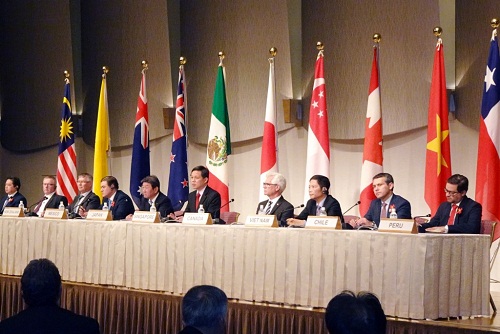 the national economy by 2030. However, despite these anticipated benefits, some economists estimate the ultimate real national income boost to be just 0.5 percent by 2030—the lowest of all Parties..
Canada: The CPTPP represents a significant opportunity for Canada to diversify its trade links and build stronger export markets in Asia. The country’s food and agriculture industry in particular is poised to benefit, gaining preferential access where it currently faces high tariffs, such as in Japan, Vietnam and Malaysia. Overall, Canada's GDP gains are estimated at $4.2 billion, higher than under the TPP, because it is no longer competing with the United States under the same agreement.
Japan: The CPTPP serves to set a floor for the anticipated US-Japan FTA negotiations, and could also give Japan leverage in the midst of other ongoing negotiations, including those for the Regional Comprehensive Economic Partnership (RCEP).
Mexico: The CPTPP allows Mexico to have FTAs with six additional Asia-Pacific nations, including Australia, Brunei Darussalam, Malaysia, New Zealand, Singapore and Vietnam. Its transparent membership process could allow Mexico to exploit new trade and investment relationships with other Asian countries and Latin American neighbors. Mexico will benefit not only from non-tariff barriers with its CPTPP partners, but also from wide treaty coverage and strict protections in several areas, such as digital trade, regulatory coherence, intellectual property rights (IPR), SOEs, services, labor and environment, transparency and corruption.
Other countries, including Colombia, Indonesia, the Philippines, South Korea, Taiwan, Thailand, and the United Kingdom, have indicated varying degrees of interest in joining the Agreement.
US to rejoin agreement
Following the US midterm elections on November 6, 2018, where Democrats attained a majority in the House of Representatives, it is possible that trade policy priorities will shift slightly. However, the speed with which the United States could potentially join the CPTPP, seek to improve the agreement, or consider other options would depend on the terms and conditions of its accession.
Using the agreement to mitigate economic impact
With the US-China trade war escalating, some CPTPP members may use the agreement to mitigate some potential economic impact. For example, Vietnam's economy is highly dependent on exports, a quarter of which go to China. Demand may slip, especially for those goods which are re- exported to the United States. The CPTPP, then, will open up new export markets and other opportunities.
"However, the present India-UK trade relationship does not look particularly special. In 2016, the UK was the fifth-largest export destination for Indian exports, behind the USA, the UAE, Hong Kong and China. It accounted for only 3.3 percent of Indian exports, valued at $8.66 billion (€7.6 billion). This is miniscule in comparison to the almost 16 per cent of Indian goods exported to other EU countries. In terms of imports, the UK is not a significant exporter for the Indian market and overall, it barely scrapes into India's top 20 trade partners."
 Once the UK manages to cast off the EU's yoke, it will be able to strike its own trade deals with countries around the world. This inevitably places India high up on its wish list.
UK, a miniscule part of India’s exports
However, the present India-UK trade relationship does not look particularly special. In 2016, the UK was the fifth-largest export destination for Indian exports, behind the USA, the UAE, Hong Kong and China. It accounted for only 3.3 percent of Indian exports, valued at $8.66 billion (€7.6 billion). This is miniscule in comparison to the almost 16 per cent of Indian goods exported to other EU countries. In terms of imports, the UK is not a significant exporter for the Indian market and overall, it barely scrapes into India's top 20 trade partners.
Yet, according to Kevin McCole, COO, UK India Business Council, this is not the full picture of the economic relationship between the countries. While India-UK trade relationship "is not as strong as it could be," the key to the overall relationship is the bilateral ties which include the level of investment from both countries into each other, and the level of shared innovation and research projects companies and institutions from the countries work on.
EU eager for a trade deal with India
McCole points out, growth in trade and investment between Britain and India will be driven by the tech sector. The EU has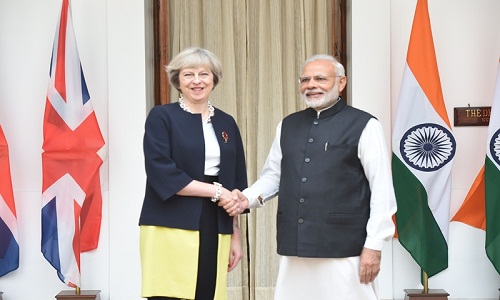 been in negotiations with India over a trade deal since 2007. While little progress has have been made since the Brexit vote, the EU is still eager for a deal. It believes that there is plenty of room to expand trade and investment relations and make them more fruitful.
The business sentiment within India is not as anti-Brexit. Shortly after the 2016 Brexit vote, the Federation of Indian Chambers of Commerce & Industry (FICCI) conducted a survey of 45 Indian companies that do business in the UK. While 28 per cent said Brexit would have a negative impact on their business within the UK, 41 per cent said it would be either good for business or would make no difference. Similarly, 48 per cent said their primary reason for being in the UK was the UK market, rather than access to the EU market as a whole. This is a view that certainly can be found within some of India's major export areas. Clothes and textiles are one such area, accounting for a whopping 13 per cent of all Indian exports. The EU is the largest apparel market for India, with the UK taking in the biggest share of that and accounting for more than 10 percent of all Indian exports in apparel.
Yet as appealing as the advancement of UK-India business ties are to Brexit-supporting politicians or to those businesses with a particularly strong India-UK basis, they can hardly be seen in isolation from the central question currently gripping the entire Brexit debate.
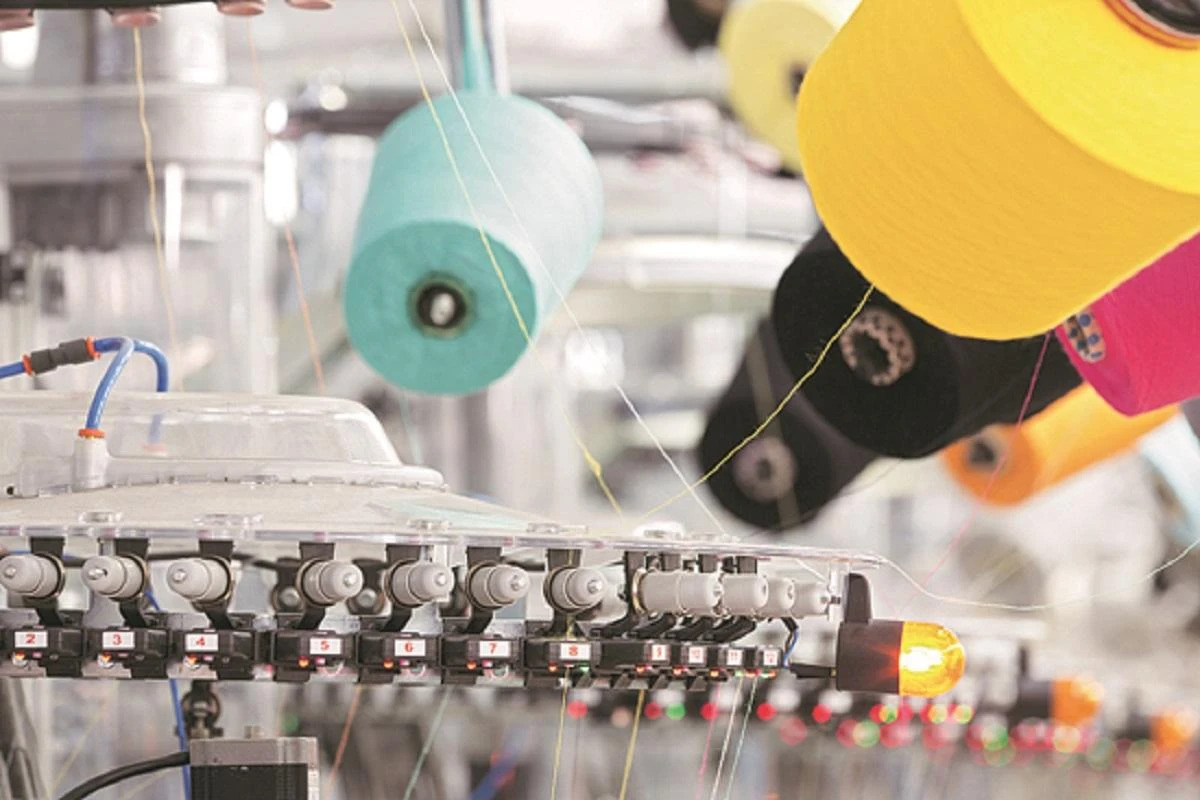
Pitti Filati is on till January 25, 2019. This is a trade show for the knitting yarn industry, showcasing spring/summer 2020 trends and collections to industry buyers. The main markets covered by the event, besides Italy, are the UK, France, Germany, the US, Switzerland, Spain, Russia, Turkey, Japan, the Netherlands, China, Belgium, Sweden, South Korea and Hong Kong.
Techno-Luxury, a section where rare and hi-tech materials blend is showcasing the combining of both rare fabrics, like cashmere, and polyamide and polyester yarns. Participants are Italian warp knit and circular knit stretch fabric specialists. CustomEasy is a knitwear capsule collection resulting from the synergy between various players at Pitti Filati.
A debate focused on supply chain management and sustainable development, on workers’ rights and growth in the regions involved in the textile industry supply chain. Pitti Filati is highlighting for the first time vintage apparel, accessories and design objects. A special layout punctuated by illuminated frames is accompanying visitors as they discover a new perspective on vintage.
Revenues of the Italian yarn industry were up 2.7 per cent in 2018. Bucking the trend of the last few years, exports grew again, rising by 3.6 per cent though imports were slightly down.
Hong Kong Fashion Week was held January 14 to 17, 2019. Hong Kong Fashion Week is held every January and July as a trade show for women’s wear, men’s wear, children’s wear, lingerie, swimwear, evening wear, handbags, shoes, accessories, fabrics, buttons and labels. In this edition, the mood was subdued as exhibitors were facing uncertainties from the ongoing trade conflict between the United States and China as well as rapid changes in sourcing and retail models.
While US buyers were not as abundant as in the past, there were a number of attendees from Europe, Indonesia and Australia who roamed one vast hall filled with sparkling evening gowns, scads of sweaters, beaded handbags, rows of denim and pint-sized clothing for children. US tariffs on Chinese goods had affected buyers’ confidence levels in placing orders with Chinese factories. They were turning to sourcing from Vietnam.
Last year, the show added a corporate fashion and uniform zone, popular for its offerings of stylish and tailored company uniforms. That section was back this year as were sections for fashionable sportswear, thermal clothing, bridal and evening wear, intimate wear and swimwear.
One of the few exhibitors from India was Only For U Designs, showing colorful tunic tops. Usually some 25 Indian companies exhibit at the show.
Korea’s trade deficit continued to expand in 2018. In 2018 import value of textiles and apparel into Korea was up by 12.11 per cent and export value was up by 2.25 per cent. Trade between Korea and Vietnam increased but the import and export textile and apparel share of China dropped.
Textile and apparel exports of Korea are dominated by 60 codes (knitted or crocheted fabrics), 54 codes (manmade filaments) and 55 codes (manmade staple fiber). In 2018, export value of 60 codes (knitted or crocheted fabrics) fell 4.12 per cent year on year. Export value of most major export varieties increased, and export of 55 codes (manmade staple fiber) moved up by 15.97 per cent.
Korea’s export volume to Vietnam increased 3.9 per cent year on year and to the US moved up by 11.25 per cent. As for Korea’s imports of textile and apparel, China was the largest source of imports, accounting for 37 per cent, up by 6.91 per cent year on year. Vietnam’s share increased 23.25 per cent. The share of Indonesia, India, Myanmar and other countries also moved up. China’s market share has been decreasing year on year, while that of India and some Southeast Asian countries such as Vietnam is growing rapidly.