FW

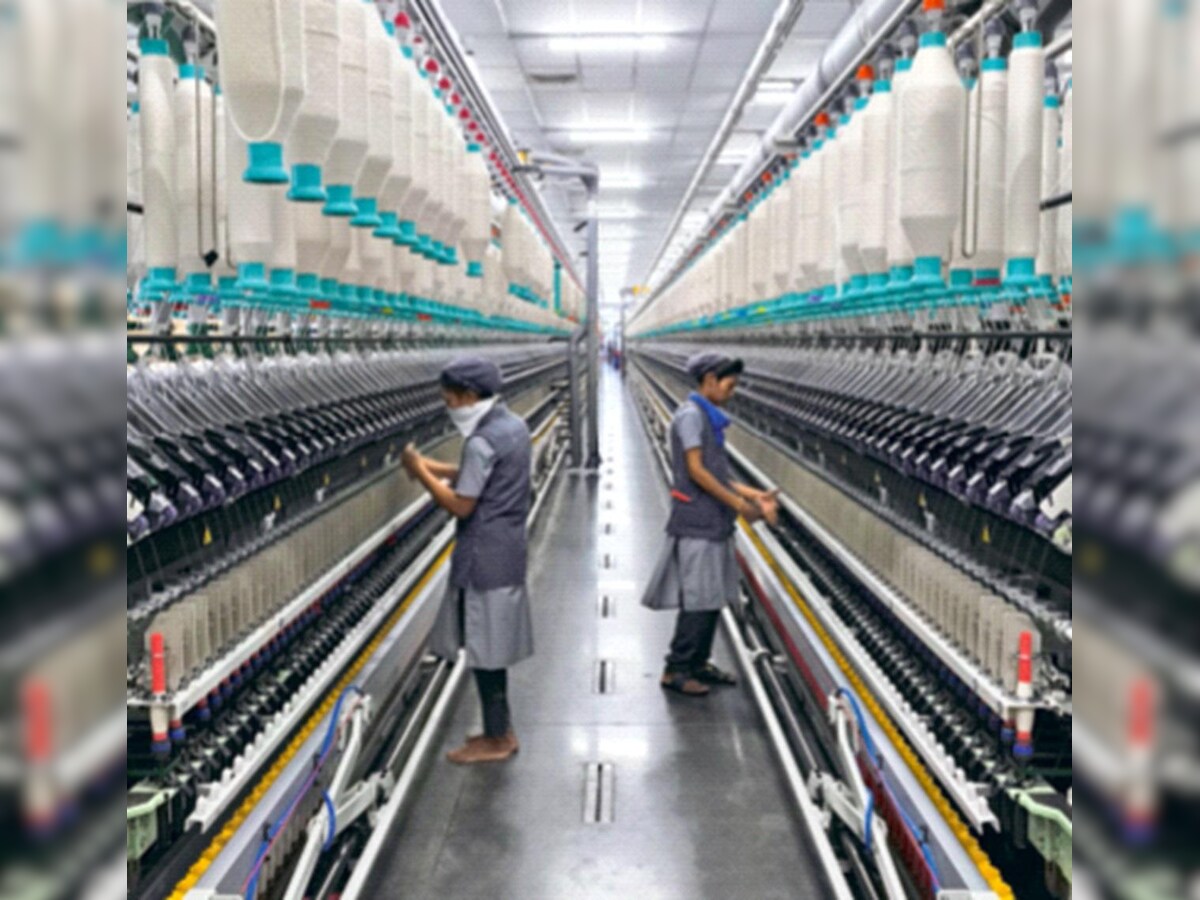
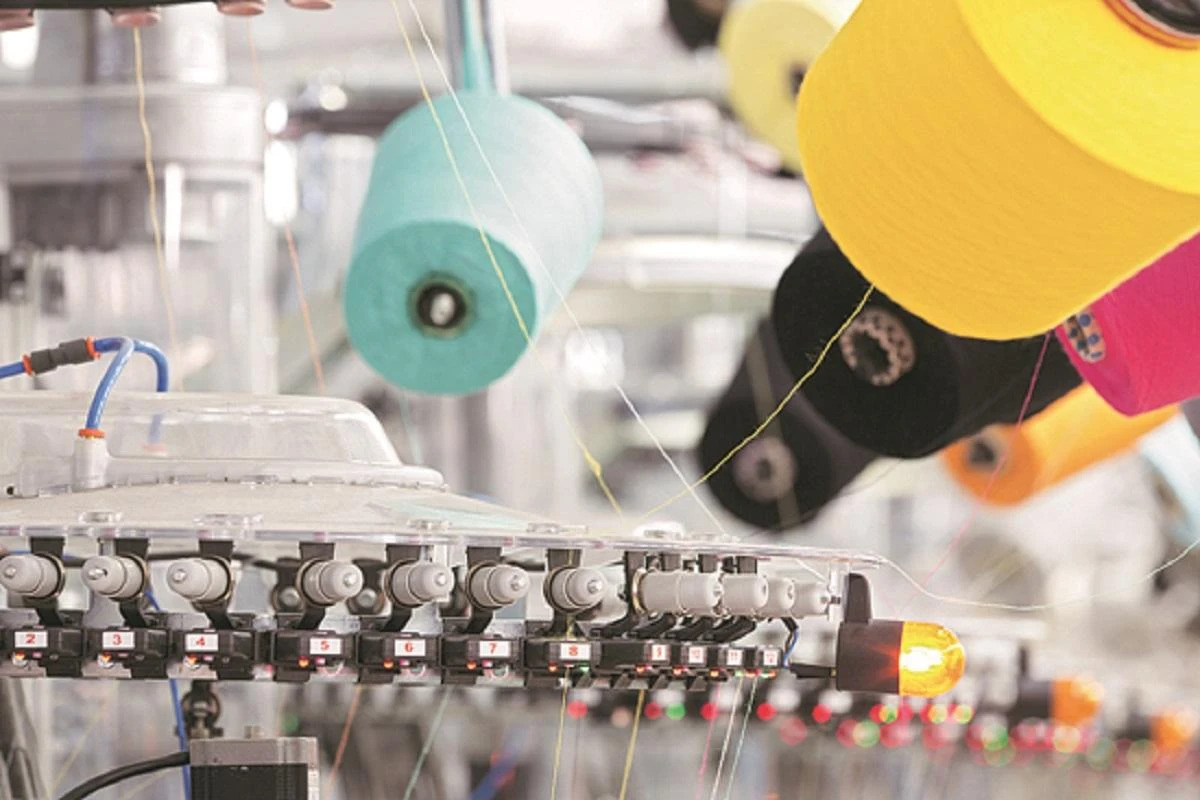
"According to an ICRA report, the surge in exports of cotton yarn during the initial few months of current financial year helped the domestic spinners record a healthy recovery from the multi-year low profitability reported during FY2018. Cotton prices have softened with fresh arrivals in the recent months, cotton yarn realisations have exhibited stickiness which, together with movement in cotton yarn stock levels, point towards a pick-up in domestic demand. Moreover, notwithstanding the moderation in Y-o-Y growth in cotton yarn exports in the recent months, growth in absolute exports remains healthy.
 According to an ICRA report, the surge in exports of cotton yarn during the initial few months of current financial year helped the domestic spinners record a healthy recovery from the multi-year low profitability reported during FY2018.
Cotton prices have softened with fresh arrivals in the recent months, cotton yarn realisations have exhibited stickiness which, together with movement in cotton yarn stock levels, point towards a pick-up in domestic demand. Moreover, notwithstanding the moderation in Y-o-Y growth in cotton yarn exports in the recent months, growth in absolute exports remains healthy.
Strongest growth recorded in five years
Commenting on the emerging trends, Jayanta Roy, Senior Vice-President and Group Head, Corporate Sector Ratings, ICRA, noted healthy demand and higher cotton fibre prices (vis-a-vis last year) have shifted cotton yarn realisations into a higher trajectory this year, with realisations averaging 13 per cent higher vis-a-vis an 11 per cent increase in cotton fibre prices since last year. Additional benefits of lower cost cotton stocked during the last harvest season have helped in placing the recent performance of the cotton spinners amongst the strongest seen in more than five years in terms of gross contribution margins.
The sharp rupee depreciation between July and October 2018 also supported spinners’ rupee realisations and hence contribution margins. The aggregate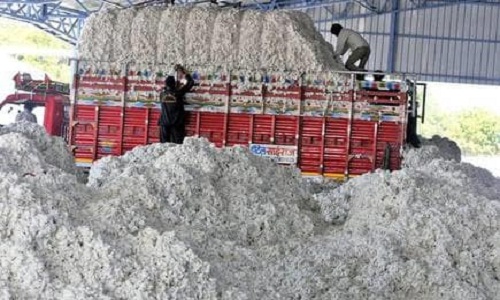 operating margins of ICRA’s sample of 13 large spinning companies improved to two-year high of 13.7 per cent in Q2 FY2019 vis-a-vis 12.2 per cent in Q1 FY2019, after remaining subdued at 9-11 per cent during the preceding five quarters. On an absolute basis, the aggregate operating profit of ICRA’s sample in Q2 FY2019 stood at five-year high level, with 59 per cent Y-o-Y growth and 9 per cent Q-o-Q growth.
Export growth supported by competitive prices
After growing at a strong pace of 50 per cent Y-o-Y during five months FY2019, India’s cotton yarn exports normalised in the subsequent months of September and October 2018, reporting a moderation in growth to 34 per cent Y-o-Y in seven months FY2019. The growth initially had been driven by more than two-fold increase in exports to China – one of India’s key markets for cotton yarn. Besides a low base effect, the staggering growth in exports was supported by the relative competitiveness of Indian cotton and yarn prices, providing an arbitrage opportunity to Chinese buyers.
Given India’s continued high dependence on China, its ability to strengthen its presence in other export markets remains crucial. Besides, incremental developments on the US-China trade row can play a key role in influencing India’s export prospects, as China has a significant reliance on the US for import of cotton fibre.
Vietnam emerged in second spot in global garment and textile export turnover in 2018. However, the country has had to import around 80 per cent of its materials for production. Currently, Việtnam imports up to 99 per cent of cotton, 70 per cent of fiber and 80 per cent of its fabric.
The heavy dependence on imported materials has become a serious problem for the industry. The Comprehensive and Progressive Agreement for Trans-Pacific Partnership (CPTPP) which took effect in Việtnam earlier this week, is expected to bring huge opportunities. However, there are many challenges as well. The biggest shortcoming is that only 10 per cent of the fabric is imported from Japan and countries that are part of CPTPP. Việtnam is unable to produce fabrics for export.
The ongoing US-China trade war threatens to dent exports from the world's two largest economies but other countries may see Chinese and American demand diverted their way. Vietnam is expected to benefit the most from the trade war-inspired buying. The Southeast Asian nation has been touted as a possible winner in the US-China trade war because of its low cost of manufacturing. Some companies have already begun shifting production out of China to avoid tariffs imposed by America.
p> Trendy has acquired a majority stake in Denham. Chinese fashion group Trendy over the years has rolled out well-known international brands in China, including Miss Sixty and Superdry. Launched in 1999, Trendy has grown into an international fashion conglomerate. Its portfolio includes fashion brands like Ochirly, Five Plus, Coven Garden and Trendiano.
Denham is a Dutch company. Founded in 2008, Denham operates in more than 20 countries, with stores in Amsterdam, Antwerp, Hamburg, Tokyo, Osaka, Shanghai and Seoul. The label is also available via wholesale partners and via its own online store. Denham sees many opportunities to grow the business in existing markets but also as the most influential denim player in the future. This will not only be achieved by extending its jeans business, but also by adding product categories.
In March 2017, Denham and Trendy announced a joint venture with the aim of further expansion of the denim brand in China. To date, the joint venture has introduced 16 retail stores in key cities in China and has plans to further grow the business in the coming years as a result of the acquisition. Trendy is taking over majority stake from Amsterdam-based investment firm Amlon Capital.
The global textile chemical market is growing at a CAGR of 3.4 per cent. Textile chemicals include products like coating and sizing chemicals, finishing agents, colorants and auxiliaries, surfactants, desizing agents, yarn lubricants and bleaching agents.
Asia-Pacific holds the leading position and is expected to maintain its lead in the future. The coating and sizing chemical segment is expected to retain its dominant position, in terms of revenue generation, up to 2022. The applications of textile chemicals include packaging, home furnishings, apparels, and industrial chemicals.
Textile chemicals have a wide range of applications such as dyeing, printing, coating, finishing, and bleaching. Applications of textile chemicals in the apparel sector such as in clothing and footwear are expected to grow in the coming years. Moreover, growth in demand for home furnishings, floor furnishings, and eco-friendly chemical products are some other factors that drive this market.
However, unfavorable effects of textile chemicals on the environment may hamper market growth. Product launch is the key strategy adopted by market players to expand their portfolio. Mergers and acquisitions, business expansion, production expansion, and partnerships are the other prominent strategies adopted by key players to sustain the intense competition in the market.
Bulelani Magwanishe, the Deputy Minister of Trade and Industry and Sihle Zikalala, KwaZulu-Natal MEC for Economic Development, Tourism and Environmental Affairs will launch Africa Bespoke Apparel (ABA), an R81 million black Industrialist textile firm in Verulam, KwaZulu-Natal, South Africa on January 22, 2019. ABA is one of the first black industrialists beneficiaries to have created around 450 job opportunities within four months of its operations. The company received a grant of R35.5 million from the Department of Trade and Industry and also Black Industrial Scheme (BIS). The project is co-funded by KwaZulu-Natal government’s Growth Fund.
The latest technology installed through BIS will help ABA increase its production by three times. Besides BIS will extend its support to ABA to expand into the sub-Saharan African markets.
Global Textile Technology and Engineering Show (GTTES) is being held in Mumbai, from January 18 to 20, 2019. The fair offers new optimism, opportunities and prospects for the textile industry with 400 exhibitors, 49 countries and 65 international business delegations.
Among the participants are: Sri Lanka, Slovenia, Belgium, China, France, Germany, Italy, Japan, Spain, Turkey, UK, USA, Taiwan, Morocco, Algeria. The event has achieved its place as a reliable international business platform for both domestic and overseas companies. GTTES facilitates interaction with all export promotion councils which will help industry to know more about export opportunities, various government subsidies, market initiative schemes available for Indian manufacturers and help to gain information and develop new opportunities for exports from India.
The event is a platform to connect exhibitors with new markets which have never looked at India as a sourcing opportunity. Both for Indian manufacturers and foreign exhibitors these new and developing markets can bring future opportunity for business and expand their customer networking in an unprecedented way.
GTTES is a must to visit event for every company in textiles and textile engineering. A highlight of the event was the launch of the Colorix digital printing solution by the Orange Group.
According to Aung Naing Oo, Director-General of Department of Investment and Companies Administration (DICA), the numbers of garment factories whose products are being exported to the European Union have increased by 180 within five years. In 2013, only 22 garment factories exported to EU but at present, the number has increased to 202, an increase by 180, primarily due to benefits brought about by the EU's Generalized Scheme of Preferences (GSP).
There were 24 factories: 22 garment factories exporting garment to the EU, one factory (non-CMP industry) and one factory (CMP industry) before the EU’s reinstatement of GSP rights to Myanmar in 2013. At the time, these factories created more than 23,000 jobs.
After Myanmar earned GSP rights beyond 2013, the number of factories of all kinds has increased to 305—202 garment factories, 26 factories (non-CMP) and 77 factories (non-CMP garment). These factories have job creating capacity of more than 300,000 jobs.
Amidst ongoing trade war between the US and China, Malaysia is seeing a huge potential of enhancing textile exports to the US. One of the buyers, at the recently concluded Heimtextil Trade Show, said if US firms decide to quit China, Malaysia could be ideal replacement mainly owing to latter’s superior textile quality. He added that many US buyers are now becoming aware of this unbalanced dependence on China, besides a lot of overseas importers have often faced quality concerns with Chinese products.
Another participant, Nature World Manufacturing Sdn Bhd, too received good enquiries. The company manufactures home textile products. The event witnessed good participation from Asean countries, including eight from Indonesia, three from Malaysia and eight from Vietnam.
Olaf Schmidt, Vice President, Textiles and Textile Technologies, Messe Frankfurt expressed delight at ASEAN region’s potential and said that soon countries like Vietnam, Malaysia and Bangladesh would become key players in the global textile supply chain.
French luxury and lifestyle business Kering, which owns brands like Gucci, Yves Saint Laurent and Alexander McQueen, has published the first in a series of white papers on the concept of Planetary Boundaries in conjunction with the Cambridge Institute for Sustainability Leadership (CISL).
The Planetary Boundaries (PB) framework was first introduced in 2009 as a science-based guidance system for human development on earth. The concept was developed by a group of environmental scientists led by Johan Rockström from the Stockholm Resilience Centre and Will Steffen from the Australian National University. The group wanted to define a ‘safe operating space for humanity‘ for the international community, including governments at all levels, international organisations, civil society, the scientific community and the private sector, as a precondition for sustainable development.
The PB framework is a fundamental element to include when designing the agenda for managing and mitigating our global environmental challenges. As businesses we need to go far beyond our single, individual issues and contribute to meaningful change at a global level.
The fundamental principle on which the PB framework rests is that Kerin’s actions undermine the relatively stable conditions of the past 12,000 years. This unique period of stability of the climate, and of the earth system as a whole, known as the Holocene epoch, has allowed humanity to develop agriculture, settlements and the complex societies prevalent today.
India's cotton exports to Pakistan are unlikely to increase, despite the neighbouring country scraping import duty, as high domestic prices have made exports uncompetitive. Indian cotton is currently available around Rs 43,000 a candy, while prices in Pakistan are at sub Rs 43,500 making it (exports) unviable so far.
Recently, Pakistan scrapped duties on import of cotton for February 1-June 30 to tide over shortage of the crop. Indian traders, usually large exporters to Pakistan, would have benefited, but for their high procurement cost. In 2015-16, India had exported over 2.5 million bales of cotton to Pakistan when crop there fell over 30 per cent. In the current year, Pakistan has harvested 10.8 mln bales of cotton, down 25 per cent from initial target of 14.4 million bales. But the situation is different this time. Indian prices are not competitive. If rupee depreciates or prices in Pakistan rise exports will pick up
Indian cotton can reach Pakistan in just one day through roads from Punjab or even via sea route it can reach in three-four days, as against 20-45 days from other regions such as Africa, the US or Australia.