FW

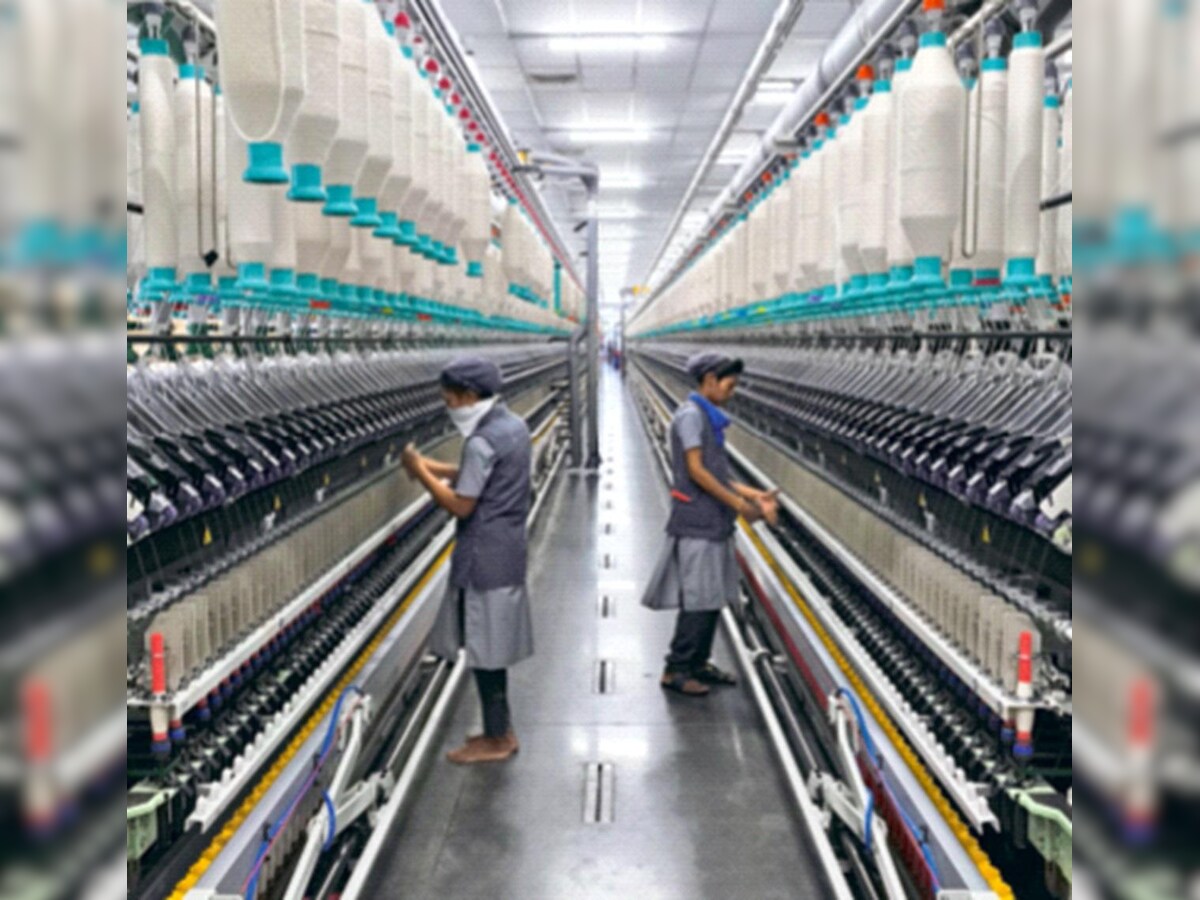
Pakistan’s textile policy for 2014-19 has failed to achieve its targets. The main reasons are: a financial crunch for different schemes under the policy and non-availability of energy at competitive prices.
Exports of textile products were expected to increase beyond 10 per cent. Instead exports further declined during this period. One main export impediment is the levy of customs duty on import of cotton. During the policy implementation period, the energy cost was made almost double and resultantly several mills were closed, rendering thousands of people jobless.
The textile policy aimed at doubling value addition in five years, doubling textile exports in five years, facilitating additional investment in machinery and technology, improving the fiber mix in favor of non-cotton, improving the product mix especially in the garment sector, strengthening existing textile firms and establishing new ones, making the textile sector domestically and internationally compliant, especially with respect to labor and environment rules and conventions, encouraging textile units to use modern management practices for improving efficiency and reducing waste.
The policy aimed at systematically developing and strengthening clusters, training workers for capacity building, offering internships and programs for enhancement of skills and adopting measures to increase the ease of doing business and reduce the cost of doing business.
Pakistan’s overall exports grew 2.19 per cent during July to December. Imports fell by 2.29 per cent. Textile exports grew 0.06 per cent from July to December.
Exports of knitwear grew 10.51 per cent during July to December. Exports of bed wear increased by 3.27 per cent and exports of made-up articles rose by 1.57 per cent. Meanwhile, exports of readymade garments surged by 0.89 per cent in first six months of the current financial year.
Exports of cotton cloth fell 100 per cent. Similarly, exports of raw cotton tumbled by 73.62 per cent. Exports of cotton yarn witnessed an increase of 17.14 per cent. Exports of towels declined 2.03 per cent. Exports of cotton cloth, tents, canvas and tarpaulin and others also registered a decline during the first six months of the ongoing fiscal year.
The Islamic Fashion and Design Council (IFDC) has dedicated a fund to help emerging modest brands find success in the business of modest fashion and lifestyle. Participants have the potential to become a strong part of the global modest fashion narrative. The first event where the fund will be applied is the upcoming Pret-A-Cover Buyers Lane. This is a first in the global modest fashion space.
The Pret-A-Cover Buyers Lane is an invitation-only platform where well selected modest fashion and design brands will be showcased to global attendees; an opportunity that can very well catapult their journey to the next level.
One challenge for designers is rising event production costs. A designer’s career can be made or broken by their ability to showcase work and gain critical exposure at key events like Pret A Cover Buyers Lane. Until now. IFDC will be working together with brands, helping them to remove roadblocks thereby increasing their pathways to development and success. By covering fees and certain costs, IFDC’s aim is to significantly bolster the momentum of the growing modest lifestyle industry.
Designers will get direct access to prominent global retailers, VIPs, industry leaders, and more looking to discover opportunities within the lucrative Muslim fashion and lifestyle markets and also within the wider secondary market of modest lifestyle consumers.
Digimarc has developed a barcode for apparel application. With this barcode, shoppers can scan hangtags or apparel labels using their phones to complete a purchase in the aisle or to find sizes, styles and colors not available on the retail floor. Easy and reliable scanning helps retailers capitalize on in-the-moment buying intent, and links store associates with retail inventory management systems. Even if the correct size or color is not available in the retail showroom, the barcode can link the physical store with the retailer’s e-commerce site for more options and recommendations, enabling shoppers to immediately buy online.
Adding the Digimarc barcode to all apparel media including hangtags, labels and displays is aimed at elevating the entire purchase journey by ensuring seamless shopper engagement, product discovery, as well as making it easy for shoppers to buy at the point of display without the need for traditional checkout.
The barcode can also be added to hangtags on garments and to retail displays, allowing retailers and brands to maintain aesthetic integrity and provide an engaging customer experience. Since Digimarc Barcode is generally imperceptible to shoppers, there is no need for unsightly QR codes on the tags.
Easier scanning translates into an improved shopping experience with less snags at the front-end and shorter lines.
Digital disruption has resulted in a radical shift in consumer shopping behavior, their beliefs, and expectations. Consumers have become more demanding than ever. Their growing need for ease of shopping, prompt service, and personalised solutions has left retailers with the only option, ‘either go digital or die’. It has become imperative for retailers to redefine their traditional business models, embrace digitisation and unleash tremendous opportunities provided by emerging new ecosystems.
In today’s complex business environment scenario, luxury retailers need to work towards re-inventing consumers’ shopping experience by understanding their pain points, needs, desires, and aspirations. Retailers should embrace technologies such as blockchain, artificial intelligence, smart sensors, computer vision, chatbots and facial recognition to solve problems like counterfeiting, delayed check-outs, queuing, product navigation, waiting time for product returns, delays in online order pick-ups and late order fulfillment.
Darshan Kochar, President,Solapur Garment Manufacturers Association says, Solapur in Maharashtra aims to be the world's uniforms sourcing hub by 2022, with plans to establish 2,000 garment units in the city. Kochar was speaking at the third edition of the 'Uniform, Garment and Fabric Manufacturing Fair 2019. Uniform-manufacturing sector in India is estimated at Rs 18,000 crore per annum, with Rs 10,000 crore from machinery and fabrics while the rest is from sales supplying to local schools through retailers and institutions.
Well-connected across the country with rail and road networks and airports in Mumbai, Pune and Hyderabad, Solapur has emerged as the investment destination in the state for the uniform garment industry in the country. The third edition of the 'Uniform, Garment and Fabric Manufacturing Fair 2019' was held from January 8 to 10 in Bengaluru. The three-day fair promoted Solapur and Maharashtra as the uniforms sourcing hub.
Many overseas buyers from the Middle East, Africa and South East Asia have shown interest in our uniforms. Buyers from the United States, Dubai, Ghana, Malaysia, Nepal, Nigeria, Oman, Qatar, Senegal, Sri Lanka and Vietnam participated in the event.
New research has found that most Japanese apparel companies fall short on human rights issues. Business & Human Rights Resource Centre and Human Rights Now, an international human rights NGO based in Japan, surveyed the human rights policies and practices of the top 62 apparel companies operating in Japan.
The survey found that a small number of leading companies have policies and procedures in place to prevent and remedy negative impacts their business activities may have on human rights. Aside from that small group, however, most companies, it was found, are yet to take adequate measures – for example, of the 21 that responded, nine still do not have human rights policies that make concrete reference to international human rights standards.
Several companies have no procedure for remedying human rights abuses, and of those that do, most provide for them only in Japanese. Only four companies that responded to the survey have a remedy procedure accessible in languages other than Japanese.
Of the 21 companies that responded, 12 companies have a human rights policy or procurement guidelines in line with international standards. Among these are Fast Retailing, Gap, H&M, adidas, Asics and Patagonia. On the positive side, several companies stated they have started strengthening their human rights measures, at least partially because of the survey.
For spring/summer 2020 fashion has no problem playing with bizarre ideas and questionable aesthetics. So says Premiere Vision. It’s a happy-go-lucky attitude that’s inviting new ideas and fresh concepts. The season is committed to eco responsibility and high technology; creativity and collaboration; notions of happiness and simplicity working together in concert. The result is a spirited and fun season enhanced by vivid color stories, fruit skins, fantastical takes on tropical plants and preppy maritime ideas.
Impactful reds, pale lime yellows, sugary pinks and electric blues are bolstered by bright white across women’s wear, men’s wear and active wear. Transparency and gradients remain important, as designers continue to play with color filters and watercolor effects. The forecast includes graduating tones on quilted fabrics, rainbow effects over rustic textures and semi-transparent silks with blurred florals.
Shine takes on a slippery look with transparent coatings that don’t mask the natural weave of the fabric. Rather, the coating magnifies the fabrics’ natural irregularities and leather grains. Instead of intense metals, women’s fashion and footwear are moving toward mermaid-like effects. Lightly colored yarn, vaporized metallic and pearl coatings offer a fresh new look for glammed-up fashion. This season’s accessories are brightened up with shine that combines different effects like pearly pastels, iridescence, milky tones and metallics that highlight the weaves of the materials.
Guess has partnered Colombian singer J Balvin for its ready-to-wear capsule for both men and women. Everything in the capsule is inspired by South Beach just before the turn of the century and borrows heavily from the look and feel of Vibras, Balvin’s new album.
The 42-piece capsule, which will be released in February, includes both apparel and accessories, including a tie-dye fanny pack that instills Balvin’s colorful, risk-taking aesthetic into a collection that feels right at home in the tropics. Women can expect plenty of cut-offs and cropped tees to beat the heat as the summer comes back into view, most of which brandish vibrant primary colors.
In keeping with the beach aesthetic, the women’s side of the capsule will include bodysuits, bandeaus, tank tops and track pants found in shades of hot pink and green. A collection of swimwear rounds out the offering. The men’s collection echoes Balvin’s own style in color-blocked denim jackets and leisurely track suits. The men’s tees are purposefully oversized, a common component in street wear capsules, and come in two styles: tie-dye in reds, yellows and greens or multi-striped and imbued with the album artwork from Vibras.
Beyond wanting to buy clothing that doesn't make a person feel guilty, more consumers are showing a desire for alternative, creative fashion that is made in limited numbers. The rise of upcycling among new designers and businesses is likely due to a youth-driven consortium within the fashion industry which is poised to support brands that create things in a positive way. With this, the process works well for younger, smaller brands who find it easy to buy deadstock or vintage garments for the purpose of upcycling in place of expensive fabrics that often require minimum orders. Moreover, a smaller-scale brand with upcycling baked into its DNA means it's easier to maintain and less expensive to produce, unlike bigger brands who may have trouble adopting these processes due to the traditional setup of their supply chain.
This uptick in younger sustainably minded brands could possibly stem from design schools, too, which have been adding more sustainability-focused courses into their curriculums, training their students to adopt new ways of thinking about fashion systems. Programs teach young designers to think critically about how fashion is made and consumed, and to reconsider both its processes and outcomes.