FW
Global sports apparel segment grows at five per cent CAGR
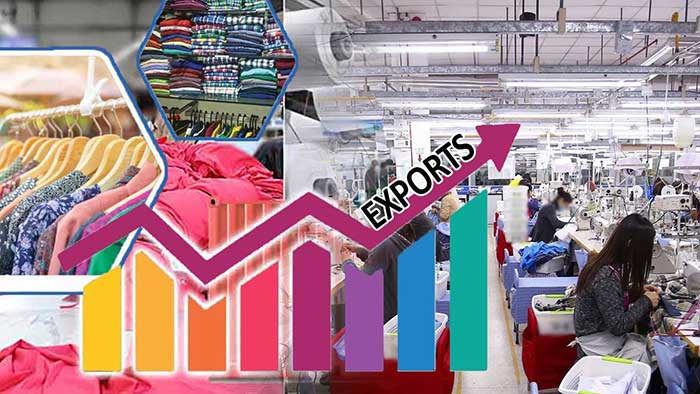
The worldwide market for sports apparel is expected to grow at a CAGR of 5.8 per cent over the next five years. The classification of sports apparel includes shirts, coats, pants, skirts and others. North America has the largest consumption share of nearly 30 per cent. Europe is the second largest, with a consumption share of 26 per cent.
Sports apparel are in amateur sport and professional athletics. The share of sports apparel in amateur sport is about 85 per cent. Technological developments designed to improve comfort and performance has also led to growth in sales of sports apparel. As a result sportswear is turning into a highly popular style statement and fashion trend.
Sportswear includes items such as yoga pants and active wear. Although performance sportswear takes the lead in terms of market size, sports-inspired is the category driving growth. Both sports-inspired footwear and apparel are growing at a rapid pace, registering ten per cent and six per cent growth.
Besides emerging markets such as India and Thailand, core markets such as the United States are also producing significant sports-inspired growth, despite its reputation as a performance-oriented market.
Growth is driven by a growing portion of the population living healthier life styles and stronger participation in sports and fitness activities.
PRGMEA lauds Saudi investment
Pakistan Readymade Garments Manufacturers and Exporters Association (PRGMEA) termed the visit of Saudi crown prince as a positive indicator for restoring the confidence of foreign and domestic investors in Pakistan which will help in reviving the national economy.
The huge Saudi investment will open new vistas of development and prosperity as well as attract investors of other countries. Due to negative travel advisory foreign buyers are reluctant to visit Pakistan for their business deals. The Saudi investment will reduce this negative trend.
The association urged the government to bifurcate the textile sector into three categories: raw material, home textile and apparel. The sector comprises many sub-sectors with different functions and their functioning are different sub-sectors.
PVH Corp to buy Australian subsidiary Gazal
PVH Corp has made an offer to buy Australia's Gazal, as the U.S. company looks to expand its direct control of businesses operated under the Calvin Klein and Tommy Hilfiger brands globally. Gazal and PVH first entered into a joint venture partnership in 2014, forming PVH Brands Australia. The JV holds licenses for PVH’s Calvin Klein, Tommy Hilfiger and Van Heusen brands, as well as the Pierre Cardin, Bracks and Nancy Ganz brands in Australia, New Zealand and other parts of Oceania.
With the deal set to close in the second quarter of 2019, PVH Corp has acquired the remaining interest in Gazal that it does not already own for A$6 per share, and the aggregate net purchase price for the 78 per cent of Gazal shares being acquired is approximately A$124 million. PVH affirmed that management at both Gazal and PVH would remain in their current roles for the next two years and would use approximately 25 per cent of their existing Gazal equity to subscribe for an approximate 6 per cent stake in the PVH subsidiary that is the parent company of the acquirer.
Salvatore Ferragamo S.p.A appoints new Creative Director
Salvatore Ferragamo S.p.A, the, parent company of the Salvatore Ferragamo Group, one of the world's leading players in the luxury sector, has appointed Paul Andrew s the Creative Director of the Salvatore Ferragamo brand. Andrew joined the company in September 2016 as Women’s Footwear Director and was promoted one year later to Women’s Creative Director. With this appointment, all design functions across the brand will be grouped under Andrew’s responsibility.
Guillaume Meilland will maintain his role as Men’s Ready-to-Wear Design Director and is entrusted with the additional responsibility of Studio Director, coordinating the development of all product categories under the leadership of the Creative Director.
Nike cuts water use in its supply chain
By working together with its supplier, Nike has managed to slash the use of water during cotton dyeing. Vertical Knits, a Mexican knitted textile supplier, has used innovative techniques and manufacturing process improvements to reduce its water use by a massive 85 per cent per kilogram of fabric – while halving its energy bill in the process. On an average, it takes approximately 200 liters of freshwater to dye and finish a kilogram of cotton.
Besides water saving, Vertical Knits has also realised almost 50 per cent reduction in energy savings. Vertical Knits and Nike was able to achieve these dramatic savings through close collaboration and a multi-faceted approach. With this partnership Nike has managed to slash the use of water during cotton dyeing to just 20 liters per kilo of cotton – ultra-low levels by conventional textile industry standards.
Vertical Knits, which opened in 2003, is a vertically integrated knitted fabric operation, which produces around 300 tons a month of knitted and dyed fabrics. It works with brands such as Nike and Patagonia. Nike, based in the US, is the world’s leading designer, marketer and distributor of authentic athletic footwear, apparel, equipment and accessories for a wide variety of sports and fitness activities.
Consumers prefer sustainable over fast fashion
A new survey by Fashion Retail Academy in London reveals, shoppers are increasingly opting for sustainable apparels against fast-fashion. Around 39 per cent shoppers in the survey chose expensive clothing that would last longer over cheaper options that were more fashionable. The population polled was between the ages of 18 and 35, encompassing some Gen Z and some Millennial shoppers.
And younger shoppers seem to be slightly less interested in fast-fashion with those in the 23 to 26 cohort being five per cent more likely to buy expensive, long-lasting clothing than 31- to 35-year-olds.
As evidence of a trend away from throwaway apparel, Lee Lucas, principal of the Fashion Retail Academy noted that Patagonia, a brand with a lifetime guarantee on its products, has been growing steadily in popularity.
Invista and The Shanghai Chemical Industry Park to build ADN Plant in Shanghai
Representatives from Invista and the Shanghai Chemical Industry Park (SCIP) signed a memorandum of cooperation in Shanghai for a 400,000-tonne adiponitrile (ADN) plant in Shanghai. The plant, to be built with an estimated investment of over $1 billion, will commence construction in 2020 and complete it by 2022.
According to the memorandum of cooperation, Invista will advance its internal decision-making process for the project with strong support from the Shanghai government and SCIP, including commitment to intellectual property protections and joint efforts to execute an investment agreement.
ADN is the key ingredient in the production of nylon 6,6, a versatile polymer used in many applications that improve people’s quality of life. Applications include engineered plastics, automotive airbag fabric, high-performance coatings and specialty apparel fibers.
Adidas to prioritise digital experience
Adidas aims to prioritise digital experience by investing in a suite of Salesforce products, including Commerce Cloud and Service Cloud. With this services, Adidas will empower its staff of 1,100 care agents to deliver faster, smarter service in whichever format consumers prefer — phone, email, web, or social — all from a single application.
Commerce Cloud enables Adidas to rapidly form relationships with shoppers anywhere in the world. The company runs more than 50 stores across more than 40 countries. Salesforce gives Adidas the ability to treat consumers as individuals, and answer key questions about the customer in each interaction. The brand uses this knowledge to create better products and even custom-make products.
By allowing shoppers to build custom products, executive leaders at Adidas know they’re opening their brand and relinquishing control to consumers — an expected result of putting consumers at the center of the business. The Salesforce Platform has creates the digital interface that enables the company to engage with shoppers. The powerful part is when those solutions start to be interconnected, at a data layer and at a capability layer The Adidas digital channel, powered by Salesforce, enables the company to deliver better experiences quicker, and to drive scale and consistency in a way we weren't able to do before.
Fashion merges with tech in smart watch segment
Fashion brands are key players in the smart watch or fitness strap market. Wearable tech is increasingly claiming its place in fashion. This can be seen in smart fabrics, models wearing Google Glass on the runway, or models wearing the next generation of payment-enabled dresses on the catwalk.
Technology is getting faster and smaller, speaking to consumers seeking minimalist and seamless, but well-designed options. Technology and fashion brands are working together to end consumer confusion over whether devices are fashion accessories, tech hardware or fitness tools.
For technology providers, the challenge is making processes as smooth and unobtrusive as possible to empower fashion brands to design wearables that first and foremost look like high-end accessories.
One of the first companies to enter this area was Sony with its smart watch strap, which is designed to make everyday activities easier to do by incorporating contactless payment, advanced fitness tracking and direct link-ups for phone notifications – all into a luxury timepiece design.
More people are wearing smart clothing to the gym. The materials that make up smart fabrics can range from high-grade polymers for maximum comfort to threads equipped with tiny sensors that respond to stimuli and perform a specific function.
Apparel brands turn to sustainable cotton
More and more apparel brands are sourcing 100 per cent sustainable cotton. Sustainable sources of cotton include organic, BCI cotton, Cotton made in Africa (CmiA) and Fairtrade, among a number of other niche initiatives. At present, 19 per cent of the world’s cotton is sustainable. By 2025, more than 50 per cent of the world’s cotton is expected to be converted to more sustainable growing methods.
There is growing recognition of the enormous social and environmental impact of the global fashion industry. By working collaboratively the sector hopes to scale rapidly solutions that are good for farmers, the environment and consumers alike. The tide is turning on traditional supply chains, with demands for greater transparency generating a change from transactional relationships to transformational partnerships.
But for sustainable cotton to become standard business practice, the amount of sustainable cotton grown and bought must increase significantly. There is real demand for a more sustainable approach to cotton production that reduces the environmental and social costs.
Greater transparency across the supply chain and stronger, more strategic relationships between supply chain partners will be critical to the much needed widespread adoption of sustainable farming practices around the world.