FW
US has a rethink, aims to join CPTPP
The Comprehensive and Progressive Agreement for Trans-Pacific Partnership (CPTPP) has officially come into effect. The 11-member agreement accounts for 13 per cent of global GDP and 14 per cent of world trade. CPTPP took shape after the US pulled out of the Trans-Pacific Partnership (TPP).
Now, it is possible the US will rejoin the new accord. The US' real income under the original TPP would have increased by 0.5 per cent of its GDP. After the US pulled out, the country not only gave up those gains but also lost an additional $2 billion in income because US firms suffered a disadvantage in TPP markets.
A survey finds that 61 per cent of Americans want the US to participate in the CPTPP. The US will not be reluctant to participate in the free trade deal if the agreements benefit it the most. The Trans-Pacific Partnership aimed to shape new rules for world trade excluding China.
To form an alternative to TPP, 16 countries, including China, Japan and Asean members, launched negotiations in 2012 on the Regional Comprehensive Economic Partnership (RCEP). The talks are expected to make substantive progress in 2019. Once completed, the agreement will cover 3.4 billion people and about 32 per cent of the global economy.
Tommy Hilfiger’s next Paris show to be held on March 2
Tommy Hilfiger's next show will be held in Paris, on March 2 during the Paris Womenswear Fashion Week that will be held from Feb. 25 to March 5. It will allow the label to show off the fruits of its collaboration with American actress and singer, Zendaya. Tommy Hilfiger chose Paris for its next show, following a string of previous events in Shanghai, Milan, London, Los Angeles and New York. The brand will present a see-now-buy-now collection, in line with its current strategy.
The event will showcase Tommy Hilfiger's latest creative collaboration. It will also showcase the first pieces from the spring 2019 line ‘TommyXZendaya.’ All of the looks shown on the catwalk will be available for sale after the show in over 70 countries, via the label's stores, partners and e-commerce store.
Turkey textile exports up three per cent in 2018
Turkey’s textile and ready wear exports rose 3.8 per cent in 2018. This year, the textile and apparel sector aims to boost exports by around 10 per cent. Turkish exporters are aiming for a five per cent share of the global market. The target is to make the sector, which is currently the seventh-biggest exporter globally, among one of the world's top five.
Africa is a strategic target market. The sector's exports to Africa are up 13.5 per cent year on year. Textile exports to the Americas also picked up last year, along with those to the EU, Turkey’s main trading partner. Turkey is advantageously placed, next to the European market.
South America and the Far East have been identified as this year’s targets. Projects will be carried out for the Japanese and South Korean markets. In 2018 textile and raw materials and ready-wear sectors combined constituted nearly 16 per cent of Turkey’s total exports. The textile and apparel sector plans to turn Turkey’s currency advantage to an opportunity in 2019 and work through its target thanks to Turkish brands instead of contract manufacturing.
Turkey can do quick product turnarounds thanks to its integrated facilities, strong design infrastructure, experience, knowhow, and qualified labor force.
The Woolmark Company launches S/S 2020 edition of The Wool Lab
The Woolmark Company, the global authority on wool, has unveiled the Spring/Summer (S/S) 2020 edition of The Wool Lab at the ongoing Pitti Uomo in Florence. The Wool Lab is the seasonal guide to the best commercially available wool fabrics and yarns, created in collaboration with the most innovative and quality-oriented spinners and weavers from the world.
Pitti Uomo is one of the world's most important platforms for men's clothing and accessory collections. This four-day programme will conclude on January 11, 2019.In response to designer and brand needs, The Wool Lab is now divided into product categories to facilitate and address the research of fabrics and yarns, and to provide a more focused and direct approach to the sourcing of materials and innovate product.
Initially started as an inspirational guide divided in macro trends, The Wool Lab now focuses on the innovations, allowing designers and brands to find the perfect wool fabric or yarn and be connected directly with the supplier, encouraging networking between brands and manufacturers.
The guide has now introduced a new digital component at trade fairs. Using the devices provided at the booth, visitors scan the QR code of a swatch and immediately receive an email with requested details and contact information of the manufacturer.
Simon James Spurr joins 7 For All Mankind as global creative director
Simon James Spurr is the new global creative director for denim brand 7 For All Mankind. Spurr, 44, has more than 20 years in the fashion industry, he previously worked with some of the industry’s top designers at Yves Saint Laurent, Calvin Klein, Ralph Lauren, Tommy Hilfiger. He brings the perfect balance of relevant experience, entrepreneurial spirit and fashion vision to lead 7 For All Mankind into its third decade. He also has a strong, directional perspective on how the brand can be modernized and positioned for accelerated growth while sustaining its legacy as a premium denim brand. The belief is that Spurr will be able to create a vision that leads to the brand bridging the gap between modern denim and its reputation as a heritage brand.
Margaret Maldonado is senior design director of women’s ready-to-wear. She is the co-founder of L’Agence, a premium French denim brand for women. Additionally, former Diesel brand director Alessandra Pesavento has been hired to handle the creative direction of product aimed at European consumers.
The brand has made several moves to set itself apart in recent months. Its fall ’18 campaign saw the company expand its sizing and marketing to appeal to a more diverse audience.
Global lingerie market to reach $59.15 billion by 2024
Recent industry research has indicated that the global lingerie market, fuelled by the rise in the ‘HER Economy’ will reach $59.15 billion by 2024. The sector, in 2018, saw an ushered in era of functionality, form and sustainable credentials. Brands now seek products that are functional, eco-friendly and comfortable. Many fashion brands are also diversifying into the intimate wear space. Labels like Free People and Stella McCartney, are making intimate wear and changing the space that was previously dominated by industry leaders like Victoria’s Secret.
The expansion of the intimate market is set to continue due to rising consumer demand across various sectors, ranging from maternity to multifunctional intimates. With this diversification, there is likely to be rapid technological advancement in intimate wear production, with growing new technologies that support multiple functions in intimate wear catering to consumer needs.
Generation Z and millennials have increasingly become aware of sustainability. A recent report published by PwC indicated that 21 per cent respondents to a survey were willing to send an additional 5 per cent on sustainable fashion, which signifies the value of the sector.
India’s November textile exports up 14 per cent
India’s textile and apparel exports grew 14 per cent year-on-year in November. Apparel exports surged 21 per cent year on year in November. Exports of cotton yarn, fabric and handlooms advanced at a modest five per cent. Manmade yarn, fabric and made-up exports increased eight per cent year on year.
Growth in textile exports has been higher than the increase seen in other commodity-linked sectors. Sustained depreciation of the rupee against the dollar in the weeks preceding November also helped in increasing exports. Some orders came to India due to the ongoing trade war between the US and China.
The textile industry has also stabilised from the adverse effects that followed the implementation of GST and demonetization. The index of industrial production for textile and apparel saw a robust improvement in October. Textile and apparel registered a year on year growth of 6.2 per cent and 28 per cent respectively during the month. The stressed advances ratio for the textile industry has been improving continuously. Stressed advances ratio of the textile industry has come down to 18.7 per cent in September 2018 compared to 23.7 per cent in the same month the previous year.
However, the industry needs more support to fully utilise the opportunities arising out of the diversion of orders from China, the world’s largest producer and exporter of textile products.
First day of the nationwide strike fails to impact apparel units
The first day of the two-day nationwide strike called by 10 central trade unions had little impact on textile and garment manufacturing hubs of India. All India Trade Union Congress and few other unions are protesting against the government’s “anti-worker, anti-national” policies, including unilateral labour law reforms, privatisation of public sector entities, policies encouraging contract work and ‘destroying’ job security, etc. Unions are demanding a raise in minimum wages to Rs. 18,000 besides demanding an increase in the minimum pension wages to Rs. 3000, among others.
To ensure peace in industrial areas, administration and industry co-operated with each other. Lalit Thukral, President, Noida Apparel Export Cluster (NAEC), urged exporters to open factories and have regular working hours.
Most factories in Surat, Ahmedabad, Bhiwandi, Coimbatore and Tirupur, ran smoothly. However, in specific areas, some apparel manufacturers were forced to close their units. Similarly, many apparel manufacturers in Bengaluru closed their factories for the day, while those who opened, witnessed high absenteeism. Kolkata too was little affected by the strike.
Adidas, Lulumon, Gap some top brands ranked high on labor compliance
Anti-modern slavery charity Know The Chain has assessed big-name fashion firms on the actions they are taking to remove forced labor from their supply chain and avoid human rights breaches in garment factories. Brands were assessed based on their contribution to social sustainability across seven key areas: commitment and governance; traceability and risk assessment; purchasing practices; recruitment practices; listening to worker voices; supply chain monitoring and remedial policies for breaches of human rights laws. They were then given an overall score out of 100.
Sportswear giant Adidas topped the rankings for the second year running, achieving an overall score of 92 per cent. Canadian athletic wear brand Lululemon, meanwhile, scored 89 per cent to rank second. The top five was completed by Gap, Primark and Inditex, which owns brands such as Zara, Barshka and Pull & Bear.
Nonetheless, progress from the wider fashion sector has remained slow. Brands are proving particularly slow to act in regards to their recruitment processes, worker voice policies and supply chain traceability. Of the companies listed, only Adidas and Lululemon could provide evidence that workers below the first tier of their supply chains had used their grievance mechanisms during 2018. Fashion is one of the largest industries in the world, producing 100 billion garments a year.
Mayer & Cie. adds braiding machines to product range
From January 1, 2019, Mayer & Cie. (MCT) is manufacturing braiding machines, in addition to circular knitting machines, at its Albstadt works. Mayer Braidtech, a wholly-owned company subsidiary, is responsible for sales and service of the new machines manufactured for the past 40 years by the US-based affiliate Mayer Industries. With Mayer Industries due to cease operations in the medium term, Mayer & Cie. has decided to integrate and take forward this successful line of business at its Albstadt location.
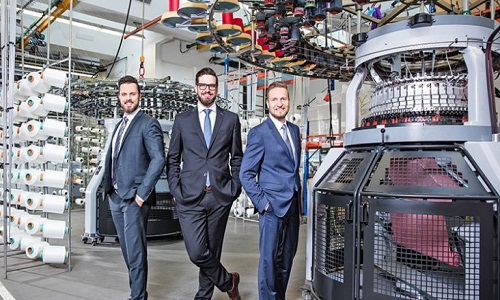 “We see this step as an opportunity to come much closer to our target of sensible diversification,” says Marcus Mayer, Managing Director at Mayer & Cie. and in charge of technical development. “As a manufacturer of circular knitting machines we are subject to the vagaries of the textile machinery market, which experience has shown to be liable to strong fluctuations. A sector-unrelated product such as braiding machines will make us a good deal more independent.”
It was apparent right now how important diversification is, Benjamin Mayer, Mayer & Cie. Co-Managing Director, noted. He is responsible for sales. After a fast and furious start to 2018 demand for circular knitting machines had tailed off in the second half. That was mainly due to turbulence in the international trade policy, he said, in the wake of which uncertainty had spread widely in many important circular knitting markets. Order books for braiding machines, in contrast, are full for months ahead because other laws apply to the hydraulic hoses used, for example, in automobile manufacturing and aviation. That is also true of tubes that drive pumps on the seabed in offshore operations. Braiding machine manufacturing capacities are currently fully booked until the beginning of 2020.
Although circular knitting and braiding machines are only distant relations, there are many synergy effects between the two lines of business. “That was a powerful argument for integration,” says Benjamin Mayer. “Our new investment stays within limits because we can make many braiding machine parts with our existing machine tools and production machinery. Assembly employees can not only assemble circular knitting machines, shipping employees can not only ship circular knitting machines.”
Mayer & Cie. also anticipates a positive effect in the key sector of research and development, but with the stated aim of setting up a separate research department as soon as possible.
Series manufacture in Albstadt from January
In January 2019, Braidtech is embarking on series production in Albstadt-Tailfingen. Preparations for this milestone took nearly 12 months. Premises needed to be provided, the production line prepared, procurement organised and the team lined up. At the moment, it has 12 employees who do production-related work in, say, assembly, quality assurance and logistics. They are currently working flat out on the prototype of their first braiding machine, an MR 15 24 Carrier.
Patrick Moser, head of the new Mayer Braidtech business unit, explains that “the model as such is tried and established, but for us here, in new conditions, it is an ‘original’.”
The plan for the first half of 2019 provides for shipment of two double-deck systems, each consisting of two MR15 24 Carriers per month. Preparations are also on for series production of the second model in a range consisting of six products.
Distribution structures are well established. Mayer Braidtech has handled world sales of braiding machines for years. “Our business,” Moser says, “is project business, so the largest sales markets can vary from year to year, but for some time we have had many orders from Italy and China.”