FW
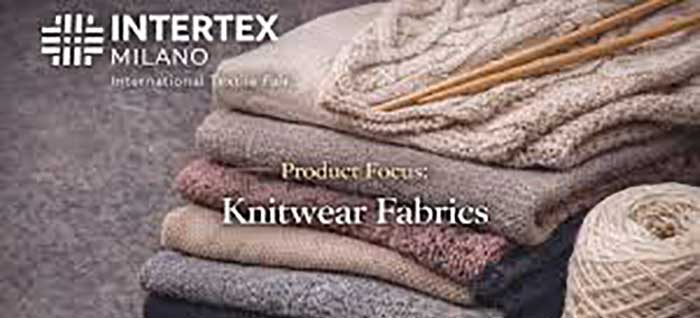
E-com to boost global knitwear market in future
"A report on the global knitwear market for 2016-26 predicts a rise in demand for knitwear products across the globe due to increasing use of e-commerce. There is also an increase in global online sales of knitwear products, which are part of the fashion and apparel industry. The global e-commerce business of fashion and apparel is expected to increase from $408 billion in 2017 to over $706 billion in 2022, rising at a CAGR of 11.6 per cent. Online sales of knitwear products is increasing due to growing penetration of e-commerce in emerging economies like Brazil, Russia, India, China, and South Africa (BRICS)."
 A report on the global knitwear market for 2016-26 predicts a rise in demand for knitwear products across the globe due to increasing use of e-commerce. There is also an increase in global online sales of knitwear products, which are part of the fashion and apparel industry. The global e-commerce business of fashion and apparel is expected to increase from $408 billion in 2017 to over $706 billion in 2022, rising at a CAGR of 11.6 per cent.
Online sales boosts market size
Online sales of knitwear products is increasing due to growing penetration of e-commerce in emerging economies like Brazil, Russia, India, China, and South Africa (BRICS). Increasing penetration of smartphones across emerging economies, rise in middle class population with increasing discretionary income, and innovative and advanced e-commerce technologies are also driving demand for knitwear products. Online knitwear sales are also increasing due to a rise in average revenue per user (ARPU) in e-commerce knitwear products compared to ARPU of offline knitwear product sale. The ARPU of e-commerce clothing market is expected to increase from $270 in 2018 to $301 in 2022. Knitwear products are a major segment of the fashion industry.
The e-commerce in fashion industry in the US and Europe are expected to expand at a CAGR of 8.8 per cent and 8.7 per cent between 2017 and 2022 respectively; on the other hand, e-commerce in fashion industry in China is expected to grow in double digits at a CAGR of 14.1 per cent between 2017 and 2022. Thus, rising penetration of e-commerce in knitwear sales is boosting the market size of knitwear products across the world.
Product, fabrics, distribution channels drive up sales
The study segments the global knitwear market according to product and material types, application, consumer group and distribution channel. Products are classified as: innerwear, t-shirts & shirts, sweaters & jackets, sweatshirts & hoodies, shorts & trousers etc. Based on fabric, the market is classified into natural, synthetic, and blended. On the basis of application, the market is segmented into outerwear, innerwear, sportswear and others. Based on consumer group, the market is segmented into men, women, and kids. Further on the basis of distribution channel, the market is segmented into online and offline.
The analysis of these segments is based on present and forecasted global demand for knitwear products and prevailing and future trends across North America, Europe, Asia Pacific, Middle East & Africa, and South America.
Companies dominating the market
The report includes a SWOT (Strength, Weakness, Opportunity, and Threat) analysis of the market, Porter’s Five Force analysis of the market, ecosystem analysis, key macroeconomic indicators influencing the market and raw material analysis of the knitwear industry.
The report highlights major companies operating in the global knitwear market including Adidas, Gap, Gildan Activewear, Hackett, Abercrombie & Fitch, Loro Piana S.P.A., Marks & Spencer, Nike, among others.
Indian consulate, VCOSA organise business interaction event
The Indian consulate in HCM City in co-ordination with VCOSA organised a business interaction event ‘Textiles: India-Việt Nam Co-operation’ in Vietnam. The event attracted nine Indian companies who also participated in the 18th ViệtNam International Textile and Garment Industry Exhibition in HCM City from November 21 to 24 besides local firms.
In his opening remarks K Srikar Reddy said Việt Nam was among the top five textile and clothing exporting countries along with India. India’s textile and clothing exports to Việt Nam during the 2017-18 fiscal year grew by 42 per cent to $555 million. Its exports exceeded $31 billion last year, a year-on-year growth of 10.23 per cent.
Việt Nam also had to import a lot of raw materials and is planning to diversify its sourcing of raw materials for garments such as cotton, yarn, made-ups and fabric. According to Nguyễn Hồng Giang, Việt Nam Cotton and Spinning Association (VCOSA), there is a plenty of opportunity for co-operation in yarn, cotton and fabrics between businesses in the two countries.
India is one of the suppliers of high-quality materials, fabric and machinery at competitive prices globally. Under the India-ASEAN FTA, most types of cotton yarns, woven cotton fabrics and cotton knit fabric can be imported duty free from India from January 1 next year.
The Indian government also allows 100 per cent foreign direct investment under the automatic route in many sectors, including textiles. Importers and buyers who are interested in sourcing from India can benefit from a subsidised scheme for hotel stay and travel by visiting the show in India.
Novozymes’ Bio Prep Fusuaion helps save costs, water use
Denmark-based Novozymes has launched the Bio Prep Fusion concept. This allows textile mills handling knit processing to increase productivity, while saving costs with reliable enzymatic scouring. It also reduces the producer’s environmental footprint by saving 67 per cent water, 50 per cent energy, and 50 per cent time required for knit pre-treatment processing.
Novozymes, is a world leader in biological solutions for wet processing of textiles. Novozymes, founded in 2000, is the world leader in bio innovation. Its industrial enzymes, microorganisms, biopolymers and other proteins allow its customers to achieve more efficient use of raw materials, reduce energy consumption, replace traditional chemicals with more sustainable alternatives, and offer higher quality products.
The company sees a big opportunity in India and Southeast Asia, where knowledge-based innovations in the field of industrial enzymes can effectively replace polluting chemical processes and deliver environmental sustainability.
Novozymes is known for its Combi Polish technology. This saves time, energy and water during the dyeing process. Use of it is the fastest, gentlest and most sustainable way to perform textile bio polishing and bleach clean-up. The readymade garment sector in countries like Bangladesh faces serious challenges like high water consumption and low energy efficiency. Novozymes’ product is a proven technology to address these challenges.
Taiwan half yearly textile exports up two per cent
For the first half of 2018, Taiwan’s textile exports inched up by two per cent year on year. Fabrics accounted for 66 per cent followed by yarn with 17 per cent, fiber eight per cent, apparel five per cent, and others four per cent. Vietnam was the largest export destination, followed by China, the United States, Hong Kong, and Indonesia.
Besides serving long-established brands, Taiwanese companies have been foraying zthe rapidly emerging fast-fashion apparels, supplying brands like H&M and Root, whose order-to-shipment time may be only one week instead of the usual half year.
Taiwan has captured some 70 per cent of the fast-expanding global market for functional fabric, which in turn accounts for ten per cent of the total fabric market. It has also been a major supplier of fabric made from recycled materials. About 50 per cent of the fabric material is now recycled, and the proportion is expected to rise to at least 70 per cent in the next few years as increased environmental awareness drives international demand.
To assure quality and reduce production costs, many of the major Taiwanese textile companies have integrated operations that cover everything from fabric production and dyeing to making the apparel. They have also established global production networks to further control costs.
PETA Fashion Awards celebrate outstanding brands and events for animals
The annual Fashion Awards by PETA celebrate brands and events that have made major statements for animals this year. Luxury labels including Coach, Burberry, Michael Kors and Diane von Furstenberg, emerge winners in PETA’s biggest luxury fashion moment category for their actions. ASOS was named the Most Progressive Online Platform by PETA in light of its announcement that it will introduce a ban on mohair, silk, feathers and cashmere products on its site.
PETA’s Most Progressive Fashion Event of the Year Award was awarded to Helsinki Fashion Week for its decision to ban leather from its catwalks as of 2019.On the high street, faux fur label Ecopel was honored with the Innovation Award for using recycled plastic bottles to produce its garments.
Other winners included Dr Martens, which was awarded for its extensive range of vegan shoes on the best vegan boot collection category, and Veja, which received the Best Vegan Shoe Collection prize for its vegan leather and organic cotton collection.
Meanwhile, London-based label Felder Felder received the Collaboration Award for partnering with sustainable fashion label Ecoalf to produce a capsule collection of coats made from recycled materials; outerwear brand Save the Duck was awarded Best Down-Free Label for its recycled coats free of animal fillers; and Alexandra K won in the best vegan bags category for its innovative accessories made from apple leather, a sustainable material made in Italy that integrates organic apple peels into the skin of the material.
Myanmar textile show this month
A textile and garment expo will be held in Myanmar from December 6 to 9, 2018. The four-day expo will showcase over 130 brands from China, Germany, Hong Kong, Japan, India, Malaysia, Myanmar, Singapore, among others. On displayed will be clothing, textile, modern machinery such as embroidery machines, sewing machines, printing machines and flat knitting machines.
The expo aims to build an efficient communication platform for the domestic market. Myanmar has more than 400 garment factories employing about 4,00,000 workers and earning more than two billion dollars annually from foreign markets. Myanmar’s economy grew by 6.8 per cent in 2017-18, up 5.9 per cent from the previous year.
This was due to expanding public spending and growing exports, and a recovery in agricultural production supported by favorable weather conditions. The economy is projected to recover further at 7.1 per cent and 7.4 per cent in 2018 half-year interim and 2018-19, respectively, supported by sustained foreign direct investment inflows, improving investor sentiment, and continuing strong growth in garment exports and domestic consumption.
With the advantages accruing from preferential trade agreements and low labor costs, Myanmar can utilize the time window to address key constraints in improving both the environment for domestic manufacturing as well as efficiency of trade logistics.
Kering enhances digital capabilities
Digital is at the very heart of Kering’s strategies now. Kering is enhancing its omni-channel capabilities. It is working on a suite of apps, the first of which is a store experience app that enables sales associates in-store to access stock levels in real time to provide their customers with a fully personalized service. Via the app, sales associates know instantly if a specific size or color is available in-store or if it can be ordered from other stores; they can also give customized styling recommendations.
Several pilot projects have been launched using data science techniques to deliver personalized messages and experiences to customers, based on their profile and purchasing history. A data science team has been created at the group level to improve the service provided to the clients of Kering by making the best use of the available data. A China-based client and digital team is currently being formed. It will be responsible for adapting digital practices to the Chinese market, along with identifying and promoting innovations from China to other markets.
Kering will leverage its in-house technology and operations team to fully internalize the e-commerce activities currently handled through the joint venture with YNAP. Following a highly successful and fruitful seven-year partnership with YNAP, these e-commerce activities will transition to Kering in the first half of 2020.
India to rate industrial parks
A rating system will be developed for industrial parks in India. This is expected to raise competitiveness of industries and promote manufacturing. Such a system is being developed based on four parameter: internal and external infrastructure, connectivity, environment and safety management, and business support services. The system could become a reference database for prospective investors.
The Scheme for Integrated Textile Parks has not worked out as thought. One reason is high rentals in some parks. There has been a lack of marketing efforts. No special benefits are available for investors in parks and many of the parks are not easily accessible.
There are suggestions the parks should occupy a minimum of 1000 acres, with infrastructure support in the form of readymade factory sheds, warehouse, effluent collection treatment and disposal systems, incubation centers and testing labs, first aid centers, with express connectivity to seaports and airports.
The Scheme for Integrated Textile Parks was launched in 2005 to encourage private investments and employment generation in the textile sector. The primary objective of the SITP was to provide the industry with world class state-of-the-art infrastructure for setting up new textile units. The Scheme for Integrated Textile Parks was launched by merging two schemes, Apparel Parks for Exports Scheme and Textiles Center Infrastructure Development Scheme.
India to reexamine RCEP
India will examine the Regional Comprehensive Economic Partnership (RCEP) to see how it benefits or hurts the economy. The country is under pressure by RCEP partners to have a stronger commitment to liberalise its goods trade. Domestic industry and even certain ministries, including steel, have been critical of the RCEP deal and fear dumping, especially by China.
From steel to pharmaceuticals, industries have been criticising India’s existing trade agreements with Asean, Japan and South Korea on the grounds that India’s deficit with these countries have only widened after these pacts came into force and there is little for domestic industry to benefit from. Also, India has a record $63 billion trade deficit with China. If, on top of this, a free trade agreement with China is effected through the RCEP (of which China is a key member), cheap products are expected to flood the market.
The pharma industry, too, fears that cheap Chinese products will have unrestricted entry to India. China is the biggest contributor to India’s trade deficit with all RCEP partners. The scrapping of tariff lines means import duties on specified items would be cut to zero over a mutually agreed-upon time frame. India remains anxious over potential losses from the mega deal.
Bangladesh has immense potential in leather
Bangladesh’s main export markets for leather goods are the EU, the US, Australia, Japan, Singapore and South Korea. The country has massive export potential of leather goods and footwear. Last fiscal, the country exported $1.1 billion worth footwear and other leather goods — using only 30 per cent of finished leather. The remaining 70 per cent finished leather was exported, mostly to China.
The country can earn three times more from leather goods exports if all the finished leather produced in the country in a year is utilized. Bangladesh produces 400 million sq ft of finished leather annually. Finished leather exports fetch less than one-third of what footwear exports do. The country has 161 tanneries that process raw hides into finished leather; but 98 per cent tanneries are not compliant with global standards. Many tanneries do not have proper water treatment and affluent plants. Though receipts from leather goods, footwear and finished leather exports have been crossing the billion dollar mark for the past five years, they are not growing further.
Now, Bangladesh needs efficient manpower and technology to earn more from exports. Compliance and quality are the major factors to attracting foreign buyers and not cheap labor.