FW
Taiwan’s top sportswear maker Eclat to continue riding high
Taiwan-based Eclat, is a sportswear maker. The company specializes in making high-end fabrics and turning them into sports clothing for brands including Nike, Lululemon, Under Armour, Polo Ralph Lauren, Victoria's Secrets and Adidas as well as retailers such as JC Penney, Amazon, Kohl’s and Target.
For the first 10 months of 2018, Eclat’s revenue rose more than 16 per cent and is set to see healthy growth next year. At the end of 2016 the company ended its production in China. This now seems like a wise choice as fabrics have already been hit under the package of tariffs that the US imposed on Chinese imports in late September. This has made Eclat less vulnerable to the trade jousting between the world’s two leading economies than its Chinese rivals. The investment environment in China has been deteriorating dramatically and it is extremely difficult to find qualified workers. Wages in China are double those in Vietnam, while production efficiency is also better in Vietnam.
Currently, Eclat’s production facilities are mostly in Taiwan and Vietnam. Eclat generates around 60 per cent of its revenue from North America. Europe accounts for 20 per cent of the company's sales while Japan and Australia combined take about ten per cent.
Shanghai Tex to feature AI event
Artificial Intelligence on Fashion and Textile (AIFT) will be held simultaneously with Shanghai Tex, November 25 to 27, 2019. AIFT will provide an open platform for researchers, engineers and practitioners in the area of AI, fashion and textile to explore the ways of driving the industry toward Industry 4.0 and the new era of retail. Speakers will cover the internet of things, textile and apparel supply chain modeling, textile material defect detection, textile material color measurement, wearable devices, 3D image modeling for fitting, retail sales replenishment and fashion sales forecasting, carrying out a comprehensive analysis of the opportunities and challenges in the textile and fashion industry brought by AI.
AIFT will develop a long-term cooperation with Shanghai Tex 2019. An Artificial Intelligence alliance will be established together with a number of institutions during AIFT 2019. Adopting research, application, popularization as its core values, AIFT aims at connecting researchers and industry practitioners to accelerate the development and application of AI in the textile and fashion industry.
Computer technology, especially AI’s rapid development over the past 20 years, has changed lifestyle and society. The textile and fashion industry will step into the fourth industrial revolution as soon as mature technology applications in production processes become routine.
India: CRB’s conference focuses on sustainability in the apparel & textiles
The issue of sustainability in the apparel and textiles sector took centre-stage at the recently concluded Centre for Responsible Business’ (CRB) 5th annual Sustainability Conference (India & Sustainability Standards) in Delhi. The conference organised a number of sectoral/thematic sessions in partnership with like-minded organisations at the conference. The three-day event assembled a diverse mix of relevant stakeholders to bring their perspectives, experiences and insights on the table – thereby ensuring that the multi-stakeholder nature of the dialogue was maintained.
A session on the situation of ‘Women in Value-chains’ focused on the apparel & textiles, speakers unanimously agreed that there is need to raise the standard of working conditions for women workers, and to accord specific attention to prevent sexual harassment and violence. Members agreed upon industries encouraging women in management and decision-making positions.
Speakers also discussed on ways to promote child-friendly supply chains in apparel & textiles sector – an imperative for international buyers/brands. CRB alongwith the Global March Against Child Labor (GMACL) has developed a toolkit to help companies undertake the necessary due diligence to assess and mitigate child and forced labor in the apparel and textiles supply chain.
Accord warns of dire consequences if forced to shut down in Bangladesh
Accord, set up to improve safety in Bangladesh's garment industry after the Rana Plaza disaster in 2013 has warned global fashion firms of stopping sourcing from Bangladeshi factories if the Accord is forced to close next week.The Bangladeshi High Court has ordered the Accord's Dhaka office to close due to a complaint from a factory owner who was prevented from working with Accord brands after he was accused of falsifying test results on concrete strength in his building.
The Accord will keep operating from the Netherlands and remains legally binding on its member companies, but it has warned signatories they may have to stop sourcing from about 500 factories with safety problems if it can no longer inspect them. The Accord and its signatory firms, along with European politicians and campaign groups, have been lobbying the Bangladesh government for help to lift the court order, but with little effect so far.However, many experts and campaigners say the Bangladesh regulatory body is not yet ready to take over.
More than 200 firms - including the world's top fashion retailers like Zara-owner Inditex and H&M - signed the legally-binding, five-year Accord after at least 1,100 people were killed when the Rana Plaza complex collapsed. The Accord has inspected more than 2,000 factories in Bangladesh and helped draw up plans to fix 150,000 structural and fire hazards.
Amazon to launch its first pop-up store this week in Spain
Amazon has forayed into the offline market in Spain with the launch of its first pop-up store in Madrid, in one of the prime shopping districts. The store is styled as a house with everything for sale, from electronic goods to video games to clothing. The company is eyeing similar outlets in Italy, Germany and Britain. The move underscores Amazon’s push to attract customers through physical retail.
The store will be open to the public for six days around ‘Black Friday’ weekend, with visitors also invited to take part in workshops and other experiences. It recently opened a new store in New York that allows shoppers to buy items from its website with the help of a smartphone app.
Also, the online shopping website is also hosting its first Black Friday event in Australia tonight with tens of thousands of bargains appearing at the stroke of midnight. These will be deals across a wide selection of categories including video games, fashion, beauty, electronics and books.
Unfazed by global competition local brands dominate interior Chinese market
"Fashion brands like H&M and Zara might dominate the global market but penetrating the low cost clothing market in the Taobao villages’ of China is tough for them. The clothing brands operating here are fully domestic. International brands, inspite of their aggressive marketing have failed to make inroads into this market as people living in these parts of China, have never heard of them."
 Fashion brands like H&M and Zara might dominate the global market but penetrating the low cost clothing market in the Taobao villages’ of China is tough for them. The clothing brands operating here are fully domestic. International brands, inspite of their aggressive marketing have failed to make inroads into this market as people living in these parts of China, have never heard of them.
Wholesale clothing factories, traditionally dealing in low-cost apparel, were concentrated in Zhejiang, Fujian and around Guangdong in the Pearl River Delta. These factories would offload their nameless, brand-less, largely design-less goods to small vendors who would truck them around the country to sell at wholesale clothing markets. All this changed with the rise of Taobao: the platform that unlocked the ability of Chinese consumers.
Focusing on core competencies
According to Alibaba’s research arm, AliResearch, 10 per cent households in these Taobao villages run stores,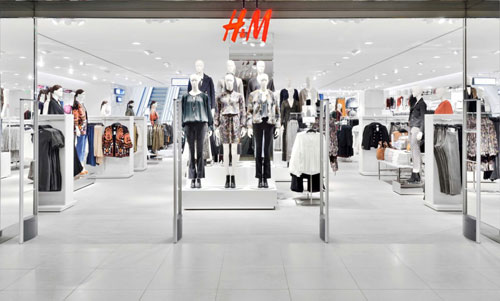 with their total annual online revenue reaching at least 10 million yuan (about US $1.5 million). There are currently more than 1,000 such villages in China.
These villages focus on a niche category. Hongxing, in China’s eastern Jiangxi province, makes jackets, with 420 companies in a village devoted to manufacturing and distributing puffy outerwear to Chinese consumers. Every year, the village makes 2.5 billion yuan (US $360.2 million) in revenue from jackets, more than 1 billion yuan (US$144 million) of which comes from Taobao sales.
Traditionally, low-cost Chinese brands won market share by covering the country’s shopping centres and high streets with thousands of brick and mortar stores — still a viable strategy for major players such as the aforementioned Metersbonwe (the founder of which, Zhou Chengjian, has a net worth estimated at US$1.4 billion (by Forbes), Bosideng (founded by Gao Dekang, (who Forbes estimates is currently worth $1.7 billion), plus Ochirly and Five Plus, both owned by Guangzhou-based Trendy Group (founded by Jacky Xu, whose current net worth sits at $1.3 billion).
Local manufacturers have an edge
International mass-market players haven’t been able to gain a foothold among many young Chinese consumers. This is partly due to the first-mover advantage of local brands manufacturing cut-price fashion with remarkable turnaround speeds, but also because China’s post-90s generation don’t necessarily care where affordable clothing comes from — unlike Chinese luxury consumers who place a premium on "made in Europe" luxury. Another problem with these companies is that they didn’t focus on their e-commerce operations even as China’s online apparel market boomed. Their e-commerce sales lagged behind the anticipated 2018 China average online retail spend of 33.6 percent.
As Jason Yu says, China’s low-cost apparel manufacturers currently face the choice of either upgrading to domestic brand status, downgrading to sell their wares on the lowest-tier e-commerce platforms, or shutting down their operations altogether. More complex is the fate of global players, most of whom seem destined to play second fiddle to domestic giants in China’s mass-market apparel sector. Any thought of dominating the kingdom seems to be a like ‘boiling the ocean.’
Burberry gets involved in Afghan cashmere production
Burberry aims at providing a boost to the cashmere industry in Afghanistan. The British luxury fashion brand is trying to promote sustainable agricultural practices. While nearly 95 per cent of the country’s goats are cashmere producing, just 30 per cent are currently farmed for cashmere. Burberry wants that to change.
Afghanistan is the world’s third largest cashmere producer after China and Mongolia. Afghan cashmere is of a significantly higher quality than Iranian cashmere. In Afghanistan, cashmere fiber production is still part of the country’s rural traditions, meshing in some regions with an ancient, rarely changed lifestyle. Many Afghan goat herders have limited understanding about the potential and true value of cashmere, and the project is aiming at addressing such challenges by working with local herders to create community-owned collective action organisations and provide them with the necessary knowledge, technical skills, essential services and access to markets to support sustainable farming and economic development.
By doing so, the overall objective of the project is improving cashmere quality and yield as well as the yield of herders’ goats overall, including meat and dairy production – which in turn would allow herders to obtain a higher value for their goats. A training program will be introduced for herders, on how to safely remove cashmere fibers from the goats.
IFC launches textile project in Pakistan
The International Finance Corporation (IFC) has undertaken an initiative aimed at supporting Pakistan’s textile industry’s efforts to reduce energy consumption with a view to improving sustainability. This will help Pakistan’s textile industry, especially the clothing sector, to resolve energy-related and environmental issues. Advisory services will be provided to the textile sector in Pakistan. Seminars and training workshops for industry stakeholders will be held for letting them know how to reduce energy consumption and achieve sustainability. The IFC has already done this in Bangladesh.
Another issue that remains to be tackled is how to enhance the productivity of the industry. Small and medium entrepreneurs, who account for 95 per cent of the garment industry, need upgraded technology. Pakistan garment sector’s productivity is at least 30 per cent less than that of Bangladesh.
Marketing is another problem faced by the country’s textile and garment sector. More investment and a well-conceived and well-planned marketing strategy are needed to showcase products globally. In this respect Pakistan is far behind Bangladesh and other competitors such as India and China.
Currently, Pakistan’s textile and clothing industry delivers 57 per cent of the country’s total exports. But raw cotton, cotton yarn and cotton cloth exports have shown negative growth of between 18 per cent and 62 per cent.
Faisalabad, Pakistan’s Manchester faces a crisis, workers rally against new taxes
"The textile industry in Faisalabad, known as the little Manchester of Pakistan, has been facing a severe financial crisis ever since the federal government announced its 2019-20 budget. The government has imposed a 17 per cent sales tax on the textile sector, which resulted in several processing units going on strikes and refusing to corporate with other stakeholders in the industry. Around 100 out of the total 150 units of the processing industry have been dysfunctional since the last 12 days."
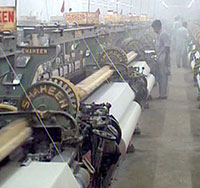 The textile industry in Faisalabad, known as the little Manchester of Pakistan, has been facing a severe financial crisis ever since the federal government announced its 2019-20 budget. The government has imposed a 17 per cent sales tax on the textile sector, which resulted in several processing units going on strikes and refusing to corporate with other stakeholders in the industry. Around 100 out of the total 150 units of the processing industry have been dysfunctional since the last 12 days. This closure has not only disrupted the entire processing chain but also forced several weaving and power loom business to shut down.
Power loom businesses take initiatives to restore businesses
Power loom businesses in Pakistan are highly unorganised with the sectors scattered in different parts of the city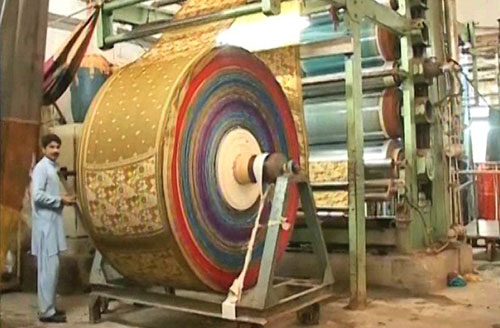 such as Ghulam Abad, Sidhu Pora, Jhan Road, Thikriwala, and Baowala, etc. They hire laborers on a daily basis. The closure of these units has therefore left, several laborers without a job. The closure of many processing, weaving and sizing units too has deprived many laborers of their wages.
These workers have now started taking initiatives to restore work in these factories. Under the leadership of Labor Leader Latif Ansari, the workers recently organised a protest camp to demand their jobs back from these factories. Most of these workers are already under severe financial pressure as they are the only bread winners of their houses. They have to pay heavy utility bills besides bearing the increasing costs of edibles and daily consumptions. The therefore believe that the government should take more initiatives for the betterment of the factory bazaars.
Traders follow
Recently, traders of around eight bazaars also announced their decision to go on a strike against the imposition of the sales tax and the condition of mandatory CNICs for business. Aslam Bhali, the Chairperson of the Traders Association says, these small shopkeepers cannot deal with such financial hurdles as they are already struggling to find good customers.
WTO to decide on US tariffs
The World Trade Organization (WTO) has agreed to hear grievances from a number of countries over new US steel and aluminium tariffs, as well as complaints from Washington over retaliatory duties. The Dispute Settlement Body (DSB) of WTO approved the constitution of panels to review US decision to hit a long line of countries with tariffs of 25 per cent on steel and ten per cent on aluminium.
Earlier, the European Union, China, Canada, Norway, Mexico, and Russia had confirmed they would escalate their disputes by starting adjudication proceedings, while the US wants dispute panels against Canada, China and the EU. The Dispute Settlement Body will create separate panels for the complaints by the European Union, China, Canada, Mexico, Norway and Russia, after the US said it would not agree to a single panel to hear all of them. A seventh request from Turkey for a panel will be discussed during a meeting later.
The DSB also agreed for a panel which will review certain Chinese measures pertaining to the protection of intellectual property rights as demanded by the US. While imposing the tariffs, the US justified it and said it’s a matter of national security. Exporter countries say the United States should compensate them for the damage, and have imposed their own tariffs in response.