FW
FDI in Malaysian clothing sector reaches MYR112 million
As per Malaysian Investment Development Authority (MIDA), FDI in Malaysia’s clothing and textile sector is increasing more this year on the back of a robust performance in 2017. From January to June 2018, the total investments in the sector reached MYR244.8 million ($58.73 million) of which FDI accounted for MYR112 million ($26.87million). This compares with MYR428.8 million ($102 milliion) of investments approved across 12 projects for the garment and textile sector last year where MYR322.3 million ($77.35 million) – 75.2 per cent – came from foreign investors.
All these projects put together generated 1,850 jobs comprising skilled positions for engineers, quality controllers, and highly skilled technicians. MIDA expects investments to continue to rise in 2018 based on the performance in the first half of the year. The Asian Development Bank (ADB) has also sounded positive about a rise in FDI in general during 2018.
Export of Bangladeshi cotton trousers generates $1.13 billion in revenue
Latest Otexa figures reveal, export of Bangladeshi-made cotton trousers fetched $1.13 billion in revenue during the January-September 2018 period. This was a 9.31 per cent gain on a year-to-year basis in comparison to the same time period last year. Cotton trousers made up for 27 per cent of Bangladesh’s total apparel exports to the US, the country’s single biggest country-wise export destination, in 2018.
Bangladesh’s apparel exports to the US, during the period, amounted to $4.16 billion, up 5.84 per cent from last year. The major garments exported were cotton trousers, cotton dress, knit blouse, slacks, cotton underwear and sweater. Export of slacks marked a significant rise, fetching over $59 million. This was an impressive 9.32 per cent gain from the $54 million during the period in 2017. On the other hand, export of woven shirts declined. It fetched $41 million during this time, down 1.14 per cent from previous year.
CPTPP to aid Vietnam’s textiles exports
The Comprehensive and Progressive Agreement for Trans-Pacific Partnership (CPTPP) agreement is expected to aid Vietnam's exports, especially textiles and footwear industries. One of the key contents of the CPTPP is removal of 95-98 per cent of tariff lines as soon as the agreement enters into force. The remaining tariff lines will be cut over the next seven years, moves predicted to aid the growth and export turnover of the two industries.
According to the Vietnam Textile and Apparel Association (VITAS), the CPTPP will help Vietnam accelerate its growth and make the export market more balanced. The zero-per cent tariffs will help the country’s textile and garment industries expand market share in countries with high tax rates like Canada, New Zealand and Australia.
The CPTPP sets strict requirements on product origin, which is a big challenge for Vietnamese enterprises and the textile and garment and footwear sectors in particular, as they are heavily dependent on material sources imported from China, India and other ASEAN countries.
Egypt textile sector struggles with competition
Egypt is one of the largest textile and apparel centers in the Middle East. The industry manufactures a variety of fabrics, garments, and knitted garments, bed linen and terry cloth products. Approximately 5,00,000 workers are employed in textiles and apparel -- a quarter of the total employment in manufacturing.
Taking labor costs into consideration, Egypt's textile and apparel products are not competitive when compared with China, Indonesia, Pakistan, Sri Lanka and Vietnam. Restrictions on imports have been sustained and some products have even been barred altogether. Aside from a few exceptions, imports of cotton fabrics and readymade textile products are prohibited.
Currently, there is a 150 per cent tariff on imports from the European Union. Although there are no quantitative restrictions on cotton yarn, the imported product is subject to a flat 30 per cent tariff, plus 10 per cent sales tax and a three per cent surcharge. The tariff charged on imported raw materials used in goods for exports is refunded to the importer through the drawback system.
High subsidies have led to wasteful use of extra long staple cotton. Egypt produces a variety of extra long, and medium-long staple cotton. While long staple production began to fall during the mid ’70s, the production of medium-long varieties increased.
Coloreel wins innovation award for digital thread coloring
Coloreel has won an award for innovation from the Skapa foundation. The Swedish company has developed a unique machine for digital thread coloring that will revolutionize the textile industry.
The innovation revolutionizes the technological possibilities for industrial embroidery; shortens production times and allows embroidery in the precise colors wanted. Also, for the first time, it is now possible to produce gradients in the embroidery. In September this year, Coloreel launched its first thread coloring unit. The patented base technology can also be used for sewing, knitting, weaving and more.
Today's thread dyeing plants can only color thread in a single solid color. With Coloreel technology, it is possible to get a fast and high-quality coloring of a textile thread while using the thread in production. The first product based on this technology is a ground-breaking thread coloring attachment that will be used in existing embroidery machines. By coloring a white thread during embroidery production, Coloreel offers complete freedom to create unique embroideries without any limitations in the use of colors. This technique not only contributes to increased efficiency, but also in an innovative way to the efficiency of the global textile industry, development and growth.
Arvind Mills to set up Greenfield plant in Andhra Pradesh
Arvind Mills will set up its first plant outside Gujarat in Kuppam in Chittoor district of Andhra Pradesh. The green field integrated textile plant, will be set up with an investment of Rs 700 crore. It will have a capacity to manufacture 24 million garments per annum.
The textile plant will provide employment to 80 per cent of women with 9,300 direct employment. The plant will produce denim jeans and is likely to start production in February 2020. Chief Minister N Chandra Babu Naidu will lay the foundation for the plant on December 13, when he attends MSME conclave at Tirupati.
Success for STOLL at ITMA Asia + CITME 2018
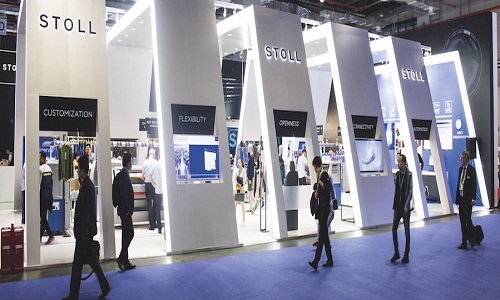
Once again STOLL has inspired many visitors with the latest innovations and developments presented at the fair. The booth was entirely dedicated to knitelligence®, STOLL's new software solution and a highlight from the ever-growing field of STOLL Software Solutions. STOLL's knitelligence® is a modular system that combines all of STOLL's software solutions under one platform that covers the entire value chain of flat-knit production. From design to production, knitelligence® can be easily integrated into existing customer processes.
The topic "networking and digitalization of processes" was the focus and attracted numerous visitors to the STOLL exhibition booth. In order to illustrate the new software solutions in the best possible way, there was a live demonstration that impressively illustrated the workflow of knitelligence®. Visitors were able to edit their own images and motifs in the Photoshop plug-in STOLL-artwork® and convert them directly into a knitting program via STOLL-autocreate® and knit them on site. This was the perfect souvenir for anyone interested.
In the area of knitting machine technology, STOLL presented the new ADF 830-24 W knit & wear with the multi gauge E7.2 to the public for the first time. At the booth a knit & wear pullover with plating technique was presented. Also from the area of knit & wear was presented the new CMS 830 HP knit & wear in multi gauge E9.2.
STOLL's technology convinces with other exhibition machines such as the CMS 330 HP W TT sport, CMS 502 HP + Bc and ADF 530-24.
In addition, STOLL has brought back some new innovations from the areas of Fashion & Technology and Technical Textiles.
With regard to Technical Textiles STOLL showed the ever-growing market for applications and technical implementations.
STOLL demonstrated the performance range of STOLL’s CMS 330 HP W TT sport multi gauge E7.2 by knitting shoe uppers and various technical applications.
Other Technical Textiles applications shown include medical designs, upholstery solutions, conductive garments, industrial uses, etc.
In the Fashion & Technology area, STOLL introduced the Adobe® Photoshop® extension
STOLL-artwork® for the creation and production process. This innovation was offered a lot of space at the exhibition booth and impressively presented to the visitors in a live demonstration.
In addition to the new Adobe® Photoshop® extension STOLL-artwork®, Fashion & Technology presented the latest Trend Collection, Digital Knits. Impressive knitting patterns were also created thanks to STOLL-artwork®.
Besides all these innovations and improvements, STOLL offered visitors another highlight. Four seminars in the area of Technical Textiles, Digital Knits, STOLL-artwork® and knit & wear were available for those interested. As expected, the seminars were well attended and thus found great approval among the visitors.
The participation at the ITMA ASIA + CITME in Shanghai was again a great success. STOLL is already looking forward to new, exciting projects and the ITMA Barcelona from the 20th to the 26th of June 2019.
SHIMA SEIKI to exhibit at Expotextil Peru 2018

Leading Japanese computerized flat knitting machine manufacturer SHIMA SEIKI MFG., LTD. will exhibit at the upcoming Expotextil Peru 2018 show in Lima, Peru.
At Expotextil SHIMA SEIKI will promote its WHOLEGARMENT® knitting technology by displaying its SWG061N2 WHOLEGARMENT® knitting machine. As a compact entrylevel machine, the SWGN2 series is perfect for knitting compa nies searching for ways to distinguish their services in a competitive market. Ondemand knitting capability of WHOLEGARMENT® combined with the great flexibility of SWGN2 in producing a variety of items such as gloves, socks, leg gings, hats and mufflers as well as childrenswear, provide new business opportunities as well.
The latest in conventional knitting is represented by the SVR122 computerized knitting machine. SVR122 becomes the new reference standard in shaped knitting by inheriting proven SHIMA SEIKI technology such as the patented Digital Stitch Control System (DSCS®), SpringType Sinker System, Stitch Presser, Yarn Gripper and Cutter and Takedown Comb. MadeinJapan quality, reliability, productivity, userfriendliness and costperformance combine to satisfy the high stan dards expected by the fashion industry within Peru and beyond.

Aside from the SWGN2 series and SVR machines mentioned above, knit samples highlighting the cuttingedge in com puterized knitting technology will also be on display. Items produced on SHIMA SEIKI’s flagship MACH2XS WHOLEGARMENT® knitting machine as well as samples knitted on SRY series and SVRSP model featuring inlay technique that yield hybrid knitweave fabrics, and new iPlatingTM technique will also be featured.
Also on display will be the SDSONE APEX3 3D design system. Key to SHIMA SEIKI’s “Total Fashion System” concept, APEX3 integrates all stages of apparel production into one smooth and efficient workflow through comprehensive sup port from planning and design to production and sales promotion. With ultrarealistic product simulations, APEX3 is also capable of Virtual Sampling that minimizes the costly time and resourceconsuming samplemaking process. Combined with the ondemand capability of WHOLEGARMENT® knitting machines, such new retail trends as masscustomization and eCommerce can be supported through a smart, speedy and sustainable production process.
Exhibition Details
Name: Expotextil Peru 2018
Date: Thursday, 8th Sunday, 11th November 2018
Hours: 2:00PM 9:00PM
Location: Jockey Exhibition Center - Avenida Javier Prado Este 4200 Lima, Peru
Organizer: Plastic Concept S.A.C. - Tel: +51 (1) 7149558
Booth: E3, E4 (STT PERU IMPORT Booth)
Exhibited Technology
SWG061N2 10G - WHOLEGARMENT® knitting machine
SVR122SV 14G - Computerized flat knitting machine
SDSONE APEX3 - 3D design system
For more information please contact:
STT PERU IMPORT SRL
Tel: +51(1) 4739952
Email: This email address is being protected from spambots. You need JavaScript enabled to view it.
Shima answers call for automation in Korea
Leading computerised knitting machine manufacturer Shima Seiki, of Wakayama, Japan, together with its Korean subsidiary Shima Seiki Korea, will participate in the Korea International Garment Machinery and Textile Industry Fair (GT Korea) exhibition in Goyang, South Korea this month.
With growing interest in factory automation in the Korean textiles industry, Shima Seiki answers the call by presenting its new Total Fashion System at GT Korea. The combination of Shima Seiki’s Wholegarment knitting technology, along with virtual sampling capability on its SDS-ONE APEX3 3D design system “yields revolutionary game-changing flexibility in the knit supply chain to support current and upcoming trends”, the company reports.
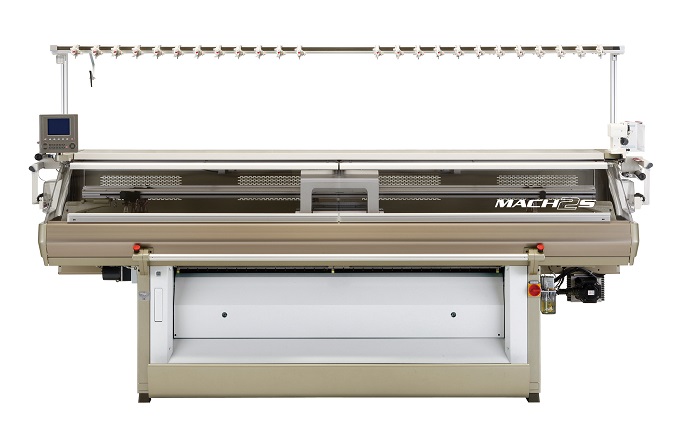
On the production side, the flagship MACH2XS features Shima Seiki’s original SlideNeedle on four needle beds and spring-loaded moveable sinkers for knitting a wide variety of high-quality fine gauge Wholegarment knitwear in all needles. MACH2S is a versatile V-bed machine that supports production ranging from conventional shaped knitting in all needles to Wholegarment knitting using every other needle. The SWGN2 series compact Wholegarment machine line-up offers flexible production of a variety of items such as gloves, socks, leggings, hats, mufflers and even childrenwear, as well as technical textiles.
Also on display will be the SDS-ONE APEX3 3D design system, positioned at the core of the Total Fashion System. It integrates all stages of apparel production into one efficient workflow through support from planning and design to production and sales promotion. With ultrarealistic product simulations, APEX3 is also capable of Virtual Sampling that minimises the costly time and resource consuming sample making process.
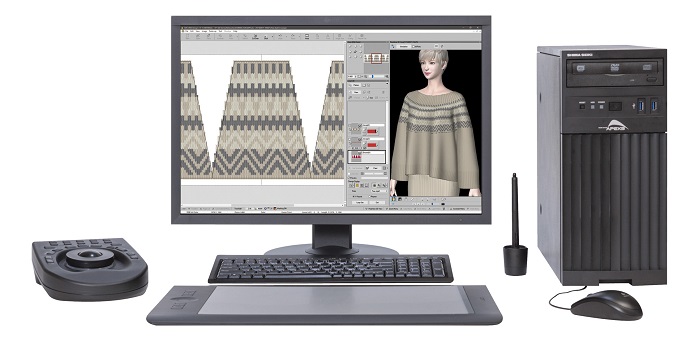
“Virtual samples can be used in retail as well and, combined with the on-demand capability of Wholegarment knitting machines, such new trends as mass customisation and eCommerce, can be supported through a smart, speedy and sustainable production process,” the manufacturer says.
Exhibition details
Exhibition: Korea International Garment Machinery and Textile Industry Fair (GT Korea 2018)
Date: 14-16 November 2018
Location: KINTEX Hall 9B
21760, Kintexro,
Ilsanseogu, Goyangsi,
Gyeonggido, Korea
Tel: +82318108114
Organiser: Korea Sewing Machinery Industrial Association (KOSMIA)
Tel: +82222678323
Booth No.: E21
Exhibited technology
MACH2XS153 15L Wholegarment knitting machine
MACH2S 12G Wholegarment knitting machine
SWG061N2 10G Wholegarment knitting machine
SDS-ONE APEX3 3D design system
For more information please contact:
Shima Seiki Korea
Tel: +82222164057
Email: This email address is being protected from spambots. You need JavaScript enabled to view it.
www.shimaseiki.com
Author:
Knitting Industry
APAC to lead digital textile printing market in 2018-27
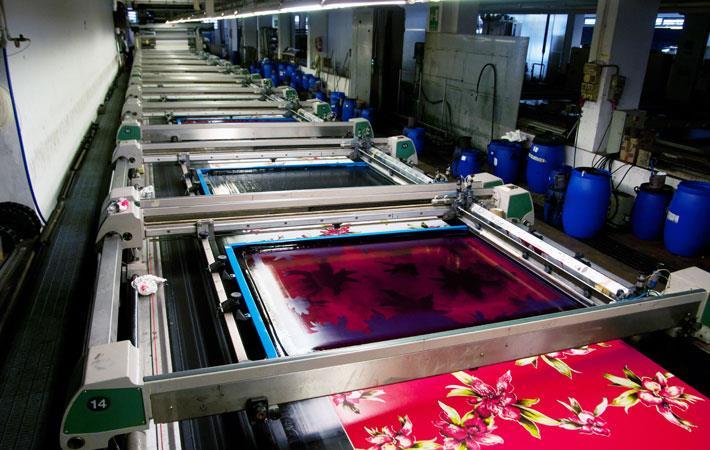 The global digital textile printing market’s revenue is projected to expand at a compound annual growth rate of 16.3 per cent during 2018-2027, according to a new report. Taking the lead will be the Asia Pacific region (excluding Japan), whose growth will be mainly attributed to contributions from emerging economies, such as India and China.
China is expected to be at the forefront, spearheading the growth, said the report titled ‘Digital Textile Printing Market: Global Industry Analysis 2013-2017 and Opportunity Assessment 2018-2027’ by Future Market Insights.
The China digital textile printing market has witnessed rapid growth in the past couple of decades. The APEJ region is characterized by a robust political, demographic, and economic ecosystem of the leading emerging economies; and a rapidly growing digital textile printing industry in the region will lead to optimum in growth levels in the coming decade, it said.
End user sectors of digital textile printing, such as food and beverage, personal care, pharmaceuticals and automotive, are increasingly adopting digital textile printing on their sales promotion devices.
Increasing competition in the digital textile printing market has led to growing sales of promotional activity, which increases the growth of digital textile printing market.
Revenue from digital textile printing in North America is estimated to account for over 43 per cent of the global digital textile printing market revenue in 2018, says the report.
Key players in this market include Durst Group (Durst Phototechnik AG), Seiko Epson Corporation, Electronics For Imaging Inc., Roq International, Konica Minolta Inc., Kornit Digital Ltd., Mimaki Engineering Co., Ltd., Sawgrass Technologies Inc, Spgprints B.V. and The M&R Companies. (DS)