FW

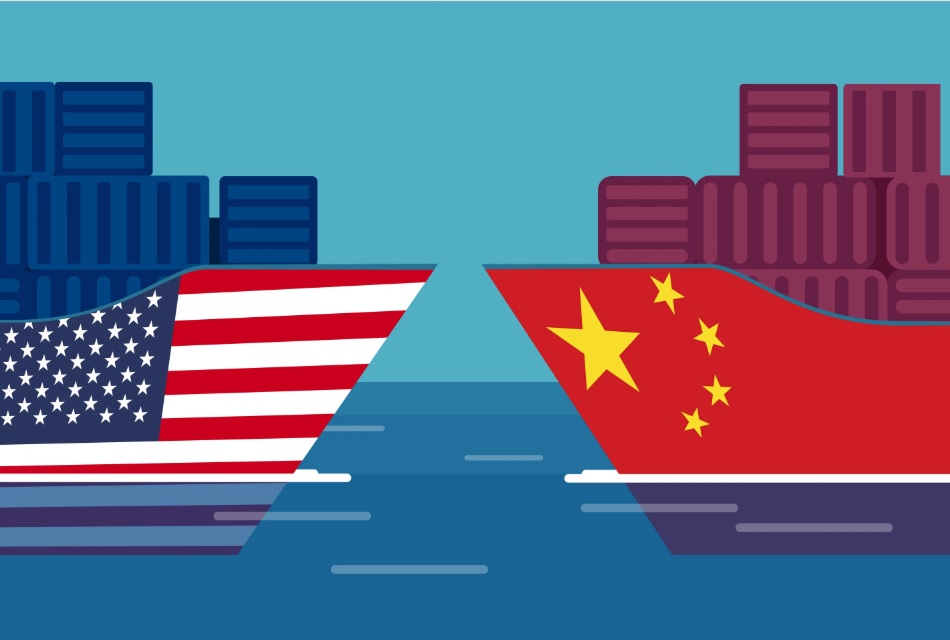
The fashion, apparel, and textiles sector is facing a potential upheaval as the US government announces a new 10 percent tariff on goods imported from China. Trump has called out 25 per cent tariffs for Mexico and Canada and 10 per cent for China, the US’ three largest trade partners, for which the US imported more than $1.2 trillion worth of goods in 2023. This move comes on the heels of a study released by the National Retail Federation (NRF), which highlights the economic consequences of such tariffs. The NRF study, conducted by Trade Partnership Worldwide, titled ‘Estimated Impacts of Proposed Tariffs on Imports’ analyzed the potential impact of tariffs on a wide range of consumer goods, including the fashion industry.
The study concluded tariffs would lead to:
Higher costs of doing business: Importers and retailers will face higher costs for goods sourced from China, potentially leading to reduced profit margins or increased prices for consumers.
Job losses: The study estimates significant job losses across various sectors, including retail and manufacturing, as businesses grapple with increased costs and reduced consumer spending.
Supply chain disruptions: Tariffs could disrupt established supply chains, forcing businesses to seek alternative sourcing options, potentially leading to delays and increased complexity.
The additional 10 per cent tariff on Chinese imports affects the fashion industry that is particularly vulnerable. China is a major supplier of raw materials, fabrics, and finished garments for many global brands. According to the USITC, China accounted for approximately 30 per cent of US apparel imports in 2023. This reliance on Chinese imports highlights the potential impact of the new tariffs on the US fashion industry. The NRF study estimates that a 10 per cent tariff on Chinese imports could lead to a loss of over 200,000 US jobs and reduce GDP by $30 billion.
The new tariff could significantly impact the industry in several ways. For example, increased import costs are likely to be passed on to consumers in the form of higher prices for clothing and accessories. This could reduce consumer demand and impact sales. Fashion companies may be forced to diversify their sourcing, moving away from China to avoid the tariffs. This could lead to increased production costs and logistical challenges as companies establish new supplier relationships in countries like Vietnam, Bangladesh, or India. While some argue tariffs could boost domestic manufacturing, the reality is more complex. The US fashion industry has gone through significant offshoring in recent decades, and rebuilding domestic production capacity would require substantial investment and time.
Indeed, the new tariffs on Chinese imports are a challenge for the US fashion, apparel, and textile sector. Businesses will need to adapt quickly, exploring alternative sourcing strategies, optimizing their supply chains, and potentially adjusting their pricing strategies to remain competitive in this evolving landscape. The long-term impact of these tariffs on the industry and the global economy remains to be seen.
For the first time, Italian luxury fashion house Dolce & Gabbana will stage its 2025 haute couture collection in Rome. Scheduled for the first fortnight of July, the event will showcase the Alta Moda and Alta Sartoria collections, alongside the latest fine jewelry pieces. The brand has selected some of the city’s most remarkable locations as backdrops for the exclusive event, details of which are yet to be revealed.
Known for spotlighting Italy’s cultural heritage, Dolce & Gabbana has previously presented haute couture collections in iconic Italian locales such as Sicily (2022), Puglia (2023), and Sardinia (2024). Since launching its haute couture project in 2012, the label has opted to present exclusively in Italy, distancing itself from Paris Haute Couture Week. The addition of Alta Sartoria in 2014 expanded the focus to menswear, maintaining a commitment to celebrating Italy’s craftsmanship and traditions.
The multi-day event coincides with the Catholic Church’s Jubilee celebrations, which include significant renovation and restoration projects throughout the city. Mayor Roberto Gualtieri emphasises, showcasing Italy’s finest craftsmanship, the collections will enhance the allure of Rome during this momentous time.
Deputy Mayor Alessandro Onorato states, Rome offers unique locations that no other city can match. This global event underscores the city’s growing appeal while serving as a powerful promotional platform with immense economic benefits
The 2025 presentation promises to be a ‘Grand Tour of Italy,’ celebrating the nation’s history, landscapes, and haute couture traditions. With its captivating monuments and hidden treasures, Rome is poised to host one of the year’s most anticipated fashion events, reaffirming Dolce & Gabbana’s deep connection to Italian heritage and artistry.
From January-October 2024, Sri Lanka’s earnings from garment exports rose by 5.7 per cent to $3.8 billion to further reach the $4 billion revenue mark in the first week of November 2024.
A major contributor to this growth, Sri Lanka’s apparel and textile exports to the US and the UK increased by 23.28 per cent and 23.26 per cent respectively in October 2024 as against October 2023.
Sri Lanka’s total combined textile and garments exports also helped increase the nation’s merchandise export performance in October 2024. In 2023, the nation had exported apparel products worth $4,848.55 million while the value of its apparel exports rose to $5,933.52 million in 2022.
The American Apparel & Footwear Association (AAFA) lauded President-elect Donald Trump’s recent engagement with the International Longshoremen's Association (ILA) leaders Harold and Dennis Daggett, emphasizing the urgent need for a finalized labor contract with the United States Maritime Alliance (USMX) before the Master Contract's January 15 expiration.
AAFA President and CEO Steve Lamar stressed the importance of avoiding disruptions to East and Gulf Coast ports, which are vital to the US supply chain. “The Longshoremen are essential to our economy, and we applaud their hard work,” Lamar stated, highlighting that a labor strike could cost the U.S. economy $4.5 to $7.5 billion weekly.
The current contract allows for semi-automation, with guarantees that no jobs or hours will be lost. Lamar underscored that adopting efficiency-enhancing technologies is critical to ensuring port safety, attracting investment, and creating jobs. He noted the ILA’s willingness to embrace progress while protecting workers' roles.
A disruption, Lamar warned, would threaten millions of jobs, drive up prices for families already facing inflation, and hinder economic growth. The October 2024 strike caused month-long port backlogs, highlighting the potential impact. These ports handle the bulk of apparel, footwear, and travel goods imports.
AAFA called on both parties to finalize a fair contract that benefits workers and the economy. Lamar also urged President-elect Trump to continue his leadership, ensuring a resolution ahead of his January 20 inauguration to protect the economy and millions of American jobs.
Circulose, a leader in sustainable fashion, has announced the appointment of Sara Diez Jauregui and Kalyan Madabhushi to its Board of Directors. These strategic additions follow the recent appointment of Chair Helena Helmersson, further reinforcing Circulose’s commitment to sustainability and circularity in the fashion industry.
Sara Diez Jauregui brings over 20 years of executive experience in fashion, sports retail, and digital platforms. She has worked with leading brands such as Zara, Nike, and Zalando, and is currently the CEO of The Post Fiber. Her expertise in sustainability and her dedication to transforming the fashion industry make her a perfect fit for Circulose’s mission. Sara also serves on the Board of Directors of Revolution Race, advocating for responsible practices.
Kalyan Madabhushi, with more than 34 years of experience in global business leadership, has held senior roles at Royal Dutch Shell and Aditya Birla Group. His expertise spans the chemicals, fertilizers, and sustainable textile fibers sectors, making him a valuable asset as Circulose advances its goals of circularity across global value chains. Kalyan’s experience in driving transformation initiatives will support Circulose’s ongoing mission to revolutionize the textile industry.
Both Sara and Kalyan bring world-class expertise to Circulose at a pivotal time for the company, positioning it for continued growth and impact in the sustainable fashion space. Their combined knowledge in fashion, sustainability, and global supply chains will further propel Circulose toward making circular fashion the industry norm.
Tamil Nadu, the backbone of India’s textiles and clothing (T&C) industry, accounts for a third of the nation's textile business, including 47 per cent of spinning capacity and 60 per cent of yarn exports. Despite its dominance, the spinning sector faces challenges due to outdated infrastructure, market sluggishness, geopolitical issues, and high logistics costs. Of the 46 million spindles in India, Tamil Nadu houses 19 million, with over 12 million spindles older than 15 years.
To address this, the Government of Tamil Nadu has announced a policy to modernize spinning units. As per Government Order (GO Ms No 166) dated December 9, 2024, spinners can avail a 6 per cent interest subvention for modernizing spinning machines over 15 years old for five years. This initiative aims to revive the spinning segment and boost competitiveness.
SK Sundararaman, Chairman of the Southern India Mills Association (SIMA), expressed gratitude to Chief Minister Thiru MK Stalin and Handlooms & Textiles Minister Thiru R Gandhi for introducing this critical policy. He highlighted the crisis in Tamil Nadu’s textile industry caused by incentives in competing states, market slowdown, and labor shortages. The modernization will enhance productivity, improve yarn quality, and support high-value-added fabric production, strengthening Tamil Nadu’s global competitiveness.
The government has allocated Rs 10 crore for FY 2024-25, with 60 per cent designated for ring frame modernization, 15 per cent for air jet or electro spinning, and 25 per cent for open-end spinning. This allocation will particularly benefit segments producing viscose staple fiber (VSF) and recycled yarn, vital to downstream sectors in Erode and Karur.
The modernization initiative promises to strengthen Tamil Nadu’s textile industry, supporting economic growth and ensuring a level playing field for the State amidst national and international competition.
Karl Mayer, the global leader in warp knitting technology, is inviting Heimtextil attendees to an exclusive machine presentation at its Obertshausen headquarters from January 14 to 17, 2025. The event will highlight innovative Tricot and Raschel machines that offer innovative solutions across diverse industries.
Among the stars of the showcase is the HKS 3-M, featuring a 210-inch working width and E 28 gauge, which will produce trendy upholstery cord fabrics. Known for its versatility, this model can also create textiles for automotive interiors, sportswear, mosquito nets, and more.
The TM 4 EL, another crowd-pleaser, combines a 210-inch working width with CFRP technology for 30 per cent faster production. It will demonstrate seersucker fabric creation, catering to cost-conscious markets without compromising quality.
For swimwear, sportswear, and lingerie, the HKS 2-SE Plus, with its E 40 gauge, showcases exceptional elastic fabric production. Thanks to its modified knitting motion, it offers superior strength, resistance, and quick-drying properties.
Karl Mayer will also feature the RDS 11-EL Raschel machine, designed for robust sack production. Operating at 700 rpm, it produces up to 870 bags per hour, with variable sizes and patterns to meet diverse packaging needs.
Complementing the machine displays will be an exhibition of novel textiles and digital care solutions.
As per the global licensing agreement signed with Lacoste, Haddad Brands will manage the brand’s kids’ clothing and accessories collections. The company will design, develop, produce, and market the Lacoste kids’ range, with its first collection for the Fall 2025 to debut in stores by mid-July 2025.
Founded in 1925 and headquartered in New York, Haddad Brands specialises in children’s apparel and accessories. The company is the official licensee of several prominent brands, including Nike, Converse, Levi’s, Tommy Hilfiger, and Calvin Klein.
Until now, Lacoste developed its kids’ category internally. Prices for the kids’ collections, ranging from newborns to teens, range between €30 and €100. Haddad Brands joins Lacoste’s select group of licensees, which includes Interparfums SA for fragrances and cosmetics, Marchon for eyewear, and Movado for watches and jewelry. This partnership underscores Lacoste’s focus on strengthening its position in the premium kidswear market globally.
Thierry Guibert, CEO, Lacoste, says, the undeniable expertise and knowledge of Haddad Brands in kids’ fashion licensing are major assets for the lacoste’s continued development in this category. This strategic alliance enables the brand to strengthen our presence in this segment.
Jack Haddad, President, Haddad Brands, adds, combined with Haddad Brands’ incredible team, Lacoste’s seamless partnership gives the company great confidence that the brand’s kids’ product will continue to resonate with consumers globally.
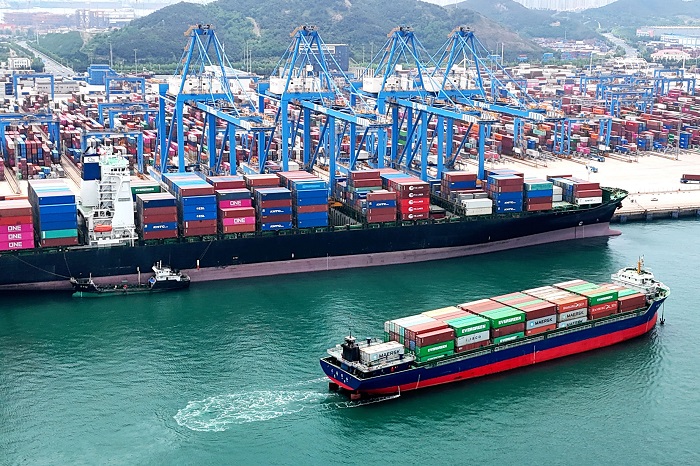
A recent report by Source Fashion, Source Home & Gift, and Insider Trends highlights the potential impact of proposed US tariffs on global sourcing strategies. The report, titled ‘The State of Sourcing Report’, suggests tariffs on goods imported into the US, particularly from China, could make near-shore sourcing more attractive for US retailers.
The report is based on a survey of UK retailers conducted in 2024. The survey found the majority of UK retailers (74 per cent) source internationally, with China being the most popular sourcing region (49 per cent). However, the report also notes that the UK is a close second at 42 per cent, followed by India (37 per cent) and Western Europe (33 per cent).
Table: Sourcing patterns
|
Region |
All respondents |
Small companies |
Large companies |
|
Mainland China |
49% |
45% |
61% |
|
UK |
42% |
44% |
35% |
|
India |
37% |
37% |
35% |
|
Western Europe |
33% |
37% |
19% |
The report also notes that US president elect Donald Trump, has proposed tariffs on goods imported into the US from overseas, particularly from China. If these tariffs come into effect, they could make sourcing from further afield, such as China, less appealing for US retailers. The report suggests several factors could make near-shore sourcing more attractive for US retailers in light of potential tariffs. Near-shore sourcing can help reduce the costs associated with transportation, logistics, and labor. It can help to improve supply chain agility and responsiveness. Near-shore sourcing can also help reduce the risk associated with global events, such as political instability and climate change
The report also notes the potential for political and climate disruption is likely to have an impact on sourcing decisions going forward. This could see retailers adopting a more agile approach to their supply chains, with a greater focus on near-shore sourcing. In addition to the potential impact of US tariffs, the report also highlights a number of other factors that are likely to influence sourcing decisions in the coming years. These include:
Sustainability: The report notes sustainability is becoming an increasingly important factor for retailers when making sourcing decisions.
Technology: The report also notes technology is playing an increasingly important role in sourcing, with a number of companies now using technology to improve the efficiency and transparency of their supply chains.
The report concludes by suggesting the retail industry is in a state of flux when it comes to sourcing. Retailers are facing a number of challenges, including the potential impact of US tariffs, the growing importance of sustainability, and the increasing role of technology. As a result, retailers will need to be agile and adaptable in their sourcing strategies in order to succeed in the years to come.