FW
Beyond Yoga reports 23% growth in Q1, FY26 revenues
Levi Strauss & Co (LS&Co.) is successfully transitioning from a pure-play jeanswear manufacturer into a diversified denim lifestyle powerhouse, with its activewear division, Beyond Yoga, emerging as a primary growth engine. In the Q1, FY26, Beyond Yoga reported a robust 23 per cent increase in net revenue, reaching $43.3 million. This increase, predominantly fueled by a 41 per cent jump in direct-to-consumer (DTC) sales, validates Michelle Gass, CEO’s strategy to leverage the ‘casualization’ trend, where performance apparel and premium denim increasingly share the same consumer basket.
Direct-to-Consumer momentum and margin optimization
The group’s evolution into a DTC-first organization is yielding significant financial dividends. DTC channels now contribute 52 per cent of total net revenues, providing LS&Co with superior data visibility and inventory control. While global gross margins tightened slightly to 61.9 per cen due to recent tariff pressures, the company successfully offset these headwinds through strategic price increases and a reduction in promotional depth. The company’s evolution into a DTC-first lifestyle brand allows it to capture a much larger addressable market, noted Gass during the Q1 earnings call, highlighting that women’s apparel now accounts for 55 per cent of the company’s overall growth.
Infrastructure scalability and 2026 outlook
To sustain this trajectory, LS&Co. is aggressively scaling its physical footprint and digital infrastructure. Beyond Yoga is expanding its brick-and-mortar presence to complement its digital ecosystem, while the broader group focuses on international markets, which contributed 75 per cent of total growth this quarter. Based on this strong performance, the company has raised its full-year 2026 revenue growth guidance to a range of 5.5 per cent to 6.5 per cent. The primary challenge remains navigating volatile foreign exchange rates and logistics costs, though the current ‘Behind Every Original’ campaign is expected to maintain high brand resonance through the fiscal year.
A global leader in apparel, LS&Co. designs and markets products under the Levi’s, Signature, and Beyond Yoga brands. Operating across 110 countries, the company is prioritizing women’s wear and DTC expansion to drive a projected $1.42–$1.48 EPS in 2026. Founded in 1853, it remains a denim innovator.
Apparel Group’s strategic product revival signals luxury-led growth in GCC markets
The contemporary luxury sector is increasingly prioritizing ‘heritage staples’ over fleeting trends to combat market volatility and consumer fatigue. Leading Dubai-based retail conglomerate, Apparel Group, has moved to capitalize on this shift by launching a global campaign for Dune London’s ‘Deliberate’ bag. As the accessory reaches its latest anniversary milestone, the strategy underscores a broader retail trend: the revitalization of established icons to capture a demographic that is increasingly investing in artisanal craftsmanship and proven market longevity.
Merging artisanal craftsmanship with celebrity-driven market validation
The enduring relevance of the silhouette is rooted in its technical execution, specifically its signature hand-woven construction which distinguishes it in a crowded mid-premium market. By utilizing premium materials and high-tactile textures, the brand has positioned the product as a bridge between accessible fashion and high-end luxury. This market positioning has been validated by high-profile adoption, with public appearances by figures such as Katie Holmes and Bella Hadid serving as a catalyst for sustained global demand.
This intersection of celebrity endorsement and visible craftsmanship has allowed the product to maintain a 5-star rating while expanding its footprint across international retail channels.
Omni-channel expansion and regional retail dominance
Operating a vast network of over 2,500 stores, Apparel Group is utilizing the ‘Deliberate’ bag’s reimagined seasonal palette to drive traffic across its extensive GCC and Southeast Asian operations. This launch is not merely a product update but a tactical move to strengthen Dune London’s 30-year legacy within the Group’s multi-billion dollar portfolio. By integrating these collections into a seamless omni-channel experience - spanning physical boutiques from Saudi Arabia to India and dedicated digital platforms - the Group is reinforcing its ability to scale localized fashion icons into global commercial staples.
Price wars, fast fashion, diamond money leads to Surat’s industrial shake-up

The sound of Surat’s diamond polishing wheels, once the city’s heartbeat, is fading. In its place, the relentless pulse of high-speed water jet looms is taking over. Capital, labor, and the high-octane temperament of diamond trading are migrating into textiles, redefining an industry that has long been steady, conservative, and relationship-driven.
This is more than a sectoral shift, it is a strategic takeover. Diamond merchants, cornered by global sanctions, US tariff hikes, and the rise of lab-grown stones, are bringing their deep pockets, risk appetite, and aggressive operational style into textiles. Traditional cloth merchants are confronting a new breed of competitor: fast-moving, volume-focused, and willing to undercut margins to seize market share.
What triggered diamond in decline trend
The numbers are stark. Surat’s polished diamond exports have fallen from $23 billion in 2022 to an estimated $12 billion in early 2026. US tariffs of 50 per cent on Indian imports, enforced in August 2025, instantly froze a third of the market. The workforce shrank from 1.5 million to 700,000, as skilled polishers moved to textile units.
Idle capital and available labor naturally found an outlet in textiles, a sector producing 40 per cent of India’s man-made fabric (MMF). Surat, long fragmented among family-owned enterprises, became a playground for deep-pocketed entrants seeking scale and rapid returns.
A side-by-side comparison underscores the disruption. In 2022, diamonds employed 1.5 million workers, dominated 90 per centof global polishing, and earned margins of 8-12 per cent. By early 2026, export revenue had fallen to $12 billion, margins on lab-grown stones dropped to 2-3 per cent, and the workforce was halved.
In contrast, Surat’s textile hub produces 30 million meters of fabric daily, employs over 1.2 million people, and delivers 5-15 per cent margins on value-added products, with an annual turnover of $10.55 billion. The sector’s scale, combined with liquidity from diamond capital, created fertile ground for high-speed, volume-driven strategies.
Table: The economic shift (2022 vs. 2026)
|
Metric |
Diamond industry (2022) |
Diamond industry (2026 Est.) |
Textile industry (Surat 2026) |
|
Annual Exports |
$23 bn |
$12 bn |
$10.55 bn (Total Hub) |
|
Workforce |
1.5 mn |
700,000 |
1.2 mn+ (Growing) |
|
Profit Margins |
8-12% |
2-3% (Lab-Grown) |
5-15% (Value Added) |
|
Daily Production |
90% Global Polishing |
55% Global Market Share |
30M Meters Fabric/Day |
The table illustrates the stark contrast: shrinking diamond margins versus resilient textile output. It also signals the behavioral difference, as diamond trading thrives on speed and high-risk maneuvers, textiles relied on stable, margin-driven, and relationship-focused operations.
The diamond temperament hits textiles
Diamond capital has brought a disruptive DNA: volume-led, aggressive, and risk-tolerant. Legacy textile players, focused on sustainable margins, seasonal production, and 30-60 day credit cycles, now face a new market logic. Diamond entrants churn out product in weeks, offer credit of 120 days or more, and often sell at cost to corner market share. The operational contrast is stark:
Table:
|
Feature |
Traditional textile player |
New diamond entrant |
|
Strategy |
Margin-focused; Long-term relationships. |
Volume-focused; Aggressive undercutting. |
|
Product Cycle |
Seasonal (3-6 months). |
Ultra-fast (Weeks); High churn. |
|
Credit Terms |
30-60 days. |
Extended to 120+ days to capture market. |
|
Risk Appetite |
Conservative; Sustainable growth. |
High; Ready to sell at "undercost" for dominance. |
The impact is immediate: price wars, shortened trend cycles, and credit stress. Smaller weavers struggle to meet payroll, pay for yarn, or run machinery as deep-pocketed entrants reshape the value chain.
Examples of gems to garments shift
S G Exports, a former diamond house, reoriented to textiles in late 2024. Applying a diamond mindset of high-speed, high-precision execution, it launched 50 new sari designs weekly. Selling below cost, it captured 15 per cent of Surat’s chiffon market within eight months, forcing three legacy firms to close or sell their assets.
In December 2025, a diamond consortium invested Rs 1,500 crore in integrated water-jet looms and processing facilities. This vertical integration, from yarn texturizing to garmenting consolidated nearly 1 per cent of Surat’s daily fabric capacity under a single entity, enhancing efficiency and reinforcing market dominance.
Socio-economic tremors
The shift is not just financial. Diamond polishers now operate looms producing fabric worth Rs 50 per meter, creating psychological de-skilling and high turnover. Broker-driven, informal transaction practices have entered textiles, increasing risk and challenging GST-compliant operations.
Indeed Surat’s textile sector is at crossroads. Diamond capital has modernized infrastructure, with machinery investments surpassing Rs 500 crore at expos like SITEX 2025. Yet unchecked price wars, excessive credit cycles, and rapid product churn threaten social and financial stability. The next phase will define Surat’s trajectory. If the diamond mindset can shifts from aggressive cost-cutting to value-driven innovation, technical textiles, global branding, and sustainable practices Surat could cement itself as the world’s preeminent textile hub.
India’s textile market nears Rs 15 lakh cr as domestic demand rewrites growth
India’s textile and apparel economy is no longer being driven merely by population growth or festive consumption cycles. It is now being powered by a deeper lifestyle-led shift in household behaviour, rising discretionary spending, and the formalisation of multiple apparel use-cases across urban and rural India. The latest ‘Market for Textiles and Clothing: National Household Survey 2024’, released by Union Textiles Minister Giriraj Singh, places the country’s total textile market at Rs 14.95 lakh crore, underscoring the scale of the structural transition underway.
What is particularly significant is the speed of expansion. Since 2010, the market has seen a CAGR of 8.3 per cent, taking India into the league of large domestic consumption-driven textile economies. Industry leaders see this as the early phase of a larger consumption supercycle, with demand increasingly tied to premiumisation, functional clothing, hygiene products, and fashion versatility.
The market’s triple growth
The most striking takeaway from the survey is the widening gap between India’s textile production identity and its domestic consumption power. Of the Rs 14.95 lakh crore total market, the domestic component alone accounts for Rs 12.02 lakh crore, showing how India is rapidly emerging as its own strongest demand engine.
At the centre of this shift is household demand, which has touched Rs 8.77 lakh crore from Rs 4.18 lakh crore in 2010. This near doubling reflects more than just inflation-led ticket size increases. It signals a change in wardrobe composition: more garments per consumer, higher replacement cycles, and sharper segmentation between workwear, occasion wear, casualwear, activewear, and home utility textiles.
Table: Market evolution (2010 vs 2024)
|
Category |
2010 (Rs cr) |
2024 (Rs cr) |
CAGR (%) |
|
Overall Market Size |
4.89 lakh |
14.95 lakh |
8.30% |
|
Domestic Market Size |
— |
12.02 lakh |
— |
|
Household Demand |
4.18 lakh |
8.77 lakh |
5.40% |
|
Per Capita Demand |
Rs 2,119 |
Rs 6,066 |
7.80% |
The table clearly shows that India’s textile sector is as much about deeper wallet share as it is about broader consumer reach. Per capita spending has nearly tripled to Rs 6,066, revealing how clothing has evolved from basic necessity into a layered expression of lifestyle, aspiration, and functionality. This table is especially critical because it captures behavioural change at the household level, indicating that India’s fashion economy is moving up the value curve rather than merely expanding in volume.
Fiber rebalance, MMF tightens its grip
If the first phase of India’s textile growth was cotton-led, the next phase is increasingly being written by man-made fibres and blends. The 2024 survey shows MMF and blended textiles commanding 52.2 per cent of total demand, making synthetics the dominant consumption base.
This is an important shift because it aligns India’s domestic consumption patterns with global apparel manufacturing trends, where performance fabrics, easy-care materials, and price-efficient blends continue to gain share.
Table: Fiber consumption 2024
|
Fiber type |
Market share (%) |
2024 value (Rs cr) |
CAGR (2010-24) |
|
MMF & Blends |
52.20% |
4.47 lakh |
8.28% |
|
Cotton |
41.20% |
3.53 lakh |
10.53% |
|
Silk |
5.20% |
— |
8.93% |
|
Wool |
1.30% |
— |
7.02% |
The table suggests a complex fiber transition rather than a simple cotton-to-synthetics replacement. Cotton, despite supply-side limitations, has still clocked a 10.53 per cent CAGR to rs 3.53 lakh crore, indicating that premium natural fibres continue to hold value in ethnicwear, innerwear, and comfort-led categories. Yet MMF’s majority share is more important. It points to stronger demand visibility in sportswear, leggings, denim blends, technical wear, and affordable fashion essentials. For mills and apparel brands, this fibre mix evolution has direct implications for capacity planning, raw material sourcing, and margin architecture.
The new Indian wardrobe
The real engine behind this market growth lies in the fragmentation of clothing occasions. India’s wardrobe is becoming segmented by time, purpose, and identity. What was once a one-outfit day is now split into morning casuals, officewear, gymwear, evening comfortwear, and social dressing.
This behavioural change is visible in the gender demand split, with women accounting for 55.5 per cent of textile purchases against men’s 44.5 per cent. The differential is not merely demographic, it reflects the rise of occasion-based purchasing and higher wardrobe churn in women’s categories.
The strongest evidence comes from the rapid rise of versatile everyday staples. Men’s jeans and women’s leggings have emerged as the fastest-growing segments, reinforcing the de-formalisation of Indian dressing habits. Comfort, stretch, repeat utility, and affordability are increasingly defining category winners. This trend is especially relevant for listed fashion retailers and value brands, as it strengthens the long-term case for basics-led volume growth over seasonal fashion volatility.
Sustainability finds commercial scale
One of the most business-relevant developments in the survey is the emergence of sustainability as a measurable domestic market segment rather than an export-driven compliance narrative. India’s sustainable textile market has already reached Rs 37,000 crore, a scale large enough to influence capital allocation decisions across spinning, recycling, and branded retail.
The most telling insight is that 58 per cent of this segment comes from reused and retailored textiles. This shows circularity in India is being shaped less by premium ‘green’ branding and more by embedded consumer thrift, reuse culture, and secondary garment ecosystems. For the industry, this opens monetisation pathways in resale, fibre recycling, post-consumer waste management, and recycled polyester value chains, especially relevant as global buyers tighten ESG-linked sourcing mandates.
Rural India’s quiet technical textile boom
Beyond fashion, the survey reveals a major pattern in technical textiles. Categories such as masks, diapers, sanitary napkins, and hygiene-linked disposables are seeing stronger rural consumption than urban demand, with rural households contributing 58 per cent of category offtake versus 42 per cent from cities. This is a significant economic signal. It suggests that public health schemes, rising awareness, and improved rural distribution are converting into durable consumption behaviour. For technical textile manufacturers, the demand curve is no longer institution-led alone; it is increasingly household-led and rural in character. The implications extend well beyond textiles into FMCG-style distribution models, healthcare retail, and last-mile penetration economics.
Domestic demand becomes the industry’s new anchor
The bigger story behind the Rs 14.95 lakh crore market is strategic: India’s textile industry is no longer dependent solely on export cycles for growth visibility. A Rs 12.02 lakh crore domestic market offers an internal demand cushion large enough to absorb global volatility, fashion seasonality, and fibre price swings.
As the middle class grows and clothing use-cases multiply, the sector is entering a new decade where consumption growth will be driven by versatility, sustainability, and technical functionality. The Indian textile value chain is no longer just producing for the world; it is increasingly producing for a fast-evolving domestic consumer who demands more occasions, more comfort, and more utility from every thread.
China Discounts, Bangladesh Bleeds: Inside Europe’s new apparel sourcing crisis
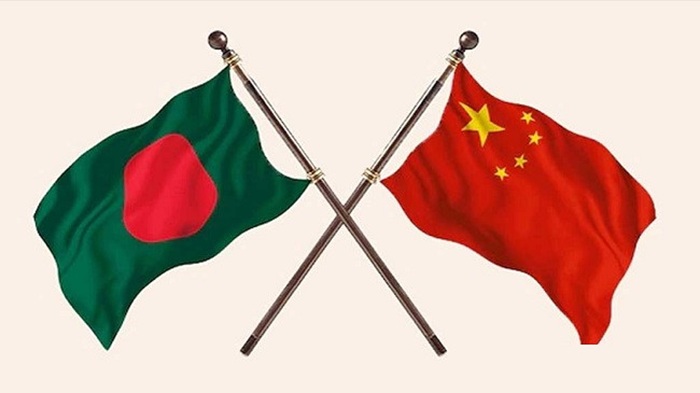
Europe’s fashion imports opened 2026 with a hard jolt. Fresh Eurostat-linked trade data for January shows the European Union’s apparel imports shrinking 15.48 per cent year-on-year to €7.03 billion, a dip sharp enough to redraw sourcing equations from Dhaka to Dongguan. The decline is not merely a weak seasonal print. It reflects a change in the world’s most influential apparel consumption bloc, where demand fragility, inflation fatigue, and a more disciplined retail inventory cycle are hitting at once.
The numbers underneath the headline make the downturn even more telling. Import volume fell 8.36 per cent to 377.45 million kg, while average unit prices slipped 7.76 per cent to €18.63 per kg. In practical terms, Europe bought less clothing and paid less for every kg it bought. That twin decline has transformed January’s data into an early referendum on how global sourcing strategies will evolve through the rest of 2026.
This comes against a wider backdrop of lower EU goods trade, with Eurostat’s broader January release also showing extra-EU imports down 9.5 per cent across categories. Apparel, however, is proving especially exposed because it sits at the intersection of discretionary spending and markdown-driven retail behavior.
One market, five very different strategies
The performance table reveals a market no longer moving in one direction, but splintering into sharply distinct supplier playbooks.
Table: EU apparel import performance (Jan 2026 vs Jan 2025)
|
Country |
Value (€ mn) |
Growth value |
Volume growth (kg) |
Unit price growth |
|
World |
7,033.60 |
-15.48% |
-8.36% |
-7.76% |
|
China |
2,224.89 |
-6.90% |
+1.21% |
-8.01% |
|
Bangladesh |
1,428.91 |
-25.25% |
-17.49% |
-9.41% |
|
Turkey |
619.98 |
-29.12% |
-31.66% |
+3.72% |
|
Vietnam |
362.86 |
-7.34% |
-13.00% |
+6.50% |
|
Pakistan |
288.81 |
-17.06% |
+49.01% |
-44.34% |
At the global level, the €7.03 billion import base confirms a demand-led correction. Yet once the lens shifts to the leading exporters, the table becomes a map of strategic divergence. China, still dominant at €2.22 billion, lost only 6.90 per cent in value despite the market’s broader collapse. The reason sits clearly in the volume column: a 1.21 per cent increase. China is effectively using price as a weapon, sacrificing 8.01 per cent in unit price to preserve throughput, keep factories loaded, and defend share in Europe’s core value segment.
Bangladesh’s is the most alarming among the major sourcing hubs. Its exports dropped to €1.43 billion, down 25.25 per cent, with volume down 17.49 per cent and prices down 9.41 per cent. Unlike China, Bangladesh could not convert lower prices into higher shipment flow. The table therefore suggests not just weaker European demand, but a loss of elasticity in Bangladesh’s basic-garment-heavy export basket. This is what makes the decline strategic rather than cyclical: lower prices are no longer automatically reviving orders.
Turkey’s line item introduces a different signal. Export value fell 29.12 per cent and volume crashed 31.66 per cent, but unit prices rose 3.72 per cent. That pricing resilience implies a conscious premiumization strategy. Turkish manufacturers appear to be giving up low-value replenishment business in favor of faster-turn, design-sensitive, and nearshore premium categories where lead time matters more than absolute cost.
Vietnam’s data supports the same thesis. A smaller 7.34 per cent value decline, paired with a 6.50 per cent rise in unit prices, suggests a successful migration toward performance wear, technical apparel, and higher-spec categories that are less exposed to Europe’s discount wars.
Pakistan has shown the clearest signal of distress in the entire market. A 49.01 per cent rise in shipment volume would ordinarily indicate a breakout export story. But the adjacent price column rewrites that narrative. Unit prices fell 44.34 per cent, pushing average realization down to just €7.12 per kg. As a result, total export value still fell 17.06 per cent.
In business terms, this is not growth; it is distress-led throughput. Pakistani suppliers appear to be liquidating capacity into Europe’s extreme-value tier, prioritizing cash flow and machine utilization over margin preservation. The table therefore exposes a dangerous trade-off increasingly common across South Asian manufacturing: volume expansion without pricing power can worsen profitability even when order books appear full.
This anomaly matters beyond Pakistan because it shows where Europe’s mass-market retailers are still spending, ultra-low-cost basics, promotional bundles, and short-life seasonal inventory. The question is whether such business is economically sustainable once compliance, freight volatility, and sustainability costs are layered in.
The new competitive map
The January data effectively divides the sourcing world into three camps. The first is the scale-driven discount bloc, led by China and increasingly mirrored by Pakistan. These exporters are using aggressive pricing to protect utilization rates and prevent order migration. This strategy works best for countries with deep vertical integration, raw material access, and enough financial resilience to absorb margin pain.
The second is the value-added migration bloc, represented by Turkey and Vietnam. Their positive unit-price growth suggests they are monetizing speed, quality, compliance, and product sophistication rather than competing in commodity basics. As EU retailers become more selective, this cohort may gain disproportionate wallet share despite weaker total market growth.
The third is the squeezed middle, where Bangladesh and Sri Lanka increasingly sit. These hubs remain heavily exposed to the mid-price essentials segment, the very category being hollowed out by both Chinese discounting and weakening European consumer appetite. This is where business significance becomes profound: the middle of the global apparel market is disappearing faster than either the luxury edge or the ultra-value basement.
Why Europe’s slowdown is becoming structural
The immediate trigger is lower consumer demand, but the deeper forces are more structural. Europe imported €180.5 billion worth of apparel in 2024, yet growth has increasingly shifted toward sustainability-led and circular fashion models. Recent EU market studies show rising preference for durable, compliant, and traceable garments over disposable fast fashion. That transition is now intersecting with Green Deal-linked textile waste rules, ESG disclosure requirements, and mounting retailer pressure to reduce deadstock. The result is fewer speculative buys, tighter reorder cycles, and more supplier scrutiny.
For manufacturers, this means the 2026 battle is no longer simply about FOB price. The new margin stack includes recyclability, traceability, lower carbon logistics, and smaller but faster replenishment cycles. Suppliers unable to monetize those capabilities are being pushed into pure price competition, a game only the largest and most efficient can survive.
The second-half 2026 test
The rest of 2026 will likely be defined by consolidation rather than recovery. Europe’s retailers are entering the year with cautious inventory discipline, and the broader EU goods-import slowdown suggests the pressure is macro as much as category-specific. The winning exporters will be those that can sit confidently at one of two extremes: the cheapest acceptable product or the most defensible premium proposition.
Everyone in between faces a brutal squeeze. January’s table, therefore, is more than a weak monthly trade print. It is an x-ray of a global sourcing industry losing its middle layer. The next phase of apparel trade will belong not to the biggest producers alone, but to those who can prove either ruthless cost efficiency or unmistakable product value.
Geopolitical volatility triggers sharp decline in global textile confidence: Survey

The global textile industry is grappling with a sudden and severe downturn in sentiment as regional conflicts disrupt essential trade routes and energy markets. According to the 37th Global Textile Industry Survey by the International Textile Manufacturers Federation (ITMF), the business situation balance has plunged to -25 percentage points. This decline is largely attributed to the escalating conflict involving the US, Israel, and Iran, which has revived stagflation fears reminiscent of the 2022 energy shocks. While Africa remains a rare bright spot of stability, North and Central America have experienced the most significant contraction in business conditions.
Energy security and logistics disruptions reshape industry risk
For the first time in recent history, geopolitical instability has overtaken weak consumer demand as the primary concern for textile executives, cited by 50 per cent of survey respondents. The blockade of the Strait of Hormuz has sent shockwaves through the supply chain, driving up raw material costs and complicating logistics. Consequently, global business expectations have collapsed from a robust +23 percentage points to just +5—the lowest level recorded since late 2022. While brands and retailers maintain a cautious optimism, the outlook for upstream manufacturers, particularly weavers, knitters, and machinery producers, has turned deeply negative.
Strategic diversification amid rising operational costs
In response to these external pressures, the industry is pivoting toward market diversification to reduce over-reliance on the US market. Manufacturers are currently prioritizing internal cost absorption over large-scale capital investments or production relocation. Interestingly, as energy and security concerns dominate the narrative, the anxiety surrounding trade tariffs has diminished significantly, falling from 31 per cent to 13 per cent. This shift underscores a fundamental realignment where immediate physical and economic security now outweighs traditional regulatory or protectionist hurdles in the global textile world.
Navi Mumbai circular hub redefines textile resource recovery
The Navi Mumbai Municipal Corporation (NMMC) has institutionalized India’s first Municipal Textile Recovery Facility (TRF) in Belapur, establishing a blueprint for urban fiber circularity under the Swachh Bharat Mission-Urban 2.0.
As of April 2026, the facility has successfully diverted 30 metric tons of post-consumer textile waste from landfills, leveraging a network of 140 dedicated collection bins across the city’s residential zones. This initiative addresses a critical gap in the domestic apparel value chain, where India generates approximately 7.8 million tons of textile waste annually. By utilizing handheld infrared scanners for precise fiber identification - distinguishing cotton, polyester, and wool blends - the TRF ensures high-purity feedstock for subsequent mechanical recycling and upcycling processes.
+3 This structured recovery model significantly boosts the regional textile economy by formalizing the collection of secondary raw materials. Strategic collaborations with women-led Self-Help Groups (SHGs) have already integrated over 150 practitioners into the green economy, with individual monthly earnings ranging between Rs 9,000 and Rs 15,000. The TRF is not merely a waste management site; it is a critical infrastructure for the future of sustainable apparel sourcing, noted a senior urban development official. Beyond traditional upcycling, the facility is pioneering high-value industrial applications, including the production of paper from rejected textile fibers. With plans to establish a permanent, high-capacity site in Koparkhairane, Navi Mumbai is effectively transitioning urban waste into a predictable resource stream for the textile manufacturing sector.
The Navi Mumbai Municipal Corporation oversees the administration and infrastructure of the planned city, focusing on sustainable urban development and sanitation. Key initiatives include decentralized waste processing and community-led circular economy projects. The corporation aims to scale its green initiatives citywide to maintain its top-tier ranking in national cleanliness surveys while fostering local employment through environmental stewardship.
Jack & Jones expands European footprint with premier French multi-brand hub
Jack & Jones has officially inaugurated its first multi-brand concept store in France, marking a strategic shift toward family-oriented lifestyle retail. Having debuted in the first week of April 2026, the flagship location integrates the established menswear label with its rapidly growing womenswear counterpart, JJXX. This expansion reflects a broader European rollout by the Bestseller group, following successful pilot launches in London and Belgium. By consolidating denim expertise and trend-forward feminine silhouettes under one roof, the retailer is effectively targeting a ‘lifestyle-centric’ demographic, moving beyond its traditional menswear stronghold to capture a larger share of the diverse French apparel market.
Diversifying revenue streams via womenswear integration
The introduction of the ‘duo-brand’ format is a direct response to the 12 per cent rise in demand for integrated shopping environments that cater to multiple household segments simultaneously. While Jack & Jones has dominated the masculine denim sector for decades, the inclusion of JJXX allows the brand to tap into a high-growth category characterized by 20 per cent faster inventory turnover. The French consumer is increasingly looking for a curated, one-stop destination that balances durability with contemporary flair, noted a regional retail director during the store’s opening. The location features an updated experiential layout, prioritizing modular displays that can be adjusted to reflect real-time consumer data and seasonal trend shifts
Scaling retail resilience in competitive hubs
As part of Bestseller’s 2026 ‘Smart Growth’ roadmap, the French expansion addresses the rising operational costs of standalone boutiques by optimizing floor space productivity. The move coincides with the group’s record-breaking fiscal performance, with net turnover reaching DKK 38.1 billion in the 2024/25 period. By leveraging a centralized logistics network, Jack & Jones ensures that the new French hub remains ‘Never Out of Stock’ (NOOS) on high-volume essentials. This multi-brand strategy not only hedges against fluctuations in the menswear sector but also positions the brand to compete more aggressively with global fast-fashion conglomerates by offering a specialized, denim-centric alternative.
A global fashion conglomerate based in Denmark, Bestseller manages over 20 brands including Jack & Jones, Vero Moda, and JJXX. The company operates in 70 markets through 3,100 branded stores and 16,500 multi-brand retailers. Under its 2026 expansion plan, the group is prioritizing omnichannel integration and sustainable material sourcing to maintain its premium market positioning.
Indian textile market triples to Rs 15 lakh crore as per capita demand increases
India’s domestic textile and apparel market has undergone a massive structural expansion, tripling in value over the last 15 years to reach approximately Rs 14.95 lakh crore in 2024. According to the ‘Market for Textiles and Clothing: National Household Survey 2024’ released by the Ministry of Textiles on April 6, 2026, the sector’s growth is fundamentally anchored by a sharp rise in individual consumption. Per capita demand for textiles has increased from Rs 2,119 in 2010 to Rs 6,066 in 2024, representing a CAGR of 7.8 per cent. This trajectory highlights a significant shift in consumer behavior, moving from basic necessity to diverse fashion and functional requirements across both urban and rural landscapes.
The growth is largely credited to a 52.2 per cent market dominance by Man-Made Fiber (MMF) and blended products, which have outpaced traditional cotton in volume growth due to their durability and competitive pricing. However, cotton remains a vital pillar with a 10.53 per cent CAGR, reaching an aggregate demand of Rs 3.53 lakh crore. Notably, the report identifies women as the primary drivers of this retail boom, accounting for 55.5 per cent of all textile purchases. As the industry advances into the FY26-27, the emphasis has pivoted toward circularity, with sustainable and recycled textiles now forming a Rs 37,000 crore sub-sector. Government-backed initiatives, including the Production Linked Incentive (PLI) scheme and the development of PM MITRA parks, are further aligning domestic capacity with this burgeoning internal demand.
The Ministry of Textiles is a central government body responsible for policy formulation, planning, and export promotion for the Indian textile industry. It oversees the entire value chain from natural and man-made fibers to garments and technical textiles. The Ministry currently focuses on modernizing infrastructure and achieving a US$ 350 billion market size by 2030.
India to fast-track technical textiles growth with expansion of Rs 10,683 crore PLI Scheme
The Government of India plans to fast-track growth in the technical textiles sector by expanding the Rs 10,683 crore Production Linked Incentive (PLI) scheme for textiles. The expansion includes integration of 17 new product categories including a wider array of Man-Made Fiber (MMF) apparel and specialized technical textiles. Confirming the development, Giriraj Singh, Union Minister for Textiles, emphasizes a strategic shift toward high-value manufacturing segments. To facilitate broader participation from mid-sized enterprises, the ministry has reduced the minimum investment threshold by 50 per cent and lowered incremental turnover requirements from 25 per cent to 10 per cent.
Strengthening industrial capacity through fiscal calibration
This policy revision addresses long-standing industry requests for a more inclusive framework, particularly as India aims for a US$ 350 billion textile market by 2030. As of late 2025, the scheme has already attracted 84 new proposals envisaging investments of Rs 10,789 crore. By including niche segments like geo-textiles and medical textiles, the government intends to reduce import dependency and capitalize on the 8.3 per cent CAGR observed in domestic consumption. Industry experts suggest, the integration of these products will shield manufacturers from the volatility seen in traditional cotton cycles, providing a stable fiscal environment for long-term capital expenditure.
Enhancing global competitiveness amidst trade shifts
The expansion coincides with the operationalization of PM MITRA parks across seven states, creating a synergistic ecosystem for large-scale manufacturing. With India’s textile exports reaching US$ 37.75 billion in FY25, the upgraded PLI 2.0 is expected to generate approximately 86,740 new jobs while positioning the nation as a viable alternative to East Asian manufacturing hubs. While the 11 per cent import duty on certain fibers remains a challenge, the move toward ‘Kasturi Cotton’ and MMF diversification is designed to ensure that Indian garments maintain price parity in the U.S. and EU markets, even amidst fluctuating global logistics costs.
An apex federal body in India responsible for policy formulation and infrastructure development across the textile value chain, the Ministry of Textiles manages key initiatives like the PLI scheme and PM MITRA parks to boost exports and employment. Historically a cotton-centric regulator, the Ministry is currently driving a transition toward synthetic fibers and sustainable manufacturing.