FW
LVMH registers 5% revenue decline in 2025
Luxury bellwether LVMH enters 2026 with a sharpened focus on operational discipline following a transitional fiscal year. While the group reported a 5 per cent decline in reported revenue to €80.8 billion for 2025, a move toward organic stability in the second half of the year - highlighted by 1 per cent growth in the fourth quarter - signals a resilient recovery. This normalization follows a ‘post-pandemic super-cycle’ that previously inflated growth, with current performance now underpinned by a diversified portfolio that shields the group from specific regional volatility.
Selective Retailing and Beauty outperform
A primary engine of growth in the current landscape is the Selective Retailing sector, which achieved a 28 per cent growth in recurring profit in 2025. Sephora remains the standout performer, consolidating its status as the world’s leading beauty retailer through aggressive volume gains and margin expansion. This success is mirrored in the Perfumes and Cosmetics division, which saw an 8 per cent profit increase, proving that ‘accessible luxury’ and high-ticket beauty categories remain insulated from broader macroeconomic cooling in Europe and Japan.
Strategic speed and sustainable craftsmanship
LVMH is aggressively leveraging its new 10-year partnership with Formula 1, which debuted in 2025, to capture high-growth demographics. Featuring TAG Heuer and Moët Hennessy, this collaboration serves as a key marketing pillar for the 2026 season. Simultaneously, the group has accelerated its LIFE 360 environmental roadmap, achieving 84 per cent certified cotton and 76 per cent certified wool usage. In an uncertain environment, our ability to inspire dreams through sustainable creativity is our decisive asset, stated Bernard Arnault, Chairman, as the group prepares to propose a €13 dividend per share this April.
LVMH is a global leader in luxury across six business sectors, including Fashion, Beauty, and Watches. With €80.8 billion in 2025 revenue and a workforce of 211,000, the group is focused on maintaining its 22 per cent operating margin through 2026. Historically a family-led pioneer, it continues to scale via flagship ‘House’ experiences in Shanghai, Milan, and Tokyo.
Levi Strauss & Co posts $1.8 billion revenue in Q4, FY26
Denim pioneer Levi Strauss & Co posted an adjusted profit of 41 cents per share on revenues of $1.8 billion in Q4, FY26, driven by a robust 10 per cent organic growth in its direct-to-consumer (DTC) channels. This performance highlights a successful structural shift toward a brand-led, digital-first model, which now accounts for nearly half of total global revenue.
Denim lifestyle expansion and activewear growth
The retailer continues to capitalize on the ‘baggy denim’ trend, with wide-leg and loose-fit styles accelerating across both men’s and women’s segments. While core denim remains the anchor, the company's ‘Beyond Denim’ categories are providing critical diversification. Beyond Yoga recorded a standout 37 per cent revenue increase, underscoring Levi’s evolution into a comprehensive lifestyle brand. To maintain this momentum into 2026, the company is doubling down on premium offerings, including the global rollout of its Blue Tab collection, targeting the high-end Japanese denim aesthetic.
Tariff mitigation and operational agility
The primary challenge for FY26 remains the shifting US trade policy. Levi’s has integrated a 30 per cent tariff on Chinese imports and 20 per cent for the rest of the world into its guidance, projecting 5 per cent to 6 per cent net revenue growth. To protect margins, management is implementing ‘surgical’ price increases and SKU rationalization. We are making meaningful progress on mitigating tariff impacts through targeted pricing and lower product costs, noted Harmit Singh, CFO. The company’s strategic exit from lower-margin lines like Denizen and Dockers further streamlines operations as it aims for a long-term $10 billion revenue target.
Levi Strauss & Co. is a global leader in jeanswear, operating in over 110 countries through approximately 3,300 retail touchpoints. Following its 2021 acquisition of Beyond Yoga, the firm has prioritized high-growth activewear and premium denim. Currently, the company is divesting its Dockers business to focus exclusively on its core brand-led, DTC-first strategy.
Francesca’s Boutique commences liquidation of 450 stores in January 2026
The structural fragility of mall-based specialty retail has been exposed once again as Francesca’s Boutique commenced a total liquidation of its 450-store network in January 2026. The collapse was precipitated by a catastrophic breakdown in the brand’s supply chain and a sudden withdrawal of critical financing. According to internal documents and WARN filings in Texas, the retailer received a formal notice of default from its primary lender on January 8, following a December 30 reversal from an investor who had previously pledged sufficient operational capital to carry the firm through the FY26.
Inventory gridlock and supply chain paralysis
A primary driver for the immediate shutdown was the termination of funding for two of Francesca’s major suppliers. This credit freeze rendered the delivery of new spring merchandise impossible, leaving the chain with stale inventory and an estimated $250 million in unpaid vendor invoices. The resulting ‘inventory gap’ made long-term viability impossible in a sector where high-turnover freshness is a prerequisite for survival. The liquidation features aggressive pricing, with many items marked down to $5 and $15, as the company attempts to recover remaining value for secured creditors.
Market pressures and structural challenges
While general mall traffic grew slightly in 2025, Francesca’s struggled to modernize its ‘treasure hunt’ boutique model against aggressive digital-first competitors. Analysts note, the firm never fully recovered from its 2020 bankruptcy, despite an $18 million acquisition by TerraMar Capital and Tiger Capital in 2021. The retailer’s high-cost brick-and-mortar footprint in traditional indoor malls - which saw a 1.1 per cent decline in foot traffic during the final quarter of 2025—exacerbated a debt-to-income ratio that eventually precluded further private equity rescue.
Founded in 1999 as a single Houston boutique, Francesca’s expanded to 457 locations across 45 states, targeting Gen Z and Millennial women with curated apparel and accessories. After a 2021 acquisition by TerraMar Capital, the brand attempted to pivot toward a lifestyle-centric free-spirited aesthetic but faced terminal liquidity constraints by early 2026.
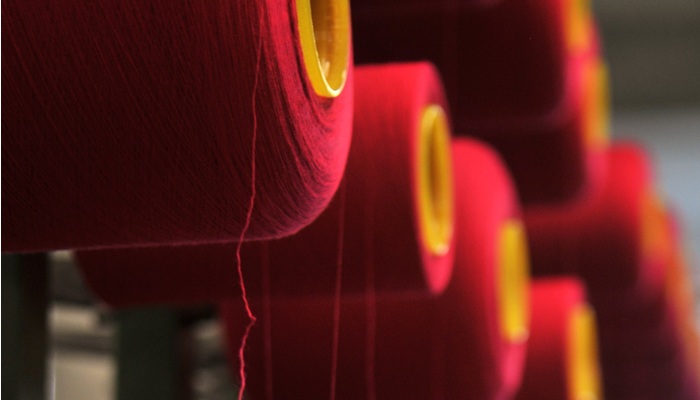
Tech Bulletin-Challenges faced by spinners in the production of slub-yarns due to mass decrease and strategies to mitigate them
In the production of slub yarns - textiles engineered with intentional thick sections to provide a ‘natural’ or ‘fancy’ aesthetic - spinners face unique technical challenges. Unlike standard yarn, slub yarn relies on controlled irregularities, but when unintended mass decrease occurs, it can compromise the integrity of the entire supply chain.
Technical challenges of mass decrease
In slub spinning, ‘mass decrease’ typically refers to the thinning of the yarn immediately before or after a slub. According to industrial standards (such as Uster Fancy Yarn Profile), a mass decrease is critical if the mass drops 30 per cent below the base yarn within a distance of 3 cm.
• Weak spots and end breakage: Significant mass decreases create localized weak points. These points cannot withstand the high tension required during downstream processes like high-speed weaving or knitting, leading to frequent "ends down" (yarn breakage).
• Twist distribution issues: Twist naturally travels to the thinnest sections of the yarn. A mass decrease attracts excessive twist, making that section brittle, while the thick slub section remains under-twisted and structurally loose.
• Aesthetic inconsistency: Unintended mass variations distort the "ramp" of the slub (the transition from thin to thick). This can result in a "stepped" look rather than a smooth, artisanal transition, often ruining the fabric's visual appeal.
• Production stoppages: Electronic yarn clearers (EYC) are programmed to cut out defects. If mass decrease is not controlled, the clearers will frequently cut the yarn, leading to excessive knots/splices and reduced machine efficiency.
Mitigation strategies for spinners
To maintain the delicate balance between intentional slubbing and structural stability, spinning mills employ several technical and operational strategies:
• Optimizing slub device settings: Most slub yarns are produced via a retrofit device on the ring frame that accelerates the back rollers. Spinners must precisely calibrate the acceleration and deceleration ramps of the servo motors to ensure that the "feeding" of extra fiber doesn't starve the preceding or succeeding sections of the yarn.
• Strategic traveler selection: The traveler weight controls the balloon tension. For finer slub counts (e.g., Ne 30 or Ne 34), lighter travelers (like 5/0 or 6/0) are often used to reduce friction and minimize tension-related mass variations and breakages.
• Back zone drafting control: Using a wider back zone setting (approx. 60–65 mm) combined with a lower break draft (1.14–1.3) helps the twist in the roving break up more gradually, preventing the ‘starving’ of fibers that causes thin places near slubs.
• Humidity and environmental control: Synthetic and cotton fibers are highly sensitive to static and moisture. Maintaining a consistent relative humidity (RH) of 65 per cent ± 2 per cent ensures fiber cohesion and prevents ‘fly’ generation, which can cause erratic mass variations.
• Advanced Online Monitoring: Utilizing software like Uster Tester 5/6 with Fancy Yarn Profile allows spinners to visualize the ‘ideal’ vs ‘real’ slub. This enables real-time adjustments to the slub multiplier and base yarn count to eliminate ‘rogue’ thin places.
Men’s Fashion Week 2026 begins in Paris with a Louis Vuitton show
Men’s Fashion Week 2026 kicked off in Paris with a celeb-heavy Louis Vuitton show as designers and industry leaders mourned the loss of Italian maestro Valentino.
Celebrity designer Pharrell Williams sent out models wearing long wool coats, loose-fitting suits — sometimes with Bermuda shorts — short jackets, or fitted parkas with fur-trimmed hoods.
A guestlist heavy in US performers included Usher, John Legend, SZA and Joe Keery who took their places on the front row alongside Louis Vuitton owner and tycoon Bernard Arnault.
Arnault was one of many leading industry lights to pay tribute to Italian designer Valentino Garavani’s refined, radiant and sumptuous fashion after his death aged 93 on Monday.
Designers, supermodels and actresses have publicly mourned the loss of another Italian style legend, just four months after the passing of Giorgio Armani.
The Fall-Winter 2026 Paris Fashion Week follows on from Milan where trend-spotters say the recent fad for large oversized tailoring appears to have peaked.
Karnataka inaugurates state-of-the art cocoon market in Kalaburagi
The inauguration of a state-of-the-art cocoon market in Kalaburagi, Karnataka, marks a strategic expansion of India’s silk value chain, targeting a valuation of Rs 1.1 lakh crore by 2030.
Finalized on January 27, 2026, this decentralized infrastructure move aims to insulate farmers from the logistics bottlenecks of Ramanagara - Asia’s largest cocoon hub - while ensuring price transparency through digital auctioning. To complement this, the Central Silk Board has deployed high-grade automatic reeling machines (ARMs) across the northern Karnataka belt, a technical intervention designed to reduce labor intensity by 60 per cent and achieve a yarn evenness coefficient of under 3 per cent.
The industry is currently navigating a high-value transition, with raw silk production targets set at 14,150 tons for the current fiscal year. However, challenges persist; rising input costs and climate-induced yield fluctuations have kept cocoon prices volatile, often averaging between Rs 650 and Rs 750 per kg. By modernizing the post-cocoon segment in non-traditional belts, we are building a more resilient, audit-ready supply chain that meets the stringent traceability requirements of European luxury houses, noted a senior Ministry of Textiles official at the Resham Mela. This focus on ‘Quality Cocoon to Quality Silk’ positions India to potentially triple its silk exports, which are projected to exceed Rs 2,500 crore by the end of FY26.
The Central Silk Board (CSB) is a statutory body under the Ministry of Textiles responsible for the integrated development of India’s sericulture sector. Headquartered in Bengaluru, the CSB focuses on mulberry and Vanya silk research, aiming to double the industry's value chain by 2030 through aggressive mechanization and farmer-centric seed technology.
BTMA to shutter all spinning mills from February 1, 2026
The definitive ultimatum by the Bangladesh Textile Mills Association (BTMA) to shutter all spinning units on February 1, 2026, marks an unprecedented fracture in the nation’s $45 billion apparel value chain. At the heart of the crisis is a ‘price war’ over raw materials, with local millers alleging that subsidized Indian yarn imports - particularly in the 10–30 count range - are being dumped into the market at $0.30 to $0.60 below domestic production costs. This pricing delta has paralyzed the primary textile sector, leaving an estimated BDT 12,500 crore ($1.04 billion) in unsold inventory across local warehouses.
While the Ministry of Commerce has recommended the withdrawal of duty-free ‘bonded warehouse’ benefits for these imports, the National Board of Revenue (NBR) has yet to formalize the order, caught between the BTMA's demands and the garment exporters' (BGMEA) warnings of a 37 per cent rise in manufacturing costs. The timing is critically sensitive; as Bangladesh moves toward LDC graduation in late 2026, international ‘Rules of Origin’ will soon mandate a double transformation process, requiring garments to use locally sourced yarn to maintain duty-free access to European markets. A failure to resolve this deadlock now threatens to dismantle the very backward-linkage infrastructure essential for post-2026 survival, potentially jeopardizing the livelihoods of one million textile workers and the stability of 85 per cent of the country’s total export earnings.
The Bangladesh Textile Mills Association (BTMA) represents the nation’s primary textile sector, including spinning, weaving, and dyeing mills. Serving the global Ready-Made Garment (RMG) market, the association focuses on vertical integration. Despite historical growth, the sector currently faces a 50 per cent capacity underutilization amid rising energy costs and a liquidity crunch.
Conferment of GI tag for Ryindia catalyzes shift in India’s high-end textile exports
The conferment of the Geographical Indication (GI) tag for Ryndia - Meghalaya’s traditional Eri silk- has catalyzed a major shift in India’s high-end textile exports as of January 27, 2026. This ‘Ahimsa silk,’ produced without harming silkworms, has found a lucrative niche in European eco-luxury markets, where traceability is now a regulatory prerequisite. Capitalizing on this, the Union Ministry of Textiles recently identified Ryndia as a flagship success of the 2025 reforms, noting its role in elevating raw silk production to 41,121 metric tons nationally. By securing GI protection, Meghalaya has effectively insulated its 42,000 weavers from mass-market imitations, allowing them to command premium pricing from international fashion houses seeking ethical fabric alternatives.
Strategically, the state has integrated this textile heritage with a "textile-tourism" model, inaugurated at the new Integrated Textile & Tourism Centre (ITTC) in Nongpoh. This initiative addresses the long-standing challenge of unorganized marketplaces by providing direct-to-consumer digital channels and e-commerce tie-ups. "The GI recognition is not just a label; it is a legal safeguard that ensures our women-led weaving communities capture the full value of their craftsmanship," stated Textiles Minister Bah Paul Lyngdoh. With employment in India’s sericulture sector growing to 9.8 million people, the Ryndia case study illustrates how regional fibers can transition from heritage symbols to formidable economic assets within the global $23 billion silk market.
The Meghalaya Department of Textiles oversees the promotion and regulation of the state's indigenous handloom and sericulture sectors. Primarily focused on Eri and Muga silk, the department plans to scale rural incomes to ₹50,000 monthly through the "Pachlakhia Didi" model. Historically a cottage industry, it now drives Meghalaya's export-oriented growth strategy.
Bestseller’s ‘Hypedrop’ disrupts wholesale with ultra-fast digital-first model
Danish fashion powerhouse Bestseller is fundamentally recalibrating the wholesale landscape with the 2026 rollout of Hypedrop, a digital-first brand designed to eliminate the traditional six-month lead time. By integrating AI-supported decision-making and real-time market sentiment analysis, Hypedrop delivers curated weekly product collections with a guaranteed six-week turnaround. This model addresses a critical 2026 industry shift: JOOR data indicates that average wholesale lead times have collapsed from 263 days in 2019 to just 102 days in 2024. Hypedrop pushes this frontier further, offering independent retailers and multi-brand stores the agility of fast-fashion giants like Zara or Shein within a wholesale framework.
Strategic response to ‘in-season’ market demands
The initiative arrives as Bestseller celebrates its 50th anniversary with record 2025 revenues of DKK 38 billion ($5.5 billion) and a 10 per cent rise in pre-tax profit. Hypedrop immediately translates rapidly evolving demand into curated drops, ensuring our partners avoid the risk of stagnant, out-of-season inventory,’ a company spokesperson noted during the Belgian launch. By focusing on ‘high-heat’ items - characterized by bold graphics and premium utility - the brand targets a younger demographic that values scarcity and novelty. This ‘sense-and-respond’ stramtegy not only minimizes overproduction but also secures Bestseller’s dominance in a volatile retail climate where 2026 GDP growth in the EU is projected at a modest 1.1 per cent.
Founded in 1975, Bestseller is a global fashion leader with over 20 brands, including Jack & Jones and Vero Moda. Operating in 90 markets with 3,100 retail stores and 16,500 wholesale partners, the group focuses on digital innovation and sustainable scaling. For 2026, the company is intensifying its retail expansion while investing heavily in circular material technologies.
Anta Sports acquires strategic $1.8 billion Puma stake to consolidate global sportswear dominance
Anta Sports has formally entered a share purchase agreement with Groupe Artémis to acquire a 29.06 per cent stake in Puma SE for €1.5 billion ($1.8 billion), positioning the Chinese powerhouse as Puma’s largest shareholder. The transaction, executed at €35 per share—a substantial 62 per cent premium over Puma’s recent trading price - comes at a critical juncture for the German brand. Puma has faced a challenging ‘reset year’ in 2025, characterized by a 15.3 per cent sales decline in Q3 and a broader struggle to maintain market momentum against rising competitors like New Balance and Hoka. By leveraging its internal cash reserves, Anta is effectively betting on Puma’s brand equity as a catalyst for its ‘single-focus, multi-brand’ globalization framework.
Strategic synergy and the 2026 growth roadmap
The investment provides Anta with a strategic foothold in Europe and South America, while offering Puma an optimized distribution gateway into the complex Chinese market. ‘We believe Puma’s recent share price does not reflect its long-term industrial potential, stated Ding Shizhong, Chairman, Anta Sports. While Anta intends to seek representation on Puma’s Supervisory Board, the group has emphasized a hands-off approach to preserve the brand's Herzogenaurach-based identity. This move mirrors Anta's successful revitalization of FILA and its 2019 acquisition of Amer Sports, where direct-to-consumer (DTC) excellence and operational discipline were used to scale premium heritage labels into high-growth global platforms.
As China’s leading sportswear entity by market value, Anta manages a diverse portfolio including Fila, Descente, and Kolon Sport. The company specializes in technical footwear and high-performance apparel, maintaining a robust ‘Brand + Retail’ model. With 2025 revenue showing consistent resilience, Anta is currently scaling its presence across Southeast Asia and the Middle East to offset domestic market saturation.