FW
Santoni to unveil new circular knitting machine at ITM 2024
Santoni plans to unveil its latest innovation – the SM8-TOP2ST at the upcoming ITM 2024 in Istanbul. This groundbreaking single jersey electronic circular knitting machine boasts 8 feeds and 2 points of selection needle-by-needle per feed, available in diameters ranging from 13 to 20 inches and in gauges 24, 26, and 28.
The pioneering mechatronic device of the machine transforms the Santoni SM8-TOP2V into the first-ever seamless knitting machine capable of producing garments with needle-by-needle/sinker-by-sinker selective terry, with full electronic selection of the sinkers. While retaining the core specifications and fabric possibilities of the TOP2V, this advancement empowers the machine to craft sculptured terry patterns with precision.
The resulting knitted tubular garments offer versatility in wear, with the option to don them conventionally with the terry on the inside, or to flaunt the terry on the outside by simply reversing them. The terry, whether nestled within or showcased outwardly, delivers both functional and aesthetic benefits.
Internally, the terry lends a cushioning effect, elevating softness, comfort, and breathability. Externally, it enhances the garment's visual appeal, adding an extra dimension to its aesthetics.
The selective terry capability opens doors to heightened value, particularly for technical garments, a glimpse of which will be showcased at ITM 2024. The accompanying images illustrate the intricate patterns achieved through precise needle positioning, underscoring the machine's prowess in creating tailored, high-performance apparel.
Tips-Implementing robust QC measures and automated inspection during fabric production
Maintaining consistent quality during fabric manufacturing not only ensures customer satisfaction, but also minimises waste and keeps production running smoothly. Given below are few tips to implement robust quality control (QC) measures and leverage technology for automated inspection during fabric production.
Implement Traditional QC Practices
Before diving into automation, a solid foundation of traditional QC practices is essential. Here are key elements:
• Define quality standards: Establish clear and measurable quality parameters for the fabrics including weight, thread count, color consistency, weave structure, and absence of defects like holes, tears, or uneven dyeing.
• Implement standardised testing: Implement standardised testing procedures throughout the production process. Conduct regular checks for yarn quality, tension control during the weaving process and analyse fabric post-production.
• Utilise Statistical Process Control (SPC) techniques: Utilise SPC techniques to monitor key parameters and identify any trends or deviations from set standards. This enables early detection of potential quality issues.
• Training and documentation: Train your workforce on proper inspection techniques and ensure clear documentation of all QC procedures. This fosters consistency and reduces human error.
Leverage the Power of Automation
Fabric manufactures can leverage the following technologies to enhance their QC processes:
• Machine Vision Systems: Installed with high-resolution cameras and powerful software, these systems help identify defects like weaving errors, color variations, and stains. They also analyse fabrics in real-time, enabling manufacturers to take immediate corrective action.
• Automated Measurement Systems: These automated systems can be used to measure fabric weight, thickness, and dimensions with high accuracy. This helps eliminate human error besides ensuring consistent fabric properties.
• Sensor Integration: Manufacturers can integrate sensors into their weaving/knitting machines to monitor critical parameters like yarn tension and loom speed. They can prevent defects in the machine by making adjustments using real-time data.
• Data Analytics and AI: Manufacturers can utilise data analytics platforms to analyse QC data from various stages. This helps identify recurring issues, predict potential problems, and optimise production processes for better quality control.
• Integrate QC Systems with Production Management Systems: Fabric manufacturers can integrate their automated QC systems with production management software for seamless data flow, real-time quality monitoring, and informed decision-making.
Integrate Automation with Success
Here are some additional tips for successful automation of the fabric manufacturing process
• Take baby steps: Manufacturers should begin by automating specific QC tasks first. They can gradually integrate more automation into their process as the team gains more experience.
• Evaluate cost-benefit ratio: Manufacturers should evaluate the ratio between the cost of automation and it’s the potential benefits including improved efficiency, reduced waste, and higher quality.
• Invest in training: Train workforce to operate and maintain automated QC systems. This fosters the ownership culture of ownership and reduces dependence on external support.
• Data security: Protect sensitive QC data from being breached by implementing regularity security checks.
• Use insights for QC upgradation: Manufacturers need to embrace new technologies and use data insights to regularly update their QC procedures.
Fabric manufacturers can achieve exception quality and consistency by implementing a robust QC program that incorporates well-trained manual inspections and cutting-edge automation. This not only enhances customer satisfaction but also optimises production efficiency, minimises waste, and strengthens brand reputation. Embracing automation is the future key for fabric manufacturers to maintain a competitive edge and deliver the flawless fabrics.
NBA launches maiden storefront for Bero
The NBA team is launching its inaugural brick-and-mortar storefront for Berō, its fashion label introduced in December.
Crafted by the Brooklyn Home Company, the storefront is located inside a converted 200-sq-ft concession stand within Barclays Center, echoing both the brand’s essence and the basketball team's Brooklyn heritage.
Stacey Walters, Director-Architecture, Brooklyn Home Company, elucidates, the store will evoke the ambiance of a heritage clothing brand, aligning seamlessly with the borough's ethos of quality.
Renowned for capturing Brooklyn's vibrant essence in its designs, the Brooklyn Home Company sought inspiration from the borough's iconic townhouses for the store. It boasts of wood paneling, marble counters, black limestone floors, and brass accents. Ambient lighting further adds an element of coziness to the store.
The new storefront will showcase Bero’s current line-up of apparel and accessories, featuring staples like pullover hoodies, quarter-zips, cardigans, coats, soccer jerseys, and more. It will also release a collection designed by Brooklyn Nets player Nic Claxton.
Looking ahead, the store plans to unveil an exciting collaboration between Berō, the Nets, and KidSuper in the fall. Additionally, it will launch a new apparel collection during the WNBA New York Liberty’s summer season.
Fashion Revolution organises campaign to celebrate 10th anniversary
World's largest fashion activism movement, Fashion Revolution is celebrating its tenth anniversary with Fashion Revolution Week 2024, being held from April 15-24, 2024.
This annual campaign brings together people globally to advocate for a cleaner, safer, fairer, and more transparent fashion industry. It is held every year in the week coinciding with April 24, the anniversary of the Rana Plaza disaster.
Over the past decade, Fashion Revolution India has promoted an accountable fashion industry through education, policy discussions, research, and support for traditional crafts. This year's theme for the event is 'How to be a Fashion Revolutionary'. On April 21, a workshop called 'Textiles Untangled at the Backyard, Adyar will be organised in partnership with Green Donut, a Paris-based non-profit,Thasneem.
Masood Rowther, Former Regional Coordinator and Spokesperson - Fashion Revolution India, explains, the workshop will simplify the complex network of the textile industry, highlighting its environmental and social impacts. Inspired by the effective pedagogy of Climate Fresk, it will use interactive cards to map the industry's journey from production to consumption.
Adidas’ Spring/Summer 2024 II collection explores Contra-Natural concept
The second installment of adidas and Yohji Yamamoto’s Spring/Summer 2024 collection delve deeper into the notion of Contra-Natural, exploring the intricate balance between sport and avant-garde design, as well as the interplay of organic and synthetic elements.
The collection launches a wide ensemble of dynamic apparels including refined cotton twill workwear-inspired pieces alongside reimagined sporting classics. The range offers overshirts, cargo pants, and tops in subtle yet daring designs, boasting utility pockets and adjustable hems. The iconic adidas Superstar Tracksuit I in the collection is revamped with a topographical map piping, while garments inspired by adidas’ Teamgeist soccer jerseys have been printed digitally, evoking the natural process of oxidation. Signature accessories such as nylon backpacks, totes, and holdalls add a functional yet stylish touch to the apparel line.
From apparel to footwear, the collection presents a range of expressive silhouettes, as adidas performance Running technology is ingeniously reinterpreted through Y-3’s artistic lens. Yohji Yamamoto's vision breathes new life into adidas’ pinnacle running silhouette with the Y-3 Prime X 2 Strung, while the Y-3 Adios PRO 3.0 debuts in three captivating colorways.
The past merges with the future in the Y-3 Spring/Summer 2024 Chapter 2 collection, epitomised by the Y-3 Water Slide, the Y-3 Sandal, and an updated iteration of the iconic Y-3 Itogo.
Accompanying the launch is a visceral campaign, captured by Francis Plumber and styled by Robbie Spencer, which celebrates an alternative mode of urban exploration.
ITMA ASIA + CITME 2024 to showcase automation solutions
The 9th combined edition of the textile machinery exhibition, ITMA ASIA + CITME 2024, will showcase a wide range of solutions for automation and sustainable production to foster innovation among businesses and individuals.
To be held from Oct 14-18, 2024 at the National Exhibition and Convention Centre in Shanghai, the exhibition will highlight advanced manufacturing technologies and glean first-hand insights on the latest textile and garment trends.
Established in 2008, ITMA ASIA + CITME combines the strengths of the world-renowned ITMA brand and CITME—one of China's most important textile events.
Jointly owned by Cematex and China Textile Machinery Association, and held in partnership with the Japan Textile Machinery Association, the biennial ITMA ASIA + CITME exhibition is also endorsed by the Korea Textile Machinery Association, Taiwan Association of Machinery Industry and other major international and regional industry associations.
Nike increases marketing investment for Olympics by 10%
To revive flagging sales and help compete with upstart rivals, US-based sportswear brand Nike has increased its investment in marketing initiatives for this year’s Olympics than any previous games.
The brand recently unveiled 13 futuristic shoe prototypes along with the brand’s new Olympics kits at a show in Paris.
In its latest quarter, Nike increased marketing investment by 10 per cent to $1 billion over the same period last year. Investments in marketing will remain the company’s number one priority in coming times, says Heidi O’Neill, President-Consumer, Product and Brand.
In general, Nike is focusing on fewer and bigger marketing campaigns, O’Neill adds. At the end of the last year, the $139 billion company had hired a new chief marketing officer to boost the brand’s position in the increasingly competitive sportswear market.
Newer running brands such as On and Hoka are taking market share from Nike, while Adidas is benefitting from a shift away from chunky basketball sneakers.
The company’s consumers are facing challenges in every market it is engaged in. However, the brand’s investment will help stimulate demand despite pressure on consumers globally, adds Craig Williams, President-Global Geographies and Marketplace.
Stoll unveils CMS 703: Seamless knitwear revolution
In a move set to disrupt the seamless knitwear market, STOLL has launched the CMS 703 Knit and Wear, boasting a 72" working width and a seamless blend of innovation and efficiency. This latest addition to the CMS family promises streamlined production of finished articles, catering to the burgeoning volume market.
The CMS 703 follows hot on the heels of the CMS 503 Ki L, introduced just last month as an extension of Stoll's Fully Fashion range. However, the spotlight now shifts to the CMS 703, offering unparalleled flexibility and productivity at a fraction of the cost.
Michael Händel, Stoll Sales Manager, highlights the machine's appeal in the Asian market, where demand for high-quality, diverse knitwear is on the rise. With a broad working width of 72" and a gauge range from E 6.2 to 10.2, the CMS 703 is primed to meet the size preferences of local consumers while attracting interest from Latin America and beyond.
Central to its allure is the innovative Multiflex take-down system, ensuring superior width fixation and minimizing fabric faults. The incorporation of spring-loaded latch needles enhances fabric quality, while optimized design features facilitate smooth operation even with bulky yarns.
Furthermore, the CMS 703 integrates seamlessly into automated processes, offering uninterrupted operation through its UPS system—a boon for manufacturers contending with unstable power supplies.
Beyond its technical prowess, the CMS 703 prioritizes user experience with a user-friendly multi-touch panel reminiscent of smartphone interfaces, coupled with minimal maintenance requirements.
Enthusiasts eager to witness the CMS 703 in action can visit the Karl Mayer Group stand at ITMA ASIA+CITME in Shanghai from October 14 to 18, 2024. With its exceptional price-performance ratio, the CMS 703 heralds a new era of efficiency and affordability in seamless knitwear production.
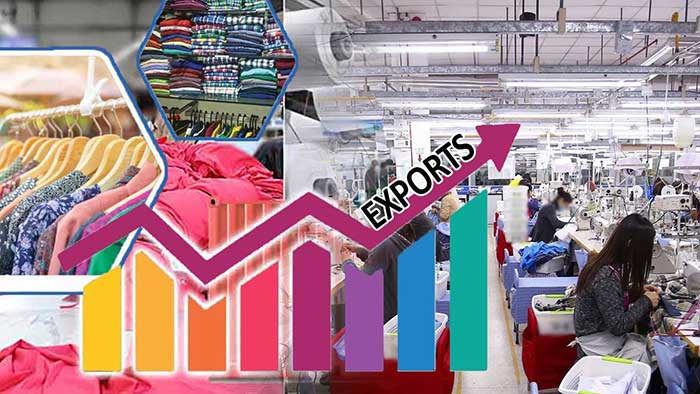
China’s T&A exports rise to 45.1 billion during Jan-Feb’24
China’s textile and apparel (T&A) exports grew by 14.3 per cent to 45.1 billion yuan during the first two months of this year.
According to official data, total profits of China’s major textile enterprises rose to 18.2 billion yuan (~$2.56 billion) during this period.
The combined operating revenue of these firms expanded by 13.7 per cent to 675 billion yuan (~$95 billion) from a year ago, according to the Ministry of Industry and Information Technology.
Industrial output of major textile companies increased by 7.7 per cent Y-o-Y, reports a state-controlled media outlet.
Asian Apparel Exports: A tale of four tigers, one lagging behind

The apparel industry in Asia presents a fascinating picture of contrasting fortunes. While Bangladesh, Vietnam, and Sri Lanka have seen their garment exports soar in recent years, India, a traditional powerhouse in textiles, struggles to keep pace. This analysis delves into the reasons behind this disparity and explores potential solutions for India to reclaim its export dominance.
Why India lags behind
|
Country |
2021 ($ billion) |
2022 ($ billion) |
2023 (estimated, $ billion) |
|
|
India |
30.5 |
29.8 |
29 |
|
|
Bangladesh |
42.6 |
45.7 |
48 |
|
|
Vietnam |
39.7 |
44.4 |
48.5 |
|
|
Sri Lanka |
6.1 |
6.8 |
7.2 |
Despite having a strong domestic cotton industry and a large workforce, India's apparel exports are losing ground. Several factors are responsible for this.
Productivity gap: Bangladesh and Vietnam boast of higher productivity due to several factors.
Specialization: These countries focus on specific garment segments, allowing for efficient production lines and skilled workers. India's broader product range can lead to inefficiencies.
Investment in automation: Bangladesh and Vietnam are actively adopting automation technologies for cutting, sewing, and packaging, leading to faster turnaround times. India lags in this area. These investments and streamlined production processes, lead to higher output per worker. India's garment industry remains fragmented, with many smaller players relying on less efficient technologies.
Labor cost advantage: While wages are rising across Asia, Bangladesh still offers a significant cost advantage compared to India. This attracts buyers seeking value-driven apparel. Often perceived as having a labor cost advantage, India's edge is diminishing. Although base wages might be lower, factors like complex regulations, fragmented infrastructure, and lower skill levels can negate the cost benefit.
Table: Average Monthly Garment Worker Salary ($)
|
Country |
Salary |
|
Bangladesh |
190 |
|
Vietnam |
230 |
|
India |
250 |
Emerging market focus
There's a silver lining. While traditional markets like the US and EU remain important, a shift towards emerging markets like Southeast Asia and Africa presents an opportunity for India. These regions offer potential for growth due to rising disposable incomes and a growing middle class. All four countries are looking to tap into these new markets with their growing middle class and rising apparel demand.
Table: Export destinations
|
Country |
Traditional Markets (US & EU) |
Emerging Markets |
|
India |
65% |
35% |
|
Bangladesh |
70% |
30% |
|
Vietnam |
60% |
40% |
|
Sri Lanka |
80% |
20% |
The road ahead for India
To regain its competitive edge, India needs a multi-pronged approach. First, it needs to invest in skill development. Upgrading worker skills through targeted training programs can significantly boost productivity. Second is focus on modernizing infrastructure. Streamlining logistics and reducing bottlenecks can improve efficiency and lead times. Third, focus on automation as embracing automation in specific areas can help bridge the productivity gap.
And fourth, moving beyond basic garments and focusing on higher-value products can help India command premium prices. Fifth is streamlining regulations and simplifying labor laws and export procedures can attract investments and reduce operational costs.
India has the potential to reclaim its position as a leading apparel exporter. By addressing productivity gap, labor cost competitiveness, and focusing on strategic areas, India can capitalize on its raw material advantage and skilled workforce to regain its export dominance in the global apparel market.