FW
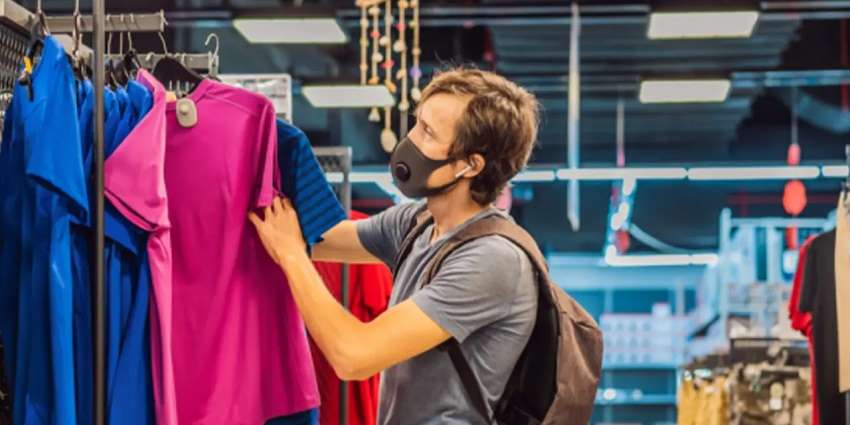
Disposability in fashion leads to increasing use of fake fur
As per MP Mary Creagh, who is currently leading a parliamentary inquiry into sustainability in the fashion industry, though major fashion brands such as Burberry and Gucci have been praised for recently eschewing animal fur from their collections, these materials are made from synthetic fibers derived from fossil fuels contributing to greenhouse gas emissions. The often-cited sustainable method of taking these clothes to charity shops after use is also problematic, given that four out of 10 items donated don’t get sold due to an inundation of items.
The advent of brands specialising in faux fur, such as Shrimps and Charlotte Simone, has meant that the material is now highly sought after by mainstream shoppers and celebrities, with Kate Moss and Alexa Chung seen sporting the trend and inspiring others to do so.
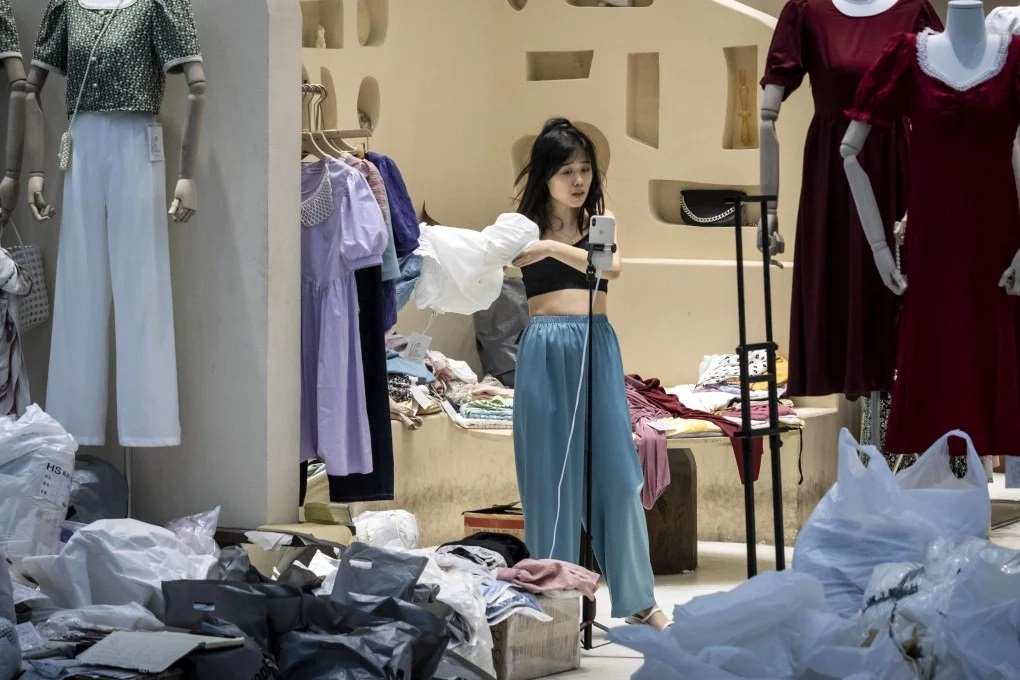
However, the problem is symptomatic of an entire industry rooted in overconsumption and one that aims to sell us something new every week. Decreasing prices in high street shops have fostered a culture of disposability in fashion, leading items to be worn just once or twice before being discarded.
Some fashion publications have been making efforts to promote vintage clothing and offer tips on sourcing old items. However faux fur and other unsustainable items are still heavily promoted.
Inditex ebit up three per cent
Inditex’s nine-month earnings before interest and tax were up three per cent. The negative currency impact on sales in the third quarter was 3.2 per cent. The group has missed sales and profit forecasts, hit by adverse currency moves and an unusually warm September, leading investors to wipe more than $5billion off the fashion retailer’s market value at one stage. Inditex is highly sensitive to fluctuations in the euro as it sells from China to Russia to India across its thousands-strong global portfolio of stores. Inditex generates more than half of its sales in currencies other than the euro and then books those sales in euros when reporting results. However, its centralised sourcing and distribution model means a large chunk of its costs are in euros.
Spanish Inditex is the owner of Zara, Massimo Dutti and Bershka. Zara's growth is flagging because of heightened competition, which is forcing the company to lower the price of clothes and footwear and to put more apparel on sale. Growth in online sales is also chipping away at profitability, because it is more expensive to ship internet orders. The global apparel retail market continues to face significant structural challenges and Inditex is no longer best positioned.
Vietnam emerges a strong FDI destination
With major trade deals on the horizon, Vietnam has the potential to attract investment and generate new cross border business opportunities. Among these are: the CPTPP, EU-Vietnam FTA and Asean-Hong Kong FTA. However, additional regulatory reforms, continued domestic investment and improvements in manufacturing and labor standards are needed to fully capture the benefits from these and other trade agreements. Vietnam could be one of the major beneficiaries of the escalating US-China trade spat.
The country will be the prime beneficiary of increased cross-border investment in the Asia Pacific and already attracts the highest consistent growth rates of foreign direct investment among Asean nations. While the level of net intended investment into Vietnam is slightly down on last year, the net figure is six percentage points higher than in 2015, when Vietnam was seventh on the list of intended foreign investment nations in the Asia Pacific, behind the Philippines, Singapore, Hong Kong and Indonesia, which have all since dropped out of the top five.
Vietnam has been named by region’s leading business executives as the busiest territory for foreign investment in the coming year – ahead of China, the United States, Australia, Thailand and Indonesia. The country has had consistent positive growth over recent years.
Alliance ends its tenure in Bangladesh
Alliance for Bangladesh Worker Safety announced the end of its tenure in Bangladesh in its fifth and final annual report. The Alliance terminated 178 factories from its compliant factory list due to lack of progress in ensuring a safe working condition. The report also said that pace of corrective action plans (CAP) were accelerated in last two years as many factories that began operations several years ago would go near completion of remediation. The incomplete remediation works would be accomplished by December
Following the Rana Plaza building collapse in April 24, 2013, garment workers, North American buyers and retailers formed the Alliance undertaking a five-year plan, which set timeframes and accountability for inspections, trainings and worker empowerment programs in Bangladesh’s readymade garment sector. In these past five years, the Alliance, member brands and owners of Alliance-affiliated factories achieved unprecedented progress toward the goal of improving safety in Bangladesh’s ready-made garment industry, while simultaneously helping to solidify Bangladesh’s standing as a global leader in garment exports.
Beginning in 2019, most Alliance member brands plan to work through a local organisation to collectively monitor safety in the factories from which they source. The Alliance report said more than 1.6 million workers, security guards and factory managers were trained—and retrained—in fire safety. The Alliance’s 24-hour confidential worker helpline reached more than 1.5 million workers which had already been transferred to local management under Phulki and would soon be available to RMG factories throughout Bangladesh.
Garware net sales up 27 per cent
Garware Technical Fibers, founded in 1976, is a leading manufacturer of technical textiles. The company creates world class technical ropes that are used for fisheries, agriculture, shipping and industrial purposes, geosynthetics and sports. For the second quarter Garware Technical Fibers’ net sales grew 27.1 per cent. Profit before tax grew by 17.4 percent compared to the same quarter last year. Net profit grew 17 per cent. EPS for the period grew by 17 per cent.
For the first half of the fiscal year net sales grew by 12.7 per cent. Profit before tax grew by 18.7 per cent. Net profit has grown by 18.8 per cent. EPS for the period grew by 18.8 per cent.
Garware specializes in providing customized solutions worldwide. The company’s products are manufactured in state-of-art facilities at Wai and Pune and marketed in more than 75 countries. Over the past four decades, Garware has built a strong reputation for quality, value addition and application-focused innovation. Its solution segments are niche. These solutions are focused on progress and productivity for agriculture and fisheries, which typically constitutes almost 15 per cent of India’s GDP.
The company was earlier known as Garware Wall Ropes. Garware Technical Fibers aims at doubling its profit over the next five to seven years.
Working conditions for women in Asian countries demand attention
"A German court case, which implicated local discount clothing manufacturer KiK for a fire at its Ali Enterprises textile factory in Karachi in 2012, raised a pertinent question: whether corporations should be held accountable for the working conditions of their suppliers abroad. The global fast fashion industry, primarily staffed by impoverished women-especially in Asia, is often accused for the exploitative working conditions in its factories. Workers in these units are highly underpaid and have fewer rights. They are highly discriminated against by their male counterparts and often sexually harassed."
 A German court case, which implicated local discount clothing manufacturer KiK for a fire at its Ali Enterprises textile factory in Karachi in 2012, raised a pertinent question: whether corporations should be held accountable for the working conditions of their suppliers abroad. The global fast fashion industry, primarily staffed by impoverished women-especially in Asia, is often accused for the exploitative working conditions in its factories. Workers in these units are highly underpaid and have fewer rights. They are highly discriminated against by their male counterparts and often sexually harassed.
Increasing minimum wages has little effect
The increase in minimum wages by Bangladeshi government from €60 to €85 (per month) in December, has had little effect as women still have to work overtime to survive. The factories are largely unorganised and if women workers try to organise themselves in trade unions, they are threatened by the management and asked to leave the factory. The industry hires women as they are docile and normally not a part of any trade unions. Their traditional upbringing also does not allow them to be treated as human beings. This makes them a soft target for factory owners who frequent mistreat them.
Not sufficient job opportunities available
Also, other industries do not offer many work opportunities for women. A textile job proves to be much better than stone cutting or working as a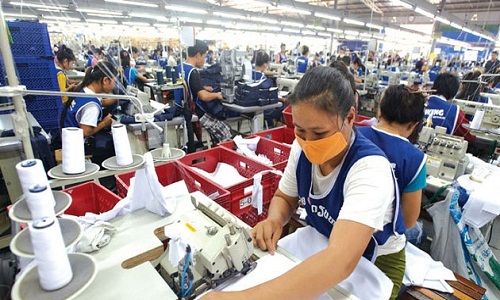 housemaid where the danger of being harassed by men is rampant. In China, many women have quit the textile industry and entered into the electronics industry which pays them better wages.
In the case of the KiK incident, the company should be held responsible as it was more or less the only buyer; having 80 per cent of the orders. Normally, in cases of human rights violations, the guilty is tried in the country where the incident happens. However, in this case, the German court has sought the Pakistani law to determine their responsibility in the incident. This indicates the lack of awareness in the industry regarding ensuring proper working conditions in factories.
Ushering in a change
FEMNET supports urgent appeals in cases where such accidents or human rights violations occur. The organisation’s partners in the countries of production makes a note of the German companies that place such orders which it addresses promptly. The organisation also involved raises awareness amongst students in 40 German universities.
The role of consumers is also important. They need to decide whether they require so many clothes. Already, there’s excess production happening with 60 per cent of these clothes not even being worn. Less consumption under better working conditions is always more preferable. This can be achieved by either buying second-hand clothes or those under certain labels like Fair Trade who assure of their clothes being produced in sustainable conditions.
Tackling deep-rooted concerns of Indian textile industry to boost growth
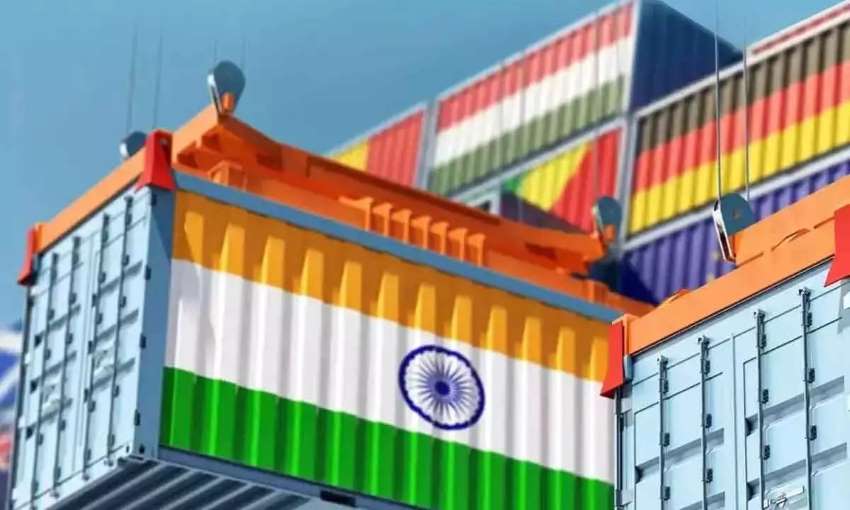
The government, in order to support the industry, has increased import duty on several textile items. However, to ensure long-term sustainable revival, it first needs to address certain deep-rooted problems. Currently, the industry is finding it extremely difficult to compete with even smaller players such as Bangladesh and Vietnam. Valued at around $127 billion, the textiles and apparels industry is a huge foreign exchange earner, and second-largest employer in India. However, the country’s share in global textiles exports is just 5 per cent, which is minuscule as compared to China’s share of 38 per cent. Much smaller players like Bangladesh and Vietnam, having a share of 3 per cent in global exports, are increasingly threatening India’s exports.
 The government, in order to support the industry, has increased import duty on several textile items. However, to ensure long-term sustainable revival, it first needs to address certain deep-rooted problems. Currently, the industry is finding it extremely difficult to compete with even smaller players such as Bangladesh and Vietnam.
Competition, domestic issues trample growth
Valued at around $127 billion, the textiles and apparels industry is a huge foreign exchange earner, and second-largest employer in India. However, the country’s share in global textiles exports is just 5 per cent, which is minuscule as compared to China’s share of 38 per cent. Much smaller players like Bangladesh and Vietnam, having a share of 3 per cent in global exports, are increasingly threatening India’s exports.
Other bug bears are domestic issues. Textile exports were expected to increase with the abolition of the Multi Fibre Arrangement (MFA) in 2005-06. However, this growth did not materialise, as the industry faced increased competition from low-cost producers like Vietnam and Bangladesh. The rise in Chinese labour cost could also have provided an opportunity to increase its share in the global textiles industry. But domestic issues including outdated technology, inflexible labour laws, infrastructure bottlenecks, and a fragmented nature of the industry trampled these hopes.
As per World Trade Organisation’s Agreement on Subsidies and Countervailing Measures, a country needs to phase out export subsidies for a product as it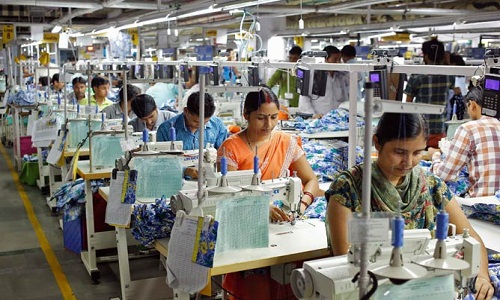 achieves export competitiveness, defined as 3.25 per cent share in world trade. As per this agreement, India needs to end export subsidy for the textiles sector by 2018. The industry needs to abolish some of the existing export subsidies such as Merchandise Export from India Scheme (MEIS) and the Export Promotion Capital Goods (EPCG) Scheme.
Need for skill development, technology upgradation subsidies
The government needs to focus on regional, cluster, technology upgradation and skill development subsidies, which benefit all producers. Globally, manmade textiles and garments are in high demand. However, India, despite being the second-largest textiles exporter, lags in this category due to the unavailability of manmade fibres at competitive prices. The total textiles and clothing exports from India, cotton accounts for around 75 per cent. We need to align our production with the global consumption patterns.
Flexibility in labor laws and adequate skilling is likely to boost the textiles sector in a big way. For instance, allowing women to work in all three shifts, after taking into account adequate safeguard measures, will enable the industry to employ more female workforce. Technology upgradation schemes will help Indian players increase both their productivity and competitiveness. In addition, the government needs to carefully evaluate various trade agreements—Bangladesh and Vietnam benefit from favorable access to some of the big apparel markets.
Although India has the required ingredients in the form of raw materials and abundant labor to make the industry a success, outdated technology, inflexible labor laws and infrastructure bottlenecks hamper its growth. The government needs to re-look at fibre neutrality and evaluate various trade agreement opportunities, while domestically focusing more on technology upgradation and skill development.
Vietnam garment, textiles exports up 16 per cent
Vietnam’s garment and textile exports have risen 16.01 per cent against last year. This is the highest rise over the last three years, compared with 12.1 per cent in 2015, 4.07 per cent in 2016, and 10.8 per cent in 2017. Export turnover of clothes was up 14.45 per cent; that of fabrics was up 25.5 per cent; and the export values of yarn was up 9.9 per cent. The sector’s trade surplus was up 14.39 per cent year on year.
The sector sees rosy signs for 2019, with many businesses already receiving orders for the first six months and some even the whole year, with better product competitiveness and supply chains forecast.
The new-generation free trade agreements Vietnam has joined will be put into place and are expected to exert positive impacts on the production and business activities of the sector. Businesses are joining hands in implementing solutions on investment, marketing, human resources development, and sci-tech applications. Other proposals are policies to support waste water treatment at garment-textile industrial parks, increase personnel training, and admit wholly foreign-invested enterprises to develop the supply chain and promote experience exchange. The target is to raise the export turnover by 10.8 per cent in 2019.
Trade war can benefit India
India can benefit from the trade war between the US and China because the US and China will explore options for suppliers from other countries to fulfill their demand. They will develop alternate markets for their products and seek new sources to meet their local demand.
India can focus on increasing exports from automotive, apparel and readymade sectors. India had come out with a policy of hardware manufacturing and a few large players, especially in mobile phones, had announced their plans for big investment in this sector. India has a very good eco system for hardware development and this could be a good opportunity for India to increase the growth of the hardware industry. Initiatives in India like Make in India, Industry 4.0 will make India attractive for foreign companies to make their investments here.
Auto components is another big opportunity. In the last few years, India has become very competitive in the auto sector and has emerged as the most preferred location for manufacturing small cars in the world. Further, the eco system for the auto sector in India is well developed. All players in the market invest on innovation, R&D and produce global quality vehicles. FDI regulations for this sector are very liberal. Indian auto and auto component manufacturers can capitalise on this emerging opportunity.
New regional UN report predicts export growth to slow in 2019
The Asia-Pacific Trade and Investment Report (APTIR) 2018 by the United Nations Economic and Social Commission for Asia and the Pacific (ESCAP) notes an accelerated imposition of restrictions on trade in goods and services, and more reservations on Foreign Direct Investment (FDI). The United States-China trade tensions have also begun to disrupt existing supply chains and dampen investor confidence, as evidenced by the deceleration in trade growth after the first half of 2018. If the trade tensions remain, export growth may slow to 2.3 per cent in 2019, compared to a nearly 4 per cent growth in export volume in 2018. FDI inflows to the region are also expected to continue in their downward trend next year, following a 4 per cent drop in 2018.
Tariff hikes are expected to cut global GDP by $150 billion, and regional GDP by a little over USD40 billion. Importantly, as many of the main export industries in the region are relatively labor-intensive, a contraction of export could spell at least temporary hardship for many workers. At a minimum, Asia and the Pacific will see a net loss of 2.7 million jobs due to the trade war, with unskilled workers -often women- shouldering more severe impact.