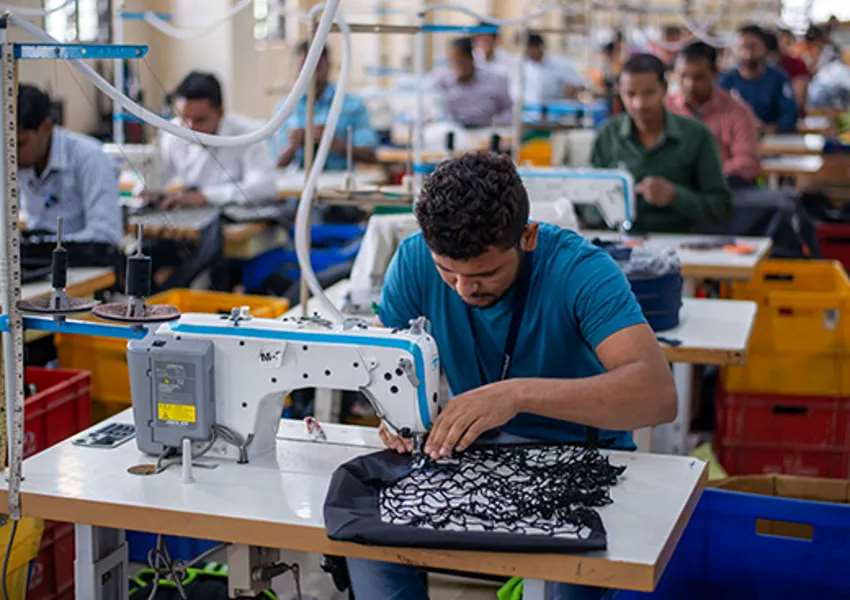
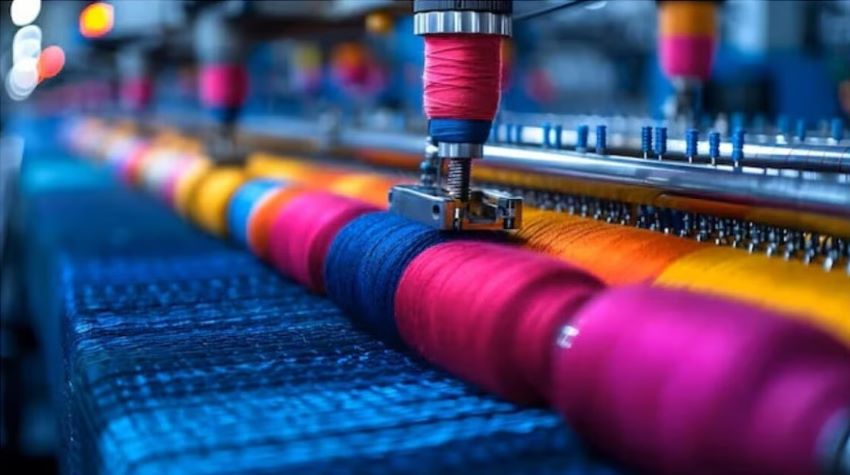
Huge losses are being reported by owners of silk handlooms makers in different villages of Sadar and Shibganj districts of Bangladesh due to the ongoing blockade enforced by BNP-led alliance since January 6. This has resulted in temporary joblessness for hundreds of handloom workers. An owner from Laharpur village in Sadar has stated that his business had virtually stopped due to the blockade and he suspended production. Over 250 other handlooms at the village also stopped weaving. Owners who have taken loans from banks and NGOs are now worried about timely payments.
Workers, who usually earn Tk 250 to 300 a day for weaving silk, have reported difficulties in running day to day life due to the country-wide blockade. Around 2,500 weavers work at as many handlooms in the district, said an office-bearer of the Baroghoria union weavers association. Elaborating further, he said that wholesalers from different places cannot come to the district for buying clothes including saris, scarves, shirt, kurta pieces, and curtains due to the blockade. Weavers cannot send the items either.
- 1
- 2
- 3
- 4
- 5
- 6
- 7
- 8
- 9
- 10
China’s duty-free revival meets a reality check as Hainan shifts from VICs to va…
Hainan’s retail recovery is beginning to look less like a cyclical rebound and more like a rewiring of China’s domestic... Read more
Zombie inventory and shrinking margins inside China’s fashion returns meltdown
China’s digital fashion market, long celebrated as the world’s most sophisticated test bed for e-commerce innovation, is facing a destabilising... Read more
Circularity by Design: How EU rules are turning data into fashion’s new currency
The European fashion sector has entered a compressed transition window. Two regulatory confirmations: the revised EU Textile Labelling Regulation (effective... Read more
The Lyst Reset: Chanel and Dior rewrite luxury’s power index
The global luxury hierarchy has been quietly rewritten, and not by sales alone. In Q1 2026, Chanel rose to the... Read more
Inventory, not expansion, defines winners in global apparel
The 2025 fiscal year has crystallised that revenue growth and operational health are no longer moving in tandem. In an... Read more
From growth-at-all-costs to cash discipline, the new economics of DTC fashion
The global direct-to-consumer apparel market is entering a correction phase, as fashion brands across the US, Europe and the UK... Read more
Britain’s Forgotten Growth Engine: Why policy gaps are undermining fashion and t…
Britain’s fashion and textile industry, often framed through the lens of creativity and design, is emerging as a case study... Read more
Beyond price rallies structural reform can strengthen India’s cotton economy
India’s cotton economy is entering a decisive phase, where firmer prices and tighter arrivals in the 2026-27 season have given... Read more
Polyester volatility redraws India’s textile industry competitive map across Asi…
India’s synthetic textile industry has entered a phase of cost instability as polyester staple fibre (PSF) prices rise across domestic... Read more
The £7 Billion Question: Who pays for fashion’s ‘free rental’ habit?
The global fashion industry is facing an uncomfortable paradox: its most valuable customers may also be its most destructive. A... Read more