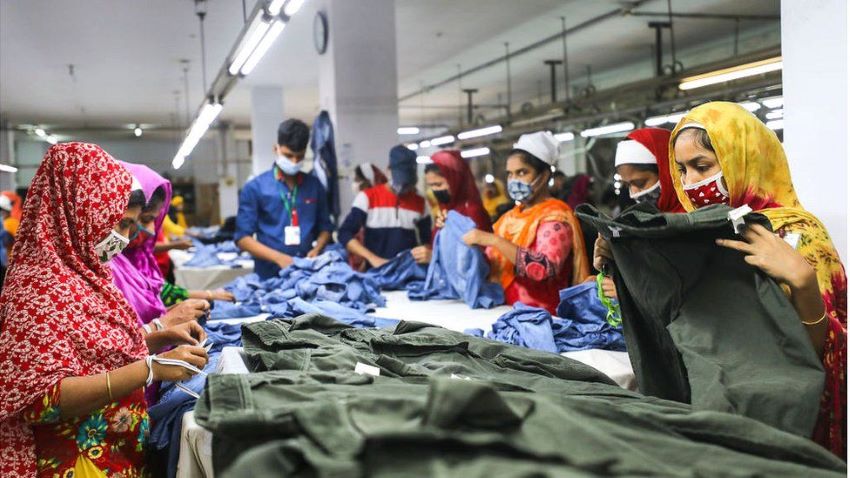
Bangladesh will give garment, terry towel and specialised textile exporters a one per cent special incentive. The aim is to help exporters remain competitive in the global market. Currently, Bangladesh garment exporters receive a four per cent cash incentive for shipment to non-traditional markets. The country considers all destinations as non-traditional markets except the EU, the US and Canada.
Bangladesh’s garment exports have been declining for the last five months because of currency appreciation, rising cost of production, lower consumer spending on garments and the free trade agreement between Vietnam and the EU. In the first half of the fiscal, Bangladesh’s apparel shipments fell 6.21 per cent. The US-China trade war resulted in a slump in consumption of readymade garment products. Consumption fall also forced the country’s exporters to lower prices. The readymade garment sector contributes 83.52 per cent to the country’s overall export earnings. Due to Bangladesh’s high dependency on garment exports, any instability in this sector in future could result in huge unemployment and a trade deficit. So the country needs to diversify its export basket. Bangladesh has to develop factory to port communication in order to reduce lead times and has to have a one stop service in trade procedure and documentation in product transaction.
- 1
- 2
- 3
- 4
- 5
- 6
- 7
- 8
- 9
- 10
Price wars, fast fashion, diamond money leads to Surat’s industrial shake-up
The sound of Surat’s diamond polishing wheels, once the city’s heartbeat, is fading. In its place, the relentless pulse of... Read more
India’s textile market nears Rs 15 lakh cr as domestic demand rewrites growth
India’s textile and apparel economy is no longer being driven merely by population growth or festive consumption cycles. It is... Read more
China Discounts, Bangladesh Bleeds: Inside Europe’s new apparel sourcing crisis
Europe’s fashion imports opened 2026 with a hard jolt. Fresh Eurostat-linked trade data for January shows the European Union’s apparel... Read more
Geopolitical volatility triggers sharp decline in global textile confidence: Sur…
The global textile industry is grappling with a sudden and severe downturn in sentiment as regional conflicts disrupt essential trade... Read more
India’s legacy buying houses confront existential challenge as FTAs reshape supp…
The Indian apparel sourcing is being reshaped with a a series of new Free Trade Agreements (FTAs). It is changing... Read more
ICRA sees apparel export recovery in FY27 as margin pressure eases, FTAs gain tr…
India’s apparel export sector is moving out of a year defined by tariff-led disruption and into one shaped by market... Read more
From Price to Purpose: India’s textile leaders chart a sustainable future at CMA…
The Indian textile industry is standing at a historic crossroads. For decades, the sector has been fueled by its reputation... Read more
Industrial automation and AI take center stage at Garment Technology Expo (GTE) …
The conclusion of the 39th Garment Technology Expo (GTE 2026) in Greater Noida has signalled a decisive shift in South... Read more
The End of Geographic Masking: Shein and peers reclaim Made in China as a strate…
The era of the corporate ghost is ending. For years, the world’s most aggressive retail disruptors operated under ambiguity, relocating... Read more
$120 Crude, Zero Margin: How India’s textile hubs are paying the price
For India’s textile clusters, the current West Asia crisis is no longer a distant geopolitical headline. In Surat’s polyester corridors... Read more