The textile industry has a background of polluting water and causing deforestation when producing and using fabrics and leather. But over the last years, many companies have been changing their attitude to become more environment-friendly. Recently, Greenpeace launched Detox Catwalk. Textile companies were asked to adopt and implement solutions to avoid using and releasing dangerous chemicals from their global supply chain and products by January 1, 2020.
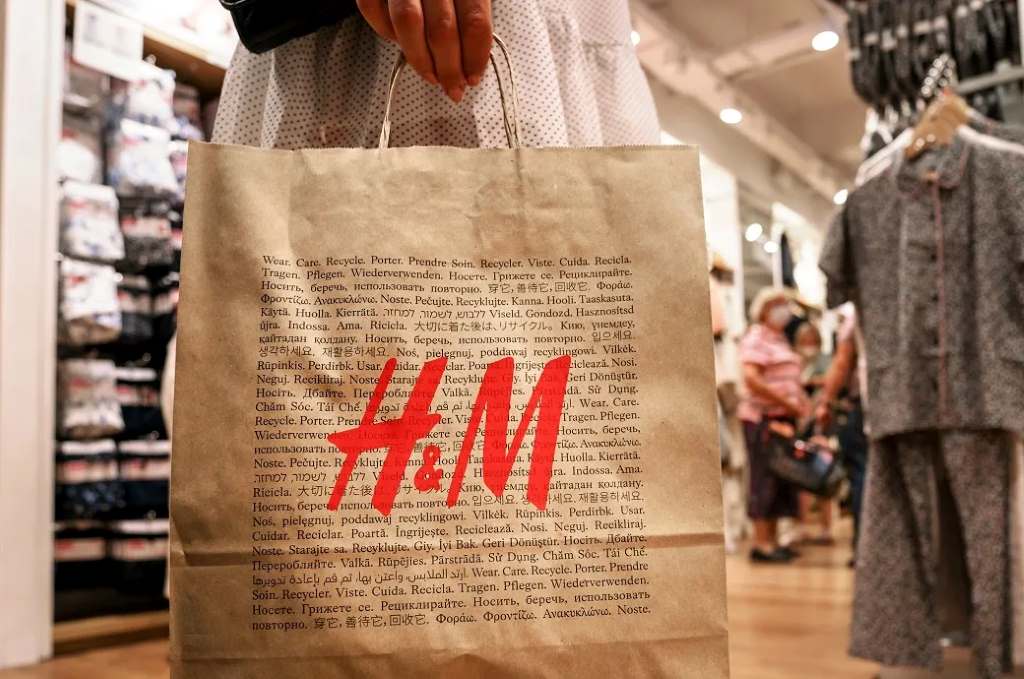
Chiara Campione, Fashion Duel Project Leader at Greenpeace Italy explained that H&M, Nike, Adidas, Valentino, Levi's and Burberry are among the 36 major fashion and retailer brands that have already joined the campaign. One of the historical districts of the textile made in Italy, renowned worldwide, is the region of Biella, North-West Italy. The secret to the success of this industrial area has been the chemical properties of its waters and the presence of big falls ensuring enough energy for production cycles.
At the Reda firm, founded in 1865, the finest merino wools are converted by the expert hands of local craftsmen into fabrics, some of which are worn by Hollywood stars. But this excellence is achieved while caring for the environment, for example by using water filtration systems and integrating renewable sources in the industrial process.

- 1
- 2
- 3
- 4
- 5
- 6
- 7
- 8
- 9
- 10
Rural India emerges as apparel’s next manufacturing frontier as investments cros…
For decades, India’s apparel industry’s growth revolved around densely packed urban clusters such as Bengaluru, Tiruppur, Noida and Gurugram, where... Read more
From ghost malls to fulfilment engines China’s retail space rewiring enters a ne…
China’s retail economy has entered a paradoxical phase where macro expansion and micro distress are happening simultaneously. Total retail sales... Read more
From commodity to control, Asia’s growing grip on the polyester chain
" " The global polyester market has seen a reset that extends far beyond crude-linked volatility. Polyester, now accounting for over... Read more
The End of Youth Obsession: Retail’s shift toward the silver economy
Forget the youth obsession, the ‘Silver Economy’ is no longer peripheral, it is the nucleus of global retail growth. In... Read more
Footprint up, like-for-like down, Primark’s demerger comes at a critical moment
Associated British Foods’ decision to demerge Primark into a standalone listed entity, marks one of the most consequential shifts in... Read more
Yarn Expo Shenzhen 2026: GBA connectivity and AI innovation drive mid-year sourc…
The global textile industry is preparing for a strategic return to the South China manufacturing heartland as Yarn Expo Shenzhen... Read more
Fiber Rebalance: Why cotton is gaining ground in a volatile synthetic market
Into the 2026/27 season global cotton economy is entering a decisive phase. Fresh projections from the International Cotton Advisory Committee... Read more
PM MITRA parks face execution test as India’s textile exports recalibrate
India’s textile and apparel sector closed FY 2025-26 with exports worth Rs 3,16,334.9 crore, a 2.1 per cent increase that,... Read more
Dominance of Pure Play: Apparel is rewiring growth around precision, AI and trac…
The global fashion industry is entering a structural reset, and it’s not just because of cyclical demand decline or tariff... Read more
New Australian Wardrobe Economy: Where AI, sustainability, e-commerce converge
Australia’s fashion and apparel industry is no longer defined by post-pandemic recovery; it has entered a transformative phase. According to... Read more