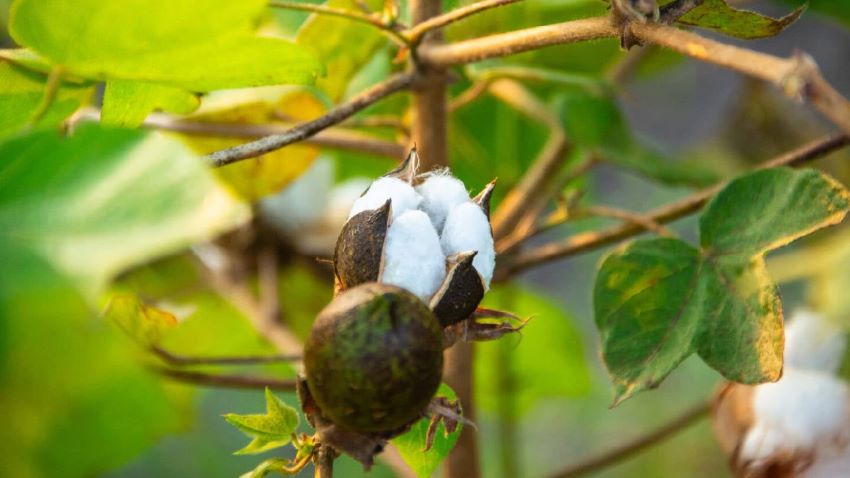
Exports of Egypt's cotton in the 2016-17 season have risen 19 per cent. Last year Egypt banned all but the highest quality cotton seed in order to save its historic crop, dramatically reducing the area under cultivation to about 1,30,000 acres, a more than 100-year low.
Egypt is now looking to scale that cultivation back up. The area planted rose to about 2,20,000 acres this year and is expected to hit up to 5,00,000 acres in the next two to three years. So the area under cultivation is growing and exports growing so that Egyptian cotton can now be sold at a price that's less than California pima.
Egypt, last November, floated its currency, roughly halving it in value and making its exports relatively cheap on international markets, a boon for Egyptian cotton traders able to source higher quality cotton after the new regulations. They see Egypt able to more than double its global market share within three years to capture about 20 per cent of a small but high-end market that trades some 5,00,000 tons of long-staple cotton per year. Egyptian long staple cotton is famously used for luxury linens. It trades at a high premium compared to the more common short-staple cotton.

- 1
- 2
- 3
- 4
- 5
- 6
- 7
- 8
- 9
- 10
Beyond Blue Jeans: How brand identity is reshaping a $103 bn market
The global denim industry is entering a new phase of competition, one in which branding psychology is becoming as valuable... Read more
Beyond Tariffs: How a unified US apparel industry wants to rebuild regional manu…
In a rare show of consensus, some of the US' most influential apparel, footwear and textile organisations have come together... Read more
India-UK CETA: Tariff-free UK access puts India's textile sector on growth track
India's textile and apparel industry is ready for one of its biggest export opportunities in decades as the India-UK Comprehensive... Read more
AI tailoring gains momentum as custom suits transforms premium apparel retail
Technology is reshaping one of fashion's oldest categories menswear. AI, digital body scanning and automated manufacturing are replacing conventional tailoring... Read more
Can trade deals and manufacturing reforms deliver India's textile vision?
India's textile and apparel industry has entered one of its strongest revival phases after several difficult years marked by pandemic... Read more
Women’s wear power global apparel growth as big brands rework retail strategies
For years, the world's largest apparel companies built their businesses around men's denim, workwear and outdoor clothing. That strategy is... Read more
The End of Fibre Blends: Why retailers are moving toward 100% recyclable apparel
The apparel industry is entering a redesign phase as sustainability goals, regulatory pressures, and resource security unite around one central... Read more
Recycled polyester’s next growth phase will be driven by data, not fiber
For much of the last decade, recycled polyester was one of the easiest sustainability wins available to brands. Replacing virgin... Read more
Lefties becomes Inditex's new weapon against Primark and Shein
While much of the global apparel industry has focused on the rapid rise of digital-first retailers such as Shein and... Read more
Bangladesh’s apparel export model hits a breaking point as price wars reduce mar…
Bangladesh's apparel industry, long regarded as the world's manufacturing hub for affordable, high-volume garments, is facing one of its most... Read more