The European fashion sector has entered a compressed transition window. Two regulatory confirmations: the revised EU Textile Labelling Regulation (effective April 2026) and the forthcoming EU Circular Economy Act (Q4 2026) have transformed what was once a fragmented sustainability agenda into a tightly sequenced compliance phenomenon. Together with the July 2026 destruction ban and the 2027 rollout of the Digital Product Passport (DPP), the bloc is creating a single, interoperable system that links product identity, lifecycle tracking, and material recovery. What emerges is not a series of independent mandates but a synchronized operating model, one that redefines how garments are designed, sold, tracked, and ultimately reabsorbed into the production cycle.
A sequenced system, not isolated mandates
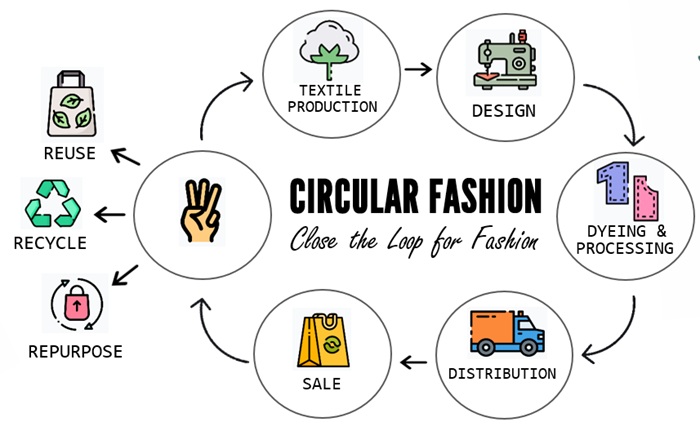
The four policy pillars now function as an integrated loop. Each regulation feeds the next, eliminating gaps that historically allowed opacity, overproduction, and waste leakage to
|
Regulation phase |
Effective date |
Core mandate |
|
Destruction Ban |
July 2026 |
Prohibition of destroying unsold apparel & footwear; mandatory disclosure. |
|
Textile Labelling |
April 2026 |
Mandatory physical & digital labels for every single SKU. |
|
Circular Economy Act |
Q4 2026 |
Binding targets for recycled content; creation of a secondary raw material market. |
|
Digital Product Passport |
2027 |
Harmonized digital identities for all textile products entering the EU. |
The sequencing is deliberate. Labeling establishes identity. The destruction ban forces accountability. The Circular Economy Act creates an economic destination for recovered materials. The DPP binds the system together through persistent, item-level data continuity.
Forward-looking brands are already reducing these into a single workflow: Label → Track → Redistribute → Report. The shift is clear, compliance is no longer a cost center but an infrastructural layer. Those who build unified data systems now will benefit from cumulative efficiencies, while laggards risk perpetual retrofitting costs.
Data becomes the new supply chain backbone
The revised labeling framework moves decisively beyond disclosure of fiber composition. Under the DPP regime, every garment must carry a verifiable digital history, spanning origin, processing inputs, environmental footprint, and end-of-life pathways. For an industry importing over €98 billion worth of apparel into the EU annually, this creates a data challenge. Supply chains that were optimized for cost arbitrage must now be re-engineered for traceability and verification.
Early implementation pilots illustrate the scale. Swedish shirtmaker Eton’s compliance testing revealed that as many as 126 discrete data points per SKU may be required, from facility-level metadata to chemical certifications. This shifts the industry away from static documentation toward dynamic, serialized data ecosystems.
The cost curve reflects this complexity:
• SMEs: Entry-level compliance systems under €10,000
• Large enterprises: €100,000 to €500,000 for integrated, SKU-level infrastructure
The implication is structural. Data integrity, not just sourcing efficiency, becomes the defining competitive variable.
Engineering a market for circular inputs
While labeling mandates transparency, the Circular Economy Act addresses the material imbalance at the heart of fashion’s sustainability challenge. Europe’s circularity rate currently stands at approximately 11.8 per cent. The policy target, to reach 24 per cent by 2030, signals a forced increase in recycled input adoption. Crucially, the Act introduces a single market for secondary raw materials, aiming to standardize quality, improve availability, and stabilize pricing. Today, recycled fibers often trade at a premium due to inconsistent supply and certification barriers. Regulatory harmonization is expected to compress this volatility, making recycled inputs commercially viable at scale.
The destruction ban reinforces this shift by converting unsold inventory into a measurable liability. Between 4 and 9 per cent of unsold textiles in Europe are currently destroyed, generating an estimated 5.6 million tons of CO₂ emissions annually. From July 2026, large companies, defined as those with over 250 employees and €50 million in revenue must redirect this inventory into resale, repair, or recycling channels. Waste, in effect, is being reclassified from a sunk cost to a regulated asset class.
Dondup’s serialization strategy
Italian label Dondup offers a working model of how compliance can be leveraged as a growth engine. By embedding digital product passports across more than 600,000 items, the company has moved beyond regulatory adherence into ecosystem building. Using QR codes and NFC-enabled identifiers, Dondup has integrated traceability into its customer engagement stack. This enables services such as authenticated resale, product lifecycle tracking, and loyalty-linked ownership experiences.
The advantage lies in its build once approach. Instead of layering solutions for each new regulation, Dondup has created a unified data backbone capable of adapting to evolving compliance requirements, effectively insulating itself from the recurring costs of regulatory catch-up.
Inventory revaluation from waste to fesource
The cumulative effect of these policies is a fundamental redefinition of inventory. Under the new framework, unsold goods are no longer operational inefficiencies to be written off they are recoverable resources with traceable value. This shift is catalyzing investment in advanced recycling technologies, particularly fiber-to-fiber chemical processes, which are projected to grow at a 19.3 per cent CAGR from 2026 onward. As regulatory clarity improves input consistency and availability, these technologies move closer to industrial scalability.
The broader implication is systemic: the industry is transitioning from a linear consumption model to a regulated circular economy where material recovery is embedded by design.
The EU as global standard setter
Operating across a market of 450 million consumers, the European Union continues to define the global compliance baseline for fashion. Through frameworks such as the Ecodesign for Sustainable Products Regulation (ESPR), the bloc is shifting the industry from voluntary sustainability claims to mandatory, third-party verified disclosures. The direction is unambiguous, by 2030, all textile products placed on the EU market must be durable, recyclable, and transparently documented. For global brands, alignment is no longer optional; EU compliance is fast becoming the default operating standard worldwide.
The convergence of labeling, traceability, waste regulation, and material economics marks a turning point. Fashion is no longer managing sustainability as a parallel function, it is embedding it into the core architecture of production and distribution. The question is no longer whether to comply, but how efficiently organizations can unify these mandates into a single, scalable data strategy. In a system where every garment carries a persistent digital identity, competitive advantage will belong to those who treat compliance as infrastructure not obligation.