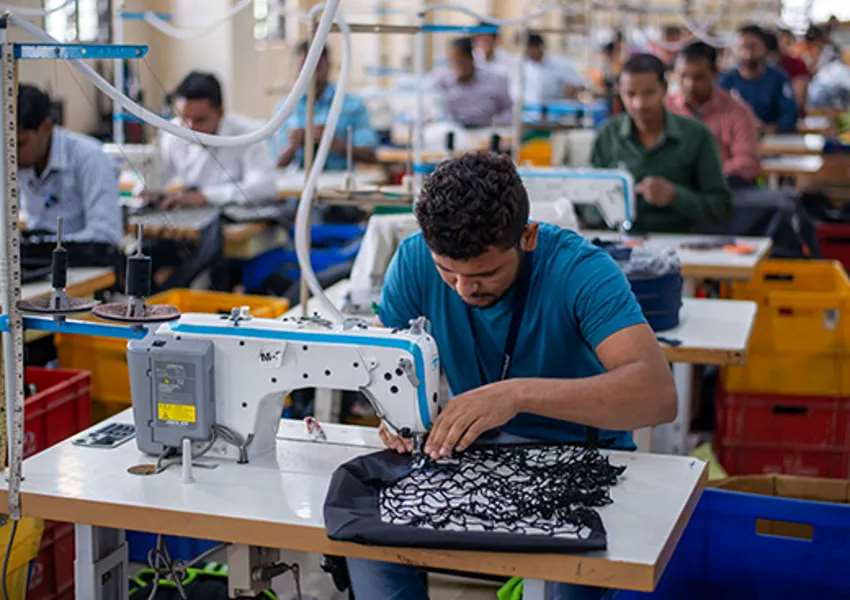
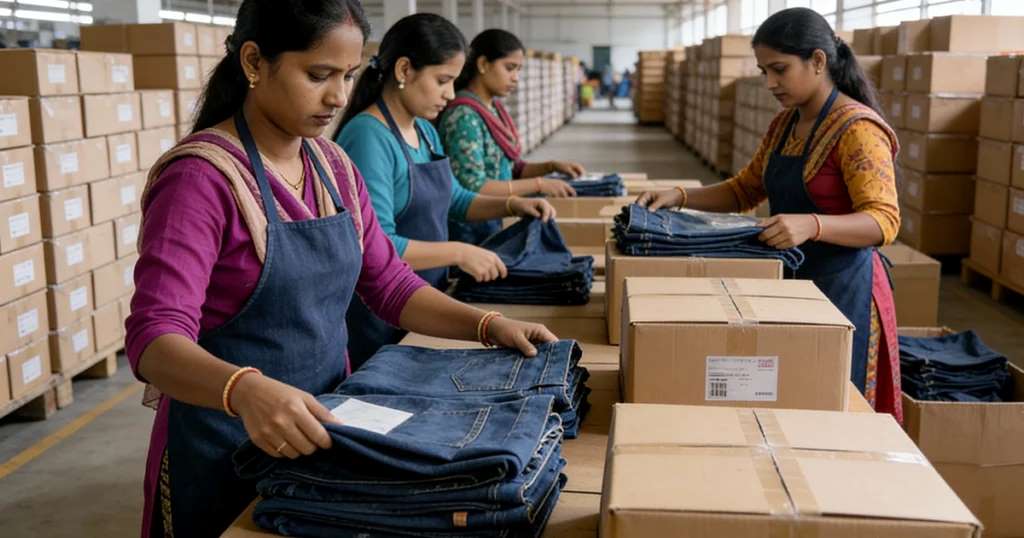
Lack of concerted efforts in using many of the government schemes seems to have affected the growth of Tirupur knitwear cluster. This was revealed in a CII study of the Tirupur district council, and Srupuram Trust among others, with the help of Grant Thornton, the sixth largest consultancy/accounting network firm in world, to understand the strengths/weakness of the Tirupur cluster. The report said 15 government schemes formulated to trigger growth of industrial clusters like Tirupur were either not fully used, or used only once, which too not in recent years.
Director (government and business advisory department) of Grant Thornton for South India, V Padmanand, says schemes like micro, small enterprises cluster development program, scheme for workers hostel, processing development scheme, technology business incubation, and market access initiative scheme were not used at all. Many in the knitwear cluster were not even aware of some of the schemes. The report further suggests the need for disincentivising export of cotton, and the requirement of a free-trade agreement with Russia and Brazil, and the European Union.
The feeling is that an FTA with EU is essential since competitors like China, Cambodia, Sri Lanka, and Bangladesh are getting preferential market access to EU making their products cheaper than Indian apparels. Many say that an export duty should be imposed on cotton to discourage its export. As Padmanand puts it, main competitors of India are benefiting from cotton exports. Vietnam domestically produces only 2 per cent of the cotton needed for its apparel production, while imports the rest from India, and Africa.
- 1
- 2
- 3
- 4
- 5
- 6
- 7
- 8
- 9
- 10
From London to Tokyo, premiumization redefines retail and office markets
Global real estate landscape has changed. Gone are the cautious narratives of recovery that defined the post-pandemic years. Today, flight... Read more
Compliance drives India’s $176 bn textile shift
India’s textile economy is no longer selling fabric alone; it is selling proof. As compliance rules harden across export markets,... Read more
The second life economy gets a boost as resale outgrows traditional apparel reta…
For decades, resale existed in the margins of the apparel economy, thrift stores, peer-to-peer marketplaces, and charity bins quietly absorbing... Read more
Rising polyester costs shake India’s textile manufacturing hubs
India’s synthetic textile industry is confronting a sudden and destabilizing price shock that is reverberating across its vast manufacturing ecosystem.... Read more
Cotton markets hold firm as tariffs, higher supply reshape global fiber economic…
In a year marked by tariff escalations, geopolitical brinkmanship and a recalibration of global trade flows, the international cotton market... Read more
Beyond Cotton How Kapok could redefine sustainable insulation in textiles
In the lush, humid heart of Southeast Asian rainforests stands a giant, a silent sentinel of the forest canopy. Growing... Read more
Bharat Tex 2026: Redefining the global textile value chain
Union Minister of Textiles, Giriraj Singh, has officially unveiled Bharat Tex 2026, signaling a significant leap in India’s influence over... Read more
Intertextile Shanghai Spring 2026: A hub for global textile innovation
The textile industry’s pulse is quickening as Intertextile Shanghai Apparel Fabrics – Spring Edition prepares to open its doors from... Read more
Moscow Fashion Week 2026: Blending sustainable innovation with timeless glamour
Scheduled to run from March 14-19, 2026 in Moscow, Russia, the Moscow Fashion Week (MFW) is cementing its status as... Read more
The Store as Stage: How fashion is crafting immersive consumer worlds
The North American fashion retail sector in 2026 is shedding its product-first identity and shifting towards a model that values... Read more