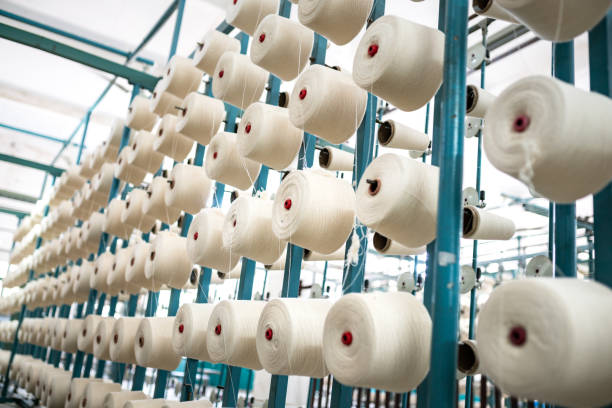
India’s cotton production is expected drop by over five per cent this season. Reasons include: low water availability and inadequate Southwest monsoon in key cotton producing states and higher incidences of pest attacks. Lower production is expected to shrink India’s cotton stock to a two-year low, leading to a seven per cent to eight per cent rise in domestic cotton prices. But the lower production in India, the US and Australia will be offset by higher production in China and Brazil. So, global cotton prices are expected to remain steady. Operating margins of domestic cotton yarn spinners are likely to shrink in the financial year 2020 mainly because of lower cotton output, rising cotton prices, and moderating demand.
Demand for cotton yarn is falling. The slowdown will be mainly driven by tepid growth in domestic demand comprising three-fourths of overall demand. Growth in exports will be 9 to 10 per cent in fiscal 2020 compared with 13.5 per cent in fiscal 2019 because of trade tensions between the US and China, and the commissioning of yarn capacities in Vietnam, which enjoys preferential access to Chinese markets. This is not good news for Indian spinners. Higher cotton costs and moderate demand outlook mean they may not be able to get a commensurate increase in yarn prices.
- 1
- 2
- 3
- 4
- 5
- 6
- 7
- 8
- 9
- 10
Polyester volatility redraws India’s textile industry competitive map across Asi…
India’s synthetic textile industry has entered a phase of cost instability as polyester staple fibre (PSF) prices rise across domestic... Read more
The £7 Billion Question: Who pays for fashion’s ‘free rental’ habit?
The global fashion industry is facing an uncomfortable paradox: its most valuable customers may also be its most destructive. A... Read more
India, China Bangladesh face fresh headwinds as global apparel markets rebalance
Global apparel trade is entering a more uneven recovery phase, with demand growth persisting but losing uniform momentum across major... Read more
Global cotton enters a deficit year in 2026 as supply drop meets logistics risk
The global cotton economy has entered a fragile and sensitive phase. Early projections for the 2026-27 season suggest that world... Read more
India’s textile trade gets a Pacific push as New Zealand FTA removes tariff barr…
India and New Zealand have inked a ‘once-in-a-generation’ Free Trade Agreement (FTA), one that will have a profound impact on... Read more
Lululemon’s world-first nylon circularity push signals a new apparel arms race
The global apparel industry’s circularity narrative is entering a more technically demanding phase. Polyester recycling once the flagship of sustainable... Read more
Beyond the DTC Rush: Levi’s hybrid channel strategy sets a new retail benchmark
The global apparel sector is entering a phase where channel strategy is no longer a tactical lever but a core... Read more
The New Rules of Resale: EPR turning secondhand into fashion’s strategic growth …
The global fashion industry is facing a decisive regulatory and commercial reset. What began as a sustainability narrative around reuse... Read more
The 2027 Mandate: Why denim’s future hinges on verifiable data
For decades, the global denim industry has relied on a narrative of durability, heritage, and authenticity. That narrative is now... Read more
Europe’s textile core unravels as costs, imports and policy pressure bite
Europe’s textile and apparel sector, long seen as a benchmark for craftsmanship and industrial depth, is slipping into a prolonged... Read more