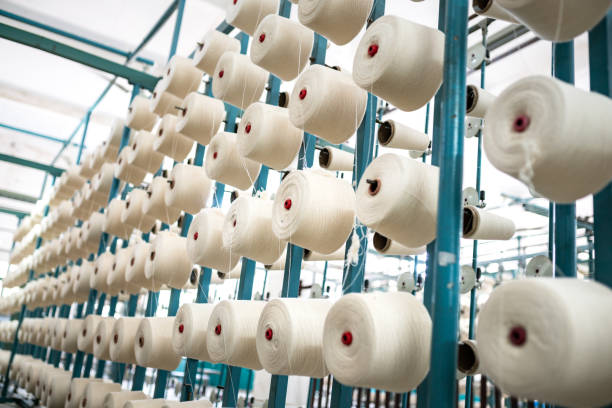
Between April 2016 and January 2017, India’s exports of wool and wool blends fell 18 per cent in dollar terms and 15 per cent in rupee terms. One reason is the US, the European Union and the UAE are witnessing a slowdown. About 70 per cent of the exports go to the US and European countries, so any fall in demand impacts exports to a substantial level.
The slowdown in global demand has affected medium-sized manufacturers in Ludhiana and Amritsar. Punjab accounts for 35 per cent of the total exports of wool and wool-blended products followed by Maharashtra and Rajasthan. Now, woolen manufacturers are exploring options like Kazakhstan, Australia, Germany and China. They are participating in trade fairs and buyer-seller meets.
In addition the industry has asked for exempting raw wool from import duty, abolishing import duty on woolen textile machinery and increasing duty drawback rates. India’s wool and woolen textile industry is the seventh largest in the world. India’s wool and woolen industry can broadly be divided into worsted yarn, woolen yarn, wool tops, fabric, shoddy yarn, shoddy fabrics, blankets, knitwear, handmade carpets and machine made carpets.
Woolen handmade carpets contribute 72.7 per cent to total woolen exports.

- 1
- 2
- 3
- 4
- 5
- 6
- 7
- 8
- 9
- 10
Global apparel supply chains realign as India navigates trade volatility
The global apparel and textile sector is experiencing a significant structural shift, as major manufacturers and retailers move away from... Read more
India’s textile sector targets global supply chain shift with $100 bn export pus…
As global brands push up efforts to diversify sourcing beyond traditional manufacturing hubs, India is repositioning its textile industry through... Read more
India balances farm interests and export ambitions with temporary cotton import …
" " The textile industry has received a policy reprieve after the Ministry of Finance eliminated the 11 per cent import... Read more
Global supply chain strain deepen as fashion brands tighten sourcing costs
The global apparel industry is dealing with growing sourcing tension as big fashion retailers intensify efforts to reduce procurement costs... Read more
From Voluntary to Mandatory: Asia’s manufacturing hubs lock in green compliance …
The multi-billion-dollar Asian apparel export market is entering a enforced sustainability era, where environmental and labour compliance is no longer... Read more
MediaVision report signals the end of mass-market fashion marketing
" " The latest MediaVision Q1 2026 Fashion Report highlights, the age of broad-spectrum marketing and passive brand awareness is rapidly... Read more
Circularity as Strategy: BRICS countries turn waste into competitive advantage
The global fashion industry’s long-standing take-make-dispose model is being reset as BRICS economies increase their transition toward circular production systems.... Read more
Amazon’s €15 bn bet on France and the future of commerce
As Europe’s luxury sector enters a phase of austerity, a parallel transformation is unfolding in the continent’s retail foundations. What... Read more
Global Sourcing Expo Sydney 2026: Bridging the gap in global apparel procurement
The upcoming Global Sourcing Expo Sydney, scheduled for June 16–18, 2026, at the International Convention Centre (ICC) Sydney, is poised... Read more
Zara’s precision retail model leaves global competitors drowning in inventory
The global apparel sector is currently grappling with a punishing inventory overhang, yet Inditex, the parent company of Zara, has... Read more