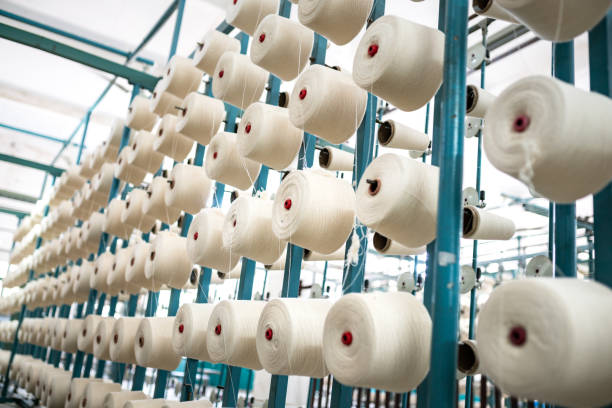
Indonesia is encouraging its textile industry to be environment-friendly, since it’s necessary for business sustainability. The United States and Europe have strict standards. Products containing hazardous chemicals are rejected. Environment-friendly industries fall into several categories. First, the industry does not pollute the environment of water, air, and soil. Second, the raw material can be recycled, re-used and is re-degradable. Third, the products used in production of finished products must be environmentally friendly. In addition, efficiency and effectiveness factor in energy use are also important factors.
The textile sector in Indonesia is expected to grow seven per cent this year. The country is trying to get the United States to reduce import duties on goods exported from Indonesia. In addition, rules for imports of textile and textile products have been tightened. And results are visible. Imports of fabrics as a raw material for garments fell by 33 per cent in the first quarter of 2017. The aim of discouraging fabric imports is to increase the utilization of national fabric production.
The textile and garment industry is one of Indonesia’s oldest industries. But Indonesia controls only about two per cent of the global textile market. Although Indonesia produces cotton, textile manufacturers prefer to import cotton because the quality of foreign cotton is much higher.
- 1
- 2
- 3
- 4
- 5
- 6
- 7
- 8
- 9
- 10
The €11 bn deadlock, can Europe’s textile recycling catch up?
Europe is at a tipping point. Fast fashion consumption, led by rising incomes and a growing global middle class, has... Read more
From field to fiber, Bharat CottonNet is closing India’s cotton value gap
India’s cotton economy is entering a decisive phase of reform with the rollout of Bharat CottonNet 2026 along with the... Read more
US apparel imports drop 13.5% as Vietnam gains and China’s grip breaks
The US apparel sourcing market has entered 2026 with a sharp demand decline but an equally important shift in supplier... Read more
H&M finds growth below revenue line as margin discipline pays off
H&M Group’s latest quarter signals a decisive shift in global fast fashion: scale is no longer the primary reason for... Read more
As Europe cuts orders, India sees a rare export window post-FTA
The sharp dip in EU apparel imports is not, at first glance, the kind of headline exporters celebrate. January’s 15.48... Read more
The Death of the "Stockpile" Model: Inside the Digital Textile disrupt…
For decades, the global textile industry has been a game of high-stakes gambling: manufacture thousands of identical garments, ship them... Read more
Fuel crisis, rising costs the geopolitical shockwave hitting Indian textiles
The hum of textile machinery in Panipat has gone dead. Over 400 dyeing units have put their shutters, not because... Read more
Price wars, fast fashion, diamond money leads to Surat’s industrial shake-up
The sound of Surat’s diamond polishing wheels, once the city’s heartbeat, is fading. In its place, the relentless pulse of... Read more
India’s textile market nears Rs 15 lakh cr as domestic demand rewrites growth
India’s textile and apparel economy is no longer being driven merely by population growth or festive consumption cycles. It is... Read more
China Discounts, Bangladesh Bleeds: Inside Europe’s new apparel sourcing crisis
Europe’s fashion imports opened 2026 with a hard jolt. Fresh Eurostat-linked trade data for January shows the European Union’s apparel... Read more