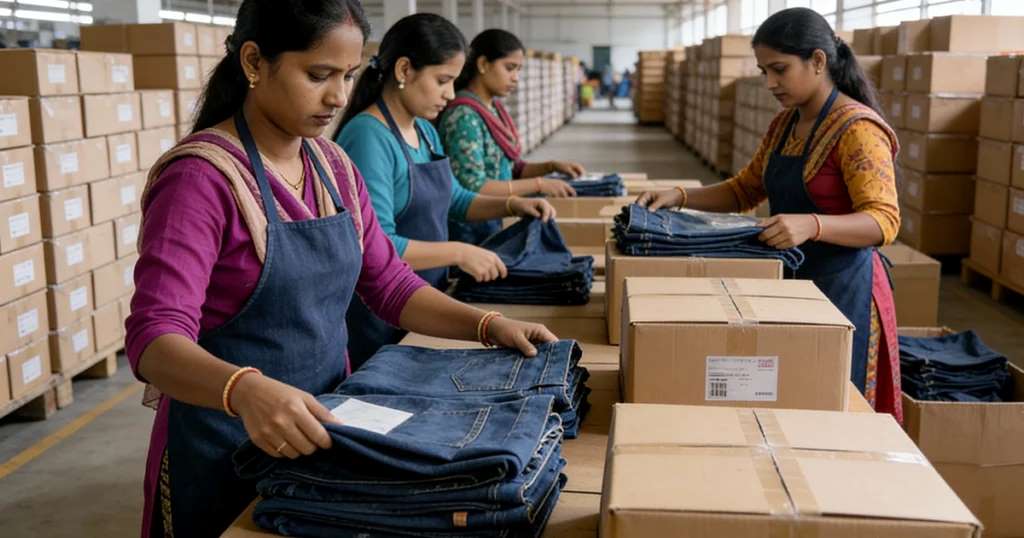
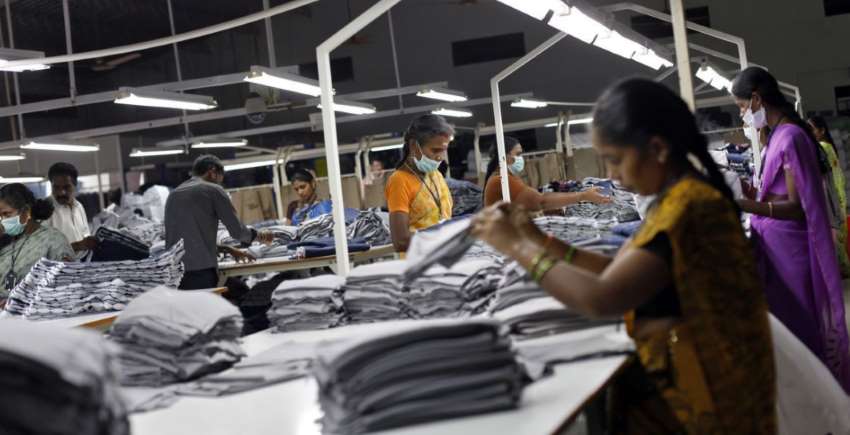
Workers in factories of South India that produce clothing for Dutch brands are exploited and poorly paid. Women get paid lower than men for doing the same work. Many garment workers are indebted, with most of them having taken loans. Savings from monthly wages are a distant dream.
The production target is easy to reach only when the product is easy and small. For finishing tasks, like attaching sleeves, cuffs or necks, the target is 60 to 90 per hour. The stress of production targets is constant. Supervisors shout and use abusive words. If a worker uses the factory bus, money is deducted from wages. Women workers are forced to resign if pregnant or if management thinks they are too slow and have to pause too often. Many Dutch brands are not transparent about where their garments are made.
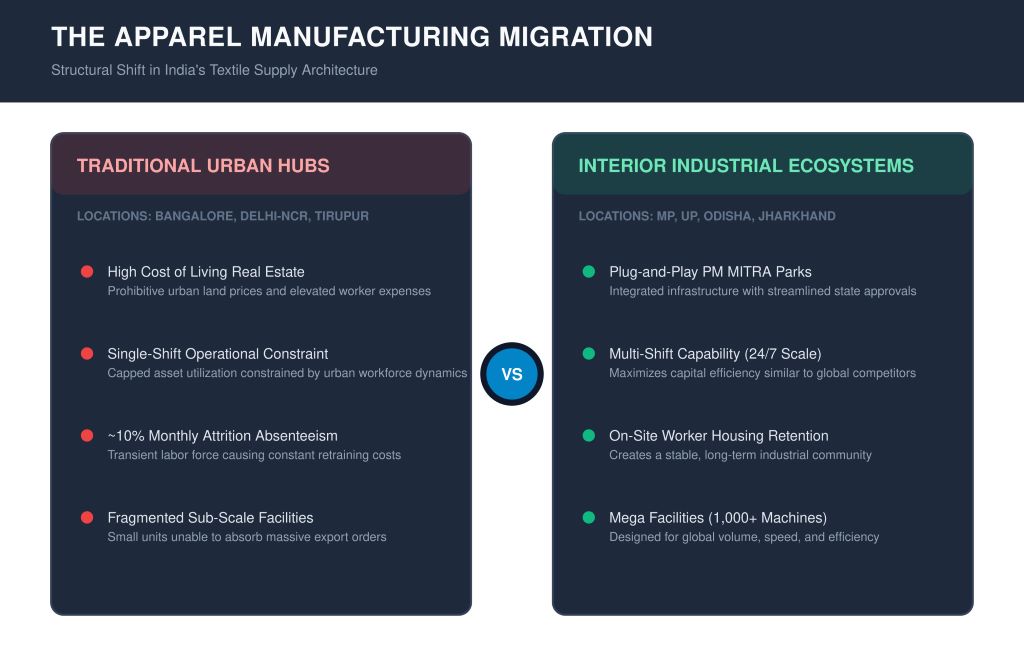
The Indian textile and garment industry is the second largest foreign exchange earner after agriculture, with Bangalore as a major hub, accounting for about 15 per cent of the production of exported garments. There are about 1,200 garment factories in Karnataka, 700 of which are officially registered, employing an estimated 5,00,000 people, many of them migrants from Orissa, Assam and Jharkhand.
- 1
- 2
- 3
- 4
- 5
- 6
- 7
- 8
- 9
- 10
Intertex Milano 2026 - A global nexus for textile innovation
Intertex Milano is set to return this summer, confirming its status as a premier international destination for the textile and... Read more
Primark at crossroads as AB Foods weighs spin-off amid digital and Lefties press…
The long-standing supremacy of Europe’s budget fashion champion, Primark, is facing a test. As of February 2026, Associated British Foods... Read more
Vietnam, Bangladesh, Cambodia drive US apparel imports in 2025
The 2025 year-end data for the US apparel sector reveals an industry in structural flux. Despite aggressive tariff measures and... Read more
The New Dress Code: Sportswear’s takeover of modern wardrobes
For much of the last decade, fashion retail has been defined by volatility. Trends have shortened, discount cycles have intensified... Read more
Hemp finds its moment in India’s $500 billion American trade calculus
In the grand arithmetic of India’s expanding trade engagement with the US, the headlines usually gravitate toward oil cargoes, aircraft... Read more
EU PET spunbond imports under scrutiny, misclassification sparks regulatory and …
The European nonwovens and technical textiles sector is facing an unprecedented compliance crisis as a rise of customs misclassification threatens... Read more
From atelier to algorithm, Gucci is redefining premium marketing
As Milan welcomes the Primavera 2026 fashion calendar, the spotlight is fixed not just on the runway but on Gucci,... Read more
America’s Store Split: Why discount retailers are winning as department stores s…
By early 2026, the American retail industry no longer resembles a single marketplace moving in one direction. It feels more... Read more
Europe’s Textile Crisis: The sovereign fibre trap and the race against China
By early 2026, the European textile and apparel sector finds itself at a crossroads that challenges traditional market logic. Unlike... Read more
A 50-Day Voyage: How Middle East conflict is repricing every shirt Asia ships to…
The global textile industry has always lived with thin margins, long lead times, and unforgiving working-capital cycles. But the latest... Read more