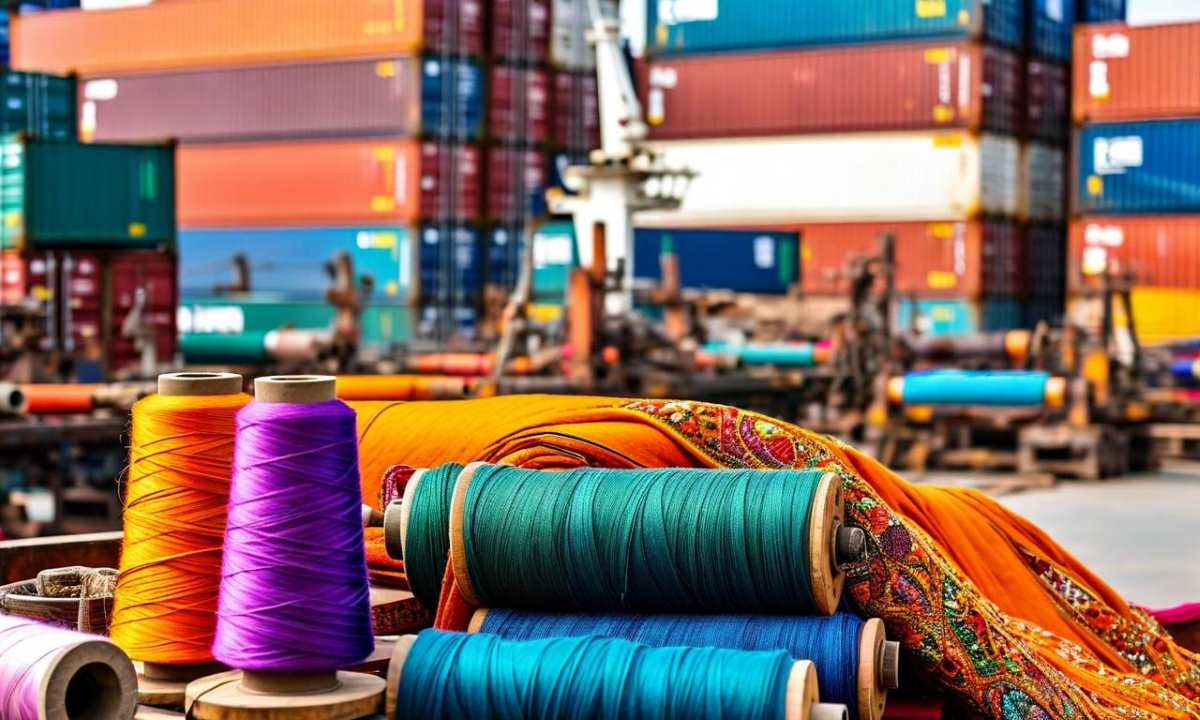
In a transformative move aimed at decarbonizing the global fashion supply chain, Microsoft has inked a landmark agreement with climate-tech company Varaha to acquire over 100,000 metric tons of carbon-removal credits. Finalized in early 2026, the deal centers on converting agricultural residues into high-stability biochar, offering the potential to transform India’s smoke-laden cotton fields into a carbon-negative engine supporting sustainable apparel production.
Turning agricultural waste into carbon assets
The partnership funds the deployment of 18 industrial biomass gasification reactors across India’s principal cotton-growing states of Maharashtra, Gujarat, and Rajasthan. Traditionally farmers burn cotton stalks post-harvest, generating seasonal air pollution. Varaha’s process captures this biomass and converts it into mineral-enhanced biochar, sequestering carbon in a stable crystalline form for decades. For apparel brands grappling with Scope 3 emissions accountability, the project provides a traceable, verifiable mechanism to offset environmental impacts at the raw material source.
Table: Textile industry carbon targets and biochar impact
|
Metric |
Industry baseline (2025) |
Target 2030/ Projected Impact |
|
Global Textile Emissions |
4 bn tonnes CO2e |
45% Reduction Target (specifically in raw materials/fiber production) |
|
Cotton Water Consumption |
2,700 liters per T-shirt |
30% Reduction in irrigation needs via biochar soil amendment |
|
Biochar CDR Capacity |
Market Growth Phase (86% of all durable CDR in 2024) |
0.5 to 2 Gigatonnes CO2 per year (global potential by 2050) |
Digital oversight and yield optimization for farmers
Microsoft’s Azure Data Manager for Agriculture, combined with AI-driven monitoring tools, ensures real-time verification of carbon sequestration and yield impacts. Beyond climate benefits, the project creates a circular economy for roughly 45,000 smallholder farmers. Farmers are compensated for supplying crop residues and receive processed biochar to enrich their soil. Early regional pilots in Maharashtra show promising results, suggesting biochar can significantly boost cotton productivity, narrowing the gap between Indian yields and global benchmarks.
The Maharashtra high-yield pilot (2024-25)
A field trial conducted in Ambajogai, Maharashtra, demonstrated the transformative potential of biochar on cotton productivity.
• Control Plot (Organic/Standard): 72 kg/acre
• Biochar-Treated Plot: 404 kg/acre
• Conventional (Chemical) Plot: 200 kg/acre
Biochar not only quintupled organic yields but also surpassed conventional chemical-intensive methods by 102%, offering a viable route to sustainable, chemical-free cotton production.
A new era for regenerative cotton
Large-scale deployment of such advanced technologies is underpinned by institutional capital. In addition to the Microsoft offtake, Varaha raised $30 million from Mirova and secured a $20 million Series B led by WestBridge Capital. This influx reflects a paradigm shift: climate-smart cotton is transitioning from niche premium markets to scalable industrial assets. With the global organic cotton market projected to reach $50.78 billion by 2034, generating verified carbon credits in the Global South is emerging as a strategic advantage for tech firms and fashion conglomerates alike.
Table: Regenerative and sustainable cotton market forecast
|
Market segment |
Value 2025 ($) |
Forecast 2034 ($) |
CAGR (2026-34) |
|
Organic/Regenerative Cotton |
$2.27 bn |
$50.78 bn |
40.00% |
|
Asia-Pacific Market Share |
69.70% |
75.0%+ (Projected) |
— |
Building a global blueprint for sustainable cotton
While India remains the immediate focus, the project’s design has global implications. By integrating satellite-based Measurement, Reporting, and Verification (MRV) systems, Varaha and Microsoft are establishing a model for transparent, sustainable sourcing. This approach allows brands to move beyond generic sustainability claims, linking each bale of cotton to quantifiable carbon-removal outcomes. Though fragmented landholdings remain a challenge, the 18 reactors, operating over 15 years, are expected to sequester over 2 million tons of CO2, reshaping the economics of the Indian cotton belt.
Varaha’s expansion across the global south
Varaha, a leading climate-tech innovator, specializes in nature-based carbon removal throughout India and Southeast Asia, with active operations in Nepal and Bangladesh. By leveraging AI and remote sensing, the company scales regenerative agriculture and biochar production across thousands of farms. Following a $30 million investment from Mirova, Varaha plans to expand its footprint to 337,000 farms, positioning itself at the forefront of the Global South’s $1.6 trillion carbon credit opportunity.