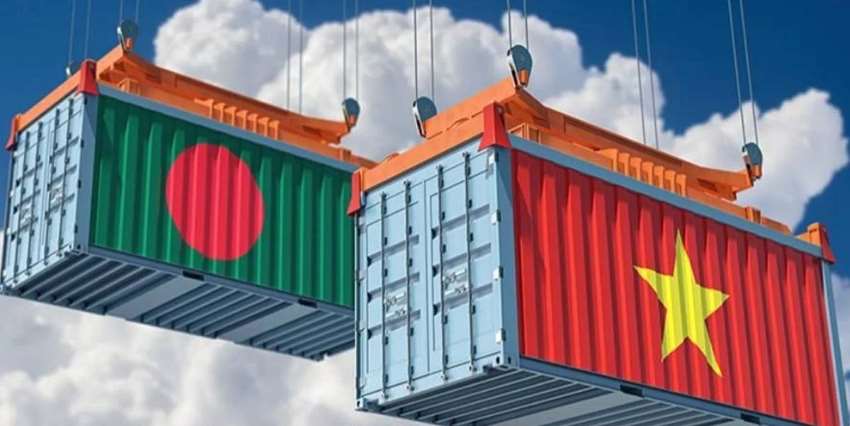
The textile sector is the largest employer of industrial labor in Pakistan and accounts for over 60 per cent of the country’s exports. In the backdrop of a competitive regional landscape, with countries like Bangladesh and Vietnam having emerged as sizeable players on the global stage, Pakistan has to invest in the entire value chain of the textile sector on a priority basis, including innovative solutions for enhancing cotton yields.
Backward linkages where large industrial players integrate into corporate farming for cotton could be a potential model to explore in this regard. Another key area of focus is checking undocumented imports of textile and apparel products from China. Undocumented or under-valued imports of such products distort the local market dynamics making it impossible for local players across the whole value chain to compete.
Companies in textile and apparel segment say they are willing to make further investments if they receive the right support, including simplification of cumbersome processes and procedures through effective one-window facilitation. Exploring linkages with China, especially with the industry on China’s west coast that is closer to Pakistan in terms of physical distance, in the form of contract manufacturing of garments, could be a profitable venture. This strategy could be very important given the context of rising domestic consumption in China.
- 1
- 2
- 3
- 4
- 5
- 6
- 7
- 8
- 9
- 10
US trade rulings and labor slowdown reshape 2026 cotton supply chains
The global cotton industry is entering a period of adjustment, shaped by legal rulings, trade policy recalibrations, and a softening... Read more
Zero-tariff paradigm drives strategic re-sourcing at Global Sourcing Expo 2026
Projected to reach a valuation of $30.3 billion this year, the Australian textile and apparel market is entering a period... Read more
Strategic manufacturing takes center stage at Gartex Texprocess Mumbai 2026
A $179 billion industrial cornerstone contributing 2 per cent to the national GDP, the Indian textile and apparel sector is... Read more
The Hidden Tax on Fashion: 2026’s EPR rules squeeze margins and shake supply cha…
As the 2026 enforcement deadlines for California’s SB 707 and the European Union’s harmonized Waste Framework Directive loom, the global... Read more
Guess? Inc. retreats from China as American cool hits a cultural wall
For more than two decades, Guess? Inc., the emblem of ‘accessible American cool’, maintained an ambitious footprint in China. At... Read more
The Hormuz Effect: Why a distant war is shaking Bangladesh’s garment exports
The immediate impact of the Iran- Isarel-US conflict is being felt in the logistics arteries that connect Bangladesh’s factories with... Read more
The rise of localized luxury, MEA, North America, and India lead growth
The global luxury industry is no longer defined by relentless expansion. The ‘2025 Global Luxury Brandwatch Report’ highlights a sector... Read more
Hormuz blockade sends shockwaves through India’s textile chain as polyester cost…
What began as a geopolitical escalation in the Gulf has rapidly metastasized into a full-scale industrial disruption for India’s textile... Read more
India’s National Fibre Scheme decouples textiles from global supply risks
For decades the Indian dominated spinning, weaving, and garment exports while remaining paradoxically dependent on imported man-made fibres and specialty... Read more
From London to Tokyo, premiumization redefines retail and office markets
Global real estate landscape has changed. Gone are the cautious narratives of recovery that defined the post-pandemic years. Today, flight... Read more