The Federal Board of Revenue (FBR) in Pakistan has warned ginners to pay taxes of one billion rupees before or on March 30, 2015. Otherwise notices would be served to them in default of payment of tax at the rate of Rs 6 per maund on binola (cotton seed) as per the agreement reached between the PCGA and the Ministry of Finance.
The Pakistan Cotton Ginners Association (PCGA) has asked members to pay tax on the sale of binola cotton seed at the rate of Rs 6 per maund till March 30, 2015, to save themselves from any trouble otherwise they would have to pay five per cent general sales tax on oil-cake (khal) and two percent on binola oil.
The Federal Board of Revenue and the Pakistan Cotton Ginners Association have reached an agreement to pay Rs 6 per maund tax on cotton seed instead of five per cent GST on oil-cake and two per cent on cotton seed oil.
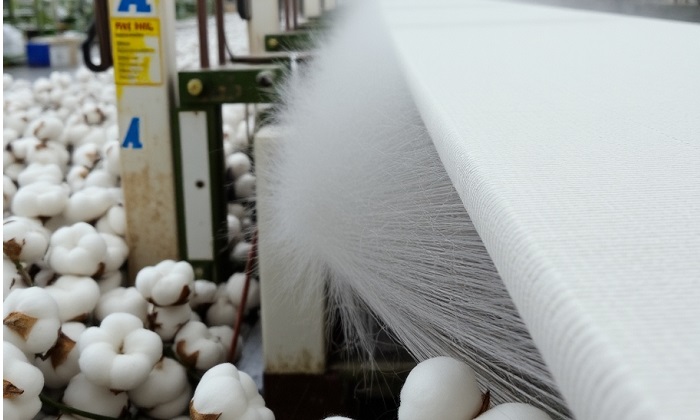
Ginners would have to pay more Rs one billion as tax against the sale of 165.44 million maund of binola. About 88,23,511 tons of raw-cotton (phutti) was arrived in the ginneries. Of them 66,17,633 tons of cotton seed were sold to oil expellers.

- 1
- 2
- 3
- 4
- 5
- 6
- 7
- 8
- 9
- 10
Compliance as the New Currency: Why global fashion is trading lowest-cost sourci…
For decades, the global apparel sourcing playbook was deceptively simple: locate the cheapest labor pool, negotiate down raw material costs,... Read more
Manufacturing Meets Retail: China’s M2C blueprint redefines fashion economics
The traditional divide between manufacturing and retail is rapidly disappearing in China. For decades, global apparel production operated through a... Read more
India's textile exporters win competitive advantage in new US tariff regime
A sweeping overhaul of US trade policy has created one of the most competitive openings for India's textile and apparel... Read more
Yarn Expo Autumn: A vital barometer for fiber innovation
Global apparel brands and textile manufacturers are rapidly re-engineering their procurement strategies, pivoting from traditional commodity fibers toward high-tenacity, circular,... Read more
Organic cotton's scale problem raises new risks for fashion supply chains
The global fashion industry's pursuit of sustainable raw materials is facing an uncomfortable reality. Organic cotton, long promoted as the... Read more
India leads global fashion web traffic boom as digital shopping habits evolve
India's digital garment trade has struck an operational turning point, as local shoppers logged 1.4 billion average monthly visits to... Read more
Global apparel trade turns direct as brands bypass traditional distribution netw…
Geopolitical uncertainty, changing tariff regimes and volatile freight costs are forcing manufacturers to rethink how garments reach global consumers. Instead... Read more
Breaking the Urban Wall: How the interior migration is redrawing India’s apparel…
For decades, India’s garment manufacturing sector has been bound to its traditional strongholds; Bangalore, Delhi-NCR, and Tirupur. Yet, inside the... Read more
Industrial Spirits and Global Mandates: How India’s textile sector plans to capt…
The global textile value chain stands at a generational crossroads. Against this backdrop, the Bharat Tex Roundtable—convened under the theme... Read more
The New Green Silk Road: Lyocell could transform India’s textile trade
The European Union's Ecodesign for Sustainable Products Regulation (ESPR) is forcing apparel companies to rethink raw material sourcing, reducing dependence... Read more