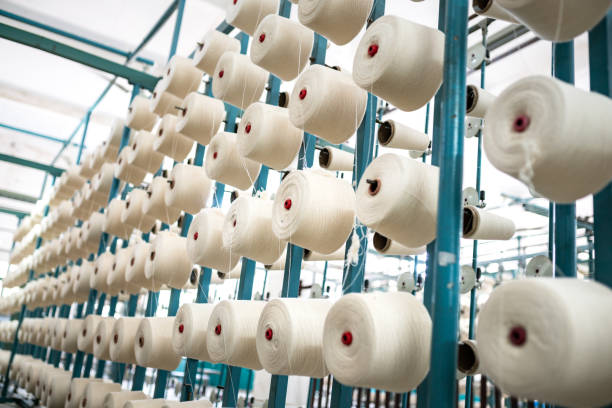
Pakistan’s textile and clothing exports rose two per cent year-on-year in the first eight months of the fiscal year. The primary growth driver was, value-added textiles. Readymade garment exports went up 2.72 per cent in value and 27 per cent in quantity. Exports of knitwear edged up 11.4 per cent in value and 18.3 per cent in quantity. Exports of non-textile products went up by 3.15 per cent. Exports of petroleum products went up 23.64 per cent. Petroleum crude and naphtha led the increase in the sector’s exports.
Footwear exports jumped 14.55 per cent mainly driven by footwear sales. Exports of surgical goods and medical instruments went up by 1.71 per cent. Exports of gur were up by 6.58 per cent, cement by 37.5 per cent and gems by ten per cent during the period under review. Basmati rice exports witnessed a robust growth of 14.8 per cent. Meat and wheat emerged as the other two major export commodities which recorded growth during the period. Other products which also posted growth include oil, fish, seeds, pulses, spices, fruits, vegetables and tobacco.
One of the reasons for the revival of exports was a cash subsidy. Pending refunds to taxpayers were released.

- 1
- 2
- 3
- 4
- 5
- 6
- 7
- 8
- 9
- 10
Spykar accelerates offline expansion: plans 100 new stores across India
A titan of the Indian denim-first fashion scene, Spykar has officially unveiled an aggressive retail growth strategy. As consumer demand... Read more
The Inventory Illusion: Rethinking the Zara benchmark in a volatile retail era
For over a decade, the global fashion industry has treated the Zara playbook as the gold standard of inventory efficiency.... Read more
Retail Without Retail: How Walmart’s depot network is turning space into logisti…
Walmart is fundamentally rewriting the commercial real estate and retail logistics playbook with the rise of its ‘Walmart Depots’ a... Read more
Global textile regulation tightens, forcing realignment across fashion supply ch…
Global fashion and consumer goods supply chains are entering a decisive regulatory transition as Extended Producer Responsibility (EPR) frameworks for... Read more
Luxury’s new power axis, US dominance, China reset, Gulf surge
As the post-China luxury order takes shape, the US is emerging as the industry’s most dependable growth engine, while Japan,... Read more
India’s $9 Billion Landfill Blind Spot How trashed clothes hold the key to globa…
A massive economic windfall is sitting uncollected in India’s landfills, and the key to unlocking it lies in rethinking how... Read more
Red Sea crisis reshapes textile trade routes, challenges India’s export margins,…
Global apparel trade is now in a new operational phase where geopolitical stability and logistics reliability are as important as... Read more
EU’s textile waste rules enter enforcement phase, raising alarms across fashion …
Europe’s apparel and textile industry is approaching one of its most significant regulatory transitions in decades. As the European Union... Read more
Corporate fashion adopts reverse logistics to unlock the $367 bn resale market
Global fashion retailers are rapidly changing their business models around resale, repair, and textile recovery as the secondhand apparel market... Read more
Tariff Shock 2026: Forced-labor enforcement is repricing global fashion trade
Washington’s latest trade intervention signals a break in the global apparel sourcing patterns. The Office of the United States Trade... Read more