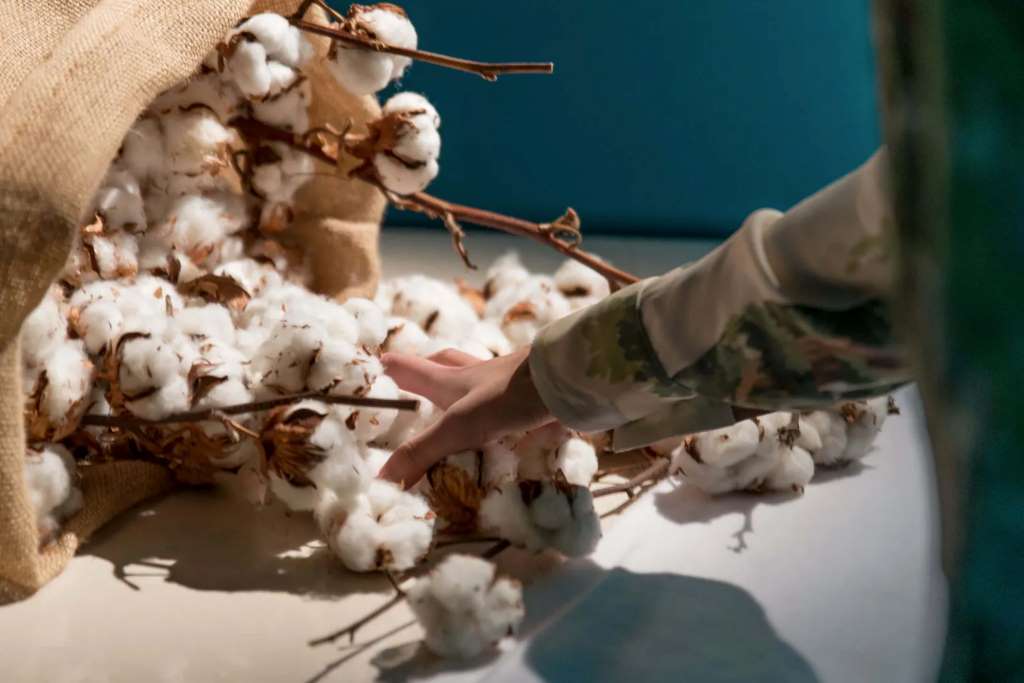
Pakistan, has committed to import more than 0.3 million bales of cotton from the US during 2014-15 fiscal year. Pakistan is the eighth largest US cotton importer with import commitments of 3,35,000 bales in the current fiscal year. The country imported 1,69,000 bales of cotton from the US in the previous fiscal year.
US cotton is supposed to be of superior quality. Some Pakistani companies visited the US early recently to observe cotton production, processing and marketing and to meet with US cotton exporters. Pakistan imports high quality cotton from the US and other countries to meet the requirements of its textile industry. Local demand outstrips production and the demand-supply gap has to be filled through imports.
Pakistan’s cotton production during the 2013-14 period declined 9.2 per cent against the target and two per cent over last year’s production. The decrease was due to fall in acreage. Cotton output is estimated to be around 14.94 million bales this year. The country is expected to import around two million bales during 2015-16.
Cotton, has a share of 1.4 per cent in national GDP and 6.7 per cent in agriculture value addition.
- 1
- 2
- 3
- 4
- 5
- 6
- 7
- 8
- 9
- 10
Redefining what responsible production looks like
India's textile and apparel sector has set the global benchmark for sustainability at scale, and two clusters are leading the... Read more
China’s duty-free revival meets a reality check as Hainan shifts from VICs to va…
Hainan’s retail recovery is beginning to look less like a cyclical rebound and more like a rewiring of China’s domestic... Read more
Zombie inventory and shrinking margins inside China’s fashion returns meltdown
China’s digital fashion market, long celebrated as the world’s most sophisticated test bed for e-commerce innovation, is facing a destabilising... Read more
Circularity by Design: How EU rules are turning data into fashion’s new currency
The European fashion sector has entered a compressed transition window. Two regulatory confirmations: the revised EU Textile Labelling Regulation (effective... Read more
The Lyst Reset: Chanel and Dior rewrite luxury’s power index
The global luxury hierarchy has been quietly rewritten, and not by sales alone. In Q1 2026, Chanel rose to the... Read more
Inventory, not expansion, defines winners in global apparel
The 2025 fiscal year has crystallised that revenue growth and operational health are no longer moving in tandem. In an... Read more
From growth-at-all-costs to cash discipline, the new economics of DTC fashion
The global direct-to-consumer apparel market is entering a correction phase, as fashion brands across the US, Europe and the UK... Read more
Britain’s Forgotten Growth Engine: Why policy gaps are undermining fashion and t…
Britain’s fashion and textile industry, often framed through the lens of creativity and design, is emerging as a case study... Read more
Beyond price rallies structural reform can strengthen India’s cotton economy
India’s cotton economy is entering a decisive phase, where firmer prices and tighter arrivals in the 2026-27 season have given... Read more
Polyester volatility redraws India’s textile industry competitive map across Asi…
India’s synthetic textile industry has entered a phase of cost instability as polyester staple fibre (PSF) prices rise across domestic... Read more