Global apparel trade is now in a new operational phase where geopolitical stability and logistics reliability are as important as manufacturing economics. For India’s textile and garment exporters, the prolonged disruption across critical maritime corridors has evolved from a temporary shipping inconvenience into a business challenge with direct implications for profit, working capital, and long-term sourcing competitiveness.
India’s textile sector, with exports worth $44 billion annually, is now operating in an environment where supply chain resilience is being scrutinized more aggressively by global fashion brands and retailers. A recent stress assessment by CRISIL revealed, escalating tensions across West Asia and continued rerouting away from the Red Sea are sharply increasing freight costs, transit timelines, and insurance premiums across major export routes.
For global retailers facing volatile consumer demand and shorter inventory cycles, the traditional procurement strategy centered on lowest factory-gate pricing is giving way to a broader evaluation of corridor reliability and delivery certainty.
Freight inflation, longer transit reshaping exports
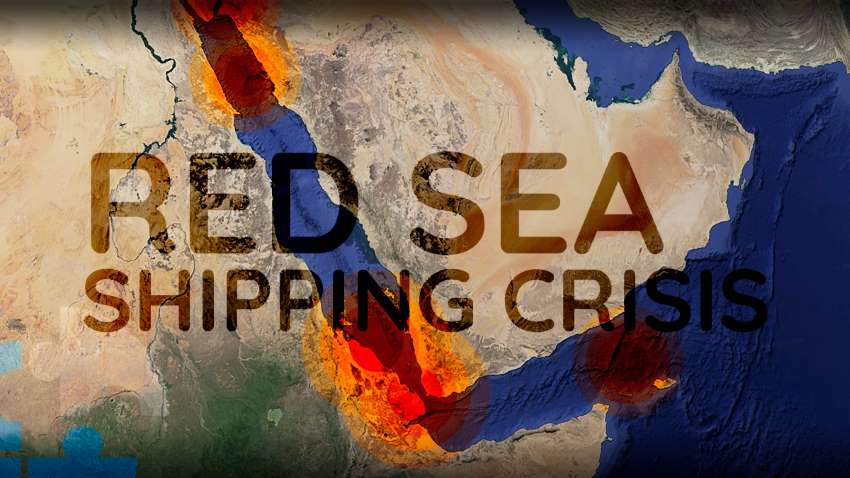
The biggest operational disruption stems from the diversion of shipping traffic away from the Red Sea and the Suez Canal. The rerouted voyages, largely redirected around the Cape of Good Hope, have extended delivery timelines to Europe by nearly 40-60 per cent, disrupting the predictability required by modern fast-fashion retail models.
CRISIL’s nine-month disruption scenario assumes global crude oil prices averaging nearly $110 per barrel, a development that has major implications for textile manufacturing, particularly for synthetic fibers and polyester-based products that remain closely linked to crude-derived feedstocks.
The result is mounting pressure across the textile value chain. Apparel manufacturers and fabric mills are facing higher inventory carrying costs, growing freight bills, and delayed cash conversion cycles. Yet immediate price revisions remain difficult because many exporters continue to operate under seasonal contracts with Western buyers that limit rapid cost pass-through. Industry estimates suggest operating profit across polyester textiles and readymade garments could decline by 100 to 200 basis points during the current fiscal year.
Table: Comparative cost and operational metrics across global export hubs
|
Corridor |
India to Western Europe |
Turkey to Western Europe |
Bangladesh to Western Europe |
|
Transit Time (Sea/Overland) |
35–45 Days (via Cape of Good Hope) |
5–8 Days (Overland Trucking) |
40–50 Days (via Cape of Good Hope) |
|
Average Freight Cost (per FEU) |
$4,200 – $5,500 |
$1,800 – $2,400 |
$4,500 – $5,800 |
|
Working Capital Cycle (Days) |
90 – 105 Days |
45 – 60 Days |
100 – 120 Days |
|
Projected Margin Impact (YoY) |
Decline of 150–200 bps |
Stable (+20–50 bps due to premium pricing) |
Decline of 180–230 bps |
|
Primary Risk Vulnerability |
Maritime Chokepoints & Insurance Hikes |
Border Customs & Fuel Surcharges |
Trans-shipment Port Congestion |
Nearshore gains importance
The ongoing disruption is strengthening the competitive position of regional manufacturing hubs located closer to consumption markets. In Europe, this shift is particularly benefiting Turkey, which is emerging as a strong sourcing alternative for brands seeking speed and supply reliability.
Turkey’s geographic proximity to major European fashion centers enables exporters to bypass high-risk maritime chokepoints such as the Suez Canal and Strait of Hormuz altogether. Overland trucking routes allow delivery timelines of under a week, creating a decisive operational advantage for retailers managing tighter inventory rotations and shorter fashion cycles. While Turkish manufacturing costs remain structurally above India’s due to higher labor and energy expenses, buyers are willing to absorb the premium in exchange for reduced transit risk and improved inventory predictability.
This marks a transition in sourcing logic. Procurement decisions are no longer based solely on unit production economics. Instead, retailers are calculating the total commercial cost of delayed inventory, missed selling windows, and capital locked in extended shipping routes.
Currency movements cushion margin pressures
Despite the difficult operating environment, Indian textile exporters retain several buffers that may help preserve financial stability. One of the most significant supports is the depreciation of the Indian rupee, which recently crossed the 96-per-dollar level. Since textile exports are largely dollar-denominated, a weaker domestic currency improves export realizations and partially offsets higher logistics and input costs.
CRISIL also notes that Indian corporates are entering this period with stronger balance sheets than in previous commodity or logistics crises. The median corporate gearing ratio has declined to approximately 0.5 times, while interest coverage ratios have strengthened to more than five times compared to the previous decade.
Moreover, liquidity support measures such as the government-backed Emergency Credit Line Guarantee Scheme (ECLGS 5.0) are providing temporary financing support for mid-sized garment exporters facing elevated working capital stress. Together, these factors are expected to preserve the solvency profile of large Indian textile companies even as short-term operating margins remain under pressure.
Fashion retailers rebalance procurement strategies
The changing economics of global sourcing are already influencing buyer behavior. A mid-sized European fast-fashion retailer recently adjusted its supplier mix after extended Red Sea disruptions created major inventory gaps across seasonal apparel categories. So far, the company sourced high-volume basics from India while relying on Mediterranean suppliers for quick-turn fashion products. However, when transit timelines from India stretched and added three additional weeks, the retailer shifted roughly 20 per cent of its cotton and synthetic sourcing volume to Turkish suppliers.
Although manufacturing costs in Turkey were approximately 12 per cent higher, the shorter six-day overland transit window significantly reduced inventory lock-up and prevented lost retail sales. The faster replenishment cycle ultimately compensated for the higher unit production cost.
The case highlights an increasingly important reality within global fashion procurement: sourcing reliability and delivery speed are becoming more commercially valuable than marginal savings on production costs.
CRISIL’s, latest stress assessment underscores a broader reality for the textile sector: geopolitical instability is no longer a peripheral trade risk. It is rapidly becoming a central determinant of sourcing strategy, capital allocation, and long-term competitiveness in the global apparel industry.